Herb · Asteraceae
Wormwood
Artemisia absinthium
Give it poor, dry soil and plenty of sun, and this gentle silver herb will look after itself while you find your feet.
Full sun
Every 10–21 days
90–120 days
USDA 4–9
Overview
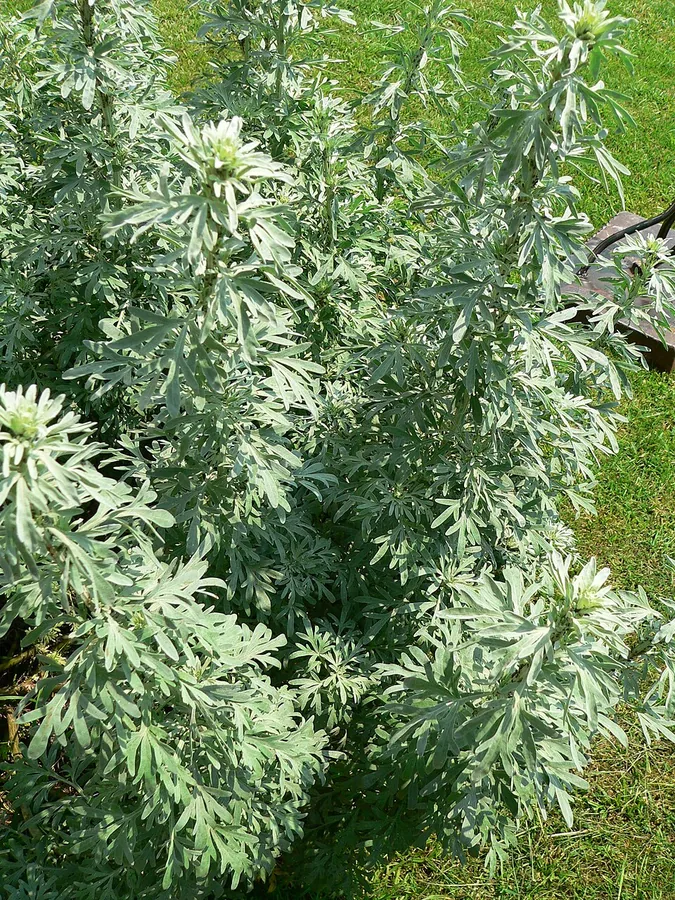
Wormwood is a hardy silver-leaved perennial in the daisy family, and it makes a kind first plant because it forgives almost everything. Its finely cut, gray foliage carries a sharp, unmistakable scent, and small dull yellow flowers appear late in summer. It grew wild across Europe and Asia for ages before settling into North America, so it is well used to fending for itself. Most people grow it for that soft aromatic foliage rather than the modest blooms.
Here is the reassuring part: it asks for next to nothing. A sunny spot and lean, dry, sharply drained soil are all it really wants, and the two mistakes that sink fussier plants, rich ground and wet feet, are easy to sidestep once you know them. It shrugs off drought and poor soil without complaint, and it stands up to both hard winter cold and real summer heat, so an off week of care will not undo it.
One thing does call for a little care, and it is easy to manage. Every part of wormwood holds thujone, a neurotoxin, along with the bitter compound absinthin that gives absinthe its name. That bitterness keeps most animals from bothering it, but it is not a herb to nibble, and its roots and rain-washed leaves can hold back plants growing close by, so give it a spot of its own.
Care
The short version: full sun and lean, dry, sharply drained soil make wormwood happy. Water it lightly and only after the ground has dried out, leave the fertilizer in the shed, and give it a shear after it blooms so it does not flop. None of this is fussy, and small slips are easy to put right.
Light
Wormwood loves full sun, and that is where it looks its best. It will put up with a little light shade, but too much of it leaves you with weak, leggy stems that flop open by midsummer, so give it the brightest spot you have.
Water
Go easy with the watering can. Let the soil dry out completely between drinks, watering only every 10 to 21 days once the plant has settled in, and never leave the ground soggy. Standing wet is the one thing that really does it in, through root rot, so when in doubt, wait a day.
Soil
Give it poor to moderately fertile, dry, sharply drained ground, sandy or loamy, and it will thank you. It copes with a wide pH span from 5.5 to 8.0, and it honestly grows better lean than rich, so there is no need to improve the bed first.
Temperature
This is a genuinely hardy plant, at ease anywhere from -22°F to 95°F (-30°C to 35°C). That deep cold tolerance carries it through hard winters without fuss, and it takes real summer heat in stride too.
Humidity
It likes the air on the dry side, around 30% to 50%, which suits its drought-loving nature. Damp, muggy conditions do it no favors, since trapped moisture invites the foliage to slump, so a bit of airflow is your friend.
Feeding
You can more or less forget feeding, which is a relief. Wormwood thrives in poor soil, and the most it ever wants is a thin topdressing of compost in spring. Feed it richly and you only push out soft, floppy growth.
Pruning
Pinch the stems back in late spring to keep the plant bushy rather than leggy. After it flowers, shear it by up to half to coax fresh, compact foliage, and snip off the spent flowers promptly so it does not seed itself all over.
Repotting
Wormwood rarely wants a pot, but if yours lives in one, repot every 2 to 3 years in spring. Roots circling the pot, water rushing straight through, and thin new growth are all gentle hints that it has outgrown its home.
Size & spacing
A settled plant reaches around 2 to 4 feet (60 to 120 cm) tall and spreads 18 to 35 inches (45 to 90 cm) across. Give it that elbow room so air moves freely through the foliage and the stems stay upright.
When to plant
Wormwood keeps the rhythm of a cold-hardy perennial, and its calendar is a forgiving one. Start seed indoors in early spring, move young plants outside after the last frost once the soil feels warm, and look forward to small yellow flowers from August into September while you gather the fragrant foliage through summer.
Northern hemisphere
Southern hemisphere
Typical months for a temperate climate: start earlier in warm zones, later where spring frosts linger.
- Sow: Early spring, 6-8 weeks before last frost; surface sow as seed needs light
- Plant: After the last spring frost, once soil has warmed
- Harvest: Yellowish flowers August to September; harvest aromatic foliage in summer at or just before bloom
Hardiness
USDA hardiness zones: 4–9
Temperature: down to -34°C
Troubleshooting
Wormwood is tougher than it looks, and most of its troubles come from too much fussing rather than too little. Wet soil, rich ground, and shade do far more harm than a dry spell ever could. If something looks off, match it below and act early, and you will almost always turn it around.
A wilting plant with black, mushy roots
Soggy roots undo wormwood faster than anything else, and this is root rot, brought on by soil that stays wet and drains too slowly. Once the roots turn dark and soft there is no bringing that plant back, so lift it, throw it out, sort out the drainage, and hold off watering the spot. The good news is that better drainage stops it happening again.
Fix:
- Improve drainage and stop watering
- Remove and discard affected plants
Stems opening out from the middle in summer
This is summer flop, and it usually points to too much water, soil that is too rich, or a spot that is too shady. Lush ground and wet weather push soft, top-heavy stems that simply cannot hold themselves up. Do not worry, it is fixable: shear the plant back by up to half once it blooms, and pinch the stems in late spring before the flopping starts.
Fix:
- Shear plants back by up to half after bloom to force fresh compact growth
- Pinch stems in late spring before flopping starts
Curled shoot tips covered in tiny insects
Even a bitter, aromatic plant like wormwood can tempt aphids onto its soft new tips. Watch for the little clustered insects and the sticky honeydew they leave. A firm jet of water knocks most of them off, and you only need to reach for insecticidal soap if they keep coming back.
Fix:
- Dislodge with a strong spray of water
- Treat with insecticidal soap if persistent
Toxicity
This is a plant to keep out of reach of pets, grazing animals, and curious mouths, and that is easy enough to do. Every part carries thujone, a neurotoxin that can bring on vomiting, tremors, and seizures if eaten in quantity. The fierce bitterness puts most animals off after one taste, but do not lean on that alone, and never treat wormwood as something safe to eat.
Toxic to
Cats · Dogs · Horses · Rabbits · Livestock · Birds · People
Cats Toxic
A cat that chews the leaves will usually drool and be sick, often with diarrhea close behind. The bigger worry is the thujone, which can set off tremors and seizures if a cat eats much of it.
Dogs Toxic
Most dogs that taste the bitter leaves end up with a queasy stomach, vomiting, or loose stools. Let one eat enough and the thujone turns it serious, with muscle tremors and seizures.
Horses Toxic
Horses can pick up colic and a dull, off mood from grazing wormwood, and a big mouthful risks the tremors and convulsions that follow thujone poisoning.
Rabbits Toxic
Keep rabbits away from it. The same thujone that troubles other animals unsettles their gut and, in any quantity, goes after the nervous system.
Livestock Toxic
Cattle, sheep, and goats tend to leave the bitter plant well alone, but a hungry animal on thin pasture can take in enough thujone to bring on stomach pain and nervous twitching.
Birds Toxic
Keep wormwood clear of birds, since the volatile oils and thujone are simply too strong for their small bodies to cope with.
People Caution
Wormwood flavors absinthe and bitter tonics, but it is not a salad leaf. The thujone in it can bring on vomiting, tremors, and seizures if you eat the plant freely, so treat it as a flavoring to use sparingly and never as a food.
Foliage is strongly aromatic and bitter; volatile oils can irritate the skin of sensitive people, so wear gloves when pruning or harvesting in quantity.
Helpline numbers

United States
ASPCA Animal Poison Control: (888) 426-4435 (fee applies)
Poison Control: (800) 222-1222



Canada
Poison Centres: 1-844-764-7669
Varieties
Most gardeners grow the plain species and do just fine, but a couple of selections are worth knowing for their prettier foliage and tidier habit.
'Lambrook Silver'
A tidier, more compact form loved for its finely cut, silvery-gray leaves.
Artemisia 'Powis Castle'
A vigorous silver-leaved cross of A. absinthium and A. arborescens that hardly ever flowers and is grown purely for its mound of foliage.
Companions
Plant near
carrots: Used traditionally as a strongly scented distant border to help mask the scent of carrots from pests; keep well away from the roots to avoid allelopathic suppression.
Keep apart
fennel: Volatiles and root-exuded absinthin from wormwood inhibit fennel germination and growth.
sage: Absinthin washed from wormwood foliage by rain stunts nearby herbs such as sage.
anise: Aromatic seed herbs near wormwood suffer reduced germination and stunting from absinthin.
How to propagate
Wormwood is easy to multiply, so do not be shy about trying. You can raise it slowly from its tiny seed, or take the quicker route and split a clump or root a cutting.
SeedModerate
Early spring, 6-8 weeks before last frost · Germinates in 2-3 weeks; reaches usable size in the first to second year
Sow seed indoors about 6 to 8 weeks before your last frost. The seeds are tiny and need light to wake up, so scatter them on the surface and leave them uncovered, and they push through in 2 to 3 weeks. The plant is in no hurry, filling out to a usable size over the first or second year, and once it is settled outdoors it self-sows with ease.
DivisionEasy
Spring or early fall · Roots in a few weeks and re-establishes the same season
Splitting an old clump is the fastest way to freshen a tired plant. Lift and divide it in spring or early fall every 2 to 3 years, and the new pieces take root within a few weeks and settle back the same season.
Stem cuttingsEasy
Late spring to summer from softwood or semi-ripe shoots · Roots in about 3-4 weeks
From late spring through summer, take 8 to 10 cm tip cuttings from softwood or semi-ripe shoots. Press them into a gritty, sharply drained mix and they root with little fuss in about 3 to 4 weeks.
Myths
The thujone in wormwood turns absinthe into a hallucinogen.
That hallucinogen story simply does not hold up. Both the old pre-ban absinthe and today's version carry far too little thujone to touch the mind, and a drinker would reach alcohol poisoning long before the thujone ever added up to a neuroactive dose. Whatever absinthe does comes from the alcohol, not the herb.
Wormwood is a natural herb, so taking it freely is safe.
Natural does not mean gentle in this case. Every part of the plant holds thujone, a neurotoxin, and large or repeated doses of wormwood preparations can harm the nervous system. US law caps the thujone allowed in food and drink for a good reason.
Planting wormwood makes nearby vegetables healthier.
It tends to do the exact opposite. Wormwood is allelopathic, releasing a water-soluble compound called absinthin from its roots and from foliage that rain washes onto the ground. That absinthin holds back the plants growing near it, so wormwood crowds out its neighbors rather than helping them along.