Herb · Asteraceae
Feverfew
Tanacetum parthenium
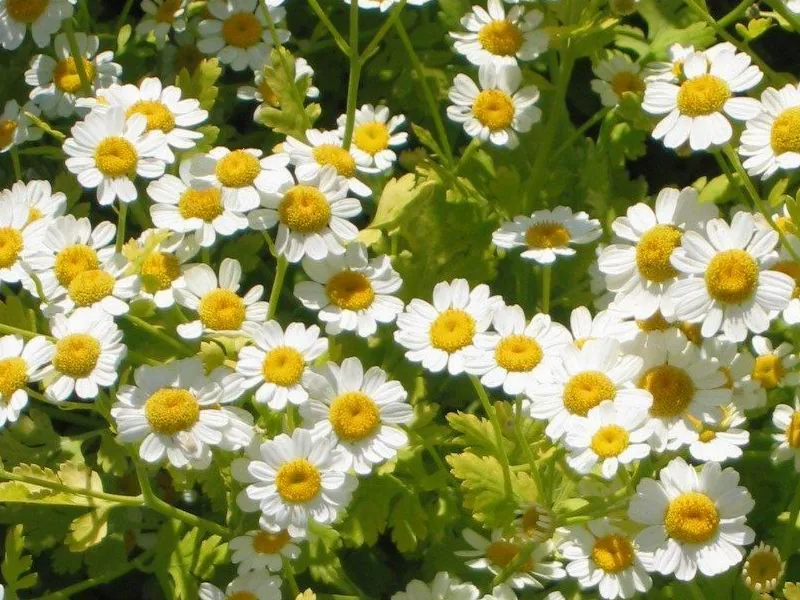
Offer it full sun and lean, dry soil, and feverfew thanks you with white daisies all summer.
Full sun
Every 7–14 days
90–120 days
USDA 5–9
Overview
Feverfew is a cheerful, easygoing perennial in the daisy family, and through the warm months it covers itself in small white flowers with sunny yellow eyes. It grows quickly and asks for very little, which is exactly why it wandered out of old cottage gardens and into beds, borders, and herb patches across cooler regions. One sniff of the aromatic, ferny leaves tells you it belongs to the Tanacetum family, a close relative of tansy and the chrysanthemums.
It gives back in two happy ways. The daisies make long-lasting cut flowers and bring the pollinators in, and the plant carries a long folk-medicine story that still echoes in its name. Leave it entirely to itself and it sows seed freely, so a neat little clump can soften into a loose, friendly colony within a season or two.
Do not let any of that worry you, because feverfew is genuinely forgiving. Give it sun, soil that drains, and a tidy trim once it has finished blooming, and it will return faithfully year after year and fill the gaps with seedlings besides. The only thing worth keeping an eye on is the spreading, and a little deadheading is all it takes to stay ahead of it.
Care
The short version: give it full sun and lean, well-drained soil, and offer a deep drink only once the top half of the soil has dried. Deadhead as you go, shear it back after the flowers fade, and it mostly takes care of itself.
Light
Feverfew blooms its best in full sun, though it will happily take a little partial shade. Tuck it into deeper shade and you swap flowers for soft, leggy growth, so do it a kindness and pick the brightest spot you have.
Water
Once it has settled in, feverfew is drought-tolerant and really dislikes sitting wet. Water it deeply, but only after the top half of the soil has dried, which usually lands around every 7 to 14 days, and let it dry out again between drinks.
Soil
Plain well-drained garden soil keeps it perfectly content, and it will even cope with poor, dry ground without complaint. Aim for a pH somewhere between 6.0 and 7.5 and make sure water moves through freely, because soggy soil is the one thing it truly cannot forgive.
Temperature
Feverfew is wonderfully hardy, riding out cold down to about -20°F (-29°C) and taking summer heat up to 90°F (32°C) in stride. That generous range lets it overwinter as a perennial across a wide sweep of temperate gardens.
Humidity
Ordinary outdoor air is all this plant asks for, so there is no number to chase or fret over. It rests happily in the 40% to 60% range most gardens already offer, and a bit of fresh airflow matters far more than the reading.
Feeding
Feverfew is a light feeder that genuinely prefers lean soil. One gentle dose of balanced fertilizer or a scattering of compost in spring is all it wants, and heavy feeding only brings soft, floppy growth that draws aphids.
Pruning
Deadhead the spent flowers as the season goes to keep the blooms coming and to ease its heavy self-seeding. Once it finishes flowering, shear the plant back hard for fresh compact regrowth, then cut it down in late fall or early spring.
Repotting
If you keep feverfew in a pot, repot it annually or whenever it outgrows its home. Roots circling the soil, a quiet dip in vigor, or soil that dries almost the moment you water are all friendly signs it would welcome a roomier pot.
Size & spacing
Plants rise 18 to 35 inches (45 to 90 cm) tall and settle into clumps 12 to 24 inches (30 to 60 cm) wide. Leave each one about that much elbow room so air moves freely around it and the roots never sit in trapped damp.
When to plant
Feverfew follows the seasons, and the rhythm is easy to learn. Start seed indoors 6 to 8 weeks before your last frost or sow it right into the ground in spring, set the young plants out once the cold has lifted, and the white daisies open from early summer all the way through fall.
Northern hemisphere
Southern hemisphere
Typical months for a temperate climate: start earlier in warm zones, later where spring frosts linger.
- Sow: 6-8 weeks before last frost
- Plant: Spring after danger of frost has passed
- Harvest: White daisy-like flowers with yellow centers from early-mid summer through fall; long bloom period
Hardiness
USDA hardiness zones: 5–9
Temperature: down to -29°C
Troubleshooting
Feverfew rarely gives trouble, and when it does it usually comes down to too much water, too little sun, or its own enthusiasm for seeding. Find what matches what you are seeing below, then step in early while the fix is still gentle and simple.
Drooping, yellow leaves on soil that stays soggy
If your plant flags while the soil around it stays wet, the likely cause is root rot, which sets in when drainage cannot keep pace with the water. A gentle dig at the base will show roots gone brown, mushy, and unpleasant smelling, and those roots can no longer feed the top growth. Ease off the watering and open up the drainage, lift out anything past saving, and give healthy divisions a fresh start where puddles never form, and you can recover from here.
Fix:
- Improve drainage and reduce watering
- Remove and discard severely affected plants
- Replant healthy divisions in well-drained soil
Baby plants turning up all over the bed
Feverfew is a prolific self-seeder, so do not be surprised when one happy plant scatters a crop of youngsters around itself the following spring. The kind fix is to deadhead before the flowers ever set seed, which quietly stops the spread before it starts. Any seedlings that slip through lift out with a light tug while they are still small, so this is nothing to worry over.
Fix:
- Deadhead before seed set
- Remove unwanted seedlings by hand while young
Sticky, curling leaves dotted with tiny clustered bugs
Take heart, because this is just an aphid visit and it is one of the easiest problems to clear up. The little soft-bodied insects crowd onto fresh growth and the undersides of leaves, and the sticky honeydew they leave is what makes the foliage curl. Knock them off with a firm spray of water, reach for insecticidal soap only if the group is large, and the ladybugs that follow will happily finish the job for you.
Fix:
- Spray with a strong jet of water to dislodge aphids
- Apply insecticidal soap if infestation is heavy
- Encourage beneficial predators such as ladybugs
Only a handful of blooms, or color that fades quickly
Light flowering almost always means too little sun or a few missed deadheads, and both are simple to put right. A plant sitting in shade just sets fewer buds, and one allowed to make seed eases off its own display. Shift it into full sun and pinch away the faded daisies as you pass, and it will keep going from early summer deep into fall.
Fix:
- Relocate to a full-sun position
- Deadhead spent flowers regularly to encourage continued bloom
Toxicity
Feverfew is a lovely plant to grow, though it is not one to eat or to let animals graze. The leaves hold sesquiterpene lactones that can upset the mouth and gut of cats, dogs, and horses, and those same compounds may give sensitive people contact dermatitis and mouth ulcers. Pull on gloves when you handle it and keep pets and little ones from chewing the foliage, and everyone stays comfortable.
Toxic to
Cats · Dogs · Horses · Rabbits · Livestock · Birds · People
Cats Mild
A cat that nibbles the leaves tends to drool and be sick, and the upset stomach can carry on into loose stools. The sap can also leave the mouth sore or raise a rash where it lands on skin, so it is kindest to keep curious cats away.
Dogs Mild
A dog that samples the foliage usually drools and feels queasy, sometimes with loose stools to follow. Where the sap touches, it can redden the mouth or bother the skin, so wipe a curious nose and move the pot out of reach.
Horses Mild
The bitter leaves can leave a grazing horse with a sore mouth, some drooling, and a mild touch of colic or loose manure. The good news is that most horses sniff it and walk on by, given any other choice.
Rabbits Caution
The very sesquiterpene lactones that trouble other animals make feverfew a poor pick for rabbits, so it is safest to keep it out of the hutch and off the list of greens you offer.
Livestock Caution
Cattle, sheep, and goats tend to steer clear of the bitter leaves on their own, but the plant's compounds can upset the gut if an animal is pushed to eat it, so it is not something to lean on as fodder.
Birds Caution
There is little to say feverfew is safe for pet or backyard birds, and the irritant oils suggest caution, so the gentle course is to keep the plant well clear of cages and aviaries.
People Caution
Working with the foliage can bring on contact dermatitis if your skin runs sensitive, and chewing fresh leaves often leaves mouth ulcers and soreness. Slip on gloves when you cut it back and rinse your hands when you are done, and you will be fine.
Wear gloves when handling foliage; sesquiterpene lactones can cause contact dermatitis in sensitive people, and chewing fresh leaves can cause mouth irritation and ulcers.
Helpline numbers

United States
ASPCA Animal Poison Control: (888) 426-4435 (fee applies)
Poison Control: (800) 222-1222



Canada
Poison Centres: 1-844-764-7669
Varieties
Past the plain white daisy, a handful of selections are worth getting to know, prized either for double flowers or for their colored leaves.
'Aureum' (Golden Feather)
Gardeners grow this one for its glowing chartreuse-gold leaves rather than its blooms, which makes it a lovely foliage choice.
'Flore Pleno'
Instead of the plain daisy it offers fully double, button-shaped white flowers crowded with petals.
'Snowball'
Its flowers come as rounded white pompons, a neat double form that looks almost like a little chrysanthemum.
How to propagate
Feverfew makes more of itself with almost no fuss, whether you sow seed or divide a settled clump, and it gladly sows itself on top of all that.
SeedEasy
Sow indoors 6-8 weeks before last frost or direct sow in spring; surface sow as seeds need light to germinate · Germination in 1-2 weeks; flowering plants within the first season
Starting feverfew from seed is wonderfully forgiving, sown indoors 6 to 8 weeks before your last frost or scattered straight into spring ground. Just settle the seed on the surface without covering it, because it needs light to wake up, and sprouts appear in 1 to 2 weeks. Plants grown this way bloom in their very first season, and because feverfew self-sows so willingly, you can simply lift and shift the volunteers while they are young.
DivisionEasy
Spring or early fall · Several weeks to re-establish in the season of division
Splitting a settled clump in spring or early fall gives a tired plant a fresh lease on life and hands you new plants that look just like the parent. Ease the clump out, separate it into rooted pieces, and tuck each one back in. The divisions need only a few weeks to find their feet and grow on through the same season.
Myths
Feverfew gets its name because it reliably cures fevers.
The name really does come from the Latin febrifugia, meaning fever reducer, which hints at how people once turned to it. Even so, both the old uses and the modern studied ones gather around headache and migraine rather than fever. It was never a dependable fever remedy, and the name simply lingers from old folk medicine.