Herb · Asteraceae
French Tarragon
Artemisia dracunculus
French tarragon asks for little once it has full sun and sharp drainage, then thanks you with that warm anise note right through summer.
Full sun
Every 5–10 days
USDA 4–8
24–35 in · 60–90 cm
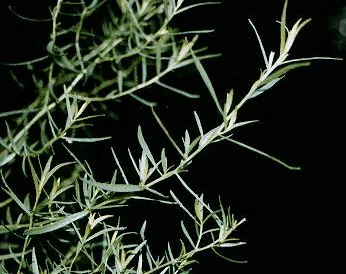
Overview
If you have room for just one herb, French tarragon is a lovely place to start, prized for a clean, warm anise flavor that nothing else in the garden quite matches. It is a cousin of daisies and sagebrush, and it grows as a hardy perennial, dying back through winter and sending up tender new shoots each spring. Plant one healthy crown and it will keep feeding your kitchen for years.
There is one thing worth knowing before you shop, and it trips up plenty of gardeners, so you are in good company. The true French herb is a sterile clone that never sets viable seed, which means you get it by buying a living plant or accepting a piece from a friend. Any packet labeled tarragon seed will be the Russian sort, quick and leafy but nearly tasteless. The happy part is that once you own the real thing, you can split it for free again and again.
The only thing tarragon truly minds is soggy roots, so this is the one detail to get right, and it is an easy one. Give it full sun, lean soil, and very sharp drainage, and steer it away from heavy, wet ground where it tends to sulk or rot. Manage the drainage and everything after that feels forgiving: a little water, next to no feeding, and a quick trim before the cold sets in.
Care
The short version: give it full sun and lean, fast-draining soil, and water only after the top half has dried, so there is no need to fuss. Feed sparingly or not at all, snip the shoot tips through summer, and divide the clump every few years, and your tarragon will stay generous and full of flavor.
Light
For the boldest flavor, aim to give your tarragon full sun, and take comfort that it will forgive a little afternoon shade. Just avoid deep shade, since it thins the growth and quietly dulls the very taste you are growing the herb for.
Water
There is no need to hover with the watering can, because tarragon likes the top half of the soil to dry out between drinks rather than staying wet. It dislikes soggy roots most of all, and the one real mistake to avoid is overwatering in winter, which can rot the roots.
Soil
Set your tarragon into light, sandy, well-drained loam, since good drainage means far more to it than rich ground ever will. Any pH between 6.0 to 7.5 keeps it content, and the only soil it truly cannot forgive is heavy, soggy earth.
Temperature
This is a genuinely tough plant, shrugging off cold down to about -20°F (-29°C) and staying content up to roughly 84°F (29°C). A chilly winter rest is not a setback to worry over, it is exactly what the plant needs to come back at its best.
Humidity
Tarragon is happiest on the dry side, around 30% to 50% humidity, with plenty of space around it for air to move. Still, damp air is the main thing that invites the mildew and rust which speckle the leaves, so a little breathing room goes a long way.
Feeding
Here is a plant that asks for very little at the table, because tarragon is a light feeder. One modest helping of balanced fertilizer or compost in spring is all it wants, and heaping on nitrogen only puffs out soft leaves with less flavor.
Pruning
Feel free to pinch and pick the shoot tips all season, since that gentle harvest is exactly what keeps the plant full and bushy instead of leggy. When late summer comes, cut the stems back and tidy away the dead top growth so the plant can settle comfortably into winter.
Repotting
Give a potted tarragon fresh quarters every 2 to 3 years, before its crown grows woody and crowded. If you notice fading flavor, fewer new shoots, or a hard center, that is simply the plant gently asking for new soil or a division, and it is easy to oblige.
Size & spacing
Once settled, a plant grows 24 to 35 inches (60 to 90 cm) tall and fans out 12 to 18 inches (30 to 45 cm) wide, so picture that space when you plant. Give each one that much elbow room and the air will flow through freely, keeping the leaves dry and healthy.
When to plant
Hardy across zones 4 through 8, tarragon simply follows the calendar, so you can relax and let the seasons lead. Once your last frost has passed in spring, settle divisions or rooted cuttings into the ground, gather leaves all summer, and then let the plant rest through winter. That cold sleep is a good thing, and it is what wakes the plant up strong again the next year.
Northern hemisphere
Southern hemisphere
Typical months for a temperate climate: start earlier in warm zones, later where spring frosts linger.
- Plant: Spring, after the last frost, from divisions or rooted stem cuttings
- Harvest: Rarely flowers and sets no viable seed; harvest leaves through summer. Benefits from a period of winter dormancy and chilling to perform well the following season.
Hardiness
USDA hardiness zones: 4–8
Temperature: down to -34°C
Troubleshooting
Take heart, because most tarragon worries begin in one of two easy-to-watch places: the roots below and the air moving through the leaves. Keep a friendly eye on both and you will sidestep almost every issue before it starts. Find the symptom that looks like yours below, then step in early while it is still simple to fix.
A collapsing plant with blackened roots and a soft, rotted crown
Try not to panic, because this is root and crown rot, and it nearly always comes down to soil that has stayed too wet. Since tarragon hates soggy feet, most of all through winter, gently lift a struggling plant and look for brown, bad-smelling roots. Where the rot has set in, throw away the worst pieces and replant the healthy divisions in raised, sandy ground that drains sharply, and the plant gets a fresh start.
Fix:
- Improve drainage and reduce watering
- Remove and discard severely rotted plants
- Replant healthy divisions in raised or sandy, well-drained beds
Stippled, yellowing leaves marked by powdery patches or small insects
When plants sit crowded and humid, they can pick up downy mildew or rust, which dust the leaves with pale or rust-colored patches, while aphids gather on tender new growth and twist it out of shape. Turn a few leaves over to see which one you are dealing with. Then simply thin the plant for better airflow, pull off the worst-hit foliage, and rinse or treat any aphids, and it will bounce back.
Fix:
- Improve air circulation and spacing
- Remove and destroy infected foliage
- Rinse off or treat aphids as needed
An aging clump gone woody, thin, and low on flavor
Nothing has gone wrong here, the plant has simply grown old, and after three or four years a tarragon builds a hollow, woody heart that offers little new growth and a flat taste. This is age rather than any disease, so there is no cure to chase. In early spring, dig the clump, replant the lively outer pieces, and let the tired middle go.
Fix:
- Divide the clump in early spring
- Replant vigorous outer divisions
- Discard the spent woody center
Toxicity
Good news for a busy household: tarragon is a kitchen herb, safe to eat and easy to live with. Cook with it as freely as you like, and know that it carries no poisoning danger for your pets. The only small thing to remember is that a big mouthful of the strongly scented leaves might leave a cat, dog, or other animal with a short, passing tummy upset, which makes this a gentle caution rather than a real hazard.
Toxic to
Cats · Dogs · Horses · Rabbits · Livestock · Birds
Safe for
People
Cats Mild
One curious nibble will do no harm at all, though a cat that works through a good mouthful of the aromatic leaves might drool a bit or have a short, passing upset stomach.
Dogs Mild
There is no poisoning risk to worry about, but a dog that bolts a big helping of the strong-smelling leaves may end up with loose stools or a little nausea that clears on its own.
Horses Mild
A small taste is nothing to fret over, and only a large helping of the leaves might leave a horse with mild digestive upset for a little while.
Rabbits Mild
Keep it to the occasional sprig, since the pungent oils can loosen a rabbit's tender gut once it eats more than a small taste.
Livestock Mild
Most grazing animals simply pass the strongly scented plant by, and a casual mouthful brings nothing worse than a brief bit of stomach upset.
Birds Mild
A few leaves will not trouble a backyard bird, though the concentrated aromatic oils make tarragon best offered as an occasional treat instead of everyday feed.
People Safe
Tarragon is a well-loved kitchen herb and perfectly safe to eat in the amounts any recipe calls for. Its estragole only becomes a concern in very large medicinal doses, well past anything ordinary cooking involves.
No special handling precautions are needed for the intact plant; use the leaves as a culinary herb.
Helpline numbers

United States
ASPCA Animal Poison Control: (888) 426-4435 (fee applies)

United Kingdom
Animal PoisonLine: 01202 509000 (fee applies)

Australia
Animal Poisons Helpline: 1300 869 738
Varieties
You will only ever run into two tarragons, and the gap between them is what separates real flavor from a pot of plain green leaves. A quick check of which one you are buying before planting saves any disappointment later.
French tarragon ('Sativa' clone)
This is the tarragon cooks reach for, a sterile clone with a strong anise flavor that you raise from divisions or cuttings since it never sets viable seed.
Russian tarragon (Artemisia dracunculoides)
Easy to raise from seed yet coarser, bigger, and nearly tasteless, it is the type that keeps showing up in seed packets only to let cooks down at the stove.
How to propagate
Since true French tarragon never makes seed, you grow more of it exactly the way the nurseries do, and it is easier than it sounds: split an existing plant or root a cutting. Either path hands down the same fine flavor, so you cannot really go wrong.
DivisionEasy
Early spring as growth resumes, or early fall · 4 to 8 weeks
Division is the surest, friendliest way to make more of the true French clone. In early spring as growth returns, or in early fall, lift an established plant, break off the healthy outer sections, and replant them, repeating this every 3 to 4 years to keep the clump young and generous. Give the new divisions a little patience and they root in and settle within 4 to 8 weeks.
Stem cuttingsModerate
Late spring to early summer from softwood growth · 4 to 6 weeks
For cuttings, snip non-flowering softwood shoots in late spring or early summer and settle them into a sharp, well-drained medium, where they take root in about 4 to 6 weeks. This is a lovely way to carry the prized French flavor forward, since only the lesser Russian tarragon ever comes true from seed.
Myths
True French tarragon can be raised from a packet of seed.
It is a common mix-up, so do not feel caught out: true French tarragon is a sterile clone that makes no viable seed, which means the only ways to hold on to its flavor are dividing a plant or rooting a cutting. Whenever tarragon shows up as seed, it is really the inferior, nearly flavorless Russian type, not the culinary herb you are after.