Herb · Asteraceae
Roman Chamomile
Chamaemelum nobile
Give it full sun and dry feet, and chamomile rewards you with a soft, apple-scented mat you can walk across.
Full sun
Every 7–10 days
60–90 days
USDA 4–9
Overview
Roman chamomile is a low, creeping perennial in the daisy family that spreads into a soft mat as it grows. Brush the feathery foliage with a hand or a foot and it gives back a warm, apple-like scent, which is exactly why so many people grow it. It earns its place along fragrant lawns and path edges, where every step releases that gentle fragrance.
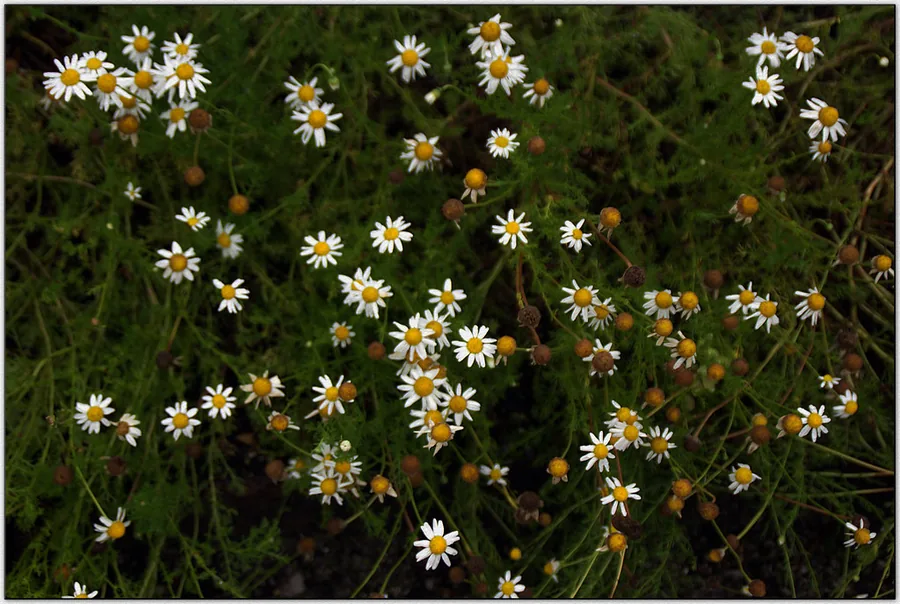
Through summer it carries cheerful white-and-yellow daisy flowers, and these are the part you harvest. Pick and dry the flower heads to brew a soothing tea, gathering them when the petals lie flat or have just fully opened. It is a relaxed, repeatable little ritual that runs right through the warm months.
This is a plant grown for scent and flowers rather than fuss, and that suits a nervous beginner perfectly. It asks for sun, sharp drainage, and a light touch, then mostly gets on with things. Think of it as a forgiving partner that rewards patience over precision.
Care
The short version: this is a forgiving little plant, so take a breath. Plant it in full sun with sharp drainage, let the top half of the soil dry before you water again, and feed it almost never. Pick the flowers as they open, shear the mat back after it blooms, and you will have a fragrant carpet that quietly looks after itself. Most slip-ups here are easy to walk back.
Light
Chamomile is happiest in full sun, and that is where it shows you its best self. It will tolerate partial shade if that is what you have, so do not worry if your spot is not perfect. The more sun it gets, though, the denser the mat and the heavier the bloom, so lean toward the brightest place you can offer.
Water
Water moderately and let the top half of the soil dry out between drinks, which usually works out to every 7 to 10 days. Once your plant has settled in, it becomes pleasantly drought-tolerant, so a missed watering is rarely a crisis. The one thing to steer clear of is soggy soil, since constant wet is the fastest way to kill it through root rot.
Soil
Give chamomile a light, well-drained sandy loam and it will thank you. Aim for a pH 5.6 to 7.5, though honestly the sharp drainage matters more than the pH, so do not lose sleep over the exact number. If your ground is heavy clay, just work in some grit to lighten it and open up the drainage.
Temperature
This plant handles a comfortable range of 39°F to 86°F (4°C to 30°C) and is hardy down through zone 4, thriving across zones 4 to 9. Its one soft spot is prolonged summer heat and humidity, which can leave the center of the mat thin and brown. If that happens, it is a setback rather than a disaster, and a trim usually sets it right.
Humidity
Chamomile likes to stay on the dry side, around 30% to 50%, which makes it an easy fit for most homes and gardens. Muggy, still air is what to avoid, because it invites fungal dieback. Remember that airflow matters more than moisture here, so keep some breeze moving and the plant stays content.
Feeding
Here is a chore you can mostly skip: chamomile is a light feeder that needs little to no fertilizer. A single balanced low-nitrogen feed in spring is all it ever really wants. Resist the urge to do more, since overfeeding pushes soft growth that aphids love, and a hungry-looking plant is usually better off than a pampered one.
Pruning
After the flowers fade, shear or mow the mat back lightly to keep it dense and to spark fresh new growth. It sounds bold, but the plant takes it well and comes back fuller. Through the blooming season, deadhead spent flowers to keep more coming, and you will stretch the show out longer.
Repotting
Repotting is rarely needed, so this is one less thing to track. If you grow chamomile in a container, simply divide and refresh it every 2 to 3 years, or sooner if you notice the roots circling the pot, the growth thinning, or the soil drying out very fast. Treat those signs as a friendly nudge rather than an emergency.
Size & spacing
Expect your plant to reach 6 to 12 inches (15 to 30 cm) tall and to spread 12 to 18 inches (30 to 45 cm) wide as it mats outward. If you are after a lawn, space the plants close so they knit together into one carpet. For a more relaxed look, leave a little extra room and let them sit as tidy clumps.
When to plant
Getting the timing right takes a lot of the worry out of growing chamomile, and the rhythm is gentle once you see it. Start your seed indoors in late winter so the young plants are ready when you are. Move them outside in spring, after the last frost has passed and the soil has had a chance to warm up. From there, pick flower heads through summer as they open, a little at a time, with no rush at all.
Northern hemisphere
Southern hemisphere
Typical months for a temperate climate: start earlier in warm zones, later where spring frosts linger.
- Sow: Late winter to early spring, 6-8 weeks before the last frost
- Plant: Spring, after the last frost when soil has warmed
- Harvest: White-and-yellow daisy flowers in summer; harvest flower heads when the petals are flat or just fully opened
Hardiness
USDA hardiness zones: 4–9
Temperature: down to -34°C
Troubleshooting
Even an easygoing plant has its off days, and noticing trouble early is half the battle. The good news is that most problems chamomile runs into are simple to read and simple to treat, and the plant tends to bounce back when you give it a little help. The list below walks you through what you might see, what is causing it, and the calm steps that put things right.
Wilting, yellowing, and collapse in wet soil
When a plant sitting in wet soil starts wilting, yellowing, and caving in, the likely culprit is root rot from poorly drained or overwatered ground. Slip it out and check the roots: if they are blackened and mushy, that part is sadly too far gone to save. The honest move is to improve drainage, cut back on watering, and remove and discard the worst-affected plants. Do not be hard on yourself, since this is the most common stumble and an easy one to avoid next time.
Fix:
- Improve soil drainage
- Reduce watering frequency
- Remove and discard severely affected plants
Center of the mat thins, browns, and dies out in hot humid weather
In hot, humid spells you may find the middle of the mat thinning, browning, and dying back while the edges hold on. This is heat and humidity stress, made worse by poor air circulation that encourages fungal dieback. Shear it back to coax fresh basal growth, thin things out so air can move through, and offer afternoon shade if you live somewhere genuinely hot. It is a setback, not the end, and the plant usually rebuilds itself.
Fix:
- Shear back to encourage fresh basal growth
- Improve air circulation by thinning
- Provide afternoon shade in hot climates
Distorted, sticky flower buds with clustered insects and reduced flowering
If your buds look twisted and tacky with little bugs crowding them, and the plant is blooming less, you are looking at aphids on the developing buds, often egged on by too much nitrogen feeding soft growth. To be sure, check for small soft-bodied insects alongside a shiny, sticky honeydew. Knock them off with a strong jet of water, follow up with insecticidal soap, and welcome ladybugs into the garden. Going easy on fertilizer and keeping good air circulation keeps them from coming back.
Fix:
- Spray plants with a strong jet of water
- Apply insecticidal soap to affected buds
- Encourage beneficial predators such as ladybugs
Sticky, curled foliage with clusters of small insects on the undersides
Foliage that turns sticky and curled, with little insects gathered on the leaf undersides, points to aphids feeding on the tender growth. Flip a few leaves and look for the aphids themselves along with that telltale honeydew. A good hose-down of the foliage clears most of them, and insecticidal soap handles the stragglers. Backing up beneficial insects like ladybugs keeps the balance tipped in your favor.
Fix:
- Hose off foliage with water
- Apply insecticidal soap
Toxicity
The flowers brew into a gentle, soothing tea that suits most people just fine, so this is a plant to enjoy. Still, it is worth knowing that the ASPCA lists chamomile as mildly toxic to cats, dogs, and horses. Volatile oils and anthemic acid in the foliage can cause vomiting, an itchy rash, and, with steady long-term chewing, a tendency to bleed. Sip the tea happily, and simply keep grazing pets away from the living plant.
Toxic to
Cats · Dogs · Horses · Rabbits · Livestock · Birds
Safe for
People
Cats Mild
The ASPCA flags chamomile as mildly toxic to cats. A cat that nibbles may drool, vomit, or turn away from its food, and the volatile oils can leave an itchy, irritated rash where the plant brushes the skin. The bigger concern is steady chewing over weeks, since anthemic acid can thin the blood and raise the risk of bleeding, so it is best kept out of reach.
Dogs Mild
Dogs tend to have much the same mild reaction: an upset stomach, loose stools, and a poor appetite after a curious chew. Brushing against crushed foliage can also bring on contact dermatitis. Keep an eye on a dog that grazes it day after day, because long-term exposure can lead to a bleeding tendency.
Horses Mild
Grazing horses usually get off fairly lightly, with mild digestive upset, a dull appetite, and the occasional skin reaction. A single mouthful poses no acute danger, but the same blood-thinning effect builds up with chronic grazing, so it is wise to keep them clear of chamomile borders and pasture stands.
Rabbits Caution
Rabbits are not on the ASPCA's list, yet the same volatile oils make chamomile a poor choice for such a small grazer. One nibbled flower head is unlikely to do harm, but steady browsing could bring soft stools or appetite loss, so it is safest kept out of their reach.
Livestock Caution
Cattle, goats, and sheep generally leave the bitter, aromatic foliage alone, and a few mouthfuls rarely cause any trouble. Still, treat it with a little caution, because the volatile oils and tannins that bother pets can irritate a grazing animal's gut if it eats a large amount.
Birds Caution
There is little solid data either way for birds. Chamomile is not known to be dangerous to them, but the irritant oils mean a pet bird should not be left to graze it freely, and any deliberate herbal use is worth checking with an avian vet first.
People Safe as tea
For people, the flowers are the classic base for a calming cup of tea and are safe to drink for most. The one catch is the daisy family link: anyone allergic to ragweed or related plants can react, and handling fresh foliage sometimes leaves a mild skin rash.
Handling or crushing the foliage can cause contact dermatitis in sensitive people and animals; wash hands after handling and keep grazing or chewing pets away.
Helpline numbers

United States
ASPCA Animal Poison Control: (888) 426-4435 (fee applies)

United Kingdom
Animal PoisonLine: 01202 509000 (fee applies)

Australia
Animal Poisons Helpline: 1300 869 738
Varieties
If you want to make this plant your own, a couple of lovely named forms are out there waiting. One is grown for fragrant lawns you can stroll across, the other for fuller, prettier blooms. Both carry that same warm apple scent, so you really cannot go wrong choosing the one that fits the look you are after.
'Treneague'
'Treneague' is a non-flowering, low-growing form treasured for fragrant chamomile lawns, and because it sets no seed it only ever spreads when you divide the mat.
'Flore Pleno'
'Flore Pleno' is a double-flowered form that trades the plain daisy for rounded, fuller blooms in a soft creamy white.
How to propagate
Making more chamomile is wonderfully low-pressure, and there is room to experiment without worrying you will spoil anything. You can raise it from seed or lift and divide an established mat, and both methods are kind to a first-timer. Pick whichever suits your patience and your plant, and know that a stumble or two is nothing to fret over.
SeedEasy
Sow indoors in late winter to early spring, or direct-sow after the last frost · Germinates in about 10-14 days; establishes over the first growing season
Sowing from seed is easy and beginner-friendly, so do not hesitate to try it. Start indoors in late winter to early spring, or direct-sow once the last frost has passed. The seed is fine and needs light to sprout, so scatter it on the surface and gently press it down instead of burying it. Expect germination in about 10 to 14 days, with plants settling in over their first growing season.
DivisionEasy
Spring or early autumn · 2-4 weeks to root in
Division is the other easy route, and it is wonderfully forgiving. Lift an established mat in spring or early autumn, then pull it into rooted clumps that take hold within 2 to 4 weeks. This is also your only path with the non-flowering 'Treneague', which never sets seed, so do not worry that you are missing out by skipping the seed tray.
Myths
Roman chamomile and German chamomile are the same plant.
They certainly look alike, and both brew into a lovely tea, but these are different plants from different genera. Roman chamomile is a low, mat-forming perennial, while German chamomile is a taller annual that reseeds itself. One spreads out as fragrant groundcover you can keep for years; the other shoots up and is gone by winter.
Chamomile is completely safe around pets because it is a soothing herbal tea.
Being safe in a cup does not make it safe in the garden, and that is an easy thing to miss. The ASPCA lists chamomile as toxic to cats, dogs, and horses, and chewing it can bring on vomiting, diarrhea, appetite loss, and an itchy rash. A herb that calms a person can still leave a pet feeling poorly.