Herb · Asteraceae
Stevia
Stevia rebaudiana
Raise your own no-calorie sweetener and pick a leaf you can chew right off the stem.
Full sun
Every 2–4 days
50–90°F · 10–32°C
90–110 days
Overview
If you have never grown stevia before, take heart, because this herb is a forgiving place to start. It is tender and native to the Paraguayan highlands, where its leaves have sweetened food and drink for generations. Each leaf holds natural sweeteners known as steviol glycosides that taste far sweeter than sugar while adding no calories. Pick one, give it a chew, and the sweetness meets you straight away.
In the garden it keeps a small, bushy shape and tops out at just 18 to 30 inches (45 to 75 cm), so it never outgrows its welcome. Warm regions let it live on as a perennial, but anywhere with cold winters it counts as frost-tender, which just means treating it as a warm-season annual or carrying a potted plant indoors before the cold sets in. It grows happily either way, whether you tuck it into a sunny bed or keep it in a container on the balcony.
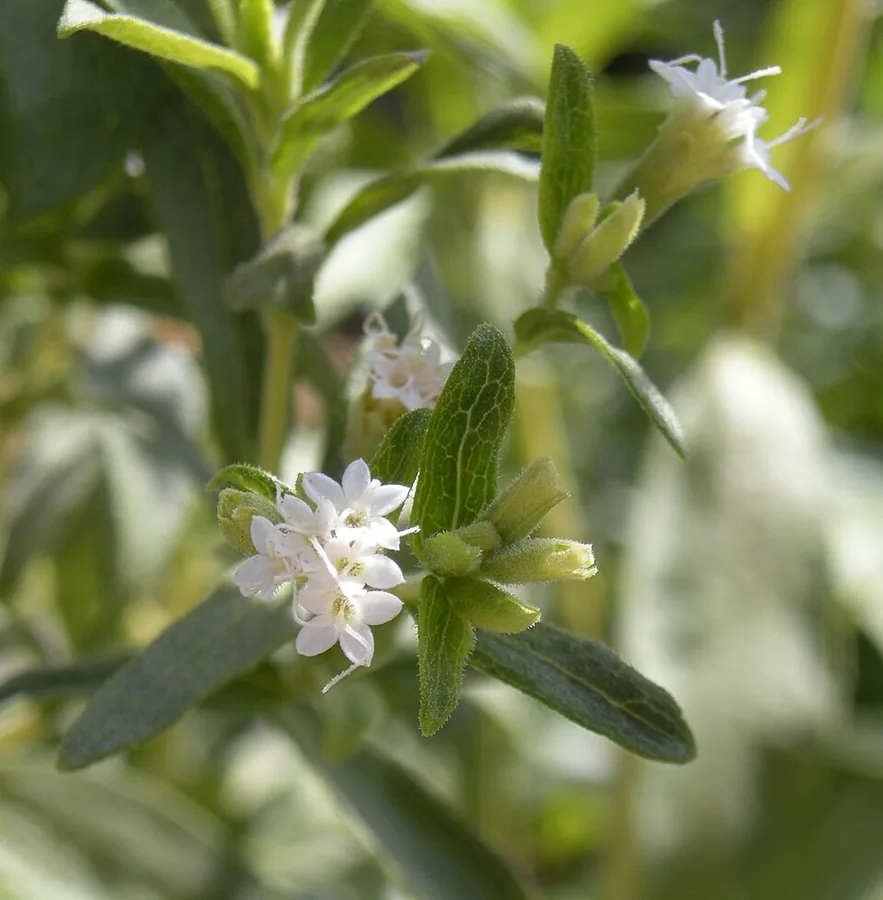
Stevia does ask for a little regular attention, and that part is easy to get the hang of. Pinch the growing tips often and it fills out into a fuller, leafier bush, then nip off any flower buds you spot, because the leaves turn less sweet once the plant blooms. Find that rhythm and one small plant will keep you in sweet leaves right through summer.
Care
The short version: give stevia full sun and steady moisture in soil that drains freely, then keep pinching back the flower buds and the growing tips so the leaves stay sweet and keep coming.
Light
Stevia is happiest in full sun, and six or more hours a day keeps its foliage full and sweet-tasting. A touch of afternoon shade will not hurt where summers turn fierce, but skimp on light and you get spindly, stretched growth, so give it the brightest spot you can.
Water
Stevia has shallow roots that lose water quickly, so keep the soil evenly moist but never soggy. Watering every 2 to 4 days usually keeps it content, more often during a heatwave or in a pot, and a layer of mulch helps the ground hold its moisture between drinks.
Soil
Give stevia a well-drained loam rich in organic matter, which feeds the roots while letting extra water slip away. It accepts a wide pH range of 6.0 to 7.5, so the soil you already have in the garden will most likely suit it just fine.
Temperature
Stevia thrives in comfortable warmth, roughly 50°F to 90°F (10°C to 32°C). It stays tender at the cold end, and even a single frost can undo a whole season, so bring your potted plants indoors before that first hard chill sets in.
Humidity
Stevia is easygoing about the air around it, and a range of 40% to 70% suits it, which covers most gardens and living rooms. Worry less about the exact figure and more about good airflow, since leaves left crowded and damp are the ones that draw pests and rot.
Feeding
Once a month through spring and summer, treat stevia to a balanced, low-nitrogen organic fertilizer. A light hand is the real secret, since an excess of nitrogen drives soft leafy growth and quietly trades away the sweetness you are growing the plant for.
Pruning
Do not be shy with the pinching, because it is the kindest thing you can do for this plant. Nipping its tips often builds a bushy, well-branched shape, and clearing away buds as soon as they form keeps the leaves at their sweetest, since both flavor and fresh growth fade once blooming starts.
Repotting
Plan on a repot once a year, and also whenever stevia comes inside for winter, shifting it into a slightly bigger pot with fresh mix. The plant will show you it is ready through roots winding around the pot, growth that stalls, or a mix that goes dry almost the moment you finish watering.
Size & spacing
A mature stevia stands 18 to 30 inches (45 to 75 cm) tall and fills out to 12 to 24 inches (30 to 60 cm) across. Leave each plant that much elbow room so air can circulate around the foliage, which keeps it dry and the plant in good health.
When to plant
Stevia loves warmth and has no patience for frost, so let the season lead and this plant will follow. Begin your seeds or cuttings inside during late winter, and move the young plants out only once the cold has truly gone and the ground has warmed. After that you can gather leaves all summer, right up to the first frost.
Northern hemisphere
Southern hemisphere
Typical months for a temperate climate: start earlier in warm zones, later where spring frosts linger.
- Sow: 8-10 weeks before the last spring frost
- Plant: after all danger of frost has passed and soil has warmed to at least 50°F (10°C)
- Harvest: Harvest leaves through summer; pinch flowers as leaves are sweetest before bloom. Main leaf harvest before flowering in late summer/early fall.
Hardiness
USDA hardiness zones: 9–11
Temperature: down to -7°C
Troubleshooting
Do not be discouraged if something looks off, because most stevia troubles surface on the foliage and most are easy to turn around. Pests, soggy roots, or the slide into bloom are the usual causes, and catching them early keeps your harvest safe. Find the picture that matches what you see, then step in while it still makes a difference.
Wilting even though the soil is soaking wet
It feels backwards, but a plant that wilts in soaking soil is most likely fighting root rot from waterlogged ground. Once the roots turn brown and mushy there is no reviving them, so cut the watering right back, sort out the drainage or move the plant into fresh, quick-draining soil, and never let a pot sit in a filled saucer.
Fix:
- Reduce watering immediately
- Improve soil drainage or repot into well-drained mix
- Remove and discard severely affected plants
Foliage gone black and limp overnight in the cold
Stevia is frost-tender, so a single freezing night is enough to blacken the leaves and leave them limp. The gentle fix is to carry containers inside before the chill settles in. If frost reaches the plant first, trim away the ruined growth and keep it indoors over winter until spring returns.
Fix:
- Move container plants indoors before frost
- Cut back damaged growth and overwinter the plant indoors
Curled, sticky leaves hiding small insects below
Do not panic if the leaves curl and turn sticky, because this is usually just aphids or whiteflies feeding on the sap and dropping a film of honeydew as they go. Blast them off with a firm spray of water, and reach for insecticidal soap if they wander back. Any leaf that is truly overrun can simply come off.
Fix:
- Spray plants with a strong jet of water to dislodge insects
- Apply insecticidal soap to affected foliage
- Remove and destroy heavily infested leaves
Ragged holes appearing in leaves down near the soil
Those chewed holes are the handiwork of slugs and snails, which creep out to feed overnight and in damp conditions, leaving shiny trails across the leaves and soil. The simplest cure is to head out after dark and lift them off by hand. Clearing mulch and debris from around the plant takes away the daytime hiding places they depend on.
Fix:
- Hand-pick slugs in the evening
- Remove debris and mulch that harbor them
- Use slug traps or barriers around plants
Sweetness fading from the leaves as buds show up
Nothing is truly wrong here, the plant is simply starting to flower, and once that begins its energy turns to blooms while the leaves come slower and taste less sweet. Pinch out the buds as soon as they show at the tips of the stems. For the sweetest leaves, take your main harvest before any blooms open.
Fix:
- Pinch out flower buds as they form
- Harvest leaves before full bloom
Toxicity
You can relax on the safety front, because stevia is about as gentle a plant as you can keep in a home. Its leaf is an edible, no-calorie sweetener used in kitchens the world over, and neither cats nor dogs, nor the other animals around the house, will find it harmful. If a curious pet sneaks a nibble, there is honestly nothing to fret about.
Safe for
People · Cats · Dogs · Horses · Rabbits · Livestock · Birds
Cats None
Cats are perfectly safe around stevia, which does not appear on the ASPCA toxic list, so a little nibble does them no harm. The only caution is that wolfing down a big mouthful of any leaf might leave a cat with a brief, passing tummy upset.
Dogs None
Dogs have nothing to fear from stevia either. The leaves hold no toxin, and the most a greedy mouthful might cause is a little short-lived gas or a loose stool that soon passes.
Horses Safe
Horses are in no danger from stevia whatsoever. A stray sprig grazed here or there causes no trouble, since the leaf carries the very same sweetener people enjoy in the kitchen.
Rabbits Safe
Rabbits get along with stevia just fine. A sweet leaf now and then makes a safe little treat, though keep the portions small so hay and fresh greens still make up most of their diet.
Livestock Safe
Goats, sheep, and cattle can all browse stevia safely. Since it is raised as an edible crop to begin with, there is nothing in the leaves to bother a grazing animal.
Birds Safe
Backyard hens and pet birds can peck at the leaves without any worry. Nothing here is toxic, just a surprisingly sweet mouthful of green.
People Safe
People plant stevia for the very purpose of eating it. The leaves work as a no-calorie sweetener you can chew fresh or dried, and they are considered safe for everyone in the family.
Leaves are edible and used as a natural sweetener; no special handling precautions are required.
Varieties
Most stevia comes labeled simply as stevia, and that is perfectly fine to grow. Even so, a couple of named picks reward the effort of tracking them down, whether you want extra-sweet leaves or a plant that settles happily into a container.
Sweet Sugar Leaf
A favorite among home growers, this one is loved for its high steviol glycoside content, which gives the leaves an unusually sweet flavor.
Candy
A neat, generous variety bred for container life, staying small in a pot while still handing you a good crop of sweet leaves.
How to propagate
You have two ways to make more stevia, and one is far kinder to a beginner than the other. Seed is slow and a little hit or miss, while cuttings take root quickly and grow into a faithful match of the parent you started with.
SeedDemanding
Start indoors 8-10 weeks before the last spring frost · Germination in 1-3 weeks, but often poor and erratic
Growing stevia from seed is the tougher road, so start it with patience. Sow indoors 8 to 10 weeks ahead of your last spring frost, and be ready for some heartache, because the seed does not store well and comes up unevenly across 1 to 3 weeks. With so many failing to sprout, most gardeners set seed aside and reach for cuttings instead.
Stem cuttingsModerate
Spring through summer from healthy non-flowering shoots · Roots in 2-4 weeks
Cuttings are the reassuring choice and rarely let you down. Any time from spring through summer, take a softwood tip from a healthy shoot that is not flowering, press it into damp media, and within roughly 2 to 4 weeks it roots into a new plant that matches its parent.
Myths
Stevia leaves supposedly taste bitter fresh off the plant.
Try it yourself: a fresh-picked leaf gives a clean, honest sweetness with no bitter edge at all. That sweetness is at its strongest before the plant comes into flower, so gather your main crop while the flower buds are still tight and closed.
Stevia is a tough perennial that shrugs off winter outdoors.
In warm regions it truly is a perennial, yet it stays frost-tender and folds at the season's first freeze. Where winters bite, the friendly path is to raise it as an annual or shelter a plant in a pot indoors to carry it safely through to spring.