Ornamental · Asteraceae
African Daisy
Osteospermum ecklonis
Offer it full sun, free-draining soil, and cool air, and your African daisy rewards you with bloom after bloom.
Full sun
Every 3–7 days
50–75°F · 10–24°C
USDA 10–11
Overview
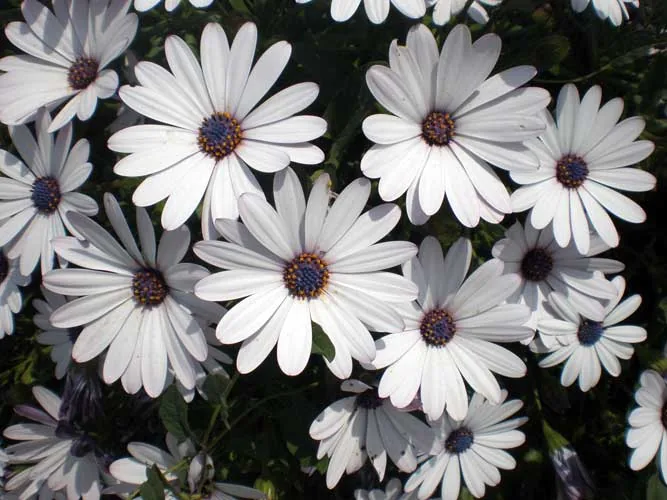
Part of the sunflower family, the African daisy comes from southern Africa, the home that gave it the friendly names Cape daisy and Cape marguerite. Across much of the country it lives as an outdoor flowering annual, settling into a low cushion that mounds or trails, with soft gray-green leaves and daisy-shaped blooms held above them. Each flower perches on a slender stem and opens into a cheerful ring of rays circling a center disk of a different shade.
Here is a charming habit that sets it apart from the daisies you may know. The flowers close at night and in dim light, then unfurl again as the sun comes up, so a bed that seemed empty at dawn quietly fills with color by mid-morning. It is a tender perennial that holds on through winter only in zones 10 and 11, so anywhere chillier you simply replant each spring and let it shine as an annual, which is no trouble at all.
Its reputation for being beginner-friendly is well deserved, so relax. Give it sunshine and soil that drains, pick off the tired blooms now and then, and it flowers from late spring deep into fall. The only thing it would rather skip is a hot, sticky summer, which can pause the show until cooler days coax it back to life.
Care
The short version: the two things your African daisy cares about most are full sun and loose, well-drained soil. Keep the soil evenly moist without letting it turn soggy, feed it with a light touch, and snip away the faded flowers so new buds keep arriving.
Light
Your African daisy is happiest in full sun, soaking up at least 6 hours of direct light each day to flower at its best. It will get by in partial sun, but too much shade trades flowers for floppy, stretched stems. A sunnier spot also dries the leaves, which helps keep mildew from settling in.
Water
Aim to keep the soil evenly moist but never waterlogged, because sitting water is the quickest way to rot the roots. Once it is settled in, the plant forgives a brief dry stretch, yet it truly blooms best with steady moisture. Let the very top of the soil dry slightly between drinks, which usually works out to every 3 to 7 days depending on how warm it is.
Soil
Set it into loose, well-drained soil with a bit of organic matter mixed through, since easy drainage is the heart of a healthy daisy. It is relaxed about acidity and grows comfortably across a pH of 5.5 to 7.5. The one thing worth sorting out first is heavy, wet clay.
Temperature
This cool-season plant does its finest growing between 50°F and 75°F (10°C to 24°C). Blooming eases off when a hot, humid summer takes hold, then perks back up as the air cools again. In most regions, frost is what finally brings the plant's season to a close.
Humidity
Plain outdoor humidity suits it just fine, so there is no target number to fuss over. What matters far more is good airflow, since still, crowded conditions are exactly where powdery mildew likes to begin.
Feeding
Feed gently and you will be rewarded. A balanced slow-release fertilizer or a sprinkle of compost through the growing season is all it needs, given seasonally. Pile on too much and you grow plenty of leaves but few flowers, because extra nitrogen nudges foliage ahead of bloom.
Pruning
Keep snipping off the spent flowers as they fade, and the plant happily sends up more. Pinching the growing tips early gives you a rounder, bushier shape. Trim back any long, sprawling branches from late summer into autumn to keep the mound looking neat.
Size & spacing
A grown plant reaches 12 to 35 inches (30 to 90 cm) tall and fills out to 9 to 24 inches (23 to 61 cm) across. Leave each one enough elbow room to reach its full width so air can drift through and the leaves stay nice and dry.
When to plant
This is an outdoor plant that likes warm soil under its roots but cool air around its blooms. Sow seed indoors 6 to 8 weeks before the last frost, move the young plants out once frost is gone and the ground has warmed, and look forward to flowers from late spring into fall, with the heaviest show while the weather stays cool.
Northern hemisphere
Southern hemisphere
Typical months for a temperate climate: start earlier in warm zones, later where spring frosts linger.
- Sow: 6 to 8 weeks before the last spring frost
- Plant: after the last spring frost when soil has warmed
- Harvest: late spring through fall, blooming most heavily in cool weather
Hardiness
USDA hardiness zones: 10–11
Temperature: down to -1°C
Troubleshooting
Nearly every hiccup with an African daisy comes down to one of two things: roots sitting too wet, or summer heat pressing in. Notice the first hints on the flowers and lower leaves and you can gently step in before anything spreads. Find the picture that matches yours below, then act while a quick fix still does the trick.
Drooping and yellowing creeping up from the soil line
Most of the time the trouble is root rot, brought on by soggy ground that smothers the roots until they turn brown and soft. A fungal problem called verticillium wilt can leave the plant looking just as tired and yellow. Don't blame yourself, just let the soil dry out between drinks, lift any plant that has truly given up, and keep your next daisies away from ground that stayed sick.
Fix:
- Improve drainage and let soil dry between waterings
- Remove and discard severely affected plants
- Avoid replanting susceptible species in infected soil
Twisted young leaves with a tacky coating
Those tiny soft-bodied visitors are aphids, and they settle on the tender shoot tips and leaf undersides to sip sap, leaving a sticky film as they go. A firm spray of water from the hose will wash most of them away with ease. If they wander back, a little insecticidal soap settles things, and a few friendly ladybugs will happily mind the rest for you.
Fix:
- Spray off with a strong jet of water
- Apply insecticidal soap if populations persist
Hardly any blooms once the heat arrives
Take heart, because this is normal. Your African daisy is a cool-season bloomer, and plenty of cultivars take a rest through the muggy stretch of summer. Feeding it too much nitrogen only deepens the lull by sending its energy into leaves instead of petals. Lighten up on the fertilizer, keep snipping off the faded heads, and the flowers will return as soon as the air turns gentle again.
Fix:
- Site in a spot with cooler conditions and good air flow
- Reduce fertilizer and avoid high-nitrogen feeds
- Deadhead regularly to promote rebloom when cool weather returns
A pale, dusty bloom spreading over the foliage
That chalky haze is powdery mildew, a fungus that moves in when damp air sits still around plants packed too close together. Given time it drifts across more and more of the leaf. The fix is gentle and easy: open up the spacing so air can move, water down at the roots instead of overhead, and pluck off the leaves that look worst.
Fix:
- Improve air circulation and spacing
- Avoid overhead watering
- Remove affected foliage
Toxicity
Here is reassuring news for pet families and parents alike. The African daisy is non-toxic, and approved sources clear it for cats, dogs, and horses without exception. A curious lick from a pet or a nibble from a toddler will not cause harm, so you can plant this daisy with confidence wherever animals and children wander.
Safe for
People · Cats · Dogs · Horses · Rabbits · Livestock · Birds
Cats Safe
Cats are clear here, so even a curious mouthful of leaves will leave them perfectly fine.
Dogs Safe
Your dog can nap beside it or sneak a chew without any risk of being poisoned.
Horses Safe
Trusted sources give it the all clear for horses, with nothing harmful in the plant.
Rabbits Safe
Rabbits are safe around it, though leafy treats should only ever be a small slice of their meals.
Livestock Safe
Goats, sheep, and cattle can graze nearby with no worry of poisoning.
Birds Safe
Backyard hens and pet birds can poke around the plant in complete safety.
People Safe
It is harmless to people, so plant it freely where little ones play and explore.
Varieties
Several different plants answer to the name African daisy, but the garden Osteospermum really comes down to the species itself plus a few named picks. These are the ones worth getting to know.
Osteospermum ecklonis
Think of this as the original parent that most hybrids trace back to, a woody-based plant that mounds or trails and shows white rays around a blue-purple eye.
Bright Lights series
This tidy, compact group has earned its place in university trial gardens thanks to vivid flower colors and a generous run of cool-season bloom.
Wildside
Plant-finder listings single this named pick out for the surprising way its flowers are colored.
How to propagate
You can begin an African daisy from cuttings or from seed, and the right path usually depends on which variety is in your hands. Most named hybrids only stay true to type when you grow them from cuttings.
Stem cuttingsModerate
During active growth in the growing season · Roots typically form in about 4 to 5 weeks under mist or a humidity tent
If you want a plant identical to its parent, cuttings are your friend, which is why most named hybrids are raised this way rather than from seed. Snip a tip while the plant is growing, dip the cut end in rooting hormone, and tuck it into a damp soilless mix. Kept under mist or a humidity tent, fresh roots usually appear over about 4 to 5 weeks.
SeedModerate
Sow indoors 6 to 8 weeks before the last spring frost · Several weeks to transplant size before moving outdoors after frost
A handful of cultivars will grow happily from seed, even though most garden hybrids prefer cuttings. Start them inside 6 to 8 weeks before the last spring frost, and give the little seedlings several weeks to bulk up to transplant size before they move outdoors once the cold is safely behind you.
Myths
African daisies bloom best in the heat of summer.
It is actually the reverse, so don't feel discouraged if midsummer looks quiet. Osteospermum gives its finest show in cool weather, and many cultivars nearly pause through a hot, sticky spell. Treat it as a cool-season plant and you will enjoy a far longer stretch of flowers.
Every plant called African daisy is the same one, and it is toxic.
It is easy to see where the fear comes from, since a few unrelated plants borrow the same common name. Yours is Osteospermum in the Asteraceae family, and approved sources list it as non-toxic to both cats and dogs.