Ornamental · Asteraceae
Bidens
Bidens ferulifolia
Settle it into full sun and average soil, and forgiving bidens rewards you with golden flowers from spring all the way to frost.
Full sun
Every 2–4 days
USDA 8–11
10–15 in · 25–38 cm
Overview
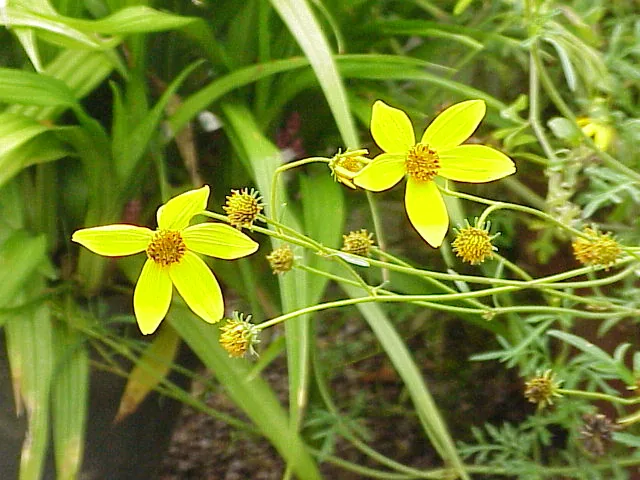
Bidens is a low, sprawling cousin in the daisy family, grown for months of cheerful bloom rather than for the kitchen, and it is a wonderfully forgiving plant for a first try. It spills happily from baskets and pots and threads along the front of a border, dressed in small flowers that usually arrive in gold. Gardeners come back to it again and again because it asks so little of you and gives so much in return.
Once it has its feet under it, bidens brushes off heat and drought and keeps flowering long after fussier plants have given up. It grows quickly yet stays low, rarely reaching past your knee, so it fills the gaps and tumbles over edges instead of standing tall. The newer named selections open the range beyond gold into white, pink, and two-tone blooms, so there is plenty to choose from.
At heart it is a tender plant, grown as a warm-season annual in most gardens and set out fresh each spring once the chill has lifted. Give it sun and a spot that drains well, and it more or less looks after itself. A single trim in midsummer is all it takes, and it answers kindly with a new flush of flower.
Care
The short version: give it full sun, average well-drained soil, and water that is steady without ever sitting soggy. Feed your container plants through the season, pinch it back just once in midsummer, and it keeps blooming with no deadheading from you.
Light
Bidens loves full sun, and the more of it the plant soaks up, the more freely it flowers. It will tolerate a touch of afternoon shade without complaint, but in genuine shade it tends to stretch thin and the blooms grow sparse along with it.
Water
Let the top of the soil dry out between drinks rather than keeping it constantly wet, since soggy roots are the one thing bidens truly dislikes, and that is easy enough to avoid. It copes beautifully with heat and drought once settled, though pots and baskets dry out quickly and will want watering more often through the summer.
Soil
Plain, well-drained ground is all this plant asks for, with nothing rich or fancy required. A pH anywhere from 6.0 to 7.0 suits it nicely, so most ordinary garden soil works fine as long as the water can drain freely through it.
Temperature
Bidens grows contentedly through warm weather and takes a generous range in its stride, from roughly 36°F to 86°F (2°C to 30°C). A hard frost is the one thing it will not survive, which is exactly why most gardeners simply replant it fresh each spring.
Humidity
Everyday outdoor humidity suits it perfectly, so there is nothing to measure or fuss over. What matters far more is air moving freely around the plant, since still, crowded growth is what invites mildew and mold to settle in.
Feeding
Plants tucked into the ground rarely need feeding at all, but containers and baskets use up their nutrients quickly. Treat those to a balanced water-soluble feed every two weeks through the growing season, and the flowers will keep on coming.
Pruning
Bidens blooms happily without any deadheading, so you are free to leave the spent flowers right where they are. If it sprawls or turns leggy by midsummer, just shear or pinch it back, and it bounces back fuller and covered in fresh bloom.
Size & spacing
Plants keep low, reaching about 10 to 15 inches (25 to 38 cm) tall while spreading 12 to 24 inches (30 to 61 cm) across. Give each one a little room to trail and the patch will knit together into a lovely sheet of flower.
When to plant
Bidens cannot stand frost, so it simply waits for warmth before getting going, and that makes the timing easy to follow. Start your seed indoors in late winter, move the plants outside once the last frost has gone and the soil feels warm, and the flowers will keep coming from late spring right through to the first frost of fall.
Northern hemisphere
Southern hemisphere
Typical months for a temperate climate: start earlier in warm zones, later where spring frosts linger.
- Sow: 6 to 8 weeks before the last spring frost
- Plant: after the last spring frost when soil has warmed
- Harvest: late spring through fall until frost
Hardiness
USDA hardiness zones: 8–11
Temperature: down to -12°C
Troubleshooting
Bidens stays mostly carefree, and the few pests and molds that turn up only do so in the wrong conditions, so there is no need to fret. Most of them show first on the new growth or the flowers. Match what you spot below and step in early, while everything is still simple to put right.
Dull, speckled leaves with light webbing when it turns hot
When the weather stays hot and dry, spider mites sometimes settle in and sip at the leaves until they look freckled and faded. To be sure, tap a leaf over a sheet of white paper and watch for tiny specks that scurry. A good rinse of the foliage sets them back, and if they linger, insecticidal soap or a labeled miticide will see them off.
Fix:
- Rinse foliage with water to reduce populations
- Apply insecticidal soap or a labeled miticide if infestation persists
Fuzzy gray mold on blooms during wet spells
Cool, soggy weather can invite botrytis, a gray mold that creeps over fading blooms and softens the tissue underneath. There is an easy remedy: pinch off the affected flowers and leaves and bin them before the mold travels. Loosening the plants so the foliage dries quickly after rain keeps it at bay.
Fix:
- Remove and discard affected flowers and foliage
- Increase spacing and air circulation to dry foliage
Tiny soft insects gathering on sticky young tips
Take heart, those little clusters are simply aphids, and they crowd onto the softest new tips because that is where the sweet sap flows. The sticky coating they leave is called honeydew, and it washes away easily. A firm jet of water knocks most of them loose, and a little insecticidal soap clears up any stubborn stragglers.
Fix:
- Spray plants with a strong stream of water to dislodge aphids
- Apply insecticidal soap to affected growth as needed
A chalky white dusting across the leaves
That powdery white bloom is powdery mildew, and it tends to creep in where plants are packed close with still, stagnant air. The cure is gentle: thin and space the plants to let air through, and pluck off the most heavily coated leaves. Plenty of sun and a little breeze keep it from returning.
Fix:
- Improve air circulation by thinning and spacing plants
- Remove and discard heavily affected foliage
Toxicity
Here is welcome news for anyone with pets or grazing animals about: bidens carries no known toxin. It is nowhere on the ASPCA list of poisonous plants, so a nibbled leaf is nothing to lose sleep over. It is still a plant grown for show rather than the plate, so there is no reason to make a habit of it.
Safe for
People · Cats · Dogs · Horses · Rabbits · Livestock · Birds
Cats Safe
You can relax around a curious cat, because bidens is not on the ASPCA toxic plant list and a nibbled leaf will not hurt one. Any plant eaten in a big mouthful can cause a little drooling or a queasy tummy, so a gentle nudge away is all that is ever needed.
Dogs Safe
A dog can share space with bidens quite safely, since the plant holds no known toxin. Chewing a stem might leave a pup with a mildly unsettled belly, much as any greenery can, but nothing worrying comes of it.
Horses Safe
Horses can graze near bidens with complete ease. It is not a poisonous plant, and nothing on record suggests it has ever caused them harm.
Rabbits Safe
A rabbit is welcome to nibble bidens without worry. As with any lush green, it is kind to hold back on a sudden heap of it, but the plant itself carries nothing that could do harm.
Livestock Safe
Cattle, goats, and sheep can browse around bidens with no cause for concern, as it holds no toxin that troubles grazing animals.
Birds Safe
Bidens is no danger to birds at all, and many happily peck the faded flower heads for seed. Backyard hens are free to forage around it as they please.
People Safe
Bidens is grown for its flowers rather than the kitchen, but it is perfectly safe to handle and to live alongside. There is no need to keep little ones away from it, though it is simply not a plant meant for eating.
Varieties
The plain species comes in gold, but breeders have gently coaxed bidens into new colors and steadier habits. These are the named selections that are well worth getting to know.
Blazing Fire
Its two-tone blooms glow red-orange at the heart and soften to gold toward the petal tips, and it proved a steady, even grower in University of Georgia trials.
White Delight
Stepping away from the everyday yellow, this one opens creamy white flowers for a gentler look, and it earned its place in the University of Georgia trials.
Pretty in Pink
Here the familiar gold gives way to soft pink flowers, a sweeter shade that was also tested through the University of Georgia trials.
Mexican Gold Improved
A polished version of the classic golden-yellow species, tidied up and trialed at the University of Georgia for a stronger turn in the garden.
How to propagate
Bidens is a kind plant to multiply, whether you would like faithful copies of a favorite hybrid or a trayful of seedlings to round out the beds.
Stem cuttingsEasy
Spring through summer during active growth · About 2 to 4 weeks to root
If you love a particular named hybrid, cuttings are the surest way to make more, because each new plant inherits every trait of its parent. Snip a soft growing tip while the plant is in full swing through spring or summer, and it will take root in around 2 to 4 weeks.
SeedEasy
Start indoors 6 to 8 weeks before the last spring frost · Germinates in roughly 1 to 2 weeks at warm temperatures
The species and the open-pollinated forms sprout readily from seed, though named hybrids often will not come true. Start them indoors 6 to 8 weeks before the last frost with a warm tray, and the little seedlings poke through in about 1 to 2 weeks.
Myths
The ornamental bidens will poison dogs and cats.
You can set this worry aside: bidens has never shown up on the ASPCA toxic plant database, and ornamental Bidens ferulifolia is regarded as non-toxic to pets. A dog or cat that chews a leaf is in no danger, though it is still wise not to let them treat any garden plant as a snack.
Garden bidens runs wild by clinging seeds, just like the weedy beggarticks.
Wild bidens get the name beggarticks from their two-pronged seeds that latch onto fur and clothing. The garden ferulifolia hybrids are quite different: grown as warm-season annuals and often bred as low-seeding selections, they stay put rather than sprawling across the yard the way their weedy relatives do.