Ornamental · Asteraceae
Blanket Flower
Gaillardia × grandiflora
Give it full sun and lean, dry soil and the blanket flower rewards you with color from June right up to frost.
Full sun
USDA 3–10
1–3 ft · 0.3–0.9 m
Overview
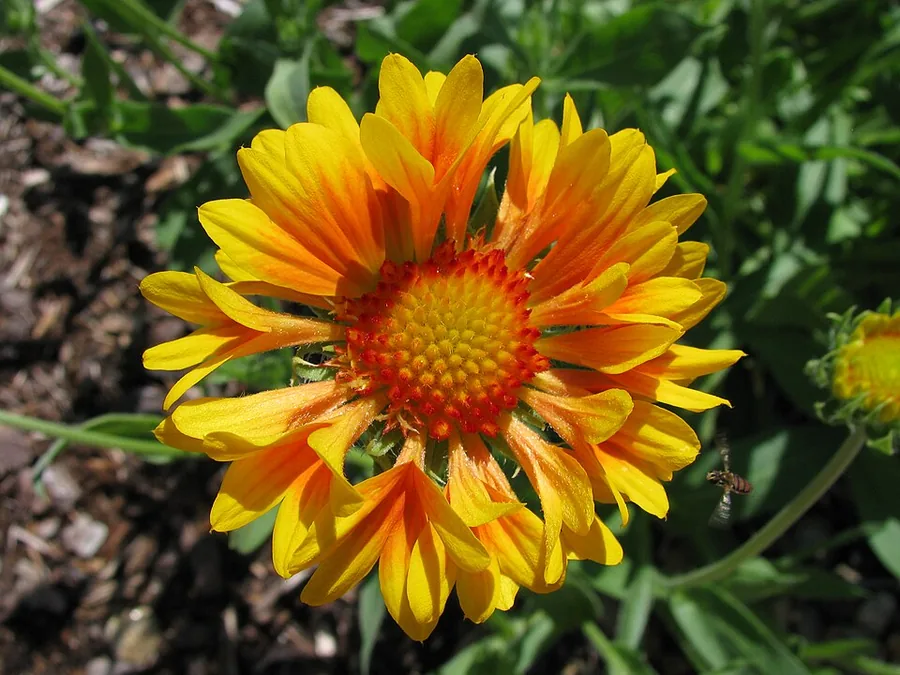
Blanket flower is a tough, sun-loving cousin of the daisy, and its name comes from the warm reds, oranges, and yellows that wrap each bloom like a woven blanket. If you want a long, cheerful show without a lot of fuss, this is a lovely plant to start with. Tuck it into a hot, dry corner and it will flower for you from early summer well into fall.
The best part is how little it asks of you. It takes drought, heat, and poor soil in stride and keeps right on blooming where pickier perennials would sulk, so there is plenty of room for a beginner to relax. Just remember the one flip side of all that toughness: rich soil and too much water are what set it back.
It is a short-lived perennial, which simply means a clump tends to thin after a few years, and that is nothing to be discouraged by. Divide it every couple of seasons or let it scatter its own seed, and the color carries on with hardly any effort asked of you.
Care
The short version: give it full sun, lean and well-drained soil, and an easy hand with the watering can. Deadhead as the season goes to keep the flowers coming, and you can happily skip the fertilizer.
Light
Blanket flower longs for full sun, and the more it gets the happier it is. Give it a bright, open, sun-baked spot and it flowers its hardest for you. Set it in shade and it grows leggy, leans over, and blooms far less.
Water
Water steadily while a young plant is finding its feet, then feel free to ease right off. Once it is established it is drought tolerant and far happier on the dry side than the wet. Overwatering, or heavy clay that will not drain, is the quickest way to lose the roots, so when in doubt, water less.
Soil
Give it well-drained loam or sandy soil with a little organic matter worked in. It is forgiving about pH across a wide range from 6.0 to 8.0, so most beds will suit it just fine. The only ground it truly cannot abide is soggy clay through winter.
Humidity
Plain outdoor air suits it perfectly, so there is no number to chase. What helps more is good airflow, since damp, crowded plantings are what invite powdery mildew onto the leaves.
Feeding
This is a plant that genuinely prefers to stay hungry, so do not feel you have to feed it. A light meal during the growing season is plenty, because lean soil gives you sturdier plants and more flowers. Heap on fertilizer and it flops and blooms less, so less really is more.
Pruning
Deadhead the spent blooms as the season rolls on to coax out new ones and keep the plant looking neat. When it starts to look ragged, cut it back as needed, and it will push out a fresh wave of flowers for you.
Size & spacing
Plants grow to 1 to 3 feet (30 to 91 cm) tall and spread 12 to 24 inches (30 to 61 cm) wide. Set them 12 to 18 inches apart so air can move freely and mildew stays away.
When to plant
Blanket flower loves warmth and dislikes wet cold, so let that guide your timing. Start seeds indoors in late winter, or sow straight outside once frost has passed, and your plants will bloom from early summer through fall, and even longer if you keep up the deadheading.
Northern hemisphere
Southern hemisphere
Typical months for a temperate climate: start earlier in warm zones, later where spring frosts linger.
- Sow: Start seeds indoors about 4 to 6 weeks before the last frost.
- Plant: Transplant or direct sow after the last spring frost; space plants 12 to 18 inches apart.
- Harvest: Blooms from early summer (June) through fall (September); deadheading extends the season.
Hardiness
USDA hardiness zones: 3–10
Temperature: down to -40°C
Troubleshooting
Nearly every problem a blanket flower meets traces back to soil that holds too much water or air that sits too still, and that is reassuring, because both are easy to put right. Get the drainage and spacing sorted and most of this list never turns up. Match what you see below and act gently before it spreads.
A wilting plant with blackened stems and a rotting crown
If you find this, you are looking at root and crown rot, the trouble most likely to take a blanket flower from you, and it almost always starts with soil that holds too much water. Gently dig around the base and the roots will feel brown and mushy where healthy ones stay firm and pale. Work some sand or organic matter into the bed, lift the plant to a higher, drier spot if you can, and ease well off the watering, and you give it a real chance.
Fix:
- Improve drainage by amending soil with organic matter or planting in a raised or sandier site
- Reduce watering and remove severely affected plants
Yellowed, distorted growth with deformed flowers
This one is aster yellows, a phytoplasma that leafhoppers carry from plant to plant, and sadly there is nothing that cures a plant once it has it. Look for flowers that turn green or warp and for stunted, broom-like shoots that simply never recover. It is hard to do, but pull and destroy the affected plant straight away, then thin out the leafhoppers and weedy hosts nearby so it does not reach the rest of your bed.
Fix:
- Remove and destroy infected plants promptly
- Control leafhoppers that spread the disease
A white powdery coating across the leaves and stems
That soft white dust is powdery mildew, and it tends to move in when plants sit close together in humid, still air. The good news is it wipes away easily, though it will return unless the conditions change. Open things up by giving the plant more room or splitting a crowded clump, take off the most coated leaves, and try to keep water off the foliage, and it usually clears.
Fix:
- Improve air circulation by spacing and dividing plants
- Remove affected foliage
Dark or brown spots dotted across the leaves
These marks are fungal leaf spots, and they look far more worrying than they really are. A plant carrying them rarely comes to any actual harm. Simply pick off the spotted leaves, water down at the base instead of over the top, and leave a little room for air to pass through, and the plant takes it in stride.
Fix:
- Remove affected leaves
- Avoid overhead watering and improve air flow
Toxicity
Here is some welcome news for pet owners: blanket flower is non-toxic and is not on the ASPCA toxic plant list. Cats, dogs, and grazing animals are all safe in its company. The one thing worth minding is your own skin, since the fuzzy leaves and flowers can leave sensitive hands a little itchy.
Safe for
People · Cats · Dogs · Horses · Rabbits · Livestock · Birds
Cats None
You can relax around cats. The ASPCA does not count it as toxic, so a curious cat that takes a nibble has nothing to worry about.
Dogs None
Dogs are in safe company here. It stays off the ASPCA toxic list, so a sniff or a chew will not do any harm.
Horses Safe
Horses can graze nearby with no trouble at all, because none of its parts hold anything poisonous.
Rabbits Safe
Rabbits are fine with it. The leaves and flowers carry no toxin, though it still rests easiest as just an occasional treat.
Livestock Safe
Cattle, goats, and sheep can share space with it safely, since it holds nothing that would trouble them.
Birds Safe
Birds have nothing to fear from it, whether they pick at the seed heads or the leaves.
People Safe
It is safe for people, with one gentle caveat: the fuzzy leaves and flowers can leave tender skin a little itchy, so slip on gloves before settling in for a long round of deadheading.
Generally regarded as non-toxic and not listed on the ASPCA toxic plant list. Contact with the fuzzy foliage and flowers can cause mild skin irritation (contact dermatitis) in sensitive people; wearing protective gloves when handling is recommended.
Varieties
Blanket flower comes in a friendly range of named cultivars, sorted mostly by height and the way the colors fall. Here are a few that are easy to love.
Goblin
A compact little dwarf that keeps low and neat, with red flowers softly edged in yellow.
Burgundy
A taller, easygoing grower loved for its rich wine-red blooms that skip the usual two-tone rim.
Oranges and Lemons
A gentler choice whose peachy-orange petals soften to pale yellow toward their tips.
How to propagate
Blanket flower is a breeze to multiply, which is a real comfort since each plant is short-lived. You can split a settled clump or grow it fresh from seed, and both are well within reach for a beginner.
DivisionEasy
Spring; divide clumps every 2 to 3 years to maintain vigor. · One growing season
Because blanket flower is short-lived, dividing the clumps in spring every 2 to 3 years is the easy way to keep it going, and it gifts you free new plants along the way. Just lift a clump, pull it into pieces, and set them back in the ground. Give the divisions a single growing season and they settle right in.
SeedEasy
Start indoors 4 to 6 weeks before last frost or direct sow after frost. · Blooms in the first or second season
Seed is every bit as forgiving. Sow it indoors 4 to 6 weeks ahead of your last frost, or drop it straight into the soil once the frost has gone, and you can look forward to flowers in the first or second season. It self-sows happily, though since these are hybrids the seedlings often come up looking quite unlike the parent.
Myths
Blanket flower needs rich soil and frequent watering to thrive.
It is actually the reverse, so do not worry about pampering it. Blanket flower is happiest in lean, well-drained ground and brushes off drought once it has found its feet. Give it heavy, fertile, soggy soil and you will shorten its life and see fewer flowers, so the kinder thing is to leave it be.
Blanket flower is poisonous to pets.
Happily, it is not. The plant is considered non-toxic and stays off the ASPCA toxic list for cats and dogs. The only thing to mind is your own skin, since the hairy leaves can leave a sensitive person feeling a touch itchy.