Shrub · Betulaceae
Hazelnut
Corylus avellana
Give it full sun, a good pollen partner, and room to spread, and the hazel will thank you with nuts every fall.
Full sun
Every 7–14 days
USDA 4–8
12–20 ft · 3.7–6.1 m
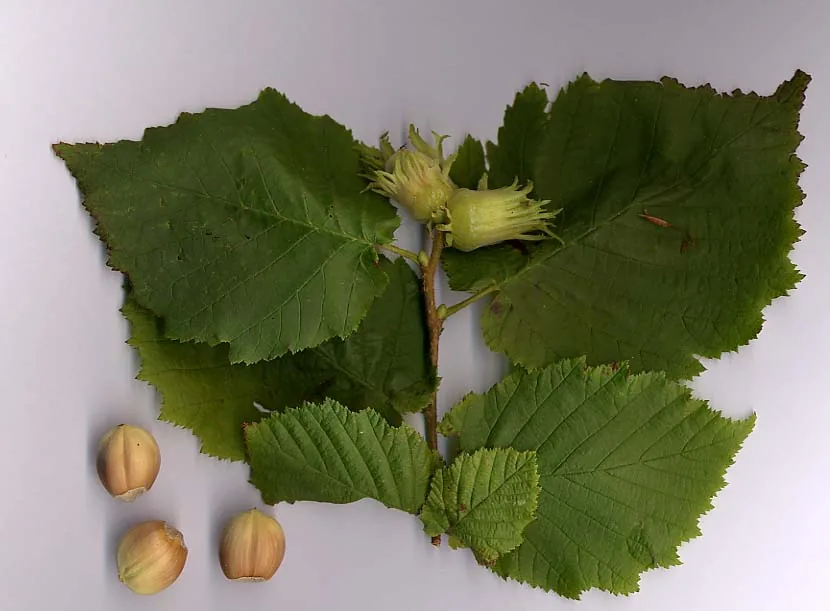
Overview
The hazelnut is a hardy, welcoming shrub from the birch family, at home across Europe and into western Asia, and it forgives a lot while you learn. You'll hear it called cobnut or filbert, and it gives back in two lovely ways: a reliable autumn crop of edible nuts and a soft, suckering shape that fits nicely along a hedge or the edge of an orchard. Hardy from zone 4 to 8, it takes cold winters in stride that would finish off fussier trees.
The flowers arrive long before the leaves, when pale yellow catkins sway among the bare late-winter branches, and it's a cheering sight in a quiet season. The wind, not the bees, carries the pollen, which is the simple reason one bush on its own rarely fills a crop. Most hazels can barely pollinate themselves, so a second, compatible cultivar close by is what lets the female flowers set nuts.
Given a little care, a hazel is a long-lived, easygoing friend in the garden, and mistakes here are gentle ones you can put right. Two habits set you up for success: choosing blight-resistant cultivars and keeping ahead of the suckers that keep rising from the base and roots. Stay on top of those and the shrub holds a clean, handsome form for decades.
Care
The short version: give it full sun and deep, well-drained soil, settle a compatible pollinizer nearby, water it through the first few years and any dry spells, and prune in late winter while you clear the suckers and any blight.
Light
Hazelnut does its best in full sun, which ripens more wood and fills out more nuts for you. It's forgiving of partial shade and will still grow happily, though you can expect a lighter harvest in shadier spots.
Water
Water it steadily through the first two or three years while the roots settle in, and again during dry spells while the nuts are sizing up. An established shrub copes with drought fairly well, yet even moisture always rewards you with a better crop. Let the top half of the soil dry out between waterings.
Soil
Give it deep, well-drained loam rich in organic matter, though hazel is generous about a wide range of ground and even handles shallow rocky sites. Aim for a pH between 6.0 and 7.5, anywhere from slightly acidic to slightly alkaline.
Temperature
This is a wonderfully tough, cold-hardy shrub that shrugs off winter lows near -31°F (-35°C) and summer heat up to about 95°F (35°C). Its one soft spot is a hard freeze during the late-winter bloom, which can cost you that year's nuts.
Humidity
Everyday outdoor air suits it just fine, somewhere around 40% to 70%, so there's no number for you to fuss over. Good airflow through the canopy counts for more, since open growth keeps fungal trouble at bay.
Feeding
Feed in early spring before bud break, and let a soil or leaf test guide you rather than guessing. A nitrogen-rich balanced fertilizer, given seasonally, keeps the growth and the nut fill on a happy course.
Pruning
Prune in late winter while dormant, taking out the dead, weak, and crossing wood and thinning things to keep an open center. Cut any blight cankers well below the visible stromata, and clear the basal suckers regularly to hold a neat tree form.
Repotting
Hazelnut is a long-lived landscape and orchard shrub that lives happily in the ground, not in pots, so you'll rarely repot it. If you do raise a young one in a container, move it on before the roots start circling, the shoots stall, or water runs straight through the mix.
Size & spacing
A grown hazel reaches 12 to 20 feet (3.7 to 6 m) tall and spreads 8 to 15 feet (2.4 to 4.5 m) wide. Give it that much space from its neighbors so air moves freely and there's room to cut the suckers back.
When to plant
Hazelnut lives by the dormant season, so let that guide you gently. Set new plants out from late fall to early spring while they rest, enjoy the wind-pollinated catkins opening in late winter, and gather the nuts as they ripen and drop from late summer into early fall.
Northern hemisphere
Southern hemisphere
Typical months for a temperate climate: start earlier in warm zones, later where spring frosts linger.
- Plant: Late fall to early spring while dormant
- Harvest: Wind-pollinated catkins open late winter to early spring; nuts ripen and drop late summer to early fall
Hardiness
USDA hardiness zones: 4–8
Temperature: down to -34°C
Troubleshooting
Most hazelnut worries turn up in the wood, the crop, or the crowd of shoots at the base, and none of them need to rattle you. Learn to read those signs and you can step in early, while a little effort still goes a long way. Match what you're seeing below, then act with confidence.
Branches fading out with little black bumps lined up along the bark
Take heart, because this one has a clear answer even though it looks grim. Those football-shaped rows of black stromata are eastern filbert blight, a fungus that slowly strangles the wood it settles in. Cut each infected limb a good 2 to 3 feet below the lowest canker you can find, then burn or bin what you remove, and lean on resistant cultivars while clearing away any wild hazels close by that keep the disease going.
Fix:
- Prune out infected limbs at least 2 to 3 ft below the lowest visible canker and destroy the wood
- Apply protectant fungicides during the spring bud-break infection period
- Replace highly susceptible plantings with resistant cultivars
Lots of catkins, hardly any nuts, or shells that turn out hollow
Don't blame yourself if a lovely display of catkins still sets almost no nuts, because the hazelnut leans on the wind and can barely pollinate itself. A sharp freeze during that late-winter bloom can also take out the catkins or the female flowers. The fix is gentle and lasting: add at least one cultivar whose pollen matches and whose bloom overlaps, and tuck your plants somewhere the late frosts land more softly.
Fix:
- Plant at least one cultivar that sheds compatible pollen and overlaps bloom with the main variety
- Site plants where late frosts are less severe
A crowd of shoots pushing up from the base and roots
This is simply what Corylus avellana does, since it suckers freely from its base and roots, and those shoots will knit into a thicket if you let them. The good news is that a little regular attention keeps it tidy: cut or pull the young suckers a few times over the season. A pass with the mower or cultivator around the drip line trims the spreading shoots before they settle in.
Fix:
- Cut or pull suckers while young, several times per growing season
- Mow or cultivate around the drip line to sever spreading shoots
Toxicity
Here's a relief for any home with pets and children: the hazelnut is not poisonous. No part of the plant counts as toxic, and the ripe kernels are a food you already know and love. The only things to watch are the choking hazard of whole nuts and the upset their heavy fat can bring a dog.
Safe for
People · Cats · Dogs · Horses · Rabbits · Livestock · Birds
Cats None
Rest easy here, since nothing on the hazelnut is poisonous to a cat, and a curious nibble of leaf or shell does no harm.
Dogs None
The plant is friendly to dogs. Just mind the nuts, because a whole one can choke a small dog and all that fat can unsettle a stomach or, in big helpings, nudge toward pancreatitis.
Horses Safe
Horses have nothing to fear here, as neither the leaves nor the nuts of hazelnut can poison them.
Rabbits Safe
Rabbits are fine around the leaves and twigs, which hold no toxins, though those rich, fatty nuts don't suit them and are best set aside.
Livestock Safe
Cattle, goats, and sheep can browse near a hazelnut with nothing toxic to worry about.
Birds Safe
Birds are safe with every part of the plant, and plenty of wild ones love cracking into the ripe nuts.
People Safe
The ripe kernels are a well-loved food you can eat raw or roasted, safe for everyone but those with a tree-nut allergy.
Whole nuts are a choking and gastrointestinal obstruction hazard and are high in fat, so large quantities can cause stomach upset and, in dogs, raise the risk of pancreatitis.
Varieties
Most named hazels are chosen for their blight resistance, their kernel quality, or their good looks. These are the ones well worth knowing by name.
Jefferson
A dependable, blight-resistant OSU release grown far and wide for its big, top-quality kernels.
Yamhill
A neat, early-maturing OSU cultivar that stands up strongly to eastern filbert blight.
Barcelona
A long-standing Oregon commercial cultivar, though it falls very easily to eastern filbert blight.
Contorta
The charming Harry Lauder's Walking Stick, loved for its twisted corkscrew stems and its winter interest.
Companions
Plant near
Compatible pollinizer hazelnut cultivar: Supplies overlapping, cross-compatible pollen needed for nut set
Clover or other legume ground cover: Living mulch that fixes nitrogen and suppresses weeds in the orchard floor
Keep apart
Wild or abandoned hazel (Corylus) plants: Act as a reservoir of eastern filbert blight inoculum that infects nearby plantings
How to propagate
Hazelnut welcomes several friendly methods, from coaxing roots onto a low branch to lifting the suckers it offers up all on its own. Which one you pick just comes down to whether you want an exact copy of a cultivar or are glad to raise a seedling.
LayeringModerate
Late winter to early spring · 1 to 2 years to rooted, separable plants
If you want a faithful copy of a cultivar on its own roots, mound and simple layering are the friendly, proven ways to do it. Pin or mound soil over the low shoots in late winter to early spring, then let them build their own roots over the next 1 to 2 years before you cut them loose as new plants.
DivisionEasy
Dormant season, late fall to early spring · 1 season
The kindest, simplest route is to make use of the suckers the shrub hands you anyway. Lift the rooted basal suckers from an established clump in the dormant season, anywhere from late fall to early spring, replant them, and they settle in within a single season.
GraftingDemanding
Late winter on dormant rootstock · 1 to 2 years
Grafting joins a named cultivar to a chosen rootstock, and it does ask for a steady hand, so give yourself grace as you learn. Do the work in late winter on dormant rootstock, and allow the union its 1 to 2 years to grow into a reliable, productive plant.
SeedModerate
Sow outdoors in fall or stratify cold and moist for 2 to 3 months · Several years to bearing
Seed is an approachable place to start, though it won't copy the parent, since seedlings never come true to cultivar. Sow outdoors in fall, or chill the seed cold and moist for 2 to 3 months first, and then be patient through several years of growth before the plant begins to bear nuts.
Myths
A single hazelnut bush will reliably crop on its own.
It's an easy thing to hope for, but Corylus avellana rides on the wind and can barely pollinate itself, so one lonely bush tends to set little or no fruit. Give it a separate compatible pollinizer cultivar nearby and you'll finally see a real crop of nuts.
Hazelnut plants are poisonous to cats and dogs.
You can relax on this one, because the plant isn't on the ASPCA toxic list and neither leaves nor nuts will poison a pet. What actually matters is the choking risk of a whole nut and the tummy upset from all that fat, not any poison.