Shrub · Apocynaceae
Asiatic Jasmine
Trachelospermum asiaticum
Tough, glossy, and happy in sun or deep shade, Asiatic jasmine carpets the ground and asks almost nothing of you.
Full sun
Every 7–14 days
USDA 7–11
6–24 in · 15–61 cm
Overview
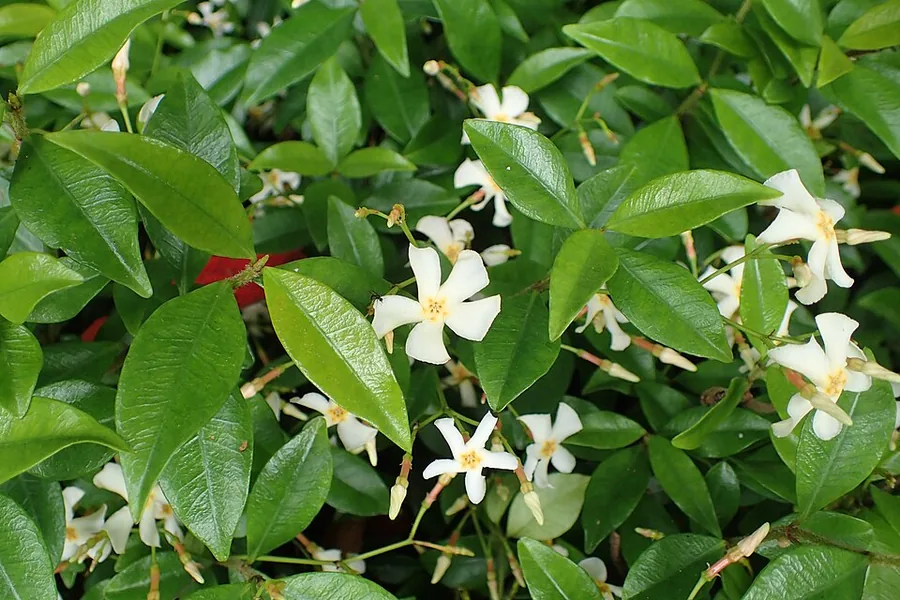
If you're new to groundcovers, this is a forgiving place to start. Asiatic jasmine is a low, evergreen plant grown for its thick mat of small, glossy leaves more than for any flower, and it belongs to the dogbane family, so despite the name it isn't a true jasmine. Its new growth often opens a coppery bronze or red before deepening to green, which gives the planting a soft, season-long shift of color you'll enjoy watching.
What wins most people over is just how little it needs from you. It happily takes full sun to deep shade, shrugs off drought once it's settled in, and copes with clay, loam, or sand without complaint. Hardy from zones 7 to 11, it endures down to about 10°F (-12°C) and stands up to heat near 100°F (38°C), which is why you'll find it thriving under trees and along curbs where most other plants give up.
The one thing to keep an eye on is its vigor, and even that is easy to manage. Those trailing stems root as they travel, so the very plant that blankets a bare slope will also reach for a trunk or a sidewalk if left alone. Give it a firm edge to lean against and one shearing a year, and it stays a clean, even carpet for decades with very little fuss from you.
Care
The short version: put it almost anywhere from full sun to full shade, keep it watered through that first season, and after that mostly leave it be, giving it one shear each year in early spring to keep the mat dense and tidy. You really can't go far wrong here.
Light
Few groundcovers are this easygoing about light, which takes a lot of pressure off you. Asiatic jasmine grows in full sun right through to full shade, though it stays thickest and colors up best with a bit of sun on it. Heavy shade slows it a little and thins the mat, but it still holds together just fine.
Water
Keep the soil evenly moist through that first season while the roots take hold. After that it's truly drought tolerant and seldom asks for extra water, so you can ease right off. A light hand matters here, since overwatering is one of the things that nudges it into aggressive, unruly growth.
Soil
It happily accepts almost any well-drained soil, whether clay, loam, or sand, across a generous pH range of 6.0 to 8.0. The only thing to watch is strongly alkaline ground, which locks up iron and yellows the leaves, so lean toward neutral to slightly acidic wherever you can.
Temperature
Hardy in zones 7 to 11, it takes a wide swing from roughly 10°F to 100°F (-12°C to 38°C) in stride. That mix of cold hardiness and heat tolerance is exactly what lets it carpet ground in climates that would defeat more delicate plants.
Humidity
Everyday outdoor humidity suits it perfectly and there's no number for you to fuss over. It handles humid Southern summers and drier stretches alike without any trouble.
Feeding
Go light on feeding, or skip it altogether. A modest helping of balanced slow-release fertilizer in spring is plenty, and most settled plantings need none at all. Overdo it and you'll just create faster, more unruly growth that you'll have to cut back.
Pruning
Your main task is a single mow or shear in early spring each year to refresh the planting and keep it dense. Now and then through the season, tidy the edges to keep it from drifting into your lawns, beds, and walkways.
Repotting
Planted in the ground, it hardly ever needs repotting, so that's one less thing to think about. In a container, only move it up a size once roots circle the pot, push through the drainage holes, or water begins running straight through.
Size & spacing
It keeps a low profile at just 6 to 24 inches (15 to 61 cm) tall, while each plant reaches wide, from 3 to 12 feet (91 cm to 3.7 m) across. Set your plants 1.5 to 3 feet apart for groundcover, and leave it some breathing room away from trunks and structures it might otherwise climb.
When to plant
Plant Asiatic jasmine in spring, once the last frost is behind you and the soil has begun to warm. Get it in the ground then and water it through that first season so it can root in, and it will spend the following two years quietly knitting into a solid evergreen carpet for you.
Northern hemisphere
Southern hemisphere
Typical months for a temperate climate: start earlier in warm zones, later where spring frosts linger.
- Plant: spring after last frost
- Harvest: late spring to early summer (blooms sparsely)
Hardiness
USDA hardiness zones: 7–11
Temperature: down to -18°C
Troubleshooting
This is a wonderfully low-trouble plant, so if something does look off, take heart, because almost everything here is either a spreading habit you can rein back in or a simple soil issue you can correct. Find what matches below and act early, and you'll have it sorted before it travels far.
When the stems wander into the lawn and start climbing your trees
Try not to worry if this one gets ambitious. It grows quickly and trails as it travels, putting down roots anywhere a stem rests on damp soil, and too much water, sun, or fertilizer is usually what tips it into climbing trunks and crossing your walkway. You can bring it right back: edge the bed, lift the stems off your shrubs and trees, and give the whole planting one shearing each year in early spring to settle it into a neat mat again.
Fix:
- Trim and edge the perimeter regularly to keep it in bounds
- Pull or cut stems climbing trees and shrubs
- Mow or shear the whole planting once a year in early spring to renew it
- Reduce supplemental water and fertilizer to slow aggressive growth
Yellow leaves while the veins are still green
If a leaf goes yellow but its veins stay green, take a breath, because this is an easy fix. That pattern points to iron chlorosis, and the usual culprit is alkaline soil holding the iron just out of reach, which is why you tend to see it on the freshest new growth first. A chelated iron supplement turns things around quickly, and gently lowering the soil pH over time keeps it from returning.
Fix:
- Apply a chelated iron supplement
- Acidify or amend the soil to lower pH
Open spaces between the plants all through year one
If a fresh planting looks thin and patchy that first season, you have done nothing wrong, and this is exactly what to expect. The plant quietly builds its roots in year one and needs about two growing seasons to knit together fully. Keep the soil evenly moist, set your plants 1.5 to 3 feet apart so they reach each other sooner, and let the second season carry the work for you.
Fix:
- Keep soil evenly moist while establishing
- Space plants closer (about 1.5 to 3 feet apart) for faster coverage
- Be patient; growth accelerates in the second season
Little bumps along the stems with a sticky film
Every so often scale insects decide to settle on the stems and the undersides of leaves, leaving small bumps and a sticky honeydew that can invite sooty mold, and the reassuring part is that real pest trouble is uncommon here. You can clear it with horticultural oil and simply prune off any stem that is heavily covered, and the plant carries on just fine.
Fix:
- Treat with horticultural oil
- Prune out heavily infested stems
Toxicity
Here's some reassurance for homes with pets and children: Asiatic jasmine is regarded as non-toxic, and its relative star jasmine sits on the ASPCA non-toxic list. The only thing worth knowing is that cut stems weep a milky latex that can irritate sensitive skin, so pop on gloves whenever you prune.
Safe for
People · Cats · Dogs · Horses · Rabbits · Livestock · Birds
Cats None
You can relax with cats around this one. Its close cousin star jasmine appears on the ASPCA non-toxic list, and a curious nibble shouldn't lead to anything beyond a mild, short-lived stomach upset.
Dogs None
Dogs are welcome to share the garden with it, no worry needed. There's no known toxin for them, so a chewed stem might bring nothing more than a brief tummy grumble.
Horses Safe
It is considered safe around horses, so you can plant with an easy mind. There's no toxin to worry about, though as with any lush new foliage it's sensible to keep a horse from gorging on it.
Rabbits Safe
Rabbits have nothing to fear from it, as it isn't toxic to them. The leaves are tough and milky rather than a treat, so most rabbits simply pass it by.
Livestock Safe
It's safe for cattle, goats, and sheep, with no poisoning ever recorded. The bitter latex in the stems usually keeps grazing animals away on its own anyway.
Birds Safe
Birds face no toxic risk from it whatsoever. They can happily shelter in the dense mat with no harm coming from the foliage.
People Safe
It's safe to keep around both children and adults. The one thing to know is that cut stems weep a milky latex that can bother sensitive skin, so slip on gloves before a big pruning session.
It is a member of the dogbane family (Apocynaceae) and exudes a milky latex sap when cut that may cause mild skin irritation in sensitive people; wear gloves when pruning. Despite the name it is not a true jasmine.
Varieties
Beyond the plain green form, there are a few lovely selections that bring extra color through variegated or brightly tinted new growth. These are the ones you're most likely to come across.
'Snow-N-Summer' ('HOSNS')
A variegated pick whose new growth opens in pink and white, then mellows to green and white as the leaves mature.
'Variegatum'
You'll know this one by its green leaves edged and marbled in creamy white for a cheerful two-tone effect.
'Bronze Beauty'
Loved for new foliage that comes in a warm bronze to reddish shade before turning green.
'Goshiki' / 'Ogon Nishiki'
Its fresh growth arrives in a blend of yellow, orange, and red, giving you a multicolored carpet.
'Elegant' / dwarf forms
These lower, tighter selections give you a fine-textured dwarf groundcover when you'd rather keep things short.
How to propagate
Making more of this plant is genuinely easy, and you'll be glad to hear it more or less handles the job itself wherever a stem touches the ground.
LayeringEasy
Growing season · Several weeks to months
Layering is the gentlest way to make more, and honestly the plant does most of it for you, since trailing stems root on their own anywhere they rest on moist soil. Pin a stem down during the growing season, give it the next several weeks to months to take hold, and then snip it free as a brand new plant.
Stem cuttingsModerate
Summer · Several weeks to a couple of months
If you'd like to try something a touch more involved, you can root semi-hardwood stem cuttings taken in summer. Be patient and allow them several weeks to a couple of months to root before you pot them on.
Myths
Asiatic jasmine is a true jasmine.
The name throws people off, but this is Trachelospermum asiaticum in the dogbane family, not an actual jasmine, since true jasmines sit in the genus Jasminum within the olive family. The common name is misleading, and the two plants aren't even close kin.
Asiatic jasmine is the same as star jasmine and is grown for its flowers.
This is its own plant, separate from star or Confederate jasmine, staying lower and denser with smaller leaves and far fewer blooms. It rarely flowers and is grown as a foliage groundcover, not for a floral display.