Ornamental · Apocynaceae
Blue Star
Amsonia tabernaemontana
Plant it in full sun and trim it after it blooms, and forgiving Blue Star carries you from spring flowers to a glow of gold leaves in fall.
Full sun
Every 7–14 days
USDA 3–9
2–3 ft · 0.6–0.9 m
Overview
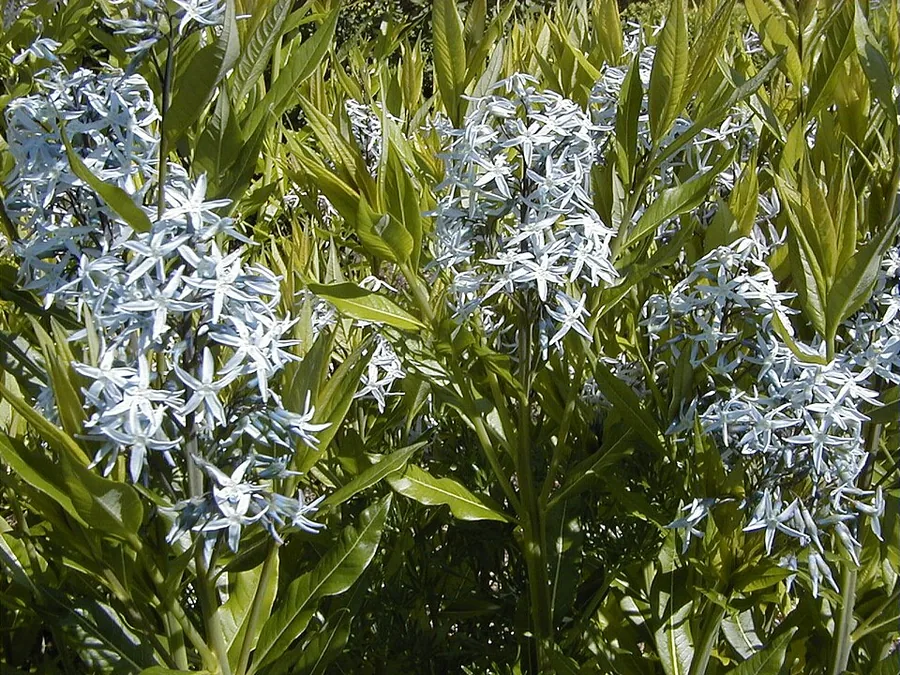
If you are nervous about keeping a perennial alive, Blue Star is a kind place to start. This native plant forms a slow, shrubby clump of feathery green foliage that holds together beautifully all season, and in late spring it opens clusters of soft, steel-blue star-shaped flowers that feel like a reward for almost no effort. It belongs to the dogbane family, and once its roots settle it shrugs off cold, heat, heavy clay, and dry spells, so a missed watering or a tough winter rarely sets it back. Hardy from zone 3 to zone 9, it gives you a lot of room to learn.
The flowers are only the beginning, and that is part of the fun. When autumn arrives the narrow leaves warm to a clear golden yellow that lifts the whole border, while the bitter, milky sap inside the stems quietly keeps deer and rabbits from nibbling. Give it full sun and it stands up on its own without staking, so you can relax and let it be the dependable plant you lean on year after year.
Care
The short version: give it full sun, average well-drained soil, and a good trim once the flowers fade. It asks for little water after it settles in and barely any feeding, so really your only regular job is cutting it back so it stays neat instead of flopping. Mistakes here are easy to recover from.
Light
Blue Star is happiest in full sun, where it grows full and dense and holds itself upright without any staking from you. It will still get by in partial shade or partial sun, but be aware that the less light it gets, the more it tends to stretch, lean, and flop.
Water
While your new plant is settling in, keep the soil evenly moist and give it a drink every 7 to 14 days. Once the roots have taken hold it copes well with dry spells and even forgives the odd soggy patch, so you can comfortably ease off the watering.
Soil
Happily, this plant is not fussy about its soil and grows in loam, clay, or sand as long as water can drain away. Any pH from 6.0 to 8.0 keeps it content, and that covers just about every garden you are likely to have.
Temperature
Few perennials are as tough as this one, taking winter cold down to -40°F (-40°C) and summer heat up to 100°F (38°C) in stride. That wide comfort range is exactly why you can count on it from zone 3 all the way to zone 9.
Humidity
Plain outdoor air suits it just fine, so there is no humidity number to fret over. What matters more is good airflow, because crowded, stagnant spots are what tempt rust onto the leaves.
Feeding
Feeding is one job you can mostly skip, which makes life easier. A light topdressing of compost in spring is all it wants, and piling on rich soil or heavy fertilizer only softens the stems and leaves them prone to flopping.
Pruning
The single task that really counts is trimming the stems back by one-third to one-half right after the flowers fade. That keeps the clump rounded and self-supporting, and deadheading while you are at it gently stops the plant from seeding itself around the garden.
Repotting
Settled clumps seldom need lifting and would rather not be disturbed, so you can leave them be. Dig and divide only when the center starts to die out or flowering falls off, and that happy moment can take many years to arrive.
Size & spacing
A grown plant reaches about 2 to 3 feet (61 to 91 cm) tall and spreads roughly the same. Allowing each one around 2 to 3 feet (61 to 91 cm) of elbow room lets air move freely and helps keep rust from ever taking hold.
When to plant
Blue Star is a hardy perennial that comes back faithfully on its own each year, so there is no pressure to get everything perfect. Set new plants out in spring once the frost has passed or in fall, look forward to its blue flowers in late spring, then simply cut the whole clump back hard after the bloom is finished.
Northern hemisphere
Southern hemisphere
Typical months for a temperate climate: start earlier in warm zones, later where spring frosts linger.
- Sow: Late winter to early spring; seed germinates readily but plants typically flower in their second year.
- Plant: Spring after frost, or fall.
- Harvest: Late spring (April to May), into early summer.
Hardiness
USDA hardiness zones: 3–9
Temperature: down to -40°C
Troubleshooting
Try not to worry, because Blue Star runs into very few problems, and that is exactly why so many gardeners trust it. The two things you might notice are floppy stems and an occasional touch of rust, and both are easy to put right. Find what matches below and you will see the fix is usually quick and forgiving.
Stems that lean open and flop outward
If your plant starts to splay, do not worry, because flopping usually traces back to too much shade or soil that is a little too rich, and it gets worse when the clump misses its trim after blooming. Shear the stems by a third to a half once the flowers fade and you will be rewarded with a tighter, self-supporting mound. Should the clump be sitting in shade, move it somewhere sunnier and it will soon hold itself up.
Fix:
- Cut stems back by one-third to one-half after flowering to encourage a denser, self-supporting habit
- Relocate to a sunnier position if grown in shade
Orange, rusty bumps dotting the leaves
Powdery orange-to-brown spots on the undersides of the leaves point to rust, the one disease this otherwise easy plant tends to pick up. Gently pull off the marked foliage and bin it rather than composting it. Then give the clump a little more room and try to keep water off the leaves, since rust thrives in still, damp air.
Fix:
- Remove and dispose of affected foliage
- Improve air circulation and avoid overhead watering
Toxicity
You can breathe easy with Blue Star, since it is a gentle, low-risk plant in the garden. Its bitter, milky sap turns away deer, rabbits, and most curious pets, and it does not appear on the ASPCA toxic list. The one thing to keep in mind is that the latex from cut stems can irritate skin and eyes, so washing your hands after pruning is all the caution you need.
Toxic to
Cats · Dogs · Horses · Livestock · Birds · People
Safe for
Rabbits
Cats Caution
There is no report written up just for cats, but the bitter milky sap belongs to the same family as other irritant plants. If a curious cat chews a leaf it might drool or have a brief stomach upset, though the harsh taste usually sends it off after a single nibble.
Dogs Mild
One extension source describes the milky sap as slightly toxic to dogs, so a chewed stem can leave a dog with mild mouth or stomach irritation. Happily, the bitter latex tends to stop most dogs well before they swallow much.
Horses Caution
Nothing specific is on record for horses, but the bitter sap and the plant's dogbane background make it one worth keeping them away from. The good news is that most horses leave it alone all on their own.
Livestock Caution
Grazing animals turn away from the bitter foliage, so trouble is unlikely. Even so, it is wise to keep the milky latex out of pasture where hungry stock have little else to eat.
Birds Caution
There is no record of harm to birds, and they simply are not drawn to the foliage. Keep a gentle eye out only if a pet bird has a habit of nibbling houseplants and cut greenery.
People Caution
No part of this plant is meant to be eaten, so treat it as a garden ornament rather than a snack. The milky latex from cut stems can irritate skin or eyes, so wash your hands after pruning and keep small children from chewing the foliage.
Rabbits Safe
Rabbits give this plant a wide berth, and the bitter taste turns them away so reliably that gardeners plant it on purpose where rabbits are a nuisance. Browsing damage is rare, so you can plant it with confidence.
The milky latex released when stems or leaves are cut or torn can be a mild skin or eye irritant; wash hands after pruning.
Helpline numbers

United States
ASPCA Animal Poison Control: (888) 426-4435 (fee applies)
Poison Control: (800) 222-1222



Canada
Poison Centres: 1-844-764-7669
Varieties
A handful of named selections build gently on the wild plant, mostly offering richer flower color or more eye-catching foliage. These are the friendly, easy-to-find ones you will spot at most nurseries.
Storm Cloud
On Storm Cloud the stems push up nearly black in spring, a lovely contrast against dark green leaves laced with bright silver veins.
Blue Ice
Blue Ice is a neat, compact pick whose flowers come in a deeper, more violet-blue shade than the plain species.
var. salicifolia
The form known as var. salicifolia wears slender, willow-like leaves only about a quarter inch wide.
How to propagate
Blue Star spreads slowly on its own, which is good news if you would rather take your time. When you do want more plants, you can divide the clumps, save a little seed, or root some cuttings, and none of it is difficult.
DivisionEasy
Spring or fall while dormant · One growing season
The easiest path is to lift and split a clump while it rests in spring or fall, just making sure every piece keeps at least one eye, the little growth bud. Do not fret over them afterward, since the divisions settle in comfortably over a single growing season.
SeedEasy
Late winter to spring · Flowers usually in the second year
Sowing seed from late winter into spring works nicely and the seed sprouts without any coaxing, though the young plants usually take until their second year to bloom, so a little patience pays off. Snip away any seedheads you do not want, or the plant will cheerfully sow itself around.
Stem cuttingsModerate
Late spring to early summer · Several weeks to root
If you feel adventurous, take root or stem cuttings from non-flowering shoots in late spring or early summer. They need several weeks to root, which makes this the slower and slightly trickier route next to simple division, so it is fine to save it for later.
Myths
Blue Star is dangerously poisonous to people and pets and should be kept out of the garden.
Take heart, because only one extension source flags the milky sap as slightly toxic to dogs, and its bitter taste keeps most animals from eating it at all. It is widely grown as a safe, low-maintenance native ornamental, and it does not appear on the ASPCA toxic plant list.