Ornamental · Apocynaceae
Common Periwinkle
Vinca minor
A forgiving evergreen groundcover that carpets shady ground in blue, with eager runners that are easy to guide back into place.
Partial shade
Every 7–14 days
USDA 4–9
3–6 in · 8–15 cm
Overview
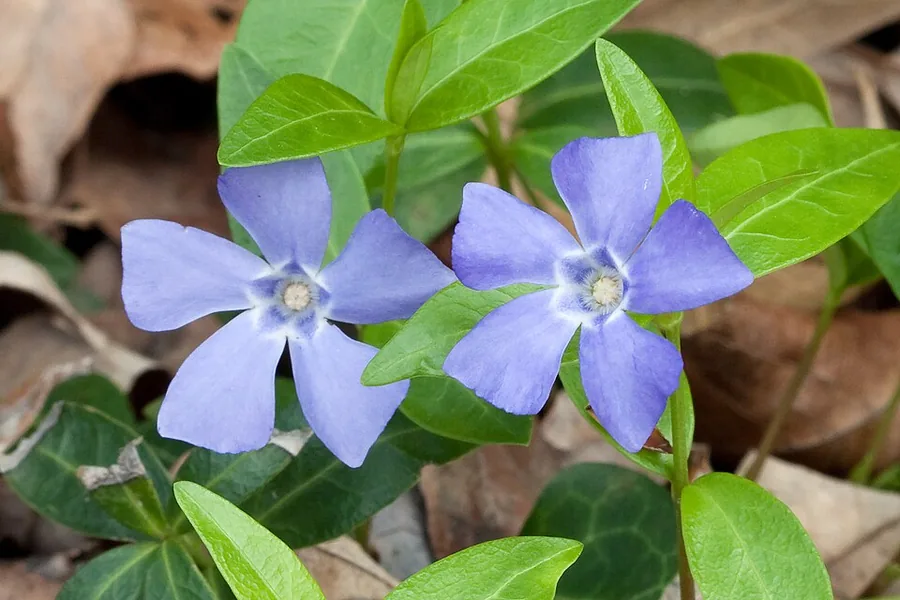
If you have a shady, tricky patch that never quite fills in, common periwinkle is a kind place to begin. This low, trailing evergreen spreads glossy green leaves and soft blue spring flowers across bare ground, and it belongs to the dogbane family. It returns year after year as a hardy perennial, keeps its leaves through winter, and roots along its own stems as it travels, so it does much of the work for you.
You do not need a green thumb to keep it content. Periwinkle settles into dry shade, poor soil, and eroding slopes where fussier plants sulk, and once it has found its feet it takes drought in stride. Its flat mats quietly shade out weeds too, which is one reason gardeners have leaned on it for generations.
The one thing to watch is its enthusiasm. Periwinkle wanders out of the garden with ease and can push into woodlands, edging out native wildflowers and young tree seedlings, so it is happiest kept inside a clear bed and away from wild areas. Every part is also toxic, which is worth gently keeping in mind if pets or little ones share the space, and it is nothing a bit of planning cannot handle.
Care
The short version: give it part to full shade, average well-drained soil, and a deep drink only when things turn dry, then shear it once each spring to keep it neat and inside its bounds.
Light
Periwinkle is happiest in part to full shade, which is exactly why it thrives under trees where lawns thin out and fade. It will take full sun in cooler areas, but where summers turn hot the strong light can scorch its leaves unless the soil stays reliably moist.
Water
While your plants are settling in, keep the soil moist but well drained, watering every 7 to 14 days during dry stretches and a little more often when they sit in full sun. Once established they handle drought with ease. Try to water at the base rather than over the top, since damp leaves can invite fungal disease.
Soil
Average, well-drained soil keeps periwinkle content, and it copes cheerfully with clay, loam, sand, and dry rocky ground. It does its best in moist, humusy soil at a pH of 6.0 to 7.5, sitting comfortably near neutral.
Temperature
This is a wonderfully cold-hardy groundcover, weathering temperatures from about -29°F to 95°F (-34°C to 35°C). It keeps its evergreen leaves right through hard winters and only really struggles where summer heat lands on dry, sunny ground.
Humidity
Everyday outdoor humidity is all periwinkle asks for, so there is no target to fret over. Good airflow matters far more than moisture in the air, because it is the crowded, damp plantings where stem canker and leaf spot tend to settle in.
Feeding
Periwinkle seldom needs feeding and gets along fine on poor soil, so you can relax about fertilizer. If the growth ever looks weak, a light spring feeding of balanced all-purpose fertilizer is all it takes.
Pruning
Give established plantings a shear or a mow in early spring to freshen the growth and keep the spread in check. That same easy pass also clears away any winter-worn or diseased foliage before the new leaves arrive.
Repotting
Grown in the ground it never needs repotting, and even in a pot it rarely will. Just keep a gentle eye out for roots circling the pot, growth slowing, or roots peeking from the drainage holes, the friendly signs it is rootbound and ready for a roomier home.
Size & spacing
Each plant stays low at 3 to 6 inches (8 to 15 cm) tall while it spreads 6 to 18 inches (15 to 46 cm) wide and keeps reaching outward. Space them at that width and they will weave together into a full, even mat within a season or two.
When to plant
Periwinkle is comfortably hardy across zones 4 through 9, and it settles in most easily when planted in spring or early fall, while the soil stays cool and damp enough for young roots to grab hold. Flowers open from spring into early summer, around May to June, and a scattering keeps appearing through the warmer months, so there is always a little color to enjoy.
Northern hemisphere
Southern hemisphere
Typical months for a temperate climate: start earlier in warm zones, later where spring frosts linger.
- Plant: Spring or early fall
- Harvest: Spring into early summer (May to June), with sporadic rebloom through summer and fall
Hardiness
USDA hardiness zones: 4–9
Temperature: down to -34°C
Troubleshooting
Almost every periwinkle worry traces back to one of two things: it grows a touch too eagerly, or it sits too wet. The good news is the early signs are easy to spot, and catching them means you can gently guide a wandering patch back or stop disease before it takes hold. Find what matches below and act while it is still simple.
Runners that root as they travel and take over the bed
What you are seeing is invasive spread, the very trait that makes periwinkle such a dependable groundcover. Its trailing stems root wherever they meet soil, so a neat patch can wander into lawns, beds, and nearby woods and cover whatever is there. Do not worry, it is fixable: dig and pull the escaping runners, edge the bed with a barrier, and put every rooted piece in the trash rather than the compost, since one stray scrap can start it all over again.
Fix:
- Pull, dig, or cut back escaping stems and remove rooted fragments
- Mow or shear to contain edges and install an edging barrier
- Dispose of clippings and pulled plants in the trash, not in yard waste or woods, to prevent spread
- Repeat removal over several seasons since regrowth is common
Brown, dying patches with sunken cankers near the ground
This is fungal stem canker and dieback, the most common ailment periwinkle runs into, and it moves in where plantings sit crowded, wet, and slow to drain. Look for sunken, wound-like marks on the stems near the soil and brown circular spots on the leaves inside a fading patch. It is very manageable: thin the affected growth to let air move through, water at the base instead of overhead, and rake away the infected bits so the spores have nowhere to wait out winter.
Fix:
- Thin and remove affected stems and leaves to improve air circulation
- Avoid overhead irrigation and water at the base
- Rake out and discard infected debris
- Reduce overcrowding when replanting
Leaves scorching and yellowing in hot, dry sun
This is simply heat and drought stress, and it turns up only on plants baking in full sun with no moisture to lean on, while shaded, well-watered patches stay a happy green. Water deeply through dry spells and lay down mulch to hold what moisture is there. Where summers run hot, give periwinkle the part to full shade it truly loves and it will bounce right back.
Fix:
- Water deeply during dry periods
- Mulch to conserve soil moisture
- Site in partial to full shade where summers are hot
Toxicity
It helps to think of periwinkle as toxic through and through. Every part carries vinca alkaloids, the same family of compounds behind some chemotherapy drugs, and chewing or swallowing it brings on drooling, vomiting, and diarrhea, with low blood pressure, tremors, and even seizures after a large amount. Keep the plant and its trimmings out of reach of cats, dogs, horses, livestock, birds, and children, and there is no need to panic if some is eaten, just call your vet or poison control.
Toxic to
Cats · Dogs · Horses · Rabbits · Livestock · Birds · People
Cats Moderate
A small nibble of the leaves or stems can bring on drooling, vomiting, and diarrhea. If a cat eats more, the alkaloids may lower blood pressure, set off tremors, and in larger amounts lead to seizures, so keep it out of reach.
Dogs Moderate
Chewing the foliage usually brings drooling, vomiting, and diarrhea before long. The bigger concern is a large mouthful, which can lower blood pressure and trigger tremors or even seizures.
Horses Moderate
Grazing on periwinkle unsettles the stomach with drooling, vomiting, and diarrhea, and a horse's size offers no real protection. Larger amounts can bring low blood pressure, tremors, and seizures.
Rabbits Toxic
The same vinca alkaloids make every part of the plant unsafe for a rabbit to eat. Expect drooling and a badly upset stomach, with tremors and collapse if much is eaten, so keep it well away.
Livestock Toxic
Cattle, goats, and sheep all react to the alkaloids in the leaves and stems with drooling, vomiting, and diarrhea. Heavier grazing can bring falling blood pressure, tremors, and seizures.
Birds Toxic
No part of periwinkle is safe for a bird to peck or eat. Even small amounts can cause drooling and an upset stomach, and larger ones can lead to tremors and seizures.
People Caution
Nothing on this plant is meant to be eaten, so it is wise to treat it as a hazard for curious children. Swallowing leaves or stems can cause drooling, vomiting, and diarrhea, and a large amount may lower blood pressure or bring tremors.
Keep plants and trimmings away from pets and children; wash hands after handling and dispose of clippings where animals cannot reach them.
Helpline numbers

United States
ASPCA Animal Poison Control: (888) 426-4435 (fee applies)
Poison Control: (800) 222-1222



Canada
Poison Centres: 1-844-764-7669
Varieties
Periwinkle offers more than the familiar blue, with white and burgundy blooms and gold-touched leaves among the choices. Here are the selections worth getting to know.
Bowles (Bowles' Variety / 'La Grave')
A vigorous, easygoing selection with larger, deep lilac-blue flowers, and it counts among the most loved periwinkle cultivars you can find.
'Atropurpurea' (sold as 'Burgundy')
Instead of the usual blue, this one offers warm, deep reddish-purple to burgundy flowers.
'Alba'
A gentle white-flowered form of common periwinkle for anyone who wants the same trailing habit without the blue.
'Illumination'
Grown mainly for its cheerful gold-and-green variegated leaves, brightened further by blue flowers.
'Jekyll's White'
A tidy, compact white-flowered selection that stays neater than the more spreading types.
Vinca major (Bigleaf/Greater Periwinkle)
A larger, bolder relative that mounds up to about 2 feet with bigger 1 to 2 inch blue flowers, and it grows even more invasive in mild climates, so give it room and clear boundaries.
Vinca major 'Variegata'
A variegated bigleaf periwinkle rimmed in creamy white, lovely spilling over the edges of containers and hanging baskets.
How to propagate
Periwinkle is one of the easiest plants to make more of, since it roots so willingly on its own, and you can lend a hand through cuttings, division, or simple layering.
Stem cuttingsEasy
Late spring to summer · A few weeks to root; full groundcover in 1-2 seasons
Snip tip cuttings from non-flowering stems in late spring or summer and they root with almost no trouble at all. Give them a few weeks to settle, and they fill in to a complete groundcover within one to two seasons.
DivisionEasy
Throughout the growing season · Establishes quickly; complete cover in 1-2 years
Any time through the growing season, lift a rooted clump or a rooted trailing stem and simply replant it where you would like more. It settles in quickly and knits into full cover within a year or two.
LayeringEasy
Growing season · Roots where stems touch soil within weeks
Periwinkle layers itself without any help from you during the growing season. Wherever a trailing stem rests on moist soil, it puts down roots at the node within weeks, and you can snip it free and move the new little plant once it has taken hold.
Myths
Trailing groundcover periwinkle and the annual bedding vinca are the same plant.
They share the name vinca, but they really are two different plants. The trailing evergreen perennial groundcover is Vinca minor, while the upright annual sold for flowerbeds is Madagascar periwinkle, Catharanthus roseus, once known as Vinca rosea. Both belong to the dogbane family and both are toxic, though the annual holds even stronger vinca alkaloids such as vincristine and vinblastine.