Ornamental · Apocynaceae
Annual Vinca
Catharanthus roseus
Set it in heat, full sun, and soil that drains fast, and annual vinca will keep flowering from late spring all the way to frost.
Full sun
Every 5–10 days
50–95°F · 10–35°C
USDA 10–11
Overview
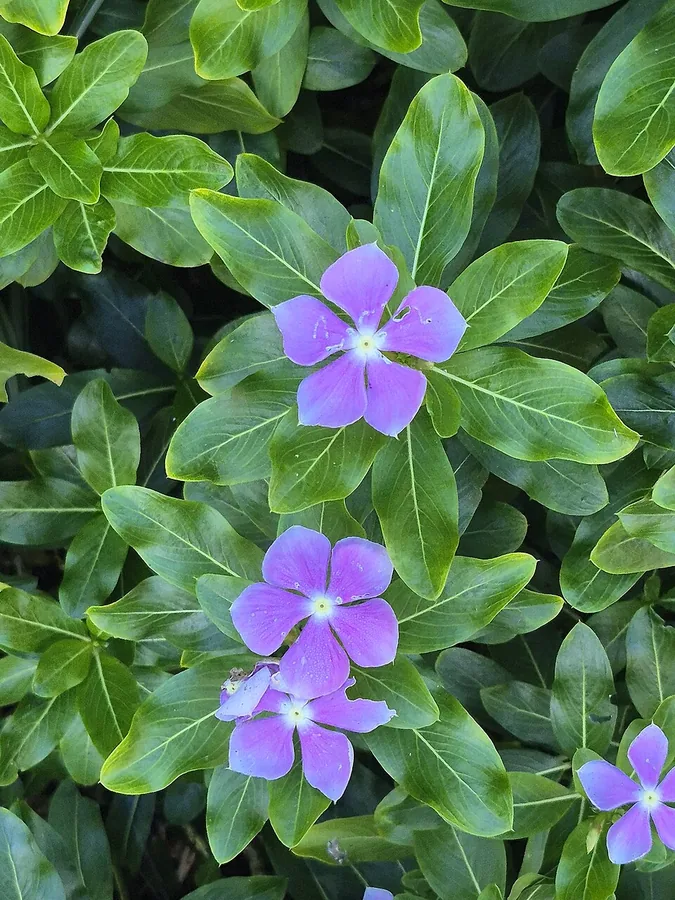
If you are just starting out, annual vinca is a wonderful plant to build your confidence on. Gardeners often call it Madagascar periwinkle, and it is happiest in the sunny, hot, dry corners where fussier flowers give up. From late spring until frost it keeps producing blooms in whites, pinks, and a deep blackberry-purple, each one resting against glossy dark green leaves. One gentle reminder: despite the nickname, this is Catharanthus roseus, not the trailing periwinkle it so often gets mixed up with.
The lovely thing is how little it asks of you, though that same easiness can catch a caring gardener off guard. Because it is heat and drought tolerant, the one habit to unlearn is watering out of kindness. Too much moisture leaves the soil soggy, and soggy ground is what opens the door to the root and stem rots that are this plant's only real weak spot. The good news is that this is simple to avoid once you know to watch for it.
Think of it as a warm-season friend and everything else falls neatly into place. Hold off planting until real summer warmth arrives, then give it full sun and soil that drains quickly, and reach for the watering can only when it genuinely asks. Do that and you will enjoy months of steady color from a plant that gives back far more than it takes.
Care
The short version: pick a full-sun spot with fast-draining soil, and wait for real summer warmth before planting. Water deeply but only once the top of the soil feels dry, keep the leaves dry, and feed with a light hand.
Light
Give annual vinca full sun and it will flower its best for you, though a little partial shade is fine too. The more direct light it soaks up, the fuller and more colorful the plant, while too much shade thins it out and softens the blooms.
Water
Water deeply but seldom, reaching for the can only when weekly rainfall falls under about an inch. Let the top half of the soil dry out between drinks, and try to keep water off the leaves, since soggy roots and wet foliage are what tend to invite disease.
Soil
Plant it in soil that drains well, whether sandy or a nice organic loam, and it will even forgive clay as long as water keeps moving through. It feels most at home in slightly acidic ground, around a pH of 5.5 to 6.5.
Temperature
This is a real heat lover, content anywhere from 50°F to 95°F (10°C to 35°C) and truly thriving at the warm end. Cold slows it down and a damp chill invites rot, so it earns its keep through the hottest stretch of summer.
Humidity
Ordinary outdoor humidity suits it just fine, so there is no number to fuss over. Good air movement matters far more, because still, muggy air around crowded plants is what lets leaf spot and gray mold settle in.
Feeding
Feed it once a month through the growing season with a balanced general-purpose fertilizer, and go gently. Adding extra will not bring you more flowers; it only softens the growth and raises the risk of root rot.
Pruning
You can relax here, because no pruning is needed. Modern hybrids are self-cleaning and drop their spent flowers on their own, with no pinching or deadheading required. The one helpful task is picking off any tired leaves and blooms so disease has nowhere to settle.
Size & spacing
These are neat, low plants that reach about 6 to 18 inches (15 to 46 cm) tall with a similar spread of 8 to 18 inches (20 to 46 cm). Give each one enough elbow room for air to move between them, and you will go a long way toward keeping the rots and leaf spots away.
When to plant
Annual vinca loves warmth and quietly struggles in the cold, so timing is your friend here. Start seeds indoors in March somewhere cozy and warm, then be patient and keep the young plants inside until late May or early June, safely past frost and once the soil has warmed above 60°F (16°C). Rush them into cool, wet ground and they will sit and rot, but wait for the heat and you will be rewarded with flowers from late spring all the way to frost.
Northern hemisphere
Southern hemisphere
Typical months for a temperate climate: start earlier in warm zones, later where spring frosts linger.
- Sow: March in warm temperatures
- Plant: Late May to early June, after frost and when soil temperatures exceed 60°F
- Harvest: Blooms from late spring or early summer (May to June) continuously until frost
Hardiness
USDA hardiness zones: 10–11
Temperature: down to -1°C
Troubleshooting
Almost everything that troubles annual vinca comes back to one kindly mistake: too much water on the roots or the leaves. Soggy soil brings the rots up from below, while splashed and standing moisture invites the leaf spots and gray mold. Find your plant's symptoms below, then let it dry out and gently clear away the affected parts, and it will usually pull through.
Dark lesions along the stems as plants suddenly wilt and collapse
If your plants fold over and wilt with dark patches spreading on the stems, this is almost surely Phytophthora stem blight and root rot, the trouble that claims more annual vinca than anything else, and wet soil paired with overhead watering is what sets it off. Lift a failing plant and you will see the outer root tissue peeling away from the core while the leaves yellow and scorch. Do not blame yourself; just pull and bin the sick plants, work composted pine bark into the bed for drainage, and treat with potassium salts of phosphorous acid or a copper spray.
Fix:
- Remove and discard infected plants entirely
- Improve drainage by amending with composted pine bark
- Apply potassium salts of phosphorous acid as a soil drench or a copper-based spray
Yellowing and wilting even while the soil stays damp
When a plant droops and yellows in soil that is still moist, gently suspect Rhizoctonia stem and root rot, which tends to move in after deep planting or frequent shallow watering. Slip a plant out and look for brown lesions and stunting on the roots, the clue that water was never the missing piece. Lift out the affected plants along with every last root, then drench or spray with thiophanate methyl or chlorothalonil.
Fix:
- Remove diseased plants completely including all roots
- Use thiophanate methyl or chlorothalonil as a spray or drench
Ringed, target-like spots climbing up from the lowest leaves
Those little ringed marks are Alternaria leaf spot, splashed onto the foliage whenever water lands from above. They show up first on the bottom leaves as flecks no bigger than a pinhead, grow to around an eighth of an inch with that banded, target-like look, and slowly work their way up the plant. Take heart and pull out any badly marked plants, water gently at the base before dawn, and spray chlorothalonil each week if it starts to spread.
Fix:
- Remove heavily infected plants
- Apply weekly chlorothalonil sprays for serious infections
- Clear dead plants after frost
Soft gray fuzz spreading over faded leaves and flowers
A fuzzy gray coating creeping over spent foliage points to Botrytis blight, sometimes called gray mold, which likes cool, damp weather and crowded plants. You will notice the thick gray growth settle onto dead and dying tissue first. Keep calmly picking off tired leaves and flowers as they appear, and only reach for a thiophanate methyl spray if an outbreak really takes off.
Fix:
- Remove declining leaves and flowers continuously
- Apply thiophanate methyl spray only if severe
Toxicity
Here is the one part to take seriously with this otherwise easygoing plant. Every part of it holds vinca alkaloids like vincristine and vinblastine, the same compounds behind some cancer drugs, and none of it is safe to eat. If a pet, animal, or child swallows some, expect drooling, vomiting, and diarrhea, with tremors, low blood pressure, or seizures possible after a large amount. Keeping it out of reach of curious mouths is all it takes to stay on the safe side.
Toxic to
Cats · Dogs · Horses · Rabbits · Livestock · Birds · People
Cats Toxic
If your cat nibbles any part, it will usually begin drooling, then vomit and get diarrhea, often going quiet and listless. A bigger mouthful can lower the blood pressure and set off tremors or seizures, so please call your vet rather than waiting to see.
Dogs Toxic
A dog that samples the leaves or flowers tends to drool, vomit, and get diarrhea before long. Keep a gentle eye out for a wobbly, low-spirited dog with low blood pressure, and treat any tremors or seizures as an emergency.
Horses Toxic
Grazing horses come away with an upset gut, loose manure, and a flat, sluggish mood from the alkaloids. A large enough helping can bring on muscle tremors and real weakness, so it is kindest to keep this plant well away from pasture and paddocks.
Rabbits Toxic
Because the same alkaloids run through every part, a rabbit that browses the foliage can end up drooling, with diarrhea and a slumped, low-energy posture. This simply is not a safe plant to leave near a hutch or a free-roaming bunny.
Livestock Toxic
Cattle, goats, and sheep that graze annual vinca take in vinca alkaloids that upset the stomach and drain their strength. Heavier feeding can leave them staggering and trembling, so fencing it off from grazing animals is the safe choice.
Birds Toxic
Birds are not spared either, since the alkaloids sit in the leaves, stems, and flowers alike. Even a few pecked petals can bring on vomiting and weakness, so keep this plant clear of aviaries and away from poultry.
People Caution
There is no part of this plant a person should eat. A child who swallows a leaf or flower may drool and feel sick, with nausea, vomiting, and diarrhea, and after a large amount tremors or a drop in blood pressure, so it is best kept out of reach of small hands.
Keep away from pets; all parts contain alkaloids. Typical exposure causes GI upset, with neurologic signs possible at higher doses.
Helpline numbers

United States
ASPCA Animal Poison Control: (888) 426-4435 (fee applies)
Poison Control: (800) 222-1222



Canada
Poison Centres: 1-844-764-7669
Varieties
Breeders have given annual vinca a lot of loving attention, mostly to help it shrug off disease and carry bigger, brighter flowers. Here are the series you are most likely to find and enjoy.
Cora Group (Cora XDR)
Reach for this series wherever rot has plagued past plantings, because it was developed to withstand several strains of Phytophthora, the root rot and aerial blight most damaging to this plant.
Pacifica Group
A neat, densely branched bedding type whose big blooms arrive in a wide spread of colors.
Titan Group
This one forms rounded mounds and holds its oversized blooms even when summer heat turns punishing.
Jams 'N Jellies Blackberry
Loved for flowers in a deep blackberry-purple, each one centered with a clean white eye.
How to propagate
Annual vinca grows happily from seed, and warmth is really the only secret. Start it indoors nice and early, and try not to hurry it outdoors before the weather has truly turned warm.
SeedModerate
Sow indoors in March in warm conditions; transplant outdoors in late May to early June after frost · Several weeks to germinate and establish before transplanting outdoors
Annual vinca comes up readily from seed, though it rewards a warm start and a little patience. Sow indoors in March and keep the tray genuinely warm, because cool seed simply refuses to move. Let the seedlings take their several weeks to sprout and fill out, and keep them cozy inside until late May or early June, once frost has passed and the soil has warmed above 60°F (16°C).
Myths
Annual vinca is just another name for the trailing groundcover periwinkle.
These really are two different plants that happen to share a family. Annual vinca is Catharanthus roseus, an upright to mounding warm-season bedding flower, while the creeping perennial groundcovers are Vinca minor and Vinca major from a separate genus. They both belong to Apocynaceae, and that is where the resemblance stops.
Annual vinca needs constant watering and deadheading to keep flowering.
It actually wants the very opposite of that. Being heat and drought tolerant, it blooms without a break from late spring to frost and never needs deadheading. Lavish extra water on it and you will not see more flowers, only the root and stem rots that are its greatest weakness.