Houseplant · Apocynaceae
Dischidia
Dischidia nummularia
Offer it bright light, fast-draining roots, and a real dry spell, and your dischidia will trail along happily for years.
Bright indirect
Every 7–14 days
64–84°F · 18–29°C
USDA 10–12
Overview
Dischidia is a gentle trailing epiphyte from the wet tropics, where it settles onto tree bark and rock instead of putting down roots in soil. Most people first recognize it by the soft strands of small, fleshy leaves that tumble over a pot rim or a mounted piece of bark. It sits in the same family as the milkweeds, and like its cousins it holds a thin milky sap inside its stems.
The one thing that makes it special as a houseplant is the way it likes to drink. High in the canopy its roots dry within hours of a rain, so indoors it simply wants a coarse, airy mix and a genuine dry-out between waterings. Find that easy rhythm and it rewards you fast, sending out long trailing stems that look right at home in a hanging pot or trained up a mount.
It does ask a touch more attention than a true beginner plant, almost all of it around water and air. Warmth and high humidity keep it looking lush, while soggy roots are the single thing it cannot forgive. Get a feel for the watering and everything else falls into place gently.
Care
The short version: give it bright, indirect light and a coarse epiphyte mix that drains in a flash, then let it dry out fully before the next drink. Keep it warm and humid, feed a little in the growing months, and simply never leave the roots sitting wet.
Light
Your dischidia will look its fullest in bright, indirect light, though it gets along fine in medium indirect light too, so don't fret over a less than perfect window. Just spare it harsh direct sun, which can scorch the leaves, and remember that a too-dim corner leads to stretchy, leggy stems.
Water
Let the mix dry out completely between drinks, which usually lands around every 7 to 14 days. This little epiphyte was built for fast-draining roots, so it shrugs off a dry stretch far more easily than a wet one. Overwatering is the quickest way to lose it, since soggy roots rot in no time, so when in doubt, wait.
Soil
Settle it into a coarse, airy epiphyte or orchid mix of bark and perlite, the kind water runs straight through. Many growers happily skip the pot and mount it on bark instead, just the way it grows in the wild, and your plant will be content either way.
Temperature
It feels most comfortable in the range of 64°F to 84°F (18°C to 29°C), which is the easy indoor warmth most homes already have. Cold is the one thing it truly cannot handle, so keep it clear of chilly windowpanes and sneaky drafts.
Humidity
This is a moisture-loving plant that thrives at 60% to 80% humidity, so a bathroom, a kitchen, or a spot beside a humidifier all suit it beautifully. Dry indoor air won't kill it, but it can leave the leaves looking a little tired, so a gentle boost goes a long way.
Feeding
Through spring and summer, while it is actively growing, feed it once a month with a dilute balanced liquid fertilizer and it will thank you with fresh growth. As the cooler, slower months arrive and new growth pauses, simply ease off and let it rest.
Pruning
A light trim of leggy or overlong trailing stems gently coaxes fuller, bushier growth, so don't be shy with the scissors. Snip away any rotted or damaged stems whenever you notice them, and the whole plant stays healthier for it.
Repotting
Plan to repot every 2 to 3 years, or a little sooner if roots start crowding the pot, growth slows, or the old mix breaks down and holds water. Move it gently into fresh coarse mix and a container only a touch bigger, and it will keep right on trailing.
Size & spacing
The stems trail anywhere from 2 to 36 inches (5 to 91 cm) and the plant spreads about 2 to 3 feet (61 to 91 cm) across, so it likes a bit of room. Hang it or set it up high and let those soft strands cascade however they please.
Troubleshooting
Almost everything that troubles a dischidia comes down to water and air, and the good news is that the early signs show up clearly on the roots, leaves, or stems. Spot them, match them to the list below, and a small kind correction is usually all it takes to set things right.
Stems collapse and the base turns soft and mushy
When the base goes soft, brown, and mushy and the stems flop, you are almost certainly looking at root rot, and it nearly always traces back to too much water or a mix that stays damp. Because dischidia is an epiphyte that wants its roots to dry between drinks, soggy footing smothers them quickly. Don't panic: ease the plant out, trim away every brown, soft root and stem, then settle it into fresh airy mix and water only once it has dried.
Fix:
- Remove the plant and cut away all rotted roots and stems
- Repot into fresh coarse, fast-draining epiphyte mix
- Water only after the medium dries out
Spots appearing on the leaves
Little marks like these usually mean leaf spot, which takes hold when the air stays too damp or water lingers on the foliage. The fix is kind and simple: water at the base, keep the leaves dry, give the plant a bit more air movement, and gently remove any badly marked leaves so the trouble doesn't travel.
Fix:
- Water at the base and avoid wetting foliage
- Improve air circulation around the plant
- Remove badly affected leaves
Stems growing long and sparse with gaps between leaves
Stretched, leggy stems with wide gaps are just your plant reaching for more light, nothing alarming. Shift it somewhere brighter with strong indirect light, while still keeping it out of harsh direct sun that scorches the leaves. A quick trim of the longest stems nudges denser, fuller regrowth, so it bounces back looking better than before.
Fix:
- Move to a brighter spot with bright, indirect light
- Avoid harsh direct sun that scorches leaves
- Trim leggy stems to promote denser regrowth
Toxicity
If you share your home with pets or little ones, you can relax here: dischidia poses no real poisoning danger. Its milky sap simply tastes unpleasant, so a curious nibble might bring a bit of drool or a mildly upset tummy and nothing worse. Cats, dogs, and small children can all live alongside it safely.
Safe for
People · Cats · Dogs · Horses · Rabbits · Livestock · Birds
Cats None
Dischidia isn't known to poison cats, so a curious nibble shouldn't do any harm at all. A cat that chews a lot of any houseplant might end up with a mildly upset stomach, but that settles on its own before long.
Dogs None
Dogs can happily share a room with this plant with nothing to fear. There's no toxic compound here, though a dog that gulps a mouthful of stems may drool a little or bring it back up simply because the leaves are tough.
Horses None
Nothing in dischidia can poison a horse, so there's no worry on that front. As a small trailing houseplant, it's also very unlikely to ever cross a horse's path in the first place.
Rabbits None
Rabbits face no poisoning risk from this plant at all. If you keep it out of reach, do it to save the pretty foliage rather than to protect the rabbit.
Livestock None
Grazing animals like cattle, goats, and sheep come to no harm from dischidia, which lives indoors and well out of their reach anyway.
Birds None
Pet birds can perch and forage near a dischidia in complete safety, since there's no toxic part anywhere to worry about.
People None
The plant poses no poisoning danger to people, little ones included. It's grown purely for its looks rather than for eating, so there's simply no reason to taste it.
Wear gloves when handling, as the milky sap may irritate skin and eyes.
Helpline numbers

United States
ASPCA Animal Poison Control: (888) 426-4435 (fee applies)

United Kingdom
Animal PoisonLine: 01202 509000 (fee applies)

Australia
Animal Poisons Helpline: 1300 869 738
Varieties
A handful of dischidia show up in the houseplant world, each with its own leaf shape and trailing style. Here are the few that are lovely to know by name.
Dischidia nummularia
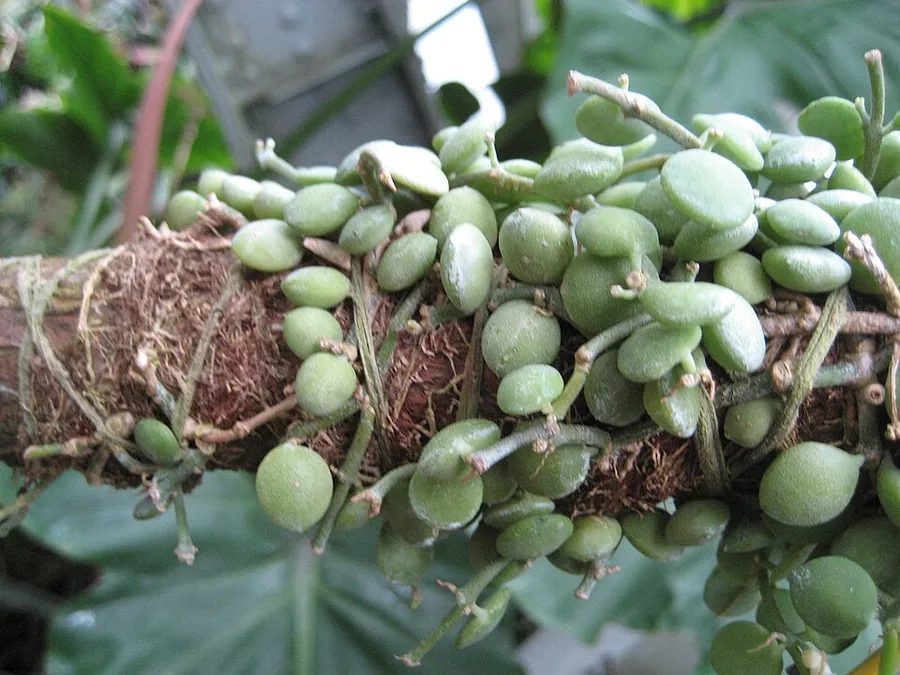
Affectionately called string of nickels for the trailing stems strung with rounded, coin-like paired leaves, this species ranges naturally from southern China through tropical Asia all the way to northern Queensland.
Dischidia ruscifolia
Known as million hearts, it sends out dense trailing stems lined the whole way with small heart-shaped leaves.
Dischidia ovata
The watermelon dischidia charms with oval green leaves striped in silver that warm to a soft pinkish-red tinge when the light is bright.
How to propagate
Making more dischidia is wonderfully forgiving, and one healthy plant happily gives you all the cuttings you could want for new pots or to pass along to friends.
Stem cuttingsEasy
Spring or summer during active growth · A few weeks to root
Stem cuttings are by far the gentlest and most reliable way to make more dischidia, so they are a lovely first project. Take a few in spring or summer while the plant is growing, tuck them into a coarse, moist mix, and they will quietly root in a few weeks. Before long each little cutting fills out into a trailing plant just like the one it came from.
Myths
Dischidia are parasites that harm the trees they climb.
It is easy to assume so, but these plants are epiphytes, and sometimes lithophytes, which simply means they rest on tree bark or rock for support alone. They draw nothing at all from the surface beneath them, sipping their water and food from the air and rain instead. A dischidia never feeds off its host, so the tree comes to no harm whatsoever.