Houseplant · Apocynaceae
Desert Rose
Adenium obesum
Offer it full sun and a good long dry spell between waterings, and the desert rose thanks you with a plump caudex and trumpet blooms.
Full sun
Every 7–14 days
50–86°F · 10–30°C
USDA 11–12
Overview
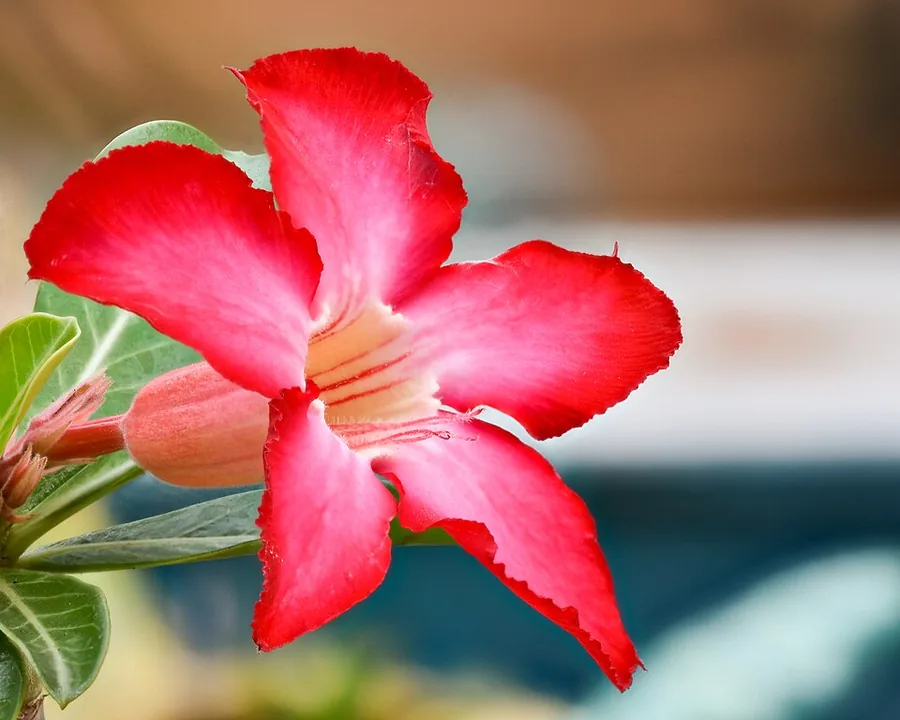
The desert rose is a succulent from the dry country of Africa and Arabia, and people grow it as much for its swollen, sculpted base as for its blooms. That chunky trunk is the caudex, a built-in reservoir that holds water so the plant can coast through long droughts. Kept indoors, it stays slow and compact, perfectly content on a hot, sunny windowsill, which makes it a forgiving choice when you are just starting out.
Once it flowers, the name makes sense. Trumpet-shaped blooms in pink, red, and near-black rise above gray-green leaves all through the warm season. Come winter the plant eases off, slows down, and often sheds its leaves, and that is completely normal, so there is no need to worry when it does.
It asks very little of you, with one rule it really means. Too much water is the quickest way to lose it, since the caudex and roots will rot in soggy soil. Treat it like the desert plant it is, give it grit, sun, and a bit of patience, and you will find it stays with you longer than almost anything else on the sill.
Care
The short version: full sun, a gritty fast-draining mix, and water only after the soil has dried out completely, then ease off firmly through winter. Get those right and the rest forgives a few stumbles.
Light
Give the desert rose all the direct sun you can manage, ideally several hours a day at the brightest window you have. It will cope in bright indirect light, but it tends to stretch and stops flowering, so don't be shy about that sunny spot. South-facing glass suits it beautifully.
Water
Wait until the soil has dried out completely, then water deeply and let it drink its fill. In active growth that often falls somewhere between every 7 and 14 days, but trust the soil over the calendar and you will rarely go wrong. Through winter the plant rests, so cut right back, since a cold, wet caudex rots fast.
Soil
Pot it in a gritty, fast-draining cactus or succulent mix that never holds onto water. A slightly acidic to neutral pH of 6.0 to 7.0 keeps it happy. Sharp drainage matters more than anything else, so if your mix feels heavy, stir in extra grit or pumice and you are set.
Temperature
Keep it cozy, between 50°F and 86°F (10°C to 30°C), and never let frost touch it. At heart it is a tropical plant, so a cold draft or a chilly winter windowsill can genuinely set it back, and moving it somewhere warmer is an easy fix.
Humidity
Ordinary household air is just right, since this is a low-humidity plant that comes from dry country. You can skip the misting and forget about chasing a number, and in fact damp, still air does more harm than help.
Feeding
Feed once a month across spring and summer with a balanced or low-nitrogen liquid fertilizer at half strength. A heavy hand with nitrogen coaxes out leaves instead of flowers, so if blooms are your goal, reach for a feed with more phosphorus and you will be rewarded.
Pruning
Trim in early spring to shape the plant, take out any dead or leggy stems, and invite fresh branching and more flowers. The cut stems ooze toxic milky sap, so slip on gloves and wash your tools afterward, and you have nothing to fear.
Repotting
Move it up every 2 to 3 years in spring as the caudex swells and fills its pot. Watch for roots curling out of the drainage holes or the caudex leaning on the walls, then step up just one pot size so the soil doesn't stay damp around the roots.
Size & spacing
Indoors it stays a slow, easy-to-handle 2 to 5 feet (60 to 150 cm) tall with a spread of roughly 12 to 35 inches (30 to 90 cm). Because it grows so gently, a single plant holds its shape and its spot for years, which takes the pressure right off.
Troubleshooting
Nearly every desert rose hiccup comes down to water or light, which makes them reassuringly easy to read. Glance at the caudex and the leaves and you can usually tell a quiet winter rest from something that needs your help. Find what matches below before you pick up the watering can.
When the caudex turns soft, dark, or squishy at the base
Take a breath: this is root and caudex rot, and while it ends more desert roses than any other problem, you can often save the plant. It shows up when the soil sits wet or the pot stays cold and damp. Put the watering can down, trim back to firm tissue with a clean blade, let the cuts dry and callus, then settle it into a dry, fast-draining mix and give it time.
Fix:
- Stop watering immediately and move to a warm, bright spot
- Cut away all soft rotted tissue with a clean blade until firm tissue remains
- Allow cuts to callus, then repot in dry, gritty, fast-draining mix
Leaves yellowing and falling away
If this happens in autumn or a cold snap, you can relax, because it is almost always just natural dormancy. The plant is settling in for winter and will push fresh leaves once it warms up again. Do give the soil a quick check, since the same yellowing can hint at overwatering, so make sure the caudex feels firm and the mix is draining freely.
Fix:
- Reduce watering and accept natural winter leaf drop
- Ensure adequate warmth and light
- Verify caudex remains firm and soil drains freely
Lots of green leaves, but the flowers never show up
Good news first: a leafy plant is a healthy plant, so you are most of the way there. Shy blooms usually mean the plant is short on light or has had a little too much nitrogen. Give it your brightest window with a few hours of direct sun, and offer a low-nitrogen, higher-phosphorus feed. A cool, dry rest over winter quietly prepares it to flower come spring.
Fix:
- Move to the brightest possible location with several hours of direct sun
- Switch to a low-nitrogen, higher-phosphorus fertilizer
- Allow a cooler, drier rest period in winter to encourage spring bloom
Toxicity
This is the one place to be careful, and a little caution goes a long way. Every part carries a milky sap full of cardiac glycosides, the same family of compound once used as an arrow poison, and it can bring on vomiting, drooling, and dangerous heart-rhythm effects. Keep it well clear of pets, livestock, and children, and pull on gloves any time you prune.
Toxic to
Cats · Dogs · Horses · Rabbits · Livestock · Birds · People
Cats Severe
If a cat chews any piece of this plant, expect drooling, vomiting, and a slump into low energy, and the cardiac glycosides in the sap can push the heartbeat into a dangerous rhythm. Please treat any nibble as an emergency and call your vet.
Dogs Severe
A dog that bites a stem or tastes the sap can begin vomiting, develop diarrhea, and grow weak before long, and an irregular heartbeat is the part to fear most. Head to the vet straight away rather than hoping it passes.
Horses Toxic
Those same cardiac glycosides are hard on horses, bringing colic, drooling, and an unsteady heart rhythm. The safest move is to keep this plant well away from any paddock or barn.
Rabbits Toxic
Even a small nibble puts a rabbit at risk, because the toxins can upset the gut and disturb the heart. Keep every part of this plant out of reach and never let it become forage.
Livestock Toxic
Cattle, goats, and sheep can all be poisoned if they browse the leaves or sap, leading to heart and digestive trouble. Fencing it off entirely from grazing animals is the kind thing to do.
Birds Toxic
Birds are vulnerable to the cardiac glycosides even in tiny amounts, so a curious parrot or wandering chicken is in real danger. Keep cages and free-roaming birds clear of it.
People Caution
No part of this plant is food, and swallowing any of it can bring on vomiting and heart-rhythm effects. The milky sap also stings skin and eyes, so slip on gloves before you prune and keep it somewhere small children cannot reach.
Wear gloves when pruning or handling cut stems, avoid contact with the toxic milky sap, and wash hands and tools thoroughly after contact. All parts, especially the sap, are toxic; keep away from children and pets.
Helpline numbers

United States
ASPCA Animal Poison Control: (888) 426-4435 (fee applies)
Poison Control: (800) 222-1222



Canada
Poison Centres: 1-844-764-7669
Varieties
Most desert roses on the shelf are the plain species, and they are lovely, but a handful of named forms are worth hunting down for their flower color and shape.
Adenium obesum 'Black Knight'
Look for deep red, nearly black trumpet flowers that glow against the gray-green caudex on this cultivar.
Adenium obesum var. swazicum
This is a slimmer form with gentle pink blooms, and it handles summer rainfall more easily than the usual species.
How to propagate
You can grow a desert rose from seed or from cuttings, and your pick decides whether you end up with that prized fat base. Either way, wear gloves, because cut stems weep toxic sap and it is simple to stay safe.
SeedModerate
Spring to early summer when temperatures are warm · Several weeks to germinate; one or more years to develop a notable caudex
Sow seed in spring or early summer once the warmth has truly settled in. It germinates in a few weeks, and you will wait a year or more before a noticeable caudex appears, but patience pays off: seed-grown plants form the fat, swollen base the species is loved for.
Stem cuttingsModerate
Warm growing season after letting cuttings callus · Several weeks to root
Take your cuttings in the warm growing season and let the cut ends callus before you pot them. They root in a few weeks, which is faster than starting from seed, though the trade-off is that cutting-grown plants usually miss out on that swollen basal caudex.
Myths
The desert rose needs frequent watering because it grows in deserts.
It is actually the other way around. That swollen caudex is its own water tank, so the plant prefers long dry gaps between drinks and will rot quickly if the soil stays wet. Underwatering is far safer than overwatering here, which is a relief for anyone who worries about forgetting a watering.