Houseplant · Apocynaceae
Sweetheart Hoya
Hoya kerrii
Treat it like a succulent, give it bright light, and the sweetheart hoya will forgive almost anything.
Bright indirect
45–80°F · 7–27°C
USDA 10–12
Overview
The sweetheart hoya wins hearts with thick, waxy leaves shaped like plump green valentines, and it's a wonderfully forgiving plant to start with. This slow-growing climber comes from the forests of Indo-China and Malesia, where it clambers up trees as an epiphyte. Indoors it stays small and undemanding, and that easygoing nature is exactly why so many nervous first-timers succeed with it.
Most people first meet it as a single rooted heart in a small pot around Valentine's Day, and that's worth understanding so you know what to expect. That sweet version is just one leaf, and it usually stays one leaf, which is perfectly normal and not a mistake on your part. For a plant that actually trails, you'll want a cutting with a stem and a node, and with a little patience it grows into long strands of overlapping hearts.
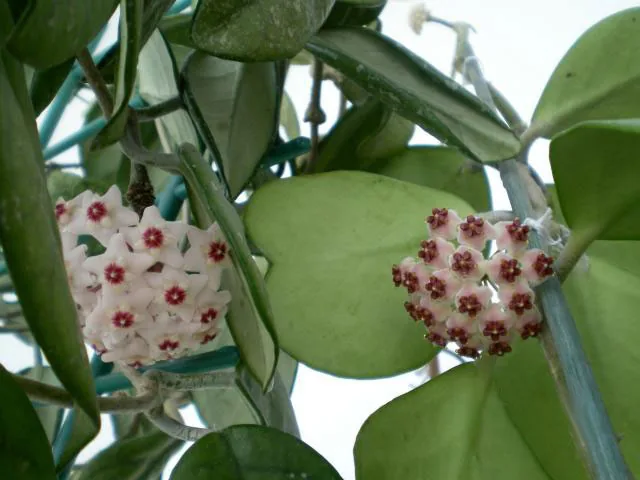
The real secret here is doing less, which is good news if you tend to fuss. Those fleshy leaves carry their own water, so the one habit that gets this plant into trouble is being too generous with the watering can. Give it light, let it dry out, and leave it a touch snug in its pot, and it thanks your patience with clusters of star-shaped flowers.
Care
The short version: bright indirect light, water like a succulent only after the soil dries out, a fast-draining mix, and a pot it can stay a little snug in, and you'll do just fine.
Light
Set it in bright indirect light near a south, east, or west window, and it will keep its rich color and bloom much more readily. It gets by in medium light or gentle shade, though growth slows and flowers seldom appear. Just keep it out of harsh direct sun, which can scorch those waxy leaves.
Water
The kindest thing you can do is water it like a succulent. Those thick leaves hold plenty in reserve, so let the soil dry out completely between drinks, waiting until the top third to half is dry or the leaves start to pucker a little. Ease right off through winter, since overwatering is the main cause of root rot and the surest way to stop it flowering.
Soil
Reach for a fast-draining, loose mix that never stays wet and heavy. A blend of one part potting soil, one part orchid bark, and one part perlite dries out quickly and suits it beautifully. It's relaxed about pH and stays content anywhere from 6.0 to 8.0.
Temperature
Ordinary room warmth is all it wants, somewhere around 45°F to 80°F (7°C to 27°C). Keep it above 45°F (7°C) and away from cold drafts, since it really can't handle a chill.
Humidity
Everyday household humidity suits it just fine, so there's no target to chase. The waxy leaves lock in their own moisture, which makes this plant far more forgiving of dry indoor air than most tropicals.
Feeding
Feed it once a month with a dilute liquid houseplant fertilizer while it's growing, from spring through fall. A formula with an NPK ratio around 2:1:2 or 3:1:2 does the job nicely. Let it rest and skip feeding through winter.
Pruning
As a slow grower it barely asks to be pruned, so relax. The one thing to hold to is this: never cut off the bare flower spurs once the blooms fade, because the plant reuses those same spurs to flower again, and snipping them off costs you next year's show.
Repotting
Only repot every few years, since hoyas bloom better when they're kept a little potbound. Move up a size when roots poke through the drainage holes, water runs straight through, or the plant dries out almost as soon as you've watered it.
Troubleshooting
Nearly every hiccup with this plant comes back to water, light, or expecting a single leaf to do more than a leaf can. Find what matches your plant below, make a small adjustment, and you'll usually catch things long before they become serious.
A mushy, darkened base where the stem meets the soil
A soft, dark base is root rot, and it usually comes down to a little too much water or a pot that stays wet. Those plump leaves already hold their own reserves, so soggy mix smothers the roots quickly. Don't panic, though, because this is recoverable: stop watering, trim away anything mushy, and settle the plant into a fast-draining mix in a pot with drainage holes. Even if the base is lost, a healthy cutting with a node lets you start fresh.
Fix:
- Stop watering and let the soil dry out
- Remove rotted tissue and repot into a fast-draining mix in a pot with drainage holes
- Take a healthy cutting (with a node) to start over if the base is lost
Leaves going thin and crinkly instead of firm and full
Puckered leaves worry a lot of new growers, but the plant is just telling you something, so feel the soil first. Dry mix with firm roots means it went a bit thirsty, and a good soak will plump those hearts right back up. Wet mix with mushy roots points instead to overwatering that has hurt the roots so they can't draw water in, and there the kindest move is better drainage and time to dry out.
Fix:
- If too dry, water thoroughly and resume a regular let-it-dry cycle
- If overwatered, correct drainage and let the soil dry before watering again
Sticky spots, odd-looking fresh shoots, or little insects on your plant
Now and then sap-sucking pests such as mealybugs, aphids, spider mites, and scale find their way to a hoya, and that's a common bump, not a failure. Watch for white cottony fluff, tiny soft insects, fine webbing with speckled leaves, or little bumps along the stems. Wipe them away and treat with insecticidal soap or horticultural oil, then keep the plant apart from the others and repeat until it's clean again.
Fix:
- Wipe off pests and treat with insecticidal soap or horticultural oil
- Isolate the plant and repeat treatment until clear
One little heart that stays a single leaf, no vine in sight
If your little potted heart has sat unchanged for ages, you haven't done anything wrong. That charmer is almost always a single leaf with no node, and without a growth point it simply has no way to push out a stem. It can live happily and green for years just as it is, so enjoy it. When you're ready for a trailing plant, all you need is a stem cutting that carries at least one node.
Fix:
- Accept that the leaf will likely remain a single leaf (it can stay green and alive for years but will not vine)
- If you want a vining plant, obtain a stem/tip cutting that includes at least one node
Everything looks fine, yet no flowers ever appear
A bloom-shy plant is nearly always asking for more light, so ease it closer to a south, east, or west window where the light is bright but not direct. Go a little lighter on the water as well, since damp roots keep flowers away. Remember that single leaves and very young plants simply aren't old enough to bloom, so give them time. Most of all, leave those old flower spurs right where they are, because the plant flowers from them again and again.
Fix:
- Move to a brighter spot with bright indirect light near a south/east/west window
- Reduce watering and let the soil dry between waterings
- Be patient and do not cut off the flower spurs
Toxicity
Here's a reassuring word for anyone with animals at home: the sweetheart hoya is non-toxic and pet-safe. Both the ASPCA and NC State Extension list it as safe for cats, dogs, and horses, and the rest of the household has nothing to fear either. A pet that overindulges on any plant might feel a brief stomach ache, but there are simply no real toxins in play here.
Safe for
People · Cats · Dogs · Horses · Rabbits · Livestock · Birds
Cats None
You can breathe easy with a cat in the house, because the ASPCA and NC State Extension both class this hoya as non-toxic to cats. Should a cat overindulge on any houseplant, a little drool or a passing upset stomach is the most you'll see, and it settles by itself.
Dogs None
Dogs are just as safe, sharing that same non-toxic listing from the ASPCA and NC State Extension. A curious chewer might end up with a bit of mild, short-lived tummy upset, and nothing more serious than that.
Horses None
You needn't worry about horses either, since the ASPCA and NC State Extension both mark this one non-toxic to them.
Rabbits Safe
A rabbit faces no toxins here at all. Just offer any new greenery in small amounts, so a sudden big helping doesn't upset a delicate tummy.
Livestock Safe
Kept indoors, this plant rarely crosses paths with grazing animals, and it holds nothing that could hurt them regardless.
Birds Safe
A pet bird can perch and nibble around the waxy leaves in safety, as the plant carries no compounds known to bother them.
People Safe
There's nothing poisonous in this hoya for people, so if a child sneaks a taste, there's no need to fret. It just isn't a plant grown for eating, so leave it off the menu.
Considered pet-safe; no special handling for toxicity is required, though pets eating any plant may have mild, transient GI upset
Varieties
The plain green form is what you'll see most, but there's one lovely named variety worth keeping an eye out for in plant shops.
'Variegata'
You'll spot this one by the green heart at the center of each leaf, wrapped in a gentle creamy-white edge that gives it a lighter, brighter look than the plain green plant.
How to propagate
Making more of this plant is genuinely easy, and the whole secret is simply making sure your cutting includes a node.
Stem cuttingsEasy
Spring to summer · Roots in a few weeks
This is friendlier than it sounds, so don't be shy about trying. Take a stem or tip cutting with at least one node in spring or summer while the plant is growing, stand it in a fast-draining mix, and it roots in a few weeks. Just skip the bare single leaf, because it will root and live but has no node and so never turns into a vine.
Myths
That one rooted heart in its little pot will eventually stretch out into a whole trailing hoya.
It's easy to hope so, but here's the gentle truth: a bare leaf will happily root, yet without a node it has no growth point, so it stays one leaf. Penn State Extension puts it plainly, calling the cute potted heart simply a single leaf of H. kerrii that stays just as it is and never becomes a vine. For a trailing plant, look for a cutting that includes a node and a bit of stem.