Ornamental · Apocynaceae
Butterfly Weed
Asclepias tuberosa
Find it a sunny, dry corner of poor soil, give it room, and the monarchs will come looking for you.
Full sun
USDA 3–9
1–3 ft · 0.3–0.9 m
Overview
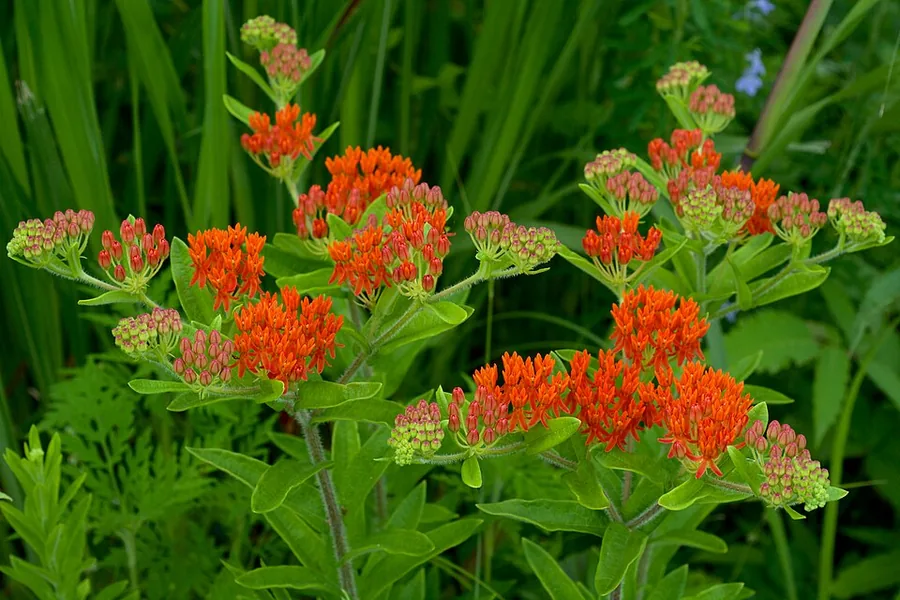
Butterfly weed is the friendly orange milkweed that quietly thrives when you let it be, which makes it a wonderful choice for a first perennial. This sturdy native perennial feels at home across dry meadows and roadside ground, content with thin soil and plenty of sun, and once it has settled it asks almost nothing of you. Its flat heads of orange bloom open from late spring into summer and draw in butterflies, bees, and other pollinators all season long.
The thing that truly sets it apart is the part it plays in the wider web of life. Along with the rest of the milkweed clan, it is a host plant for monarch caterpillars, who graze the leaves and tuck away the plant's bitter compounds to guard themselves. That very chemistry is why every part of it is toxic if eaten, even as it earns a cherished place in any wildlife garden.
Growing it well comes down to patience and a soft touch, and any early missteps are easy to put right. It anchors itself with a deep taproot, needs a season or two to find its feet and flower, and would much rather not be moved or pampered. Offer it that warm, dry spot from the very start, hold back the fertilizer and the extra watering, and it will thank you by returning a little stronger each year.
Care
The short version: give it full sun, lean and dry well-drained soil, and only a sip of water once it has rooted in. Leave the fertilizer on the shelf, let the deep taproot rest where it is, and be patient through a year or two before it truly blooms.
Light
Hand butterfly weed full sun, at least six hours of it each day, and it will reward your kindness. It can scrape by in part shade, but you lose its tidy upright shape and most of the flowers, so a bright, open spot is where it really comes alive.
Water
Keep young plants watered until their roots take hold, and from then on you can water rarely. Once settled it is drought tolerant and far more content dry than wet, since waterlogged ground rots the crown. Let the soil dry right out between drinks and it will be perfectly happy.
Soil
Lean wins over rich with this one, so there is truly no need to fuss over your ground. It does beautifully in average to poor, dry to medium, well-drained soil and takes clay, sand, loam, or shallow rocky ground in stride, as long as water drains away freely. A pH between 6.0 and 7.0 suits it just fine.
Temperature
This is a tough, cold-hardy native that shrugs off a wide swing in temperature, from -40°F to 100°F (-40°C to 38°C), carrying it comfortably through USDA zones 3 to 9. It dies back to the ground each winter and rises again from the taproot come spring, so do not fret when it vanishes for a while.
Humidity
Plain outdoor air is everything it wants, so there is no number for you to chase. Air that moves freely matters far more than any humidity reading, since still, damp air around the leaves is what tempts rust and leaf spot to move in.
Feeding
You can cheerfully skip feeding this one. Butterfly weed grew up on thin, lean ground, and extra richness works against it, leaving you with floppy stems and fewer blooms. Leave the fertilizer be and let the plant be itself.
Pruning
Pruning here is light and forgiving, so relax. Cut the spent stems down to the ground in late fall or early spring, and trim off the seed pods before they split if you would rather it not spread about. Leave settled plants right where they stand, since that taproot will not forgive a move.
Size & spacing
A grown plant stands about 1 to 3 feet (30 to 91 cm) tall and gathers into a neat clump roughly 12 to 18 inches (30 to 46 cm) across. Allow it that little bit of elbow room so air drifts through freely and the leaves stay nicely dry.
When to plant
Butterfly weed keeps a slow, gentle rhythm with the seasons, so there is no need to hurry. Begin seed in late winter after a good cold spell, or sow it in fall and let winter do the chilling for you, then ease young plants outside in spring once the frost is past. Blooms unfold from late spring through summer, and although a seed-raised plant often takes 2 to 3 years to put on its first real show, the wait truly pays off.
Northern hemisphere
Southern hemisphere
Typical months for a temperate climate: start earlier in warm zones, later where spring frosts linger.
- Sow: Late winter, about 8 to 10 weeks before last frost, after 30 days cold moist stratification
- Plant: Spring after last frost, or direct sow in fall to allow natural cold stratification
- Harvest: Late spring through summer (roughly May to August)
Hardiness
USDA hardiness zones: 3–9
Temperature: down to -40°C
Troubleshooting
Butterfly weed hands you very little to fret over, and most of its small troubles spring from too much care rather than too little. Overwatering and overly rich soil bring far more grief here than any insect ever could. Find the match below, then set the watering can aside before you reach for anything stronger.
Mushy darkened bases and a plant that has slumped
What you are seeing is crown and root rot, and the cause is nearly always ground that holds onto too much water. This plant longs for a dry, fast-draining spot, so put the watering can away and loosen up that drainage before more harm is done. A crown that has already softened cannot recover, yet that is no fault of yours, and your next planting will flourish in full sun on poor, gritty ground.
Fix:
- Improve drainage and stop supplemental watering
- Plant in lean, well-drained or rocky soil in full sun
A recently shifted plant that sulks and slips away
Butterfly weed anchors itself with one long, fleshy taproot that truly hates being disturbed, so lifting a settled clump tends to be its undoing. The kindest move is to pick its lasting home the day you plant it and then let it stay put. Should you wish for more, just sow fresh seed exactly where you want new plants, and you will enjoy the same happy result without any heartache.
Fix:
- Leave established plants undisturbed
- Start new plants from seed in place rather than transplanting
Bright little clusters huddled at the growing tips
Breathe easy, since those vivid specks are just oleander aphids, drawn to the softest new shoots and rarely a lasting threat. A steady rinse from the hose, repeated every two or three days for a week, washes most of them away on its own. When only a handful turn up, you can leave them in peace, because harsher sprays would also harm the monarch caterpillars and ladybugs this plant was meant to welcome.
Fix:
- Knock aphids off with a strong spray of water every two or three days for about a week
- Tolerate minor infestations to protect monarch larvae and beneficial insects
Orange bumps or dark flecks scattered over the foliage
Raised orange bumps that smudge into powder point to rust, while flat, dark patches usually mean a leaf spot fungus. Both creep in when foliage stays wet and the surrounding air goes still, and happily the cure is gentle. Pluck away the marked leaves, send your water down to the soil instead of the leaves, and leave a little space between plants so passing air can keep them dry.
Fix:
- Remove and discard affected foliage
- Improve air circulation by spacing plants
Toxicity
This is a milkweed, so it carries one honest caution worth holding in mind. Every part of it contains cardiac glycosides that upset the stomach and, in larger amounts, trouble the heart, which makes it toxic to cats, dogs, horses, rabbits, livestock, birds, and people alike. It is also a treasured host for monarch caterpillars, so the happy aim is to grow it for the wildlife while gently keeping pets, grazing animals, and children from eating it.
Toxic to
Cats · Dogs · Horses · Rabbits · Livestock · Birds · People
Cats Mild
A nibbling cat may turn off its food and grow tired and weak, with vomiting and diarrhea along the way, and a much bigger mouthful could bring seizures, hard breathing, a weak or racing pulse, widened pupils, and strain on the heart.
Dogs Mild
A dog that tastes it usually ends up with a queasy stomach, vomiting, diarrhea, little appetite, tiredness, and weakness, while a large helping can lead to seizures, labored breathing, a weak or fast pulse, dilated pupils, and trouble for the heart.
Horses Moderate
A horse can go dull and weak with vomiting and diarrhea, and a heavier dose may leave it staggering, with seizures, a weak or rapid pulse, breathing difficulty, and even failure of the heart.
Rabbits Toxic
Gently keep rabbits from nibbling the leaves. The very cardenolides that trouble cats and dogs reach a small grazer in no time, bringing on gut upset, weakness, and an unsteady heartbeat.
Livestock Severe
In cattle and sheep you may notice weakness, staggering, hindquarter weakness, seizures, and coma within hours, which can sadly end in death from heart and breathing failure.
Birds Toxic
Keep poultry and pet birds comfortably away. The leaves and seeds hold those same heart-affecting compounds, which land hard on a small bird, so any pecking is a genuine risk.
People Caution
No part of this plant belongs in a meal. Eating any amount can churn the stomach and unsettle the heart, and the sap may sting bare skin and eyes, so wear gloves and gently keep children from chewing the leaves or pods.
Keep grazing animals away from the plant, as livestock such as cattle, sheep, and horses can be seriously poisoned. Wear gloves when handling, as sap may cause skin and eye irritation.
Helpline numbers

United States
ASPCA Animal Poison Control: (888) 426-4435 (fee applies)
Poison Control: (800) 222-1222



Canada
Poison Centres: 1-844-764-7669
Varieties
Most gardeners grow the wild orange form and adore it, though a handful of named selections appear at nurseries from time to time. These are the ones worth getting to know.
Hello Yellow
A sunny pick that swaps the usual orange for soft, glowing yellow blooms you will love.
Blonde Bombshell
A yellow-flowering choice raised for tall, willing growth and a generous show of blooms.
subsp. interior
The wild interior subspecies from the heart of the United States, recognized by the shape of its leaves and their base.
How to propagate
Butterfly weed comes almost entirely from seed, since that deep taproot makes the usual cloning shortcuts awkward. Sow it where it is meant to settle, give it time, and trust that it will come along.
SeedModerate
Sow after about 30 days of cold moist stratification in late winter, or direct sow in fall for natural stratification · Typically 2 to 3 years from seed to first flowering
Seed is the kindest route to more butterfly weed, and all it asks of you is a little patience. Give the seed roughly 30 days of cold, damp chilling first, either by sowing in late winter or by tucking it in come fall and letting the season handle that step, and far more of it will wake up and sprout. Settle it straight into its forever home, since the deep taproot would rather not be moved, and look forward to the first flowers in 2 to 3 years.
DivisionModerate
Early spring, only on younger plants if at all · Slow; the deep taproot resents disturbance
Prying a clump apart seldom pays off and usually is not worth the fret. The long taproot bristles at any disturbance, so a divided plant is slow to find its feet and the attempt is best saved for young plants in early spring, if you try it at all. Root cuttings give you a far surer way to raise new plants without ever unsettling a crown that has already taken hold.
Myths
Butterfly weed oozes milky sap and leaves a sticky mess like other milkweeds.
Here is a happy surprise: this is the milkweed that spares you the goo. Where its relatives ooze white, its sap runs clear, so your hands stay clean as you work. The cardenolides are still present and the sap can sting skin and eyes, so it is kind to yourself to wear gloves anyway.
Every milkweed is equally and dangerously toxic.
Take comfort in knowing the cardenolide load shifts quite a bit from one milkweed to the next. Butterfly weed settles near the gentle end of that scale, which makes it much milder than most of its cousins, though gentle is not the same as harmless, and it stays toxic to pets and grazing animals.