Tree · Betulaceae
River Birch
Betula nigra
Plant it in moist, acidic soil with plenty of sun, and river birch will reward you with fast growth and peeling, cinnamon bark.
Full sun
Every 3–7 days
USDA 4–9
40–70 ft · 12.2–21.3 m
Overview
If you are new to trees, river birch is a kind place to begin. It grew up along stream banks and floodplains across the eastern United States, so it takes wet feet, heavy clay, and even a passing flood in stride. Where fussier birches sulk in heat and soggy ground, this one simply settles in and grows, which leaves plenty of room for beginner mistakes.
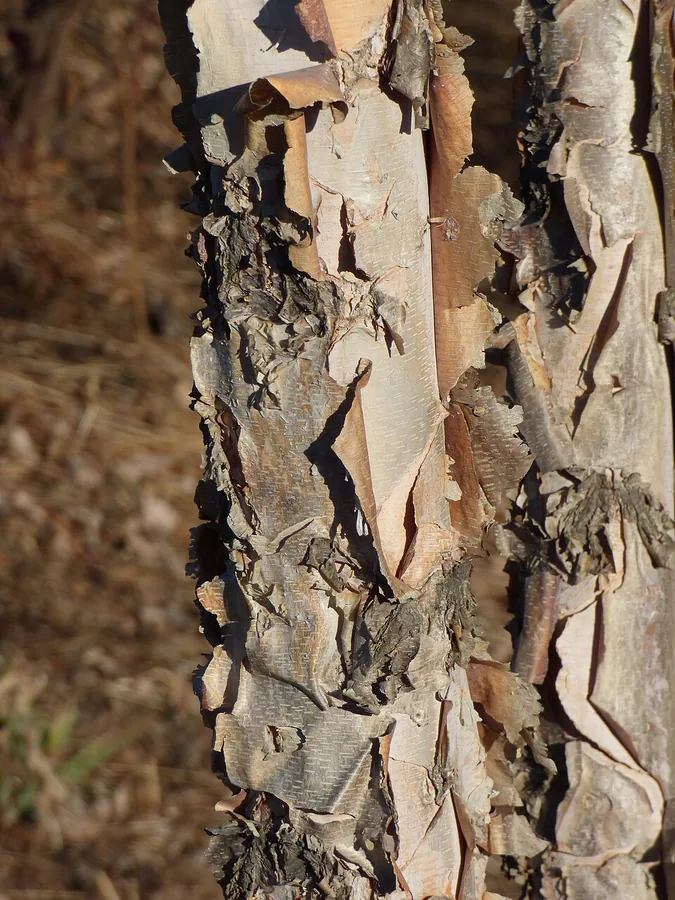
The bark is the part you will fall for. A young tree peels back in soft papery curls of salmon, cinnamon, and cream, and it only grows lovelier as the trunk ages and the plates turn ragged and dark. It climbs well past 40 feet and is often raised as a graceful multi-stemmed clump, so pick a spot where it can stretch out in comfort.
There is more to love here than good looks. River birch is the most disease-free birch and the one least bothered by the bronze birch borer that finishes off white-barked kinds, so you can relax about the pests that trouble other trees. Set it in acidic ground, keep the roots cool and moist, and it will ask very little of you after that.
Care
The short version: give it full sun, moist to wet acidic soil, and steady water while it finds its feet. Lay mulch over the roots, wait until summer or fall before you prune, and leave it plenty of room to spread. Small missteps here are easy to forgive.
Light
River birch is happiest in full sun, though it will accept partial shade without any fuss. The more sun it gets, the fuller its crown and the richer its bark color, so give it an open spot when you can and it will thank you.
Water
This tree loves moist to wet, acidic soil, and it will even sit out a flood without harm, though it may shed a few interior leaves in a dry summer spell. A soaker hose and a comfortable layer of bark mulch keep the roots cool and damp, which is exactly the treat it hopes for.
Soil
Almost any moist to wet, acidic ground suits it, whether loam, sand, or clay, and it forgives the poor drainage that would trouble other trees. Try to keep the pH between 5.0 to 6.5, since sweeter, more alkaline soil is what turns the leaves yellow.
Temperature
River birch is wonderfully tough in both cold and heat, handling anything from -29°F to 100°F (-34°C to 38°C). That comfortable range spans zones 4 through 9, so it will feel at home across most of the country.
Humidity
There is no humidity target to fret over here, since ordinary outdoor air is plenty. What the tree truly cares about is steady moisture at its roots, not any dampness in the air around it.
Feeding
A spring feeding of balanced fertilizer or a little compost is all it might want, and in rich soil it often needs nothing at all. Go gentle with the nitrogen, because a rush of soft new growth is just an open door for aphids.
Pruning
Happily, river birch asks for very little pruning, and the main thing to remember is when. Make any cuts in summer or fall and never in late winter or spring, since the rising sap will make fresh wounds weep heavily.
Repotting
This is a landscape tree at heart, not a pot dweller, so it rarely stays in a container for long. If a nursery plant begins circling its roots or stalling in its pot, the kindest move is to settle it into the ground.
Size & spacing
River birch grows quickly to a lovely 40 to 70 feet (12 to 21 m) tall, spreading 40 to 60 feet (12 to 18 m) wide. Plant it a good distance from foundations and pavement, and let it have all the elbow room it needs to fill out.
When to plant
River birch feels at home anywhere from zones 4 to 9, and the easiest time to plant it is spring or fall, while the weather stays mild. Its soft yellow-brown catkins open in April and May, arriving before the leaves unfurl for the year.
Northern hemisphere
Southern hemisphere
Typical months for a temperate climate: start earlier in warm zones, later where spring frosts linger.
- Plant: Spring or fall
- Harvest: April to May (catkins)
Hardiness
USDA hardiness zones: 4–9
Temperature: down to -34°C
Troubleshooting
Even an easygoing tree has the odd off day, and with river birch almost everything traces back to soil pH or pruning at the wrong moment. The good news is that the early signs are simple to read, and catching them soon usually means an easy fix. Find your symptom below, then act gently while it still helps.
Yellowing leaves that keep green veins
When the leaves fade to yellow while the veins stay green, the tree is running short on iron, a condition called iron chlorosis that shows up when the soil turns too alkaline for the roots to draw iron in. Start down in the ground: work in elemental sulfur to gently bring the pH down, follow with chelated iron, and keep the root zone mulched, moist, and on the acid side. River birch only holds its green in acidic soil, so it stays happiest well away from limed or chalky spots.
Fix:
- Acidify soil with elemental sulfur to lower pH
- Apply chelated iron to soil or as foliar spray
- Mulch and keep soil moist and acidic
Curling leaves under a sticky film
Soft little aphids gathered on the undersides of the leaves are behind this, and the sticky honeydew they leave is what gives them away. A firm spray of water usually knocks most of them loose, and insecticidal soap or horticultural oil will see to any that cling on. Lady beetles and their friends will tidy up the rest, so ease off the nitrogen and keep the tree well watered to head off the next wave.
Fix:
- Spray plants with a strong jet of water
- Apply insecticidal soap or horticultural oil
- Encourage beneficial predators such as lady beetles
Dark spots dotting the leaves
A damp season can bring on fungal leaf spot, which may drop a few leaves early but almost never causes any lasting harm. Gather up and bin the fallen infected leaves, thin the canopy a little so air can move through, and try to keep water off the foliage. Since river birch is one of the most disease-free birches, a resistant cultivar and a tidy cleanup are usually all you need.
Fix:
- Rake and remove fallen infected leaves
- Improve air circulation
- Avoid overhead watering
Sap weeping from fresh cuts
Make a cut in late winter or early spring and a river birch will keep weeping clear sap, because the tree is bleeding sap as it rises for the season. It looks worse than it truly is, does no real damage, and no sealant will plug it. The gentle answer is to set the pruners down until the tree is in leaf, let the wounds close on their own, and from then on prune only in summer or fall.
Fix:
- Stop pruning until summer or fall
- Allow cuts to seal naturally without sealant
Toxicity
You can breathe easy with this one. The leaves, bark, twigs, and seeds hold nothing toxic, so river birch is no danger to pets, livestock, or children. If a curious pet or child has a nibble, there is truly nothing to worry about.
Safe for
People · Cats · Dogs · Horses · Rabbits · Livestock · Birds
Cats None
River birch is not toxic to cats, so if yours bats at a low leaf or chews a twig, there is no poisoning to fear.
Dogs None
A dog can gnaw the bark or carry off a fallen twig with no harm done, since nothing in this tree is poisonous to them.
Horses Safe
Horses grazing near a river birch are perfectly safe, because the leaves and bark hold no toxins at all.
Rabbits Safe
Rabbits that nibble the bark or tender young shoots will be just fine, as river birch carries nothing that could hurt them.
Livestock Safe
Cattle, goats, and sheep can browse the foliage without worry, since the tree is not poisonous to grazing animals.
Birds Safe
Birds happily feed on the small seeds tucked into the catkins with no risk, and the tree gives them no trouble.
People Safe
River birch is no poisoning danger to people either, including little ones who like to handle the bark or leaves.
No special handling required for toxicity; this is a large landscape tree, not a houseplant.
Varieties
A handful of named cultivars have been raised for prettier bark, a smaller frame, or extra heat tolerance. These are the ones you are most likely to meet at the nursery, and any of them makes a friendly choice.
Heritage ('Cully')
One of the most vigorous and borer-resistant choices, it curls back its salmon-cream to brown bark to reveal a creamy white inner bark beneath.
Dura-Heat ('BNMTF')
A more compact tree at 30 to 40 feet, this one wears creamy white bark and shrugs off summer heat and disease better than most.
Summer Cascade
This is the graceful weeping form, its branches spilling and cascading softly toward the ground.
How to propagate
River birch can be raised from seed or from softwood cuttings, and both simply ask for a little patience. Here is how each way works, with a gentle sense of how long to wait before your young tree is ready to move.
SeedModerate
Collect and sow seed in late spring after catkins ripen · 1 to 2 growing seasons
Seed is the usual route for river birch. Gather it in late spring once the catkins ripen, then sow it fresh over a moist substrate, since the seed will not keep. Allow it 1 to 2 growing seasons to establish before you move the young tree to its final home.
Stem cuttingsModerate
Early summer using softwood cuttings · Several weeks to root, one season to establish
You can also raise river birch from softwood cuttings taken in early summer and rooted under mist. They need several weeks to root and a full season to settle, so this path asks a bit more patience than seed does.
Myths
The bronze birch borer kills every birch, so river birch is bound to succumb to it as well.
In truth river birch is the most borer-resistant birch there is, and it shrugs off the bronze birch borer that fells stressed white-barked birches. If you want a birch the borer will leave alone, this is the one to plant.