Tree · Anacardiaceae
American Smoketree (Tree Form)
Cotinus obovatus
Hand it lean, dry soil and plenty of sun, and the American smoketree rewards you with its soft summer haze and a warm rush of fall color.
Full sun
Every 7–21 days
USDA 4–8
20–30 ft · 6.1–9.1 m
Overview
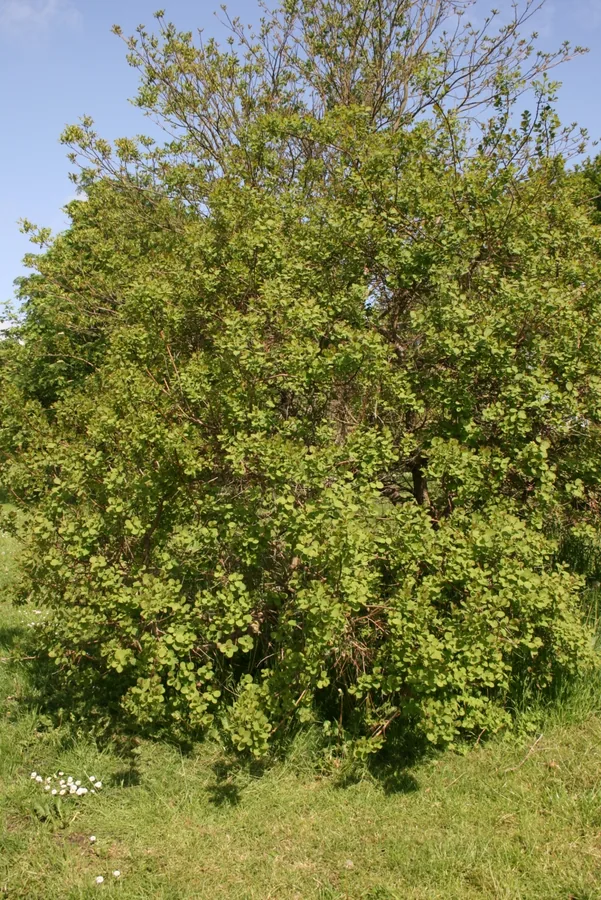
If you have room for a small tree and a little patience, the American smoketree is a kind place to begin. It earns its name from the soft, smoke-like clouds that seem to hover over its branches in early summer. Trained to a single trunk, it grows a comfortable 20 to 30 feet (6 to 9 m) tall, standing taller and more upright than the European smokebush you may already know. It sits in the same family as cashews and sumacs, and it shares their gift for growing happily where fussier plants sulk.
The best part for a nervous grower is how little this tree asks of you. Once its roots settle in, it takes dry spells in stride, makes peace with poor, rocky, and even alkaline limestone ground, and shrugs off cold down to -29°F (-34°C). Better still, the effort you save actually helps, because the leaner and drier you keep the soil, the more freely it blooms and the brighter its autumn leaves turn.
The one thing worth offering is time, and it gives plenty back. Growth is slow, yet each year brings two gentle payoffs, first that hazy summer bloom and then foliage that warms to orange, red, and purple before it falls. Set it in full sun, keep the soil open and quick to drain, and this is a tree that will stand beside you for decades.
Care
The short version: give it full sun and lean, sharp-draining soil, and water steadily only while it is young and settling in. After that it looks after itself through dry spells, wants little or no feeding, and needs just a light trim now and then to hold its shape.
Light
Give your smoketree a spot in full sun, where it flowers hardest and colors up most warmly in fall. It will happily accept partial sun or light shade if that is what you have, though a little of that smoky bloom and autumn glow slips away with every hour of shade.
Water
While the tree is young and rooting in, water it on a steady rhythm, somewhere around every 7 to 21 days depending on how hot and dry the weather runs. Once it is established you can relax, since it is drought tolerant and only really wants a drink during a long dry stretch. Do try to keep it out of soggy ground, because wet feet are what open the door to disease.
Soil
This tree feels most at home in lean, well-drained ground, and it cheerfully adapts to poor, dry, rocky, clay, and alkaline limestone spots that would stop pickier plants cold. It copes with a broad pH range from 5.5 to 8.5, so most of the time you will not need to amend the soil at all.
Temperature
Few climates faze the American smoketree, which stays comfortable anywhere from -29°F to 100°F (-34°C to 38°C). That generous span is a big part of why it makes such a dependable, low-worry tree for so many gardens.
Humidity
There is no humidity target to chase here, since ordinary outdoor air suits it just fine. What really counts is steady air movement and soil that dries out, because still, damp conditions are what let leaf fungi and rust settle in.
Feeding
Feed this one with a light hand, or skip it altogether, because it truly prefers hungry, infertile ground. Too much fertilizer will cost you flowers and fall color, so if you feed at all, keep it gentle and do it in spring.
Pruning
You barely need to prune, which is a relief for anyone still finding their footing. Work in late winter or early spring to shape it, clear out any dead or crossing wood, and guide it toward a single trunk. Keep a light hand, because the smoky plumes appear on wood from the previous season, and cutting hard trades the show away.
Repotting
A smoketree almost never needs repotting and is happiest given a permanent home in open ground. If you are nursing a young one along in a container, only size it up when you notice roots circling the rim or slipping out the drainage holes.
Size & spacing
Grown as a tree, this one gets sizable, climbing to 20 to 30 feet (6 to 9 m) tall and spreading nearly as wide. Give it that much elbow room away from walls and neighboring trees so the crown can open up and air can drift through freely.
When to plant
Plant your smoketree while it is resting, which means spring or fall, so the roots can settle before summer heat or winter cold arrives. Its smoky bloom drifts open across May and June and lingers as a soft haze all summer, and the real reward comes when the leaves turn in autumn.
Northern hemisphere
Southern hemisphere
Typical months for a temperate climate: start earlier in warm zones, later where spring frosts linger.
- Plant: spring or fall
- Harvest: May to June, with the smoky display persisting through summer
Hardiness
USDA hardiness zones: 4–8
Temperature: down to -34°C
Troubleshooting
This is a forgiving, low-trouble tree, and the little that goes wrong almost always traces back to soggy soil or a stressed plant. Keep a gentle eye on the branches and leaves for the two issues below, and step in early while a small fix still counts.
Branches fading and dying back one at a time
What you are seeing is verticillium wilt, a fungus living in the soil that works up through the tree's water channels and slowly starves whole branches. Slice into a struggling limb and you will often spot dark streaks running through the wood. There is no cure to reach for, so take the dead wood off well below where the trouble shows, keep the tree watered through any drought, and never set a species prone to it back into that same ground.
Fix:
- Prune out and destroy affected branches well below symptoms
- Keep the tree vigorous with appropriate water during drought
- Do not replant susceptible species in confirmed infested soil
Leaves freckled with spots or orange pustules
These marks are leaf spot and rust fungi, and they tend to turn up on trees that are already stressed. The harm is only skin deep and rarely worth losing sleep over. Gather and bin the fallen leaves, thin the canopy so air can pass through, and put right whatever wore the tree down to begin with, whether that was a dry spell or a waterlogged site.
Fix:
- Rake and remove fallen infected leaves
- Improve air circulation and avoid overhead watering
- Reduce plant stress with proper siting and watering
Toxicity
Here is some reassuring news if you share your home with animals: the American smoketree is safe around pets and people and stays off the ASPCA poison lists. The only thing to remember is that its sap, like that of its sumac cousins, can leave sensitive skin a bit itchy, so slip on gloves before you prune.
Safe for
People · Cats · Dogs · Horses · Rabbits · Livestock · Birds
Cats None
Even a nibbling cat comes to no harm here, because this tree holds no toxins that affect them.
Dogs None
This tree is safe for dogs, and gnawing a leaf or twig will not do them any harm.
Horses Safe
Horses grazing nearby have nothing to worry about from a smoketree.
Rabbits Safe
The leaves carry nothing that would upset a rabbit.
Livestock Safe
Sheep, goats, and cattle come to no harm sharing a pasture with it.
Birds Safe
Birds that nest or feed among the branches run no risk at all.
People Safe
The tree will not poison anyone, though its sap may leave tender skin slightly irritated, so keep gloves on for pruning.
The plant is in the Anacardiaceae (cashew/sumac) family, and its sap contains urushiol-type compounds that may cause mild contact dermatitis in sensitive people; wear gloves when pruning. This does not affect pet toxicity rating.
Varieties
Smoketrees fall roughly into the bigger American native and the flashier European kinds and their crosses. The few below are the ones you are most likely to find and coax into tree form.
Cotinus obovatus (American smoketree, species)
The native species grows bigger and more genuinely tree-like than the European smokebush, flares into orange-red-purple in autumn, and has a real talent for dry, rocky, and alkaline soil.
Cotinus coggygria 'Royal Purple'
A purple-leaved European smoketree, 'Royal Purple' darkens to an almost-black maroon and usually grows as a multi-stemmed shrub, though you can train it into a small single-trunk tree.
Cotinus x 'Grace'
'Grace' is a strong hybrid of the American and European species, carrying big purple-red leaves and a showy pink smoke, and it can also be trained as a small tree.
How to propagate
There are three easygoing ways to make more smoketrees, from seed, from cuttings, or by layering, and the right one for you comes down to whether you want the wild species or a named cultivar kept true.
SeedModerate
Fall (sow outdoors) or stratify for spring · 1-2 growing seasons
Growing one from seed rewards a patient hand. The seed sleeps until it meets a cold spell, so either sow it outdoors in fall or chill it for a spring start to break that dormancy and lift germination. The wild species stays true when grown from seed, and a young plant needs one to two growing seasons to find its feet.
Stem cuttingsModerate
Early to mid summer (softwood) · Several weeks to root, then 1-2 seasons
For softwood cuttings, snip them in early to midsummer and root them under mist, where they usually take hold within several weeks before settling in over the following season or two. This is your path for named cultivars, since only cuttings carry them faithfully back to the parent.
LayeringEasy
Spring · 1 growing season or more
Layering is the gentlest option of all. In spring, bend a low branch down to the ground and pin it, let it grow roots right there over a season or more, then cut it free as a fully formed young plant.
Myths
The smoketree must be as dangerously poisonous as its poison ivy and poison sumac cousins.
They do share a plant family, but they do not share the danger. Cotinus is not counted among plants toxic to pets and never appears on the ASPCA lists. The single caveat is the sap, which can leave tender skin mildly irritated, so pull on gloves before any pruning.
American smoketree has to have rich, fertile, moist soil before it will do well.
It is really the other way around. This tree craves well-drained, infertile ground and laughs off drought, doing its finest work on poor, dry, rocky, and alkaline sites. Drown it in water and fertilizer and you simply swap away the blooms and the fall color.