Tree · Anacardiaceae
Pistachio
Pistacia vera
Offer it long hot summers and a partner tree close by, and this patient pistachio pays you back in split-shell nuts.
Full sun
Every 10–21 days
USDA 7–11
20–30 ft · 6–9 m
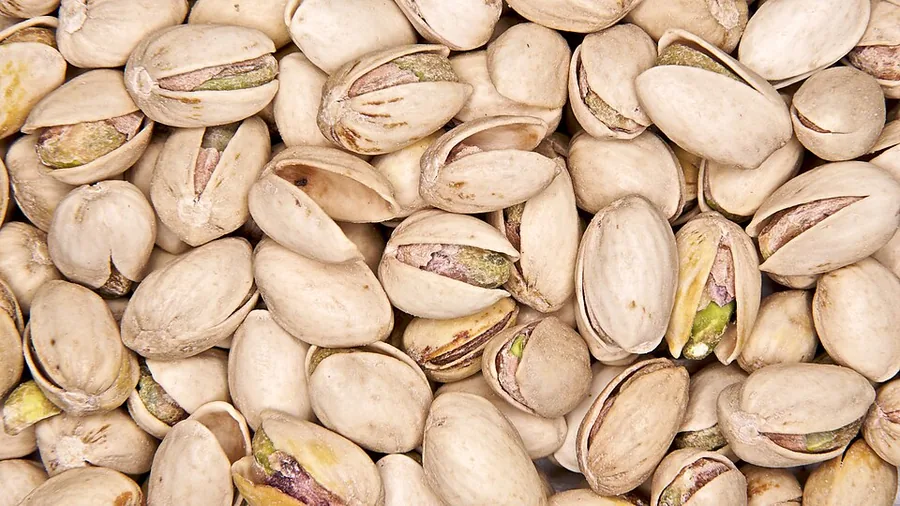
Overview
Take comfort in the pistachio's patient nature. This long-lived nut tree hails from the dry uplands of western Asia and counts the mango and the cashew among its relatives. Season by season it fills out into a wide, spreading shape that eventually stands 20 to 30 feet (6 to 9 m) tall and equally broad. You are planting for the decade ahead, not for this year, and that is perfectly all right.
Here is the one thing to grasp up front, and it is nothing to fret over: pistachios keep their male and female blooms on different trees. A female bears the nuts, yet she will stay empty until a male grows close enough for the wind to ferry pollen her way. Arrange for the pair from the beginning and you sidestep the letdown of a fine tree that never sets fruit.
Pistachio also has clear preferences about weather, and meeting them is the kindest thing you can do. It thrives on scorching dry summers, a genuine winter chill, and air kept low in moisture, the very climate of California's Central Valley and of Mediterranean lands. Set it in damp, mild surroundings and the harvest gives way to fungal blight, so pick the spot with care.
Care
The short version: give it full sun, water that is deep but occasional, and a canopy kept dry in alkaline, free-draining ground. Set a male beside the females, feed steadily across the growing season, and let it bask in the hot summers and cold winters it loves.
Light
Pistachio wants full sun and will not accept even light shade. It draws on every hour of daylight, and the searing warmth that rides along with it, to bring a crop to ripeness, so offer it the brightest, most open place you can find and it will settle in happily.
Water
Water deeply but seldom: give the root zone a thorough soak every 10 to 21 days and let the upper half of the soil dry between waterings. Once it has settled in, the tree copes well with drought, and a dry canopy plus a touch less water near harvest keeps blight from taking hold.
Soil
Give it deep, free-draining sandy loam to loam, leaning alkaline at a pH of 7.0 to 8.0. Pistachio handles chalky and somewhat salty ground without complaint, but it truly cannot bear soggy roots, so waterlogged soil will finish it off.
Temperature
This tree copes with an impressive spread of temperatures, from roughly 14°F (-10°C) in the cold months up to 109°F (43°C) at the height of summer. It genuinely wants both ends of that range: the long winter cold to lift dormancy and the blistering summer heat to plump the nuts.
Humidity
Pistachio is happiest in dry air, somewhere around 20% to 50% humidity. Muggy, moisture-laden weather is precisely the fuel for Alternaria and Botryosphaeria blights, so roomy spacing and a dry canopy do more good here than any other humidity measure.
Feeding
Through spring and summer, feed with nitrogen alongside potassium, zinc, and boron, spread over several smaller feedings instead of one heavy dose. Those micronutrients really count, because short supplies of zinc and boron crop up often in pistachio ground.
Pruning
Prune during the dormant winter, shaping young trees into an open vase or a modified central leader. Clear away any suckers from the rootstock and the water sprouts sitting below the graft union, then thin and shorten shoots to refresh the fruiting wood and soften the swing of heavy and light years.
Repotting
Not container-grown; field/orchard tree planted in the ground
Size & spacing
A grown pistachio stands 20 to 30 feet (6 to 9 m) high and spreads just as far. Set aside that whole patch of open ground from the outset, since the canopy depends on free airflow to stay dry and free of disease.
When to plant
Pistachio moves to a slow, seasonal beat, and keeping step is simpler than it looks. Plant dormant grafted trees in late winter to early spring once the danger of hard frost has passed, delight in the petal-free bloom of spring, then collect the nuts across late August into October as the hulls loosen and the shells begin to split.
Northern hemisphere
Southern hemisphere
Typical months for a temperate climate: start earlier in warm zones, later where spring frosts linger.
- Plant: Late winter to early spring, as dormant grafted nursery trees, after hard frost danger passes
- Harvest: Blooms early to mid spring (wind-pollinated, no petals); nuts harvested late August through October when the hulls loosen and split and separate from the shell
Hardiness
USDA hardiness zones: 7–11
Temperature: down to -18°C
Troubleshooting
Nearly every pistachio worry falls into one of two buckets: a fungus in the soil or canopy, or a tree that simply never got pollinated. The encouraging news is that the first hints show up on the wood, the leaves, and the shells, so noticing them early means you can respond before a whole season slips away. Find your match below and take that first calm step.
A branch or two fades on just one side of the tree
Do not be discouraged, since naming the cause is most of the battle. The trouble is Verticillium wilt, a fungus that lives in the soil, works into the roots, and clogs the vessels that move water, so one limb declines while the rest stays green. Cut into that limb and the wood reveals brown streaks, nearly always on a single side. Nothing sprayed on will cure it, yet you can stay ahead by choosing a resistant rootstock such as UCB-1 and keeping new trees off land that formerly held cotton, tomato, or pepper.
Fix:
- Plant on resistant rootstock such as Pistacia integerrima (PGII) or UCB-1
- Remove and destroy severely affected trees
- Avoid replanting into heavily infested soil
Dark shoot lesions and nut clusters that shrivel
Take heart if this shows up in a soggy year, because it is a known and workable problem. It is Botryosphaeria blight, a fungus carried on rain and overhead watering that shows itself worst when the season stays wet. Look for blighted shoots and shriveled nut clusters dotted with tiny black fruiting bodies. Prune out and burn the affected wood, drop the sprinkler heads so the canopy dries, and time a strobilurin fungicide to bloom and the rains just after, and the tree will bounce back.
Fix:
- Prune out and destroy blighted shoots and mummified panicles
- Apply strobilurin fungicides starting at bloom and before rain events
- Lower sprinklers and shorten irrigation duration to keep the canopy dry
Angular black spots and leaves falling ahead of time
This one can look worrying, yet the response is straightforward and well within reach. It is Alternaria late blight, which moves in when humidity, dew, or a wet canopy sit on the leaves. The spots turn black and angular, the hull lesions often show a reddish ring, and the tree lets its leaves go too soon. Open the canopy so air can move, swap overhead watering for drip, and rotate fungicides from late June into early July, and the tree stands a real chance of holding onto its leaves.
Fix:
- Improve canopy airflow and avoid late-season canopy wetting
- Apply fungicides around late June to early July, rotating modes of action
A crop full of hollow or unopened shells
If you crack open the crop and meet empty shells, please do not blame yourself, because these blanks almost always come down to pollination. Pistachio keeps its male and female blooms on different trees, so a female with no male flowering nearby simply never gets the wind-carried pollen she depends on. Put one male within about 20 m of your females with bloom that lines up, keep everyone fed and watered right through nut fill, and lighten the crop load so the swing of alternate bearing does not starve the forming nuts, and next year should look brighter.
Fix:
- Plant a male pollenizer within about 20 m of female trees with overlapping bloom
- Maintain adequate irrigation and nutrition during nut development
- Manage crop load to reduce alternate bearing
Toxicity
For people, pistachio kernels are a wholesome, safe snack with nothing toxic inside them. With cats and dogs the story is gentler than the scare talk implies, though not risk-free: too much of the rich fat can unsettle a stomach or trigger pancreatitis, a swallowed shell can choke a pet or jam the gut, and a moldy nut may hold aflatoxin. Simply keep the nuts and shells out of your pets' reach, and bin anything with a musty smell, and you have the real hazards covered.
Toxic to
Cats · Dogs · Horses · Rabbits · Livestock · Birds
Safe for
People
Cats Mild
Rest easy that the kernel is not a true poison, though the fat can leave a cat drooling, off her food, and coping with vomiting or loose stools. The bigger worry is a swallowed shell, which can choke her or lodge in the gut, and a moldy nut adds a risk of tremors or liver trouble, so a little caution goes a long way.
Dogs Mild
Dogs are the ones most likely to nose into a bowl, and a fatty helping can bring on vomiting, diarrhea, and even pancreatitis. Those hard shells can choke or block the intestines, and any nut that has turned moldy can tip a dog into tremors or seizures, so a quick tidy-up keeps everyone safe.
Horses Caution
Pistachios were never meant for horses, and there is simply no need to offer them. A horse that gets into the rich, fatty nuts could wind up with colic or a sour stomach, and moldy ones carry more risk still, so it is kindest to keep them out of reach.
Rabbits Caution
A rabbit's gut is built for hay and greens, not oily nuts. Even one small pistachio is far too fatty and can unsettle digestion, so gently keep both the kernels and the shells away and your rabbit will thank you.
Livestock Caution
Cattle, goats, and sheep have no need for pistachios, and a scatter of fallen nuts is best swept up. The fat sits poorly with a grazing animal, and moldy nuts carrying aflatoxin are the real hazard to keep an eye on.
Birds Caution
Plain, unsalted kernels are now and then shared with pet birds, yet a salted nut brings far too much sodium and a moldy one can be dangerous. Leave the shells out of it, since a bird cannot manage them.
People Edible nuts safe
Good news for people, since shelled pistachios are a wholesome snack and safe to enjoy. The only real cautions are tossing any nut that smells musty or moldy, because spoiled ones can carry aflatoxins, and easing up if you have a tree-nut allergy.
Salted or seasoned pistachios add a sodium risk; keep shells and nuts, especially any moldy ones, out of reach of pets.
Helpline numbers

United States
ASPCA Animal Poison Control: (888) 426-4435 (fee applies)

United Kingdom
Animal PoisonLine: 01202 509000 (fee applies)

Australia
Animal Poisons Helpline: 1300 869 738
Varieties
Pistachio varieties sort neatly into two groups: the females that carry the crop and the males that fertilize them. A productive planting relies on having both, so it pays to learn the names below in matched pairs.
Kerman
California's dependable, long-established female cultivar, a late-blooming type that swings between heavy and lean years in a pronounced on-off rhythm.
Peters
The go-to male pollenizer, prized because its flowering lines up with Kerman's so the wind can hand it pollen.
Golden Hills
A University of California introduction that flowers and matures ahead of Kerman, which kindly lengthens the picking window.
Lost Hills
A further UC female cultivar loved for its big nuts, most often partnered with the Randy male to pollinate it.
Companions
Pistachio's one essential companion is a male tree of its own kind. Without a bloom-matched male within range, the wind has no pollen to carry and the females set nothing.
Plant near
Male pistachio pollenizer (e.g., 'Peters' or 'Randy'): Pistachio is dioecious and wind-pollinated; a nearby, bloom-synchronized male tree is required for female trees to set nuts.
How to propagate
Pistachio is raised by grafting rather than by just planting a nut, since the named cultivars will not come true. Seed does play a part, but only for growing the rootstock onto which your chosen variety is grafted later, so do not feel you have skipped a step.
GraftingDemanding
Late summer (budding) or early spring (whip/bench graft) onto seedling rootstock · Grafted trees begin bearing in about 5 to 7 years; full production by 10 to 12 years
Named pistachio cultivars will not come true from a seed, so growers bud or graft them onto rugged rootstocks such as UCB-1 or Pistacia integerrima, which bring vigor and resistance to Verticillium. Do not let the method intimidate you: bud it in late summer or bench-graft it in early spring, then settle in patiently. A grafted tree begins to bear in about 5 to 7 years and will not hit full production until 10 to 12 years down the road, and that slow climb is well worth the wait.
SeedModerate
Spring, after stratification · 1 to 2 years to a graftable rootstock
Seed is mainly a way to grow rootstock, not to copy a named variety, since the cultivars will not breed true. Give the seed a cold stratification, sow it in spring, and within 1 to 2 years you will have a seedling stout enough to take a graft of your chosen cultivar.
Myths
Pistachios will poison a dog.
Relax on this one: the kernel is no genuine toxin, and the ASPCA groups pistachios among the foods that are not truly poisonous. The real trouble lies in the fat, the shells, and mold: a fatty helping can turn a stomach or trigger pancreatitis, a swallowed shell can lodge in the gut, and a nut gone moldy can hold aflatoxin.
One pistachio tree on its own will bear a crop.
Each pistachio tree is either male or female, and never both at once, so this is worth planning for early. A female bears nuts only when a male flowers close by in the same season and the wind ferries its pollen over, which means a solitary tree hands you foliage and nothing to gather.
Pistachios do fine in humid, mild climates.
In truth they are made for baking dry summers, a true winter chill, and dry air, so match them to that and they thrive. Moisture in the air is the real problem, since it fuels both Alternaria late blight and Botryosphaeria blight and leaves you with ailing trees and disappointing nuts.