Tree · Malvaceae
American Basswood
Tilia americana
A big, forgiving shade tree crowned with fragrant summer flowers the bees adore.
Full sun
Every 7–14 days
USDA 3–8
60–80 ft · 18.3–24.4 m
Overview
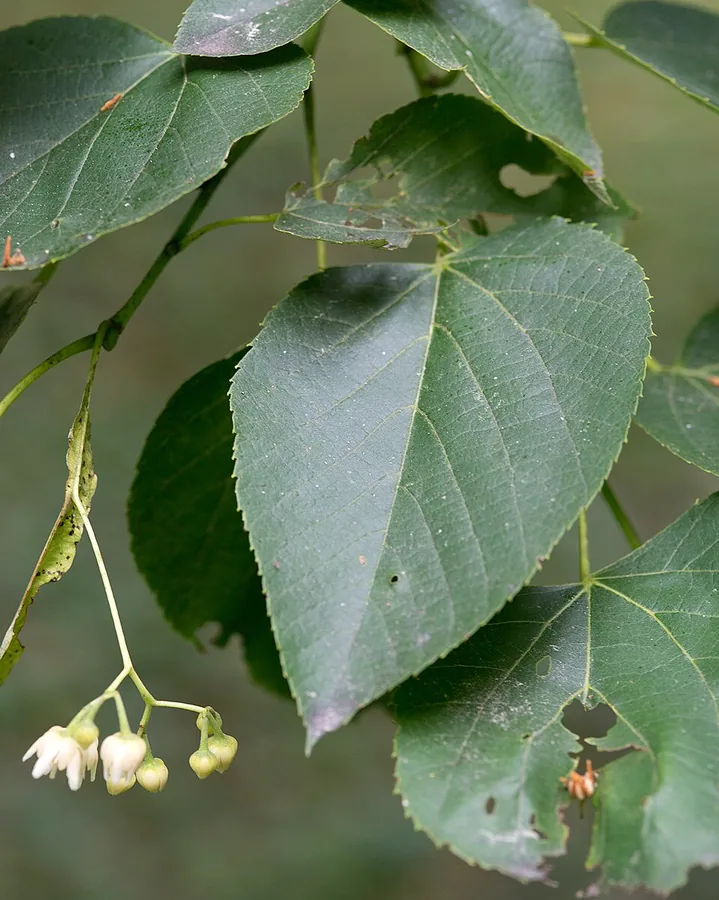
American basswood, the tree most people simply call linden, is a tall native shade tree that has earned the fond nickname bee tree. Through late spring and early summer it clothes itself in small, pale-yellow flowers whose scent drifts on the breeze, and pollinators visit from first light to last. Given the years, it grows into a stately 60 to 80 feet (18 to 24 m) with a wide, rounded crown, and you can watch that happen with pride.
This is a tree for the long run, and a kind one to a new grower. It weathers hard winters, welcomes full sun or part shade, and asks little of its soil so long as the ground drains. The big heart-shaped leaves throw a deep, cooling shade, and the soft, light wood is what gave basswood both its name and its old fame among carvers.
Plant it where it can stretch out and it will mostly look after itself, so there is no need to hover. The one thing worth remembering is that aphids are fond of it, dripping sticky honeydew in summer, so give a little thought before you set a patio or park a car right under the canopy.
Care
The short version: give it full sun to part shade in moist, well-drained soil, keep the water steady while it is young, and it will ask for little once it settles in.
Light
Your linden does best in full sun, though it takes partial shade in stride. More sun gives you a fuller crown and heavier bloom, while a shadier corner still rewards you with a healthy, if looser, tree.
Water
Keep a young tree evenly moist, giving it a drink every 7 to 14 days through dry stretches. Once it settles in it can handle some drought, but it is always happier with steady moisture, so try not to let it bake for weeks on end.
Soil
It is refreshingly easygoing and takes clay, loam, or sand, as long as the ground stays medium-moisture and well-drained. Any pH from 5.5 to 8.0 suits it just fine, which covers most of the soils you are likely to have.
Temperature
This is a wonderfully cold-hardy tree, at home anywhere from -40°F to 100°F (-40°C to 38°C). It shrugs off harsh winters and hot summers alike, which is exactly why it does so well across so much of the country.
Humidity
You never have to fuss over outdoor humidity for a linden, so there is no target number to chase. Air movement counts for more, since still, damp air lingering around the canopy is what invites leaf spots and mites.
Feeding
A settled tree in decent soil hardly ever needs feeding. If its growth looks weak, work in a balanced slow-release tree fertilizer in early spring, but keep a light hand, since too much nitrogen simply feeds the aphids.
Pruning
Prune in late winter to early spring to shape one strong central leader and to clear out dead, damaged, or crossing branches. The tree also sends up basal suckers and sprouts, so just pull those away whenever you spot them.
Repotting
Linden is a landscape tree rather than a container plant, so repotting stops mattering once it is in the ground. If a nursery tree shows roots circling the pot or slipping out the drainage holes, get it planted out soon and it will thank you.
Size & spacing
Give a linden plenty of elbow room, since it climbs to 60 to 80 feet (18 to 24 m) tall and reaches 30 to 60 feet (9 to 18 m) wide. Set it well clear of buildings, walls, and overhead lines so that broad crown has all the space it needs.
When to plant
Because linden is a tree, there is no yearly sowing calendar to keep up with, which is a relief. Set young trees out in spring or fall, once the hard frosts have passed, and the fragrant flowers will come along on their own from late spring into midsummer.
Northern hemisphere
Southern hemisphere
Typical months for a temperate climate: start earlier in warm zones, later where spring frosts linger.
- Plant: Spring or fall, after the threat of hard frost has passed
- Harvest: Fragrant pale-yellow flowers in late spring to early summer (May to July)
Hardiness
USDA hardiness zones: 3–8
Temperature: down to -40°C
Troubleshooting
A healthy linden mostly looks after itself, and most of what catches your eye will turn out to be cosmetic. Match the signs below before reaching for any treatment, since a large tree usually shakes off pests that would trouble a smaller plant, and you have less to worry about than you think.
Drooping limbs with sawdust and small round holes low on the trunk
The linden borer works its way through the wood of the lower trunk and limbs, and you will notice round exit holes and sawdust-like frass where it has been. Prune away and burn any limb it has gotten into. Since borers pick on stressed trees first, the kindest thing you can do is keep yours watered and spare the bark from mower and trimmer nicks, and call an arborist if the trunk itself is affected.
Fix:
- Prune out and destroy borer-infested limbs
- Keep the tree vigorous, as borers preferentially attack stressed trees
- Consult an extension office or arborist for severe trunk infestations
Shiny stickiness on the leaves and a dark film settling in
Take heart, because that shine is just aphid honeydew, and the dark coating is a harmless sooty mold living on the sugars. When aphids, and sometimes scale insects, gather in numbers, they let that sweet residue rain down on whatever sits below. A firm spray of water will send them packing, helpful lady beetles and lacewings will pitch in, and the film clears once the dripping stops.
Fix:
- Hose aphids off with a strong jet of water
- Encourage beneficial predators such as lady beetles and lacewings
- Apply insecticidal soap or horticultural oil to accessible foliage for severe infestations
- Sooty mold disappears on its own once the honeydew source is controlled
Summer foliage nibbled down to a delicate lace
Those are Japanese beetles eating the soft tissue and leaving only the veins, so the canopy looks like lacework from June to August. If your tree is young, take a quiet morning and tip the shiny green beetles into soapy water. A settled, well-grown linden truly takes it in stride and refills its leaves, so you can skip the pheromone traps, which only invite more company.
Fix:
- Hand-pick or knock beetles into soapy water in the early morning on smaller trees
- Tolerate damage on large established trees, which recover
- Avoid Japanese beetle pheromone traps, which attract more beetles
Leaves looking stippled, spotted, or a little browned
A handful of small visitors can leave the foliage looking off, so don't panic. Lace bugs, basswood thrips, or spider mites stipple the leaves and drop dark fecal specks on the undersides, while fungal leaf spots turn up as clear lesions in a wet season. Rake up the fallen leaves to lower the spore count, rinse the canopy in dry spells to knock the mites back, and past that you can relax, since nearly all of it is only skin deep.
Fix:
- Rake and dispose of fallen leaves to reduce fungal spores
- Hose down foliage to dislodge mites in dry spells
- Most leaf spot is cosmetic and needs no treatment
Toxicity
Wonderful news for pet owners: linden is completely safe. The ASPCA lists it as non-toxic to cats, dogs, and horses, and it holds no poisonous compounds anywhere in the tree. The fragrant flowers are even dried for a calming tea, and the young leaves are soft enough to eat.
Safe for
People · Cats · Dogs · Horses · Rabbits · Livestock · Birds
Cats None
You can breathe easy, since the ASPCA lists linden as non-toxic to cats and a curious nibble means nothing worse than curiosity. A really big mouthful of any greenery can unsettle a stomach for a bit, but there is no poison in this tree at all.
Dogs None
Your dog is safe here as well, because the leaves, bark, and flowers hold no toxic principles. Should one chew on a fallen branch, you have nothing to worry about.
Horses None
Horses can browse a linden freely and come to no harm, and the ASPCA keeps the species on its non-toxic list for them. Even the young leaves and flowers make safe forage.
Rabbits Safe
Rabbits are welcome to chew the leaves and twigs without any toxic risk. Linden is a familiar browse plant, and the tender spring growth is perfectly safe for them to enjoy.
Livestock Safe
Cattle, goats, and sheep can graze the foliage with no trouble, since the tree carries nothing that would bother them. Linden has long served as cut fodder without a single issue.
Birds Safe
Birds nest happily in the canopy and forage around the flowers in complete safety. Neither the seeds nor the buds hold any toxic threat.
People Safe
People are safe around linden too, and the fragrant flowers are dried for a comforting tea while the young leaves are soft enough to eat. Nothing on this tree needs to be avoided.
No special handling precautions; honeydew from aphids can make surfaces under the tree sticky but is not toxic.
Varieties
Lindens come in a few forms worth getting to know, from compact native selections to silver-leaved relatives. These are the ones you are most likely to meet in yards and along the street.
Tilia americana 'Redmond'
You will love this tighter, more pyramidal form of the native tree, which settles in around 40 to 60 feet and has become a go-to choice for formal shade and street plantings.
Tilia cordata 'Greenspire'
This littleleaf linden carries small heart-shaped leaves of 1 to 3 inches on a dense oval crown, and it is treasured as a tough, city-proof street tree right across Europe and beyond.
Tilia tomentosa
Known as the silver linden, its dark green leaves turn up their white woolly undersides in a breeze, so the whole tree seems to shimmer for you.
How to propagate
You can start a linden a few different ways depending on your goal, from the slow patience of seed to grafting for named cultivars to the suckers the tree offers up so freely.
SeedDemanding
Sow cleaned seed outdoors in fall, or stratify for sowing in spring · 1-2 years or more to germinate
Growing linden from seed asks for real patience, so go in gently. The seeds wear a hard coat and a double dormancy, and even after warm-then-cold stratification they may rest for one to two years before they wake, coming up slow and uneven. Sow cleaned seed outdoors in fall, or stratify it for a spring sowing, and simply let it take its time.
GraftingDemanding
Late winter for bench grafting or summer for budding · 1 growing season to take
Named cultivars such as 'Redmond' and 'Greenspire' will not come true from seed, so growers join them to seedling rootstock by grafting or budding. Bench graft in late winter or bud in summer, and with a little care the union settles in over one growing season.
LayeringModerate
Spring · 1-2 years to root
Basswood is generous and pushes up its own sprouts and suckers from the base, handing you an easy clone to start with. In spring, pin a low branch down to layer it, or lift a rooted sucker, and let it spend one to two years growing its own roots before you move it along.
Myths
Linden trees will poison your cats and dogs.
You can set that fear aside, because the ASPCA lists linden as non-toxic to dogs, cats, and horses, with no toxic principles anywhere in the tree. A pet that bolts down a lot of any plant might feel a mild tummy ache, but there is nothing poisonous about a linden.
The sticky black coating on basswood leaves is a disease killing the tree.
That dark film is only aphid honeydew with a harmless sooty mold feeding on its sugars. It can look worrying, yet it is purely cosmetic, and it lifts away on its own once the aphids move on. A settled tree is never harmed by it, so you can relax.