Ornamental · Malvaceae
Hardy Hibiscus
Hibiscus moscheutos
Give it full sun and soil that never dries out, and hardy hibiscus will open dinner-plate flowers all summer long.
Full sun
Every 2–4 days
USDA 4–9
3–7 ft · 0.9–2.1 m
Overview
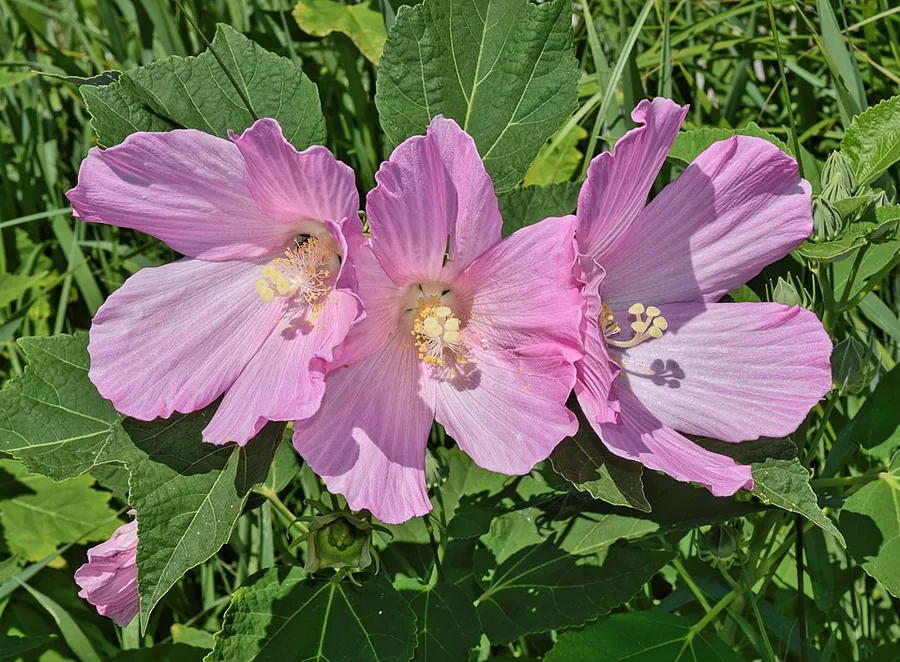
Hardy hibiscus lets you grow tropical-looking flowers even where winters turn cold, and that is a wonderful thing for a nervous first-timer. Each bloom can spread as wide as a dinner plate, yet the plant itself is a tough native perennial that shrugs off temperatures down to -20°F (-29°C). It belongs to the mallow family and grows wild in marshes and wet meadows, and that home in the wild quietly tells you most of what it hopes for from you.
A single flower lasts only a day or two, but please don't let that discourage you. A settled clump can unfurl 20 or more blooms a day right through the heat of summer, so the display keeps going from midsummer into early fall without a real pause. The colors run from soft white through gentle pink to deep crimson, and which ones you get depends on the variety you choose.
This really is a forgiving plant with just one firm wish: keep its roots wet. Offer it full sun and rich, moist ground and it grows quickly and flowers with real generosity. Let the soil go dry and the leaves may scorch and the buds may drop, but even that is recoverable, so the one thing worth never skimping on is water.
Care
The short version: give it full sun and soil that stays moist to wet rather than dry, feed it through the growing season, cut the dead stems back after frost, and be patient in spring, because this one is simply a late riser.
Light
Hardy hibiscus is happiest and flowers most freely in full sun, and the more sun it soaks up, the more blooms you get to enjoy. It will still get by in partial shade, though you can expect a looser, floppier plant with fewer flowers, which is a fine trade if that is the spot you have.
Water
This is the one part to give your full attention, so don't worry, just water. Hardy hibiscus is a wetland plant that loves soil kept moist to wet, and it even takes standing water and short flooding in stride. Give it a deep drink every 2 to 4 days in hot, dry weather, because once the soil dries out the leaves scorch and the buds drop.
Soil
Offer it rich, organic loam, silt, or sandy ground that holds onto moisture, though it will manage in average garden soil as long as you keep that soil damp. It is genuinely easygoing about pH, content with anything from 5.5 to 7.5, so there is no need to fuss over test kits.
Temperature
This plant is far tougher than its delicate flowers suggest, riding out winter cold to -20°F (-29°C) and summer heat up to 95°F (35°C) without complaint. That deep cold hardiness is exactly why it faithfully returns year after year where many showy flowers simply cannot.
Humidity
Ordinary outdoor humidity suits it perfectly, so you have no number to chase and nothing to measure. What truly matters to this plant is wet roots, not damp air, which is a happy difference from most big-flowered ornamentals that ask for more.
Feeding
Feed it once a month with a balanced general-purpose fertilizer all the way through the growing season. Because it grows fast and its flowers are so large, it has a hearty appetite and thanks you warmly for a steady supply.
Pruning
Once frost has knocked back the top growth in late autumn, cut the stems down to 3 to 4 inches and you are done for the year. For a fuller, sturdier plant, pinch the stem tips at about 8 and 12 inches in early summer, and snip off spent flowers as they fade so fresh ones keep coming.
Size & spacing
Grown plants reach 3 to 7 feet (90 to 210 cm) tall and spread 2 to 5 feet (60 to 150 cm) wide, so give yours a little room to fill out. Leaving space for that full spread lets air move freely around it and keeps the foliage happy and healthy.
When to plant
Hardy hibiscus keeps a warm-season rhythm and is happy to wake up late, so there is no need to fret over an empty patch of soil. Start seed indoors in late winter, move plants outside once the spring frosts have safely passed, and the big flowers will greet you from midsummer into early fall.
Northern hemisphere
Southern hemisphere
Typical months for a temperate climate: start earlier in warm zones, later where spring frosts linger.
- Sow: Late winter to early spring (about 8 to 10 weeks before last frost); seed started very early can flower the first year
- Plant: Spring after the last frost once soil has warmed
- Harvest: Midsummer to early fall (roughly July to September); individual flowers last only 1 to 2 days but a mature plant can open 20 or more per day
Hardiness
USDA hardiness zones: 4–9
Temperature: down to -34°C
Troubleshooting
Almost every hardy hibiscus worry shows itself on the leaves, whether a hungry beetle, thirsty soil, or a spot of fungus is behind it. The good news is that once you learn to read those signs you can step in early, while help still counts. Find what matches your plant below, and know that most of these are easy to set right.
Leaf edges turning brown and buds falling in dry spells
When the edges brown and the buds drop, your plant is simply thirsty, a sign the soil went dry several inches down during a hot stretch. Remember that hardy hibiscus grew up in wet ground, so a slow, deep soaking usually perks it right back up. To make life easier on both of you, spread mulch to lock in moisture and choose a low, naturally damp corner where it never has to wait for a drink.
Fix:
- Water deeply and consistently to keep soil moist to wet
- Apply mulch to conserve soil moisture
- Site the plant in a low or naturally moist part of the garden
Leaves eaten down to lace in the middle of summer
If the foliage looks chewed to a lacy web in midsummer, gentle Japanese beetles are almost always the reason, sometimes with a few sawfly caterpillars alongside. You will spot little clusters of shiny green-bronze beetles right on the leaves. Try flicking them into a jar of soapy water in the cool of the morning, and take heart that a light nibble does no lasting harm to a settled plant.
Fix:
- Hand-pick beetles into soapy water in early morning
- Tolerate minor cosmetic feeding on established plants
- Use a labeled insecticide only for severe infestations
Spots, blotches, or orange rust showing on the leaves
Marks like these come from fungal leaf spots and rust, which settle in when leaves stay crowded and damp for too long. Don't worry, the fix is easy: pick off the spotted leaves, gather any that have dropped, and open the plant up so air can move through. A tidy cleanup as the season winds down keeps the spores from overwintering and coming back.
Fix:
- Remove and dispose of affected and fallen leaves
- Improve air circulation and avoid overhead wetting of foliage
- Clean up plant debris at season end
Sticky foliage, black mold, and warped new leaves
A sticky coating and twisted new growth point to sap-sucking pests, usually aphids, whiteflies, or scale. Turn a few leaves over and peek at the stems, where you will find tiny soft insects, little white fliers, or bumpy scale, plus the sticky honeydew that invites black sooty mold. A firm spray of water rinses off a small run, and a little insecticidal soap or horticultural oil takes care of anything left behind.
Fix:
- Rinse off light infestations with a strong stream of water
- Apply insecticidal soap or horticultural oil to affected foliage
- Encourage natural predators
Toxicity
Here is a real comfort for homes with pets and little ones: hardy hibiscus is safe all around. The ASPCA lists hibiscus as non-toxic to cats, dogs, and horses, and the large flowers are actually edible for people. The worst a curious mouthful could do is a mild, passing stomach upset, no different from eating too much of any plant.
Safe for
People · Cats · Dogs · Horses · Rabbits · Livestock · Birds
Cats None
You can relax with a cat in the house. The ASPCA lists hibiscus as non-toxic to cats, so a curious nibble leads to nothing worse than the mild tummy grumble too much of any plant might bring.
Dogs None
There is nothing to fear for a dog either. Hibiscus is non-toxic to dogs, and even one that chews on a leaf or a flower stays perfectly fine.
Horses Safe
Horses can graze right beside it and come to no harm, because the plant holds no toxin that troubles them.
Rabbits Safe
Rabbits are welcome to it. The leaves and flowers carry nothing harmful, so a few nibbles need not worry you at all.
Livestock Safe
Cattle, goats, and sheep are free to browse it, since the plant poses no danger to grazing animals.
Birds Safe
Birds have nothing to worry about. Backyard hens and passing wild visitors can peck at the buds and petals with no ill effect.
People Safe
It is safe for people too, and those big flowers are edible. The petals brighten teas, salads, and garnishes, so there is truly nothing here to keep out of a child's reach.
Varieties
Plant breeders have gifted hardy hibiscus a lovely range of named hybrids, grouped mostly by flower color, leaf color, and height. Here are the ones worth getting to know by name as you decide what to plant.
Lord Baltimore
A tall old-favorite hybrid that opens enormous flowers in a glowing crimson red you can spot from across the yard.
Lady Baltimore
Growing to around 5 feet, it offers clear pink flowers each finished with a deep red heart at the center.
Kopper King
The one to reach for if you love foliage, with coppery bronze-red leaves that set off its large light-pink, red-veined blooms beautifully.
Disco Belle Series
A friendly, compact group of dwarf selections that stays around 3 to 4 feet, which makes them a comfortable fit for a smaller spot.
How to propagate
You can grow more hardy hibiscus by splitting a clump you already have or by starting from seed, and each route suits a slightly different hope, so pick the one that fits your goal.
DivisionModerate
Spring as new growth emerges, or early fall · Establishes over one growing season
If you want an exact copy of a plant you love, dividing a mature clump is your most reliable path. In spring as the fresh shoots appear, or again in early fall, gently lift the clump and cut the woody crown into pieces, making sure each one keeps its own shoots and roots. Settle the divisions back in the ground right away and keep them moist, and they will find their feet across a single growing season.
SeedEasy
Start indoors in late winter to early spring; seed started very early can bloom the first year · Several weeks to germinate and grow on before transplanting
Seed is a friendly place to start, with just one thing to know: the named hybrids seldom come true, so the seedlings won't be a match for the parent. Sow them indoors in late winter to early spring, and nick or soak the hard seed coats first to help them along. The little plants need several weeks to sprout and grow before they head outdoors, and seed sown very early can even flower in its first year.
Myths
A hardy hibiscus that hasn't leafed out by spring is dead.
Take a breath, because it is just one of the very last perennials to stir. Fresh shoots rise from the crown in late spring, long after the rest of the border has greened up around it. Give it time before you dig it out, since waking up slowly is completely normal for this plant.
Hibiscus flowers are poisonous to dogs and cats.
You can set that fear aside, because the ASPCA lists hibiscus as non-toxic to dogs, cats, and horses. The plant is safe around pets, and the most that a big helping of any leafy greenery might cause is a passing bit of stomach upset.