Houseplant · Malvaceae
Money Tree
Pachira aquatica
Forgiving and pet-safe in a bright corner, the money tree grows fast and asks so little of you.
Bright indirect
64–75°F · 18–24°C
USDA 10–12
6–8 ft · 1.8–2.4 m
Overview
Say hello to the money tree, Pachira aquatica, a plant from the wetlands of Mexico and Central and South America where it grows into a full tree. Kept as a houseplant it settles into a comfortable 6 to 8 feet (183 to 244 cm) tall, with glossy hand-shaped leaves opening out from the top of a slender trunk. Most come home with several trunks braided together, a charming look that gentle hands create rather than one the plant makes on its own.
It won its way indoors by being so easy to keep alive, which is wonderful news if you are just starting out. The plant puts up with lower light than many houseplants, grows quickly when it feels at home, and forgives the occasional forgotten watering far more readily than a soggy one. Better still, it sits on the short list of houseplants that are genuinely safe around cats, dogs, and small children.
All it really asks is bright, filtered light and a watering habit that never leaves it standing in water. Get those two little things right and the rest falls into place easily. Only if you push it into fierce sun or a forever wet pot will you meet dropped leaves or rotted roots, and even then it usually bounces back.
Care
The short version: give it bright indirect light, water once the top of the soil dries, keep it warm and humid, and you never have to let the pot sit in standing water.
Light
Your money tree loves bright, indirect light, the sort you find near a window but just out of the direct beam. It happily copes with medium light and even a bit of shade, which is why it manages in dimmer rooms, but the brightest spot short of harsh sun will reward you with the fullest growth.
Water
Let the top of the soil dry between drinks, then water it well. This plant minds wet feet far more than dry ones, and standing water is the quickest way to trouble its roots. Let it get too parched, though, and it lets you know by dropping a few leaves.
Soil
Reach for a moist but well drained potting mix, something with peat, perlite, and a little loam or sand so water flows through. Happily it isn't picky about pH, taking anything from 6.0 to 8.0 in its stride.
Temperature
Keep it in comfortable room warmth, somewhere between 64°F and 75°F (18°C to 24°C). As a tropical plant it has no patience for cold, so tuck it away from chilly drafts and frosty windowpanes come winter.
Humidity
Being tropical, it enjoys high humidity. Ordinary indoor air will do just fine, but it thrives with a little extra moisture, so group it near friends or pop it beside a humidifier in a dry, heated room.
Feeding
Offer a monthly drink of balanced houseplant fertilizer through spring and summer while it is busy growing. Ease right off in fall and winter, when growth slows down and it needs so much less.
Pruning
Trim it to hold whatever size and shape you like, because it takes a haircut in good humor. Those flexible young stems are the very ones growers braid together while they are still pliable, so any braiding has to be done while the trunks are young and bendy.
Repotting
Move it up a pot every 1 to 2 years, or a little sooner if roots begin circling or poking out the drainage holes. Water rushing straight through and growth that seems to stall are the other friendly hints it wants a roomier home.
Size & spacing
Grown indoors, your money tree reaches around 6 to 8 feet (183 to 244 cm) tall, though it stays much smaller in a modest pot. Give it a little headroom and a quarter turn now and then so it grows evenly toward the light.
Troubleshooting
Money trees are wonderfully hardy, and nearly every hiccup comes back to water or light, so you can breathe easy. Dropped leaves, soft roots, and scorched patches each carry their own clear message. Find the one that matches yours below and make a small change before it grows into a bigger one.
Wilting plant with soft, brown roots
Root rot creeps in when soil stays wet so long that the roots can no longer breathe. If you tip the plant out and find them brown, mushy, and a little sour smelling while the top wilts in soaking soil, that is your answer. Don't panic, because you can often save it: trim away every soft, rotted root and settle the plant into fresh, free draining mix in a pot that truly drains.
Fix:
- Remove from wet soil and cut away rotted roots
- Repot into fresh well-drained mix in a pot with drainage
- Water only after the top of the soil dries
Leaves turning yellow and dropping
If your money tree starts yellowing and losing leaves, take heart, because it is almost always telling you about its water. Both a pot left bone dry and one kept soggy and waterlogged lead to the same sad droop, and a fresh move to a dim or drafty corner can unsettle it as well. Pick one steady home for it, wait until the top of the soil dries before you water, and offer a gentle feed through the growing season.
Fix:
- Adjust watering so the top of the soil dries between waterings but the rootball is never bone-dry or waterlogged
- Stabilize the plant's location and light exposure
- Raise ambient humidity and feed during the growing season if nutrient-deficient
Tacky leaf surfaces, white fluff, or tiny flies near the pot
Indoor money trees sometimes attract the usual sap sippers, and they are nothing to fear once you spot them. Look for the white cottony fluff of mealybugs, the little bumps of scale, huddled aphids, or fungus gnats drifting over damp soil. Wipe or rinse the bugs away, reach for insecticidal soap or horticultural oil if they linger, and let the soil surface dry to stop the gnats coming back.
Fix:
- Wipe off or wash off pests
- Treat with insecticidal soap or horticultural oil as needed
- Let soil surface dry to discourage fungus gnats
Pale, washed-out spots appearing on sun-facing foliage
When leaves closest to the window show bleached or browned patches, harsh direct sun is scorching them, and the fix is easy. Your money tree loves light but wants it soft and filtered, not the fierce beam of midday. Ease it back from the glass or hang a sheer curtain between them, then snip off the leaves that took the worst of it.
Fix:
- Move to a spot with bright indirect light or filtered sun
- Remove badly scorched leaves
Toxicity
Here is some lovely news for pet owners and parents: the money tree is safe right across the board. The ASPCA lists it as non-toxic to cats, dogs, and horses, and no toxic principle has been identified in the plant. You can set it on the floor beside a curious dog or a wandering toddler and never give it a second thought.
Safe for
People · Cats · Dogs · Horses · Rabbits · Livestock · Birds
Cats None
You can relax with a cat in the house, because the ASPCA lists the money tree as non-toxic to cats with no toxic principle identified. A curious kitty that tastes a leaf has nothing to fear.
Dogs None
Dogs are just as safe here. The ASPCA names it non-toxic to dogs, so a swiped leaf or a gnawed stem won't poison your pup, though a big mouthful of any greenery can still leave a tender tummy a little unsettled.
Horses None
Horses get the all clear from the ASPCA too. With no toxic compound in the plant, a stolen bite is no worry.
Rabbits Safe
A rabbit has nothing to fear from a money tree. It holds no toxic principle, so the most a nibble might bring is a touch of digestive grumbling from the unfamiliar leaf.
Livestock Safe
Grazers like goats and sheep run no risk of poisoning from this plant, since it carries no identified toxin.
Birds Safe
A pet bird can share a room with your money tree in comfort, as none of its parts are toxic to them.
People Safe
You can keep the money tree around children with confidence, because no toxic compound has been identified. Its large seeds are even eaten in parts of its native range, so a leaf in a small hand is truly nothing to worry about.
How to propagate
You can raise more money trees from cuttings, fresh seed, or air layering, and cuttings tend to be the friendliest place to begin since the plant so rarely sets seed indoors.
Stem cuttingsModerate
Spring to summer · Several weeks to root
You can take softwood or stem cuttings in spring or summer, while the plant is growing with energy, and it is a friendly place to start. Stand them somewhere warm and humid and be patient, because roots arrive over several weeks. That warmth and steady moisture is what carries a cutting from sulking to thriving.
SeedModerate
When fresh seed is available · Germinates readily from fresh seed
The big saba nuts sprout with ease when the seed is fresh, so pop them in as soon as you have them in hand. The only snag is that houseplants seldom flower, and a plant that never flowers won't set seed, which is why so many growers reach for cuttings instead.
Air layeringModerate
Spring to summer · Several weeks
Air layering is a rewarding third path, best tried in spring or summer. You nick a section of stem, wrap it so it stays moist, and roots quietly form on the living plant over several weeks before you free the new plant to grow on its own.
Myths
Money trees twist their own trunks into that braid as they grow.
Rest easy that you didn't miss some magic step, because the plant never braids itself. Kind hands at the nursery weave the young stems together while they are still soft and bendy, and the trunks fuse as they thicken with age. That lovely braid is a grower's handiwork, not a natural growth form.
Given enough time, a money tree blooms happily inside the house.
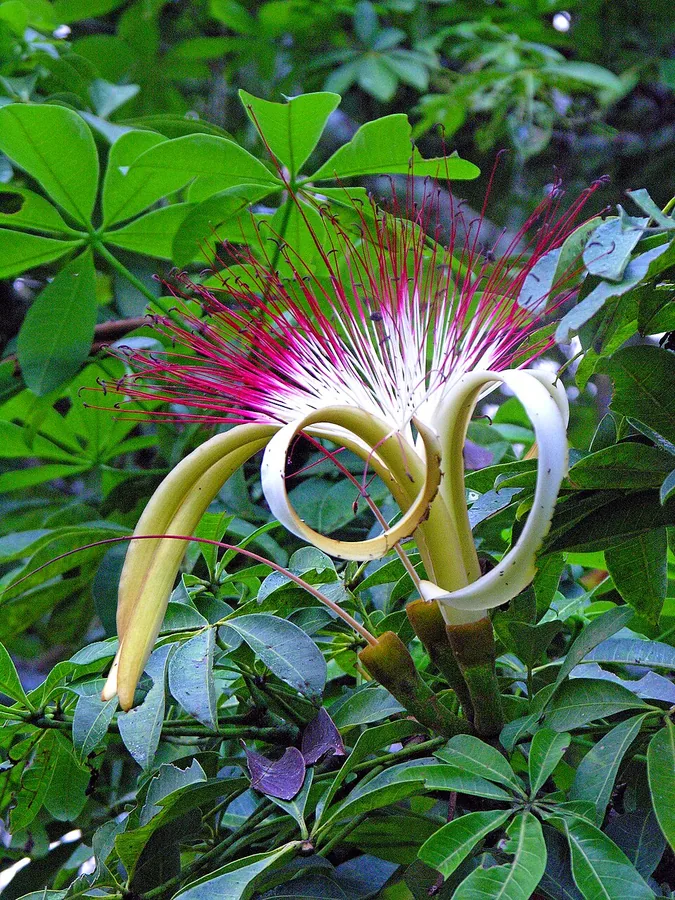
Please don't feel you failed if yours never blooms. Pachira aquatica hardly ever flowers as a houseplant, and a braided one even less, saving its showy blossoms for plants grown outdoors over several years. Indoors it is the glossy leaves you get to enjoy, not the flowers.