Houseplant · Crassulaceae
Aeonium
Aeonium
Offer it bright light, gritty soil, and a quiet summer rest, and this cool-season grower keeps its rosettes plump and firm.
Full sun
Every 7–21 days
41–77°F · 5–25°C
USDA 9–11
Overview
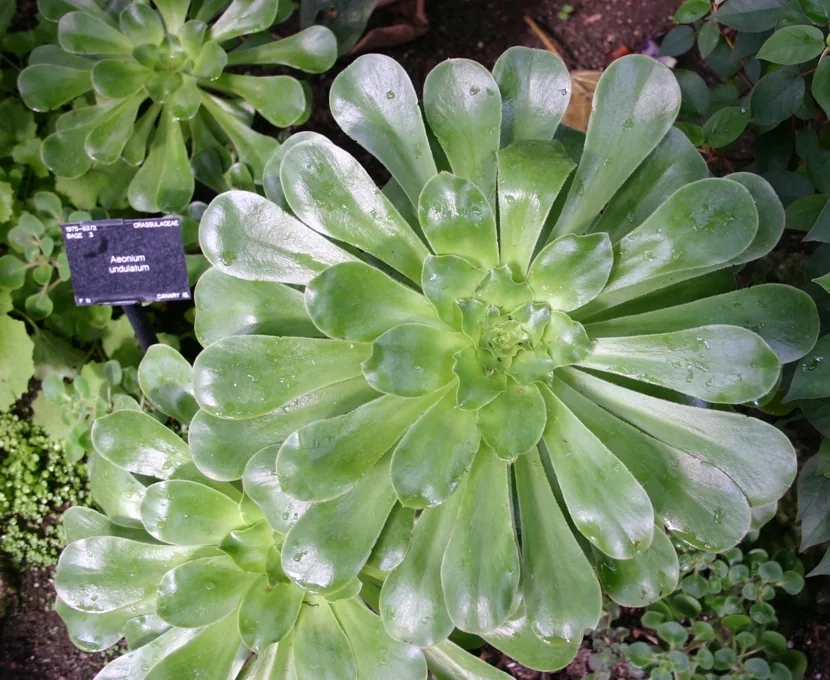
Meet Aeonium, a friendly succulent in the stonecrop family that is just as happy on a sunny sill as in a mild garden. It gathers its plump leaves into neat rosettes at the ends of its stems, and the shapes vary widely, from a low saucer resting on the soil to a small branching tree. There is a reason new growers love it: give it sun and a gritty mix, and it truly asks for hardly anything more.
The charming quirk that sets Aeonium apart is its flipped calendar. While most plants do their growing in the warmth and slow down for winter, this one cheerfully does the reverse. It puts on growth through the cool season and eases into a summer rest when the heat arrives, closing its rosettes and letting the lower leaves wither and fall. That first summer it can give you a fright, but please don't worry, since it is only the plant taking a nap rather than struggling.
Across the genus you will meet everything from compact little windowsill rosettes to sprawling clumps, and the colors are a delight. Some keep a fresh green, while the celebrated black rose carries rosettes so deeply shaded they look almost purple-black. In a kind climate it builds a lovely sculptural mound outdoors, and in a pot it becomes a tidy, fuss-free friend for a bright window.
Care
The short version: offer full sun to bright light and a gritty mix that drains fast, then water only after the soil dries during the cool growing season. Ease right off through the summer rest, and feed gently at half strength while it is actively growing. Small slips are easy to recover from, so relax and enjoy it.
Light
Aeonium loves full sun to bright light, and it will also get along with partial sun or a bright indirect corner indoors. The more light you can give it, the tighter and rounder the rosettes hold. When light runs short the stems start to stretch and lean, opening up bare gaps between the leaves, so a sunny spot keeps it looking its best.
Water
Hold off until the soil has dried out, and keep in mind this little succulent grows in the cool months. During that active cool-season stretch a drink roughly every 7 to 21 days suits it nicely, while in its summer rest you should ease way back and let the closed rosettes be. Wet soil in summer is the quickest path to a rotted stem, so when in doubt, wait.
Soil
Set it in a gritty, fast-draining mix that never lets water linger around the roots. A pH somewhere between 6.0 and 7.0 keeps it comfortable. Sharp drainage matters far more than rich soil here, since the one thing this succulent cannot abide is sitting in moisture.
Temperature
Aeonium feels at home anywhere from about 41°F to 77°F (5°C to 25°C). It has no tolerance for frost, so be sure to shelter it from a freeze. Once the heat pushes above that upper mark, it gently slides into its summer rest, which is just what it is meant to do.
Humidity
This plant is happiest in low humidity and takes dry indoor air completely in stride, so there is no moisture target to fret over. Steady airflow around the rosettes will do it far more good than any humidity tray. One less thing to worry about.
Feeding
Reach for a balanced fertilizer at half strength, and offer it during the cool active-growth stretch from fall through spring. Once a month is plenty to keep it content. Give it nothing while it rests in summer, because a dormant plant is not really drinking much in anyway.
Pruning
Trim leggy or bare stems back to a leaf rosette whenever you want to coax out fresh branching. Snip away faded flower stalks and any tired lower leaves to keep things neat. Best of all, nothing goes to waste, since the pieces you cut off root with the greatest ease.
Repotting
Move it into a fresh pot every 2 to 3 years, timing it for the start of the cool growing season so it can settle in just as it wakes up. Go ahead when roots peek through the drainage holes, the mix dries too quickly, or the rosettes start pressing against the pot edge. A clean gritty mix gives it a happy head start for the coming season.
Size & spacing
Depending on the type, plants stand 6 to 35 inches (15 to 90 cm) tall and spread 6 to 24 inches (15 to 60 cm) across. The low, flat sorts stay snug to the soil, while the branching tree types climb to real height. Since it grows at a moderate clip, the plant you set out today stays close to the size you will keep, which makes planning a breeze.
Troubleshooting
Almost every Aeonium hiccup comes down to just two things, water and light, and the encouraging part is that the plant lets you know early. Soft tissue, stretched stems, or a summer slump that looks scarier than it is will all wave a flag. Find your plant's signs below, make a gentle adjustment, and you will usually head off any real trouble.
A softening stem or a see-through patch at the rosette's base
When the base feels squishy or turns see-through, you are looking at rot brought on by too much water, and it strikes hardest when a resting summer plant is left sitting in damp soil. The good news is you can save it: trim away each soft, darkened part until you reach firm tissue, let the clean cuttings dry and seal over, then settle them into dry gritty mix to root anew. Going forward, a mix that drains fast and watering only while it is awake will keep this from returning.
Fix:
- Cut away all rotted tissue back to firm, healthy stem
- Let cuttings callus, then re-root in dry gritty mix
- Withhold water until new roots form
Summer rosettes tightening up while the lowest leaves fall away
Take a breath, because this is healthy summer dormancy rather than a plant on its way out. Your Aeonium does its growing while the weather is cool and simply rests once summer turns hot, so the heart of each rosette stays firm while the outer leaves tuck in and let go. Cut back on watering, offer a bit of shade from the fiercest afternoon sun, and you will see it stir back to life as fall cools the air.
Fix:
- Reduce watering and let the plant rest
- Provide light shade from intense summer afternoon sun
- Resume normal care as temperatures cool in fall
Leggy, stretched stems holding leaves only up at the top
Long, stretched stems are your plant gently telling you it wants more light. As it strains toward the window, the stems lean that way and the leaves spread further apart in search of sun. The fix is easy and forgiving: shift it to a brighter spot with a few hours of direct sun, and if you like, snip off the leggy rosettes and re-root them so fresh, compact growth can begin.
Fix:
- Move to a brighter location with several hours of direct sun
- Behead leggy rosettes and re-root them to restart compact growth
Toxicity
Here is something to put your mind at ease: Aeonium is non-toxic and pet-safe. The ASPCA does not include it among plants toxic to cats or dogs, and it carries no poisoning risk for the other animals that might share your home or yard. A stray nibble does no harm at all, so this plant can settle onto any windowsill without a single worry.
Safe for
People · Cats · Dogs · Horses · Rabbits · Livestock · Birds
Cats Safe
A cat is welcome to share the windowsill, and a curious nibble will leave it perfectly fine.
Dogs Safe
Should your dog chew on a rosette, you can relax, because the plant holds no toxins.
Horses Safe
There is no poisoning danger for a horse that takes a taste.
Rabbits Safe
Rabbits come to no harm near it, just keep leafy greens to a modest share of their daily meals.
Livestock Safe
Cattle, goats, and sheep can graze nearby with no risk of being poisoned.
Birds Safe
Both pet birds and backyard poultry remain unharmed in its presence.
People Safe
Even little ones who love to touch and explore are safe around this gentle plant.
Varieties
Aeonium turns up in all sorts of shapes, from flat little ground-huggers to branching stems that behave like miniature trees. The three below are the ones you will run into most, and together they show off just how varied the genus can be.
Aeonium 'Zwartkop' (black rose)
Its deep purple rosettes sit so dark on tall branching stems that they look nearly black, which is how it earned the black rose name.
Aeonium arboreum
Cheerful bright green rosettes crown woody stems that grow tall and tree-like, giving the plant genuine height.
Aeonium tabuliforme
This one presses a flat, plate-shaped rosette right against the soil, its leaves layered in snug, neat rings.
How to propagate
Few succulents are as forgiving to multiply as Aeonium, and the cool growing season is the perfect window to try. Whether you take a cutting or coax off a side rosette, a brand-new plant is well within reach even on your first attempt.
Stem cuttingsEasy
During the cool active growing season (fall to spring) · 2 to 4 weeks to root after callusing
You will find stem cuttings about as easy as propagation gets. Snip them while the plant is in its cool growing season, give the cut ends a few days to dry and seal over, and then nestle them into gritty mix. Fresh roots appear in 2 to 4 weeks, and it helps to know that many Aeonium rosettes are monocarpic, so a single rosette finishes its life once it flowers.
Offsets & pupsEasy
During the cool active growing season · 2 to 4 weeks once detached and rooted
Branching kinds send out little side rosettes that come away as ready-grown plants, which makes this wonderfully simple. Gently detach a pup during the cool growing season, set it into gritty mix to root, and it gets comfortable within 2 to 4 weeks. Keep in mind that many Aeonium rosettes are monocarpic, so a rosette finishes its life once it flowers.
Myths
This succulent wants a drink as often as any ordinary houseplant.
Rest easy on this one, because it is a thirst-hardy winter grower that gets by on very little. Let it stay almost dry all through its summer rest, and reach for the watering can only once the soil has dried out during the cool growing season.
When the rosette folds shut and sheds its bottom leaves in summer, the plant must be on its way out.
Not at all, this is just the natural summer rest of a plant that grows in the cool season. Once cool fall weather rolls back in, it springs right back into growth, so let it sit dry and trust the cycle.