Houseplant · Crassulaceae
Ghost Plant
Graptopetalum paraguayense
Offer it bright light and a dry rest between waterings, and the ghost plant will look after itself.
Full sun
Every 10–21 days
50–86°F · 10–30°C
USDA 9–11
Overview
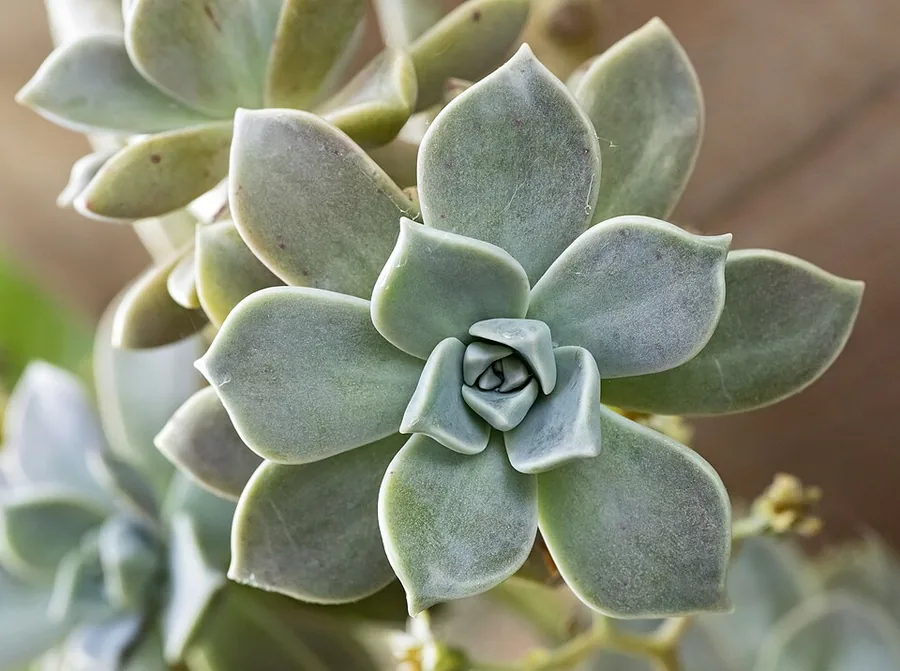
The ghost plant is a forgiving little succulent from Mexico, named for the soft, powdery bloom that lends its rosettes a chalky, ghostly look. It shares a family with the jade plant and the houseleeks, and like them it keeps water tucked in fat, fleshy leaves that shade from gray-blue to gentle pink. You would be hard pressed to find a plant that asks for less.
Its low rosettes trail and spread as the stems grow longer, easing over a pot rim or a wall as the years pass. The leaves drop at the softest touch, and yes, that startles most people the very first time. Here is the reassuring part, because nearly every fallen leaf will root itself and start a whole new plant right where it lands.
Above all it longs for strong light and very sharp drainage. Meet those two needs and it will forgive heat, drought, and the odd stretch of neglect without complaint. Leave it in damp soil or a dim corner and it lets you know quickly, stretching upward and softening at the base, both of which you can put right.
Care
The short version: bright light or full sun, a gritty mix that drains in a hurry, and a good deep soak only once the soil has dried out completely. Ease off and it truly thrives on a little neglect.
Light
Give the ghost plant full sun or very bright light and the rosettes stay snug and beautifully colored. It will manage in bright indirect light, but anything dimmer and you will see the stems stretch and the leaves drift apart, which is easily corrected.
Water
Water deeply, then simply wait until the soil feels bone dry before the next drink, which usually works out to every 10 to 21 days. Those fleshy leaves carry their own reserve, so the real risk is far more about too much water than too little. Overwatering is what leads to rot.
Soil
Pot it in a gritty cactus or succulent mix that empties in seconds, never regular potting soil that stays soggy. Any pH from 6.0 to 7.5 suits it happily, so the texture of the mix matters far more than the chemistry.
Temperature
It settles in nicely between 50°F and 86°F (10°C to 30°C) and handles summer heat with ease. It is not frost hardy, though, so bring it indoors or shelter it before the cold sets in.
Humidity
This is a low-humidity plant with no target number to chase, quite content in the dry air of most homes. Damp, stagnant air does it no favors, so good airflow serves it far better than any misting.
Feeding
Feed it monthly through spring and summer while it is growing, with a diluted balanced or low-nitrogen succulent feed at half strength. Ease off in the cooler months, and resist rich fertilizer, which only pushes out soft, weak growth.
Pruning
Pruning stays light and easy. Pull off any dead leaves and snip away leggy or stretched stems to keep things tidy, and behead any rosette that has reached up too far so you can replant the top.
Repotting
Repot every 2 to 3 years, or a little sooner if the rosettes spill over the pot edge, and do it in spring. Roots peeking from the drainage holes or soil that dries almost at once are just the plant asking gently for more room.
Size & spacing
Each plant stays low, around 6 to 12 inches (15 to 30 cm) tall, and grows wider as its stems trail, reaching 12 to 24 inches (30 to 60 cm) across. Leave a little room for that spread and for new rosettes to fill in around the base.
Troubleshooting
Almost every ghost plant hiccup comes down to one of two things, too much water or too little light, and both are easy to turn around. Each shows itself early once you know the sign to watch for. Find yours below and act before the rot or the stretch takes hold.
Soft, see-through leaves and a squishy base
Take heart, because this root and stem rot is fixable even though it looks grim, and it comes from watering more than the soil can handle. Slip the plant from its pot and feel along the roots and lower stem for anything black, soft, or sour smelling. Trim off every bad bit, let the good rosettes or cuttings dry and callus for a few days, and pot them fresh in dry gritty mix to begin again.
Fix:
- Stop watering immediately
- Remove the plant and cut away all rotted tissue
- Let healthy cuttings or rosettes callus for several days
- Replant in dry gritty succulent mix
Long, leaning stems with leaves growing apart
No harm done here, since this etiolation is simply the plant leaning toward more light than it is getting. You will notice the stems tipping toward the window and the once tidy rosettes opening up and going flat. Move it into a few hours of direct sun, then behead the stretched rosette and pot the top back up, and the bare stem will reward you with fresh little offsets.
Fix:
- Move to a brighter location with several hours of direct sun
- Behead the stretched rosette and replant the top
- Propagate the bare stem to produce new offsets
Brown scorch marks after moving into the sun
This sunburn happens to the best growers when a plant leaps from gentle indoor light into full sun too fast, so please do not blame yourself. The marks show on the most exposed leaves within a day or two of the move. Ease it back into bright, lightly shaded light, build the sun up gradually over a week or two, and simply let the plant drop the marked leaves in its own time.
Fix:
- Move to bright but slightly shaded light temporarily
- Acclimate gradually to stronger sun over one to two weeks
- Leave scarred leaves in place until they are naturally shed
Toxicity
Here is welcome news for a home with animals or little ones. The ghost plant is non-toxic all the way through, with the ASPCA listing it as safe for cats and dogs and no toxin in it to trouble other pets or people. The most a stray nibble brings is a bit of passing stomach upset from the bulk, so you can breathe easy.
Safe for
People · Cats · Dogs · Horses · Rabbits · Livestock · Birds
Cats None
You can relax with cats in the house, because nothing in this plant is poisonous. A leaf-nibbling cat might feel a little full or briefly off, and that passes on its own.
Dogs None
Dogs are in the clear here, so there is no need to fret. The ASPCA calls it non-toxic, and a chewed leaf is unlikely to cause more than a short bit of tummy upset.
Horses None
Horses have nothing to fear from this succulent, even if it makes an odd stable snack. A stray mouthful will not do them any harm at all.
Rabbits None
Rabbits can share a room with it happily. The plump leaves hold no toxin, so a curious nibble is perfectly harmless.
Livestock None
Goats, sheep, and other grazers are safe around it with no poison to worry about. If a few leaves get eaten, you can treat it as a non-event.
Birds None
Birds are safe too, with no harmful compounds anywhere in the plant. A pecked leaf may leave a little powdery smudge on the beak, and that wipes right off.
People None
It is gentle for people, children included, whether handled or accidentally tasted. The chalky bloom rubs off onto fingers but does no harm.
The powdery (farinose) coating on leaves rubs off easily when handled, which is cosmetic and harmless.
Varieties
Only a couple of forms show up often, and both swap the plain gray-blue rosette for a touch more color. These are the ones worth getting to know.
Graptopetalum paraguayense 'Pink Form'
Give it strong light or cool nights and its rosettes blush pink to rose, where the plain form holds a chalky gray-blue instead.
×Graptosedum (Graptopetalum × Sedum hybrids)
These sedum crosses keep the ghost plant's familiar shape while offering brighter colors and a quicker, more trailing way of growing.
How to propagate
Few plants make you feel as capable as this one does. A single leaf, an offset, or a beheaded rosette will each take root with barely any help from you.
Leaf cuttingsEasy
Spring through summer during active growth · 3 to 6 weeks to root and form new rosettes
This is a lovely one to try if you are new to it. In spring or summer, gently twist off a whole healthy leaf, let the broken end callus for a few days, and rest it on dry gritty mix. Roots and a tiny rosette appear in about 3 to 6 weeks, and any leaves that fall on their own will happily do the same thing.
Offsets & pupsEasy
Spring through summer · 2 to 4 weeks
Through spring and summer the plant kindly sends out rosette offsets along its stems. Ease one off, give it a brief spell to callus, and settle it into its own pot, where it takes hold within 2 to 4 weeks.
Stem cuttingsEasy
Spring through summer · 2 to 4 weeks
In the warm months, behead a rosette along with a short piece of stem and let the cut dry and callus over. Pop it back into soil and it roots with ease, finding its feet in roughly 2 to 4 weeks.
Myths
The ghost plant needs frequent watering because it looks dusty and dry.
You can set that worry aside, because the pale, powdery coat is a natural waxy bloom rather than a cry for water. The plant tucks its own supply into those plump leaves and truly prefers to dry out fully between drinks. Watering because it looks dusty is the surest way to rot it.
It is toxic to pets, the way many succulents are.
It is true that many succulents are best kept out of paws' reach, but this gentle one is not one of them. The ASPCA lists the ghost plant as non-toxic to cats and dogs, so a curious nibble is nothing to lose sleep over.