Houseplant · Crassulaceae
Hen and Chicks
Sempervivum tectorum
Give it sun, grit, and hardly any water, and this forgiving little succulent all but grows itself.
Full sun
USDA 3–8
6–12 in · 15–30 cm
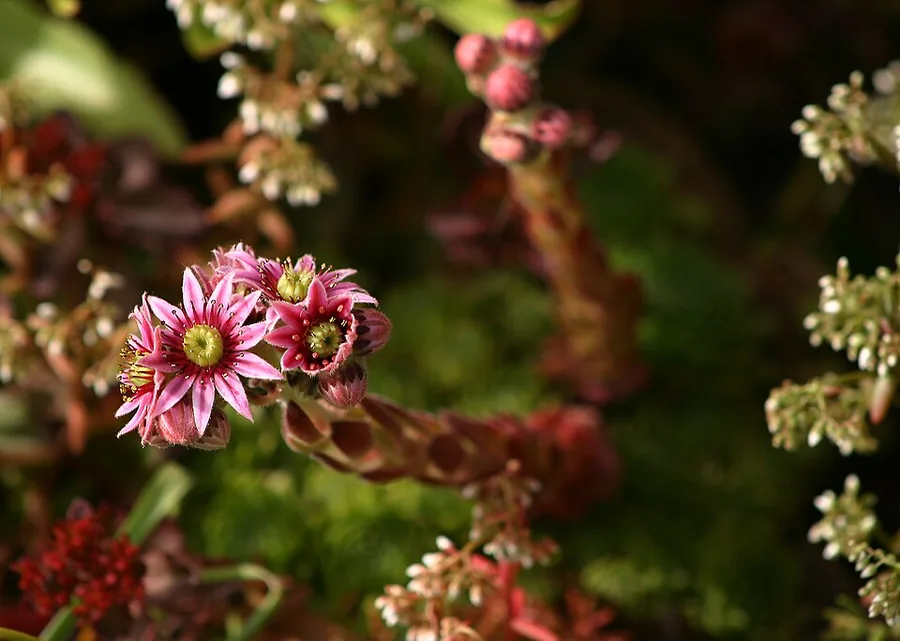
Overview
The name comes from the sweet picture the plant makes: a central rosette, the hen, sits surrounded by a brood of little offsets, the chicks. This is an alpine succulent from the mountains of Europe, and its botanical name Sempervivum means always living, which tells you just how stubbornly it holds on. People once planted it on their rooftops on purpose, and it stayed put for years.
Here is the reassuring part for a nervous first-timer: the thing that makes it easy is the very thing that catches people out, and it is an easy fix. It wants poor, gritty soil and next to no water, so the usual instinct to water often and feed richly is what harms it. Ease up and it flourishes. Each rosette is monocarpic, which means it flowers once, fades, and hands the colony over to its chicks, so your planting quietly renews itself and mistakes are almost always recoverable.
Care
The short version: give it bright light, a fast-draining gritty mix, and a drink only once the soil has dried out completely. It asks for very little feeding and forgives a light touch far more than fussing.
Light
Give it full sun and you will be rewarded with the richest color and the neatest, tightest rosettes. It puts up with partial sun or light shade quite happily, but too little light stretches the rosettes loose and fades the lovely reds and purples.
Water
Water sparingly, and only once the mix has dried out completely. This alpine succulent carries its own water inside, so overwatering is the one sure way to lose it. Ease right off in winter, when wet sitting around the crown turns to rot.
Soil
Set it in a gritty cactus or succulent mix that drains fast and never stays soggy. It is easygoing about pH, content anywhere from 6.0 to 8.0, and honestly prefers lean, poor ground over anything rich.
Temperature
Very few plants are this forgiving about temperature, coping with anything from -40°F to 86°F (-40°C to 30°C). Cold simply does not bother it. Summer heat is fine as well, so long as the drainage stays sharp.
Humidity
It prefers things on the dry side and takes low household humidity in its stride. Damp, still air is the one thing to watch, since it invites rot and rust on crowded rosettes.
Feeding
Feed rarely, if you feed at all. A dilute low-nitrogen succulent feed once or twice over spring and summer is plenty, and even that is optional. It grows in poor soil by nature and would rather not be pushed.
Pruning
There is next to nothing to do. Once a hen has flowered and died back, lift out the spent rosette and clear away any dried outer leaves; the surrounding chicks soon close the gap all by themselves.
Repotting
Repot every 2 to 3 years, or a touch sooner once the offsets crowd and spill over the pot edge. Watch for roots poking through the drainage holes or the mix drying quicker than before, and move it up into fresh gritty mix.
Size & spacing
The rosette clumps stay low, reaching 6 to 12 inches (15 to 30 cm) tall and spreading 6 to 18 inches (15 to 45 cm) wide as the chicks multiply. Give a colony room to wander and it fills the space in its own gentle time.
Troubleshooting
Nearly every hiccup with hen and chicks leads back to one gentle culprit, which is too much water. Sort out the drainage and the watering and there is very little left that can go wrong. Find what you see below, then act kindly and early before rot works into the rosette.
A soft, darkening rosette that sinks in at the middle
Take heart, because this is just crown and root rot, and it comes from a little too much water or a mix that holds on to it. Gently lift out the mushy rosettes and set the watering can aside until things dry right out. Any firm chicks you find are perfectly good, so tuck them back into fresh gritty mix that drains well and they carry on.
Fix:
- Remove and discard affected rosettes
- Withhold water and let the mix dry fully
- Salvage firm healthy offsets and replant in fresh gritty mix with sharp drainage
Orange-brown raised spots freckling the leaves
This is rust, a fungus that settles in when plants stay damp and packed together, and it is very fixable. Pick off the marked leaves and rosettes and give the clump a little more room so air can move through. Keeping water off the foliage and dividing a crowded colony will see it right.
Fix:
- Remove and dispose of affected leaves and rosettes
- Improve airflow and spacing
- Avoid wetting the foliage when watering
A rosette lifts a stalk, blooms, then fades away
Nothing has gone wrong here, so you can relax; this is the monocarpic life cycle unfolding just as it should. A hen flowers a single time and then passes, but she leaves a ring of chicks around her to carry on. Snip out the tired rosette and let the offsets fill in, or lift them and settle them wherever you would like more.
Fix:
- Remove the spent flowered rosette
- Allow surrounding offsets to fill the space
- Replant detached offsets if desired
Toxicity
You can relax on this one: hen and chicks is non-toxic through and through. The ASPCA counts Sempervivum among its safe succulents, and no harmful compound is on record. Keep it near cats, dogs, and children with an easy mind, remembering only that it is a plant to enjoy, not a snack.
Safe for
People · Cats · Dogs · Horses · Rabbits · Livestock · Birds
Cats None
You can breathe easy with cats around, since nothing in this plant is toxic to them. Should a bored cat chew on a rosette, the worst you might see is a passing bit of tummy upset.
Dogs None
Your dog is welcome to share the room with these succulents. A dog that gulps down a big mouthful of any plant may have a loose day, but there is no poison here to fret over.
Horses None
Horses have nothing to fear from this one, so a curious taste in a pasture or planter will not trouble them at all.
Rabbits None
Rabbits get along just fine near hen and chicks. The plump leaves hold nothing that could hurt them, though it is happier as a houseplant than a regular treat in the bowl.
Livestock None
Cattle, goats, and sheep can graze this plant safely. There is no toxin in it that would upset a ruminant stomach.
Birds None
Pet and garden birds may peck at the rosettes and come to no harm, because nothing in the leaves is poisonous to them.
People None
Grown on rooftops and windowsills for ages, this plant is quite safe for people. You need not keep it out of reach of curious little ones.
Varieties
Most hen and chicks set themselves apart by the color their rosettes turn as the season goes on. A handful of named cultivars are lovely to know if you have your heart set on a certain shade.
Sempervivum tectorum 'Rubin'
You will notice its rosettes flush a deep ruby-red to purple that stays with you right through the season.
Sempervivum tectorum 'Sunset'
As this one matures, its foliage warms into glowing orange-red sunset tones that are a joy to watch.
Sempervivum tectorum subsp. tectorum 'Triste'
This gentle variety wears a soft, dull reddish-brown tint instead of anything bright and bold.
How to propagate
Few plants are kinder to multiply, and much of the time the plant does the work for you by sending out chicks. If you would rather hurry things along, you can split a clump or sow seed instead.
Offsets & pupsEasy
Spring to early summer · 2-4 weeks to root
Lifting offsets is the gentle, foolproof route, and it is what most growers reach for first. From spring into early summer, twist a rooted chick free of the mother rosette and press it into gritty mix, where it settles in over about 2 to 4 weeks. Do remember the monocarpic habit: the hen fades after flowering, and these chicks are simply how the colony keeps going.
DivisionEasy
Spring · 2-4 weeks
When a clump has grown snug and crowded, division is a kind way to give it space. In spring, lift the whole mat and ease it apart into single rooted rosettes, then replant each one where you want it. Give them a little time and they root in over about 2 to 4 weeks.
SeedModerate
Spring · Several months to a year
Seed is the patient path, best saved for when you would love a whole crowd of plants. Sow in spring and be gentle with your expectations, since seedlings need several months to a year to make much of themselves, and named cultivars seldom come true from seed.
Myths
The ASPCA Hens and Chickens listing proves Sempervivum tectorum was tested and cleared as pet-safe.
That listing is really for Echeveria elegans, a tender Mexican succulent from another genus altogether. Your cold-hardy Sempervivum, the true houseleek, sits on its own on the ASPCA's roster of non-toxic succulents. Both come out safe, they just appear under different entries.
Houseleeks have to come indoors for the winter.
You can leave your worry behind, because these rank among the hardiest succulents around, rated RHS H7 and shrugging off deep cold across USDA zones 3 to 8. They happily stay outside all year even in cold spots. Wet, not cold, is what does them in, so the one winter task is keeping the crowns from sitting in soggy mix.
The whole plant is dying when the central rosette throws up a stalk and collapses.
Only that one rosette is bowing out, so there is no cause for alarm. Every hen is monocarpic and passes after flowering, yet she leaves a ring of chicks to carry on. The colony lives on through its offsets, and often looks fuller than it did before.