Houseplant · Crassulaceae
Flaming Katy
Kalanchoe blossfeldiana
Give it bright light, gritty soil, and a good dry-out between drinks, and this easygoing succulent thanks you with weeks of color.
Bright indirect
59–77°F · 15–25°C
USDA 10–12
6–12 in · 15–30 cm
Overview
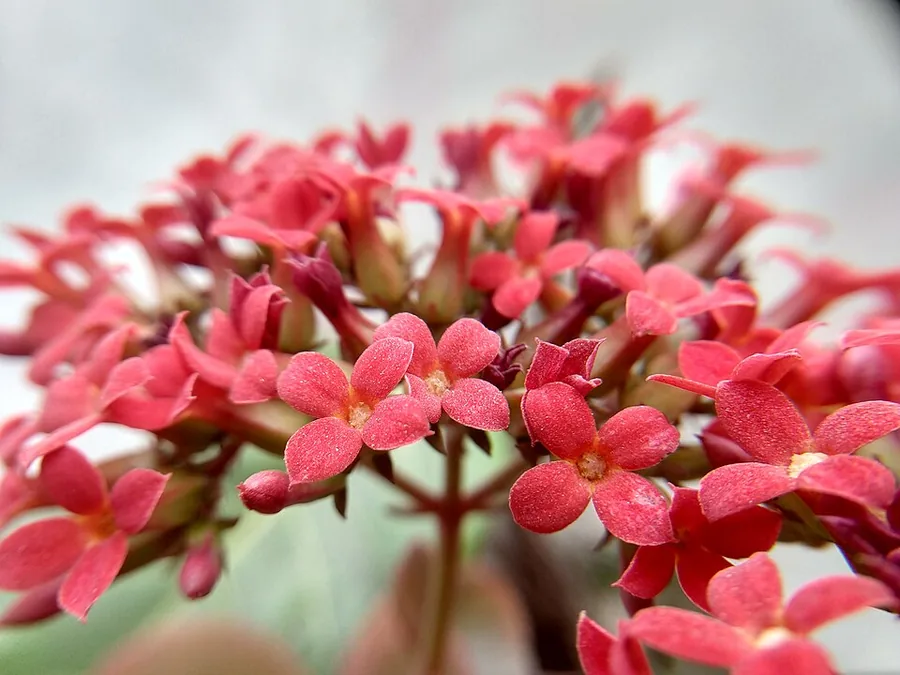
Flaming katy is a small, good-natured succulent from Madagascar, loved for its long-lasting clusters of bright flowers. It shares a family with jade and sedum, and just like them it tucks water away in thick, glossy leaves. That little reserve means it forgives a forgotten watering, though it would rather you erred on the dry side than the wet.
Most plants settle in at just 6 to 12 inches (15 to 30 cm) tall, so there is plenty of room on a windowsill for one. The flowers arrive in red, orange, pink, yellow, and white, and one good flush will hold its color for weeks. Because florists coax it into bloom all year, you will spot it as a friendly gift plant in any season.
Do not let the reblooming talk worry you, because this plant is genuinely easy and very willing to flower again once you know its rhythm. It asks for bright light and a stretch of long nights to form buds, and it likes its soil to dry out completely before the next drink. Get those two simple things right and it will bloom for you again and again for years.
Care
The short version: give it bright indirect light, gritty fast-draining soil, and a proper soak only once the soil has dried out completely. Feed it lightly through the growing season, and offer long fall nights when you want it to bloom again.
Light
A spot with bright indirect light, like the area beside a sunny window that escapes the fierce midday sun, will make it happy. It can take a little direct sun and even partial sun, so do not fret over the perfect place, but a too-dim corner leaves it stretched and slow to flower.
Water
Let the soil dry out completely before you water again, then soak it well and pour off anything left sitting in the saucer. This succulent is far happier a touch thirsty than soggy, so when you are unsure, simply wait. To bring it back into flower it also wants about six weeks of long nights, roughly 14 hours of unbroken darkness.
Soil
Pot it into a gritty, well-drained mix that lets water run straight through, such as a cactus blend. A slightly acidic pH of 6.0 to 6.5 suits it nicely, and that sharp drainage is the kindest thing you can do for its roots.
Temperature
Comfortable room warmth is just right, ideally 59°F to 77°F (15°C to 25°C). Keep it clear of cold drafts and frost, since this is a tender plant that does not enjoy a chill.
Humidity
Ordinary household air is plenty, and it is at its most content on the low side of humidity. There is no target number to chase, and dry indoor air actually suits it better than a steamy bathroom would.
Feeding
A monthly feed through spring and summer while it is growing is all it needs, using a balanced water-soluble fertilizer mixed to half strength. Let it rest from feeding in fall and winter as growth quiets down.
Pruning
Snip off the spent blooms to keep it looking fresh, then pinch the stems back after flowering. That gentle trim coaxes out bushy, compact growth instead of a few long, bare stalks.
Repotting
Move it into the next pot size every 1 to 2 years, or a little sooner if it feels crowded, always choosing one with drainage. Roots peeking from the holes, water rushing straight through, or growth that has stalled are all kind hints that it is time.
Size & spacing
You can look forward to a compact little plant of 6 to 12 inches (15 to 30 cm) tall spreading 8 to 16 inches (20 to 40 cm) across. Leave it enough room for air to drift around the leaves, which goes a long way toward keeping powdery mildew off.
Troubleshooting
Take heart, because nearly every flaming katy hiccup comes down to water or light, and both are easy to put right. Too much water tires the roots, while too little light leaves it leggy and slow to flower. Find what matches your plant below, and gently fix the cause rather than just the look of it.
When the stems turn soft and the base starts to blacken
Try not to panic if the base goes soft and dark, because this is root and crown rot and it almost always comes from a little too much water in soil that stays wet. Lift the plant gently and you will likely see brown, mushy roots where pale firm ones belong. Trim every soft piece away with clean tools, settle it into fresh gritty mix, and let it rest dry until it perks up. Going forward, a pot that drains and a full dry-out between waterings keeps this from returning.
Fix:
- Remove the plant from wet soil
- Cut away all rotted tissue with clean tools
- Repot into fresh gritty, well-drained mix
- Withhold water until the plant recovers
Reaching, gappy stems and shy flowering
If your plant is stretching toward the glass with long gaps between leaves, it is simply asking for more light, and if it skips its second bloom it is missing the long nights that wake up its buds. Both are easy to give back. Settle it somewhere bright with gentle indirect light, then offer about six weeks of roughly 14 hours of complete darkness each night, and pinch the leggy stems while you are there. Steady bright light with a calm short-day spell in fall brings the flowers right back.
Fix:
- Move to a bright spot with indirect light
- Provide about six weeks of roughly 14 hours of complete darkness each night to trigger budding
- Pinch back leggy stems
A soft white dust settling on the leaves
Those pale patches you can rub off the leaves are powdery mildew, and it tends to settle in when plants sit close together in still, damp air. Nothing here is hard to undo. Pick off the most affected leaves, give everything a little more breathing room, and keep water off the foliage when you water. Watering down at the soil and keeping the air on the dry side usually means it stays away for good.
Fix:
- Remove badly affected leaves
- Improve air circulation and spacing
- Avoid wetting the foliage when watering
Toxicity
This is a plant to be careful with around animals. Every part carries bufadienolides, cardiac glycosides that upset the stomach and, in larger amounts, can disturb the heartbeat. Keep it out of reach of pets and livestock, and ring a vet right away if an animal manages to eat any of it.
Toxic to
Cats · Dogs · Horses · Rabbits · Livestock · Birds · People
Cats Toxic
If a cat tastes any part, drooling, vomiting, and diarrhea tend to follow before long. A bigger bite can unsettle the heart rhythm, so please treat that as something to act on quickly.
Dogs Toxic
Watch a dog for drooling, vomiting, diarrhea, and a dip in their usual energy. With a large mouthful, the same bufadienolides can slow or skip the heartbeat, so do not wait it out.
Horses Toxic
Because the cardiac glycosides reach every part of the plant, a horse that grazes on it can end up with colic, diarrhea, and a heart arrhythmia that needs prompt care.
Rabbits Toxic
There really is no safe nibble for a rabbit here. Even a couple of leaves can stir up gut trouble and the heart-rhythm problems these glycosides cause.
Livestock Toxic
Cattle, goats, and sheep that reach it may show drooling, scouring, weakness, and an uneven heartbeat from the bufadienolides, so fence it well away.
Birds Toxic
Please keep it well clear of birds. The same cardiac toxin reaches them too, and because they are so small, even a tiny taste can do real harm.
People Caution
This is not a plant anyone should eat, and a mouthful can leave the stomach upset. Keep it where small children cannot reach the cheerful flowers and be tempted to try them.
Helpline numbers

United States
ASPCA Animal Poison Control: (888) 426-4435 (fee applies)
Poison Control: (800) 222-1222



Canada
Poison Centres: 1-844-764-7669
Varieties
Most flaming katy you will meet today has been bred for fuller flowers and a tidy, compact shape. These two groups cover just about everything you will find waiting at the garden center.
Calandiva series
You will know these by their full, double, rose-like flowers, and they stay neat and compact across a lovely span of colors.
Flapjacks-flowered florist hybrids
These single-flowered florist types crowd their stems with red, orange, pink, or yellow blooms for a generous show.
How to propagate
Multiplying flaming katy is one of its real joys, since a single plant gives you more starts than you might expect. You can root a stem tip or coax new plants from a leaf, and both go best in spring or summer while the plant is growing happily.
Stem cuttingsEasy
Spring to summer during active growth · 2 to 3 weeks to root
Making more of this plant is wonderfully forgiving, and a stem tip taken in spring or summer while it is growing is the gentlest place to start. Snip a healthy tip, set it aside a day or two so the cut can callus and will not rot, then nestle it into gritty, barely damp mix. Give it about 2 to 3 weeks and roots will come.
Leaf cuttingsModerate
Spring to summer · 3 to 6 weeks to form plantlets
A single leaf can become a whole new plant too, which feels a little like magic the first time. Take a leaf in spring or summer, let it callus, then lay or stand it on well-drained mix and keep it lightly moist while small plantlets appear at the base over 3 to 6 weeks.
Myths
It is a harmless gift plant that is perfectly safe around pets.
As lovely as it is, this florist plant really is toxic to cats and dogs. The bufadienolides in it are cardiac glycosides that bring on vomiting and diarrhea, and in any quantity they can unsettle the heartbeat. Enjoy it up on a shelf where curious pets cannot reach, and you can have both the plant and peace of mind.