Vegetable · Basellaceae
Malabar Spinach
Basella alba
Give it warmth, a steady drink, and something to climb, and this easygoing vine will reward you with greens all summer.
Full sun
Every 2–4 days
59–95°F · 15–35°C
50–70 days
Overview
If real spinach keeps wilting on you when summer arrives, take heart, because Malabar spinach is happy in exactly the heat that defeats it. The name can fool you, since it is not related to true spinach at all. What you are growing is a gentle twining vine in the family Basellaceae, born in the tropics and glad to be warm.
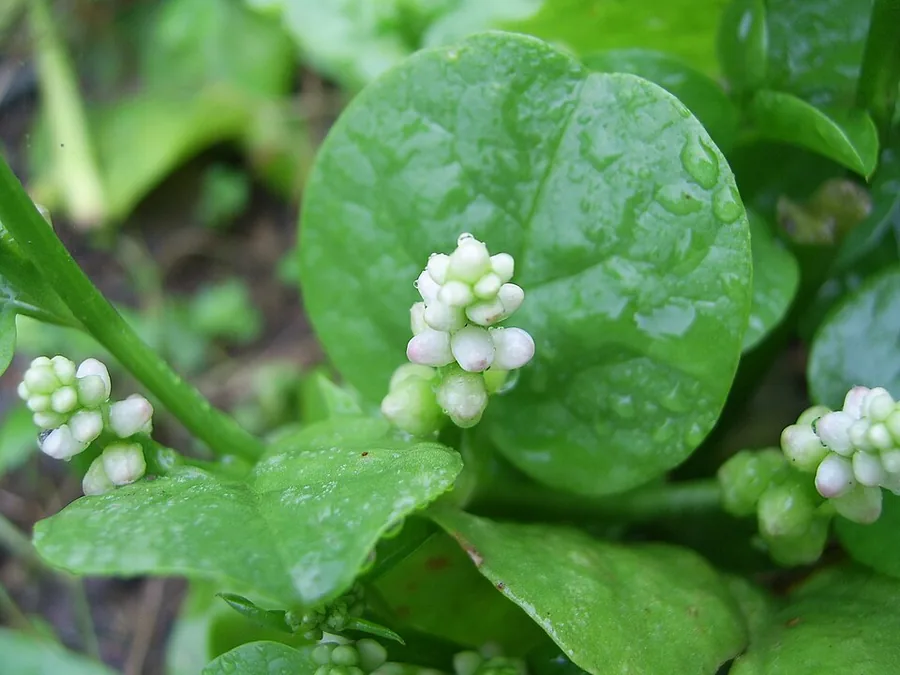
You will be surprised how eagerly it climbs, reaching 6 to 10 feet (1.8 to 3 m) up a trellis in one warm season. The leaves are thick and glossy with a mild, faintly citrusy taste, lovely fresh in a salad or cooked down soft like spinach, where they lend a gentle thickening to soups and stir-fries.
Best of all, it forgives beginners. Once it has taken hold you only need to offer sun, even moisture, and something upright to hold, then pinch the tips now and then for more leaves. If it starts to flower, do not worry, just snap those spikes off and the plant settles back into making tender greens for you.
Care
The short version: give it full sun and genuine warmth, with a sturdy trellis to climb. Keep the soil evenly moist, feed it through the season, and pinch the tips to gently hold off flowering, and you will do fine.
Light
This vine is happiest in full sun, where it puts on the most growth, though it will gladly take a little afternoon shade in a very hot garden. The more sun you can give it, the more leaves you get, which is really the whole joy of it.
Water
Try to keep the soil evenly moist, watering around every 2 to 4 days and a touch more often during a heat wave. If it dries out too much the vine hurries into flower, which shrinks the very leaves you were looking forward to, so a steady drink keeps everyone happy.
Soil
Settle it into rich, well-drained loam full of organic matter and it will feel right at home. A pH of 6.0 to 6.8, just slightly acidic, suits it beautifully and keeps the leaves coming soft and tender.
Temperature
Warmth is truly the heart of the matter here. The vine grows best between 59°F and 95°F (15°C to 35°C) and simply sulks in the cold, so be patient and let the soil warm up before you plant it out.
Humidity
Unlike most greens, this one adores damp air and does its best at 60% to 90% relative humidity. That fondness for moisture is exactly why it flourishes in the muggy summers that leave true spinach flat.
Feeding
Feed it monthly through the growing season with a balanced, nitrogen-forward fertilizer. That little extra nitrogen encourages the leafy growth that makes the vine so worth its place in your garden.
Pruning
Pinch the growing tips often to coax bushy branching and keep those tender leaves arriving. Just as helpfully, snap off any flower spikes the moment you notice them, since flowering is what turns the leaves small and tough.
Repotting
Since it is grown as an annual, it seldom needs true repotting, but do pot up a container plant when its roots fill the space. Keep a friendly eye out for roots circling the pot, quick wilting between waterings, and new growth that has stalled.
Size & spacing
On a trellis this vine climbs 6 to 10 feet (1.8 to 3 m) tall and spreads 12 to 35 inches (30 to 90 cm) wide. Offer it strong vertical support and a little breathing room so air can move gently through the leaves.
When to plant
This vine simply loves warmth and will wait patiently for it, so there is no need to rush. Sow seed indoors in the last stretch of winter, then set your young plants out only once frost has passed and the ground feels warm. From there you can pick leaves happily right through the warm months.
Northern hemisphere
Southern hemisphere
Typical months for a temperate climate: start earlier in warm zones, later where spring frosts linger.
- Sow: 6-8 weeks before the last expected spring frost
- Plant: after all danger of frost has passed and soil is warm (above ~18°C / 65°F), trained onto a trellis or other vertical support
- Harvest: harvest leaves continually once vines are established through the warm season
Hardiness
USDA hardiness zones: 7–12
Temperature: down to -18°C
Troubleshooting
Almost anything that goes wrong here will show first on the leaves or in a pause in fresh growth, and the good news is that most of it is easy to put right. Spot the early signs and you can keep tender leaves coming for a long while. Look for what matches below, then step in kindly while it still helps.
Stunted, wilting plants with knotty galls on the roots
Knobbly swellings on the roots usually mean root-knot nematodes, tiny soil pests that block the plant from drinking and feeding. Sadly a badly affected plant cannot be saved, so lift and destroy it, then move the bed to a crop the nematodes cannot live on. Feeding the soil with organic matter slowly helps it defend itself in future seasons.
Fix:
- Remove and destroy heavily infested plants
- Rotate to non-host crops
- Amend soil with organic matter to support beneficial organisms
Flower spikes appear and the leaves turn small and tough
When the vine sends up spikes of small flowers and dark berries, it has quietly shifted into seed production, and the leaves start to shrink and toughen. Shorter days, heat, and dry spells all nudge it that way. There is no harm done, so pinch the flower spikes off as soon as you spot them, keep the soil evenly moist, and harvest the tips often to coax it back into leaf.
Fix:
- Pinch out flower spikes promptly
- Keep soil evenly moist
- Harvest tips frequently
Small brown spots edged in dark on the leaves
Those little spots are Cercospora leaf spot, a fungus that turns up in warm, wet, humid spells, and it is more of a nuisance than a crisis. Gently pick off the marked leaves, open the vine up with wider trellis spacing so air can move, and water down at the soil so the foliage stays dry.
Fix:
- Remove and dispose of affected leaves
- Improve air circulation and trellis spacing
- Water at the soil line to keep foliage dry
Vines sprawling and tangling along the ground
Malabar spinach is a twining climber that longs for something to hold, and with nothing to grip the stems simply run flat and knot together. It is an easy fix, so set a sturdy trellis, fence, or stake in place at planting and guide the young shoots onto it, since the vine happily climbs past 6 to 10 feet (1.8 to 3 m).
Fix:
- Install a sturdy trellis, fence, or stake
- Gently train young shoots onto the support
Toxicity
You can relax completely with this one, because it is a vegetable rather than anything harmful. Every part is safe around cats, dogs, livestock, and little ones, and the leaves are meant for your dinner plate. The single thing worth remembering is that they are high in oxalates, just like true spinach, which only matters for people prone to kidney stones.
Safe for
People · Cats · Dogs · Horses · Rabbits · Livestock · Birds
Cats None
There is truly nothing to fear here. A cat that nibbles a leaf might get a mild, passing tummy upset at worst, no different from tasting any unfamiliar green.
Dogs None
Perfectly safe around dogs. The leaves and stems hold no toxin, so a curious pup can chew on the vine without any harm coming to it.
Horses Safe
No danger at all to horses. This is a leafy vegetable rather than a poisonous plant, and a grazing horse will come to no trouble from it.
Rabbits Safe
Rabbits can enjoy the fresh leaves with no worry. As with any leafy green, just add it in slowly so it stays a small, balanced part of their diet.
Livestock Safe
Cattle, goats, and sheep are quite safe with this vine. The foliage carries nothing harmful and is sometimes even grown as fodder for them.
Birds Safe
Pet and backyard birds can sample the leaves without concern. The plant holds no compounds that would do them any harm.
People Safe
This is a kitchen vegetable, eaten raw or cooked, so tuck in happily. The only gentle caveat is that the leaves run high in oxalates, good to know if you are prone to kidney stones.
Leaves are high in oxalates (as with true spinach), a dietary consideration for people prone to kidney stones, not a pet-poisoning concern.
Varieties
You will meet just a couple of forms in most gardens, and they differ mainly in the color of their stems. Both grow the same easy way and taste very much alike, so either is a friendly choice.
Basella alba (green)
This is the everyday green-stemmed form, easy to spot by its green stems and thick, plump green leaves.
Basella alba 'Rubra'
With its warm red-to-purple stems and leaf veins, this one is pretty enough to grow as an ornamental as well as for the kitchen.
How to propagate
Making more of this vine is wonderfully simple, and you can go either from seed or from a cutting off a plant you already have, whichever feels easier to you.
SeedEasy
Start indoors 6-8 weeks before last frost or direct sow after soil warms · Germination in roughly 10-21 days; soaking or scarifying the hard seed coat speeds emergence
You can start seed indoors 6 to 8 weeks before your last frost, or sow it straight into warm soil once the cold has gone for good. The seed coat is a little hard, so give the seeds an overnight soak first, and your seedlings should gently break ground in roughly 10 to 21 days.
Stem cuttingsEasy
During the warm growing season · Roots form in about 1-3 weeks in warm, moist conditions
Taking cuttings during the warm growing season is the quickest and most forgiving way to more plants. Just stand a healthy stem in water or moist mix and it will root in about 1 to 3 weeks, handing you a fresh young vine with almost no effort.
Myths
Malabar spinach is a kind of true spinach.
The two really only share a name and a job in the kitchen. Malabar spinach is a twining vine in the family Basellaceae, with no botanical tie to true spinach (Spinacia oleracea, in the Amaranthaceae), and it happily steps in as a warm-season substitute when the real thing bolts in summer heat.
Since it tastes like spinach, it must be free of spinach's downsides.
It does share one of the notable ones, so it is worth a gentle heads-up. The leaves run high in oxalates, just like true spinach, which is simply good to keep in mind if you are someone prone to kidney stones.