Vegetable · Brassicaceae
Bok Choy
Brassica rapa subsp. chinensis
Sow it in cool weather, keep it watered and growing fast, and bok choy fills the bed in barely six weeks.
Full sun
Every 2–4 days
50–77°F · 10–25°C
40–55 days
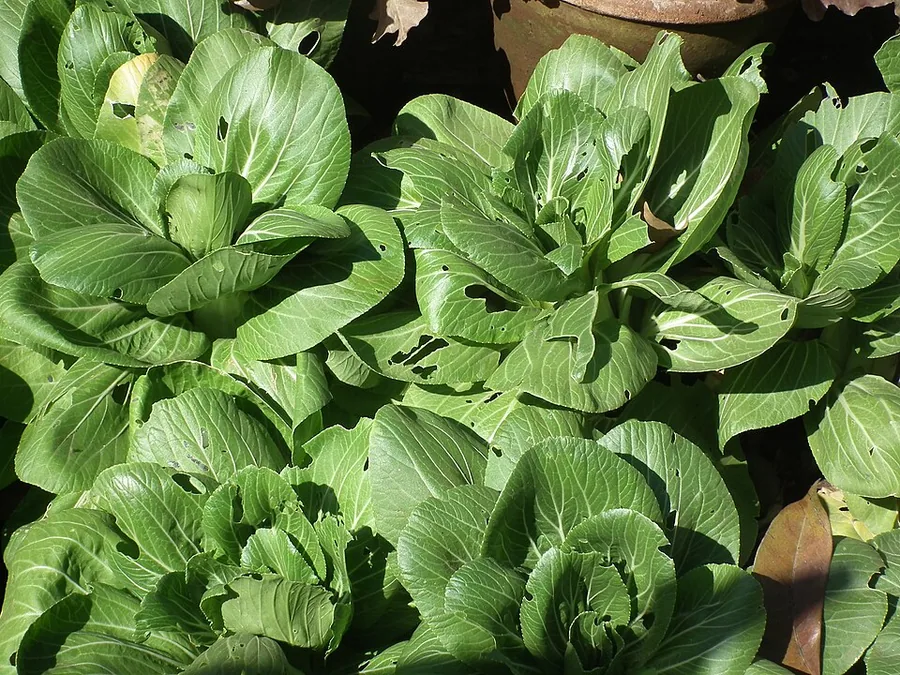
Overview
Bok choy belongs to the cabbage family, but it is grown for its crisp stalks and tender leaves rather than a tight head, which makes it wonderfully approachable. It comes together fast, going from seed to a full plant in 40 to 60 days, so it is a happy way to fill a bed early in spring or late in fall. Pick the outer leaves whenever you like, or cut the whole plant once it reaches the 10 to 15 leaf stage.
Cool weather is really the heart of growing this crop well, and once you understand that, the rest falls into place. It is happiest between 50°F and 77°F (10°C to 25°C), while a cold snap in its first weeks or the heat and long days of summer can push it to bolt and turn bitter. Aim your sowings at spring and fall and you will quietly avoid most of that worry.
Beyond that, it asks very little of you. Offer it steady moisture, fertile soil, and full sun, though it will still produce in partial shade, and within a few weeks you will be carrying crisp, mild greens to the kitchen for stir-fries and soups.
Care
The short version: give it full sun and cool weather, keep the moisture steady at about an inch of water a week, plant in rich soil worked with compost, and harvest early at the 10 to 15 leaf stage before heat sets it bolting.
Light
Bok choy reaches for full sun to grow fastest and fullest, but it is forgiving if your garden cannot offer that. It still forms usable heads on as little as 2 hours of direct sun a day, just at a gentler speed, which makes it a fair friend for a part-shade bed.
Water
Keep the soil evenly moist with about 1 inch (2.5 cm) of water a week from rain or the hose, and a touch more in sandy ground. That steady moisture is what keeps the stalks crisp and helps hold off bolting, so try not to let the bed swing from bone dry to soaked.
Soil
Plant in fertile, well-drained soil that still holds a little moisture, worked over with compost or well-rotted manure. A pH of 6.0 to 7.5 suits it nicely, and nudging toward 7 gives extra help where clubroot has been a problem.
Temperature
This is a cool-weather crop, happiest between 50°F and 77°F (10°C to 25°C). Cold below 50°F in the early weeks can quietly trigger bolting, and summer heat pushes it to flower and turn bitter, so timing is your friend here.
Humidity
Ordinary outdoor humidity is perfectly fine, so there is no number you need to chase. Just keep a kind eye out for the warm, wet spells that raise pest and disease pressure, and leave plants enough room for air to move.
Feeding
Work plenty of compost or well-rotted manure into the bed before planting and that alone carries most crops through. On poorer ground, a light nitrogen side-dress while it grows keeps fresh leaves coming.
Pruning
There is no real pruning to fuss over. Simply take the outer leaves as you need them or cut the whole head at the 10 to 15 leaf stage, and snap off any flower stalk the moment the plant begins to bolt.
Size & spacing
Plants stand 6 to 12 inches (15 to 30 cm) tall and roughly as wide. Thin dwarf types to about 12 inches apart and full-size plants a little more, so each one has the room to size up and stay airy.
When to plant
Bok choy is a cool-season crop that bolts in summer heat, so it does best in the gentle shoulders of the year. Start seed indoors a few weeks before the last spring frost or direct-sow around it, then sow again in midsummer for a fall harvest that fills out as the weather cools.
Northern hemisphere
Southern hemisphere
Typical months for a temperate climate: start earlier in warm zones, later where spring frosts linger.
- Sow: 4-5 weeks before the last spring frost for an early crop
- Plant: Set transplants out around the last spring frost once hard freezes have passed; direct-sow in midsummer (July) for a fall crop that matures in cool weather
- Harvest: Harvest 40-60 days after seeding at the 10-15 leaf stage, before hot weather triggers bolting; spring and fall crops
Hardiness
USDA hardiness zones: 2–11
Temperature: down to -46°C
Troubleshooting
Most bok choy trouble shows itself as chewed leaves, slime near the base, or a plant that suddenly runs to seed, and none of it needs to feel overwhelming. Learn to spot these signs early and you can step in well before a crop is lost. Find what matches below, then act while your help still counts.
Wilting and yellowing even when the soil is moist
When a plant droops and yellows although the soil stays moist, look down at the roots for the answer. Clubroot swells them into useless lumpy clubs, while cabbage maggots tunnel through and chew them apart. This one cannot be cured once it sets in, so gently pull and destroy any affected plant and keep it out of the compost.
Fix:
- Remove and destroy infected plants; do not compost them
- There is no cure for clubroot in an infected plant
A surprise flower stalk climbs up and the leaves stall
If a tall stalk shoots up and leaf growth quietly stops, the plant is bolting, usually because a cold spell early on fooled it into flowering or because late-spring heat and long days arrived. Once that happens it shifts its energy toward seed. Take heart, you can still cut the head before the buds open and eat it, even if it tastes a touch more bitter.
Fix:
- Harvest the head immediately, before the flowers open; it is still edible though it may be slightly bitter
A scatter of tiny round holes across the leaves
Those little pinprick holes look alarming, but they are simply flea beetles, shiny black specks that hop away when you brush the plant and bother seedlings most. Laying a floating row cover at sowing keeps them off without any fuss. Keep the water steady so plants grow fast, and they will sail right past the damage.
Fix:
- Cover plantings with floating row cover at seeding
- Keep plants growing fast with steady water so they outgrow damage
Ragged chewed holes and crumbs of dark frass
Torn holes and bits of dark frass are the calling card of cabbage caterpillars, a group that includes the imported cabbageworm, the cabbage looper, and diamondback moth larvae. Peek at the leaf undersides where they like to hide and pick them off, which is easier than it sounds. If they get ahead of you, a spray of Bacillus thuringiensis while they are still small sets things right.
Fix:
- Handpick caterpillars
- Apply Bacillus thuringiensis (Bt) while caterpillars are small
Slime trails and gnawed spots low on the stalks
Silvery trails and chewed stalk bases give away slugs and snails, which come out after dark to feed in the damp, snug base of the plant. You can gather them by hand at night, or scatter a little iron phosphate bait nearby, and either way works. Clearing mulch and debris from around the stems takes away the daytime shelter they depend on.
Fix:
- Handpick at night
- Use iron phosphate slug bait around plants
- Reduce mulch and debris immediately around stems
Toxicity
Bok choy is a kitchen vegetable through and through, safe for people and not listed as toxic to cats or dogs, so you can grow it with an easy mind. The one gentle caveat is quantity, since the natural goitrogens common to all cabbages can bring on gas or mild upset if any animal eats large raw amounts often. Horses are the one to keep an eye on, as extension guides flag brassicas as a poor fit for their diet.
Safe for
People · Cats · Dogs · Horses · Rabbits · Livestock · Birds
Cats None
You can relax about cats and bok choy, since it never appears on the ASPCA toxic list and a curious nibble does no harm. The most that a big plateful of raw leaves might bring on is a little gas or a passing upset stomach.
Dogs None
A dog is welcome to share a bit of cooked or raw bok choy with you, no worry at all. The only thing to keep an eye on is gas or loose stools if a large raw helping disappears in one go.
Horses None
Horses are the gentle exception here, as NC State Extension suggests keeping brassicas out of their diet because the family does not sit well with them in quantity. One stray leaf is nothing to fret over, just do not turn it into a regular treat.
Rabbits None
Rabbits do just fine with small servings of the leafy greens. Bring it in slowly and keep the portions modest, since a sudden pile of rich brassica can leave a bunny a bit gassy.
Livestock None
Cattle, goats, and sheep can browse the leaves with nothing to fear. As with any brassica, an all-day diet of it alone can unsettle rumen digestion, so let it be one part of the mix rather than the whole meal.
Birds None
Backyard hens and other birds will peck away happily at the leaves and the bolted flowers. Offered in moderation, it makes a wholesome green for them.
People Safe
Bok choy is grown for the table and is perfectly safe to eat, raw in a salad or cooked into a stir-fry. The only thing worth a passing thought is a steady habit of large raw amounts, because of the natural goitrogens shared across the whole cabbage family.
No special handling needed; safe to grow in household gardens.
Varieties
Bok choy comes in white-stemmed and green-stemmed forms and in full-size and baby types. These are the few worth knowing by name as you get started.
Shanghai (green-stem) type
Known as Shanghai Qing in China, this one carries spoon-shaped leaves on soft green stalks instead of white, and it is a lovely choice to pick young as baby bok choy.
Dwarf types
If space is tight, these compact little plants reach only about 6 inches and sit happily as close as 12 inches apart while maturing fast.
'Joi Choi'
A reliable white-stemmed hybrid that beginners love for the way it resists bolting and shrugs off both cold and warm spells.
'Mei Qing Choi'
A green-stemmed baby pak choi hybrid that holds off bolting nicely and rewards a gentle hand.
Companions
Bok choy grows best beside onions and aromatic herbs that throw pest-laying moths off the scent, and it shares a cool-season bed comfortably with beets.
Plant near
Onions: Extension companion-planting guides note onions get along well with all cabbage-family crops, and onion interplanting helped reduce cabbage looper and imported cabbageworm damage in brassica trials
Aromatic herbs (dill, sage, thyme, chamomile, rosemary): Cole crops do well planted with aromatic herbs; sage and thyme reduced diamondback moth pressure on brassicas in studies
Beets: Extension companion charts list beets as compatible neighbors for cabbage-family crops in the cool-season bed
How to propagate
Bok choy is grown from seed, and it really is about as easy as seed sowing gets, with a fresh row ready to start every couple of weeks.
SeedEasy
Direct-sow or start indoors in early spring, and again in mid-to-late summer (around July) for a fall crop · Seed germinates in about 4-10 days in cool soil; plants reach transplant size in 3-4 weeks and harvest size in 40-60 days
Seed is the only way bok choy is grown, and you will find it forgiving. Tuck the seed a quarter to half an inch deep in early spring or again around July for a fall crop, and watch it sprout in 4 to 10 days in cool soil. Thin to one plant every 6 to 12 inches to match the variety, then give it 3 to 4 weeks to reach transplant size and 40 to 60 days for a full head. Pop in a fresh row every couple of weeks and you will always have more on the way.
Myths
Once bok choy starts to bolt, the plant is ruined and must be thrown out.
Do not toss it just yet, because a bolting plant is still good food if you catch it in time. Cut the head before the flowers open and it eats much like a young one, only a shade more bitter, and the flower stalks themselves are a tasty bonus.
Bok choy needs full sun all day to make a crop.
Full sun does grow the fullest, fastest heads, but you do not need a perfect spot to succeed. As little as 2 hours of direct sun a day still yields usable heads, simply at a calmer pace.