Shrub · Actinidiaceae
Kiwi
Actinidia deliciosa
Give it full sun, a strong trellis, and a male partner, and your kiwi vine will thank your patience with fruit.
Full sun
Every 3–7 days
USDA 7–9
10–20 ft · 3–6 m
Overview
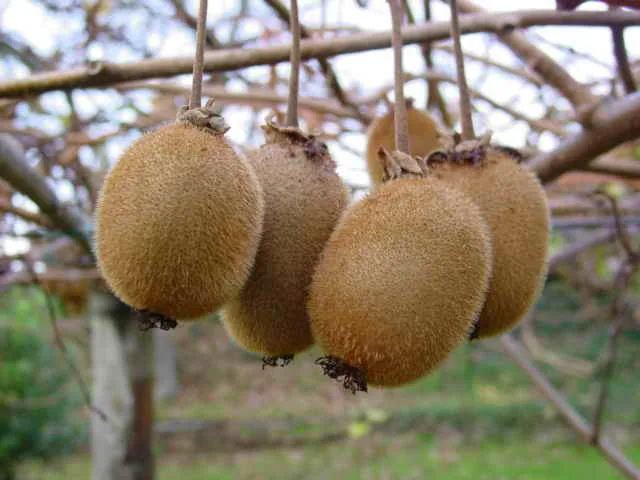
The kiwi is a big, fast-growing woody vine from the hills of southern China, where it was long known as the Chinese gooseberry before New Zealand made it famous. Left to its own devices it climbs freely and wide, filling a 200 square foot trellis with twisting cane and broad leaves before you know it. The fuzzy brown fruit you recognize comes from the female vines once they have had a few patient years to settle.
The one thing that surprises new growers is sex, so it helps to know it early. Most kiwi are dioecious, carrying male and female flowers on separate plants, which means a single vine on its own will flower and never fruit, and that is not your fault. You simply plant a male beside your females, roughly one male for several, and let the bees carry the pollen between them.
This is not a rushed crop, and that is part of its charm. A young vine spends its first 3 to 5 years quietly building structure before it fruits, and it will lean on a serious trellis to hold a mature plant's weight. Give it sun, steady water, and a yearly prune, though, and it will keep rewarding you with fruit for decades.
Care
The short version: give it full sun, deep and fertile well-drained soil on the acidic side, steady moisture for those shallow roots, a strong trellis to climb, and both a male and female vine when you are hoping for fruit.
Light
Kiwi is happiest and fruits best in full sun, which ripens the fruit and fuels all that heavy growth. It will put up with partial sun or light shade, but do expect a little less fruit and softer, leggier canes the more shade it gets.
Water
The roots stay shallow, so your vine leans on steady, even moisture and feels a dry spell fast. Water deeply through fruit development and hot weather, and lay down mulch to hold that moisture, just remembering to pull the mulch back off the trunk.
Soil
Settle it into deep, fertile, well-drained loam with plenty of organic matter, and it will feel right at home. Kiwi likes things on the acidic side, around a pH of 5.0 to 6.5, and it really does not enjoy waterlogged ground or salty and alkaline soils.
Temperature
The vine copes with a wide swing, roughly 14°F to 95°F (-10°C to 35°C) across the year, and its only soft spot is the tender spring shoots. A late frost after growth has started can undo the new season's wood overnight, so watch the forecast.
Humidity
Ordinary outdoor humidity, somewhere around 40% to 70%, suits kiwi just fine. There is no number to fuss over outdoors, so pour your care into watering and good airflow instead.
Feeding
Feed a balanced or nitrogen-rich fertilizer around the root zone monthly through spring and midsummer while the vine is growing hard. Ease off by late summer so the fresh growth can firm up and harden off comfortably before winter.
Pruning
Kiwi welcomes regular, confident pruning to stay in bounds and keep fruiting, so do not be shy with the shears. Cut female vines hard in winter while fully dormant, renewing the fruiting wood each year, since fruit forms on current-season shoots off one-year-old wood. Summer-prune the vigorous canes to let light in, prune the males lightly once they flower, and train young vines to a single trunk up the trellis.
Repotting
Kiwi is a ground plant at heart rather than a pot dweller, so repotting rarely comes up. If you do begin a young vine in a container, move it on before the roots start to circle, then settle it into its forever spot on a trellis.
Size & spacing
These vines grow gloriously big, reaching 10 to 20 feet (3 to 6 m) tall and spreading 7 to 13 feet (2 to 4 m) wide. Give each one a strong, well-anchored trellis and generous room, because a mature plant can fill a 200 square foot frame and lean hard on anything flimsy.
When to plant
Kiwi keeps to a long, unhurried calendar, and there is no need to rush it. Plant in spring once the last hard frost is safely behind you, since the fresh shoots are badly frost-tender, then settle in for several seasons of growth before the late-spring flowers turn into fruit you pick in mid to late fall.
Northern hemisphere
Southern hemisphere
Typical months for a temperate climate: start earlier in warm zones, later where spring frosts linger.
- Plant: Spring after the last hard frost; new shoots are very frost-tender.
- Harvest: Slightly fragrant greenish-white flowers in late spring; fuzzy brown fruit harvested mid to late fall (about October to November).
Hardiness
USDA hardiness zones: 7–9
Temperature: down to -18°C
Troubleshooting
Almost every kiwi worry comes back to one of three gentle causes: frost on the tender new growth, a missing male vine, or thirsty shallow roots. Learn to read the early signs on the shoots, flowers, and leaves and you can usually set things right long before the season is lost.
New spring shoots turning black and limp
Take heart, this is just frost damage, and those soft new kiwi shoots are the tenderest thing in the whole garden. One cold night after the vine wakes up can blacken the fresh growth even while the older wood stays perfectly fine. When the vine starts pushing again, simply trim the dead shoots back to living wood, and keep a bit of frost cloth handy to drape over it whenever a late frost is coming.
Fix:
- Prune out killed shoots back to healthy wood once growth resumes
- Cover vines with frost cloth when frost is forecast
Plenty of flowers but no fruit forming
Do not blame yourself, because kiwi is dioecious, which simply means the male and female flowers live on separate plants, so a lone female will bloom her heart out and set nothing. The other gentle truth is patience, since a vine often needs 3 to 5 years before it fruits at all. Pop at least one male within reach of your females, welcome the bees at bloom time, and the fruit will come.
Fix:
- Plant at least one male kiwi within pollinating range of the females
- Encourage bee activity at bloom time
Scorched leaf edges and wilting in the heat of the day
This one is easy to put right. Because kiwi roots stay shallow, the vine notices a dry spell quickly and lets you know with scorched leaf margins and a bit of midday droop, and hot dry wind only adds to it. Give it a good deep drink through any dry stretch and tuck a thick organic mulch over the root zone, just keeping it clear of the trunk, and the vine bounces back happily.
Fix:
- Water deeply and regularly during dry spells
- Apply organic mulch over the root zone
Toxicity
Here is some lovely news for pet owners: the kiwi vine is safe all round. The fruit is an everyday food, and nothing in the leaves or stems can poison cats, dogs, or livestock. Your cat may even fall for the vine the way it falls for catnip, which is simply harmless fun and never a hazard.
Safe for
People · Cats · Dogs · Horses · Rabbits · Livestock · Birds
Cats None
You can relax around cats here, since kiwi is perfectly safe for them, though plenty are pulled toward the vine just as they are to catnip because the genus includes silver vine. That fascination is harmless, so a cat happily rolling on the canes is nothing to worry about.
Dogs None
Your dog is quite safe near the vine and the fruit. If one gulps down a lot of fuzzy skin or unripe fruit it might feel a little off for a while, but that is ordinary overeating rather than any sign of poisoning.
Horses Safe
Rest easy about horses, because nothing in the leaves, stems, or fruit can harm them. Grazing beside a kiwi vine brings no toxic risk at all.
Rabbits Safe
Rabbits can nibble the foliage without any harm, and a small piece of ripe fruit makes a lovely now-and-then treat. There is simply no toxin here to worry about.
Livestock Safe
Cattle, goats, and sheep are in no danger of poisoning from kiwi leaves or fruit. You can trust that the plant is not toxic to grazing animals.
Birds Safe
Birds can peck at ripe kiwi without coming to harm, and wild birds will gladly clean up fallen fruit. None of the plant poses a toxic threat to them.
People Safe
Ripe kiwifruit is a wholesome everyday food that is safe to eat. The one thing worth keeping in mind is that a few people are allergic to the fruit, which is quite separate from any toxicity.
Fruit and foliage are harmless if nibbled. Note that cats are often strongly drawn to Actinidia vines because the genus includes silver vine (Actinidia polygama), a catnip-like attractant; this is attraction, not poisoning.
Varieties
Kiwi varieties fall into fruiting females and the males that pollinate them, so you pick them as a happy pair. These are the ones worth getting to know.
Hayward
This is the leading commercial female, loved for big, well-flavored fruit that keeps happily well into winter.
Tomuri
A late-blooming male chosen as a partner because its flowering lines up with Hayward's, even though it never sets fruit itself.
Blake
A friendlier, more self-fertile female with smaller, earlier fruit, wonderful when you simply do not have space for a separate male.
Companions
Kiwi keeps its own company more than most plants, since the one partner it truly needs is a male vine of its own kind to set fruit.
Plant near
Male kiwi (pollinizer cultivar such as Tomuri): Required near female vines for pollination; one male can pollinate several females.
How to propagate
You have several friendly ways to make more kiwi, but only the vegetative ones keep a cultivar and its sex true, which really matters when you are pairing males with females.
GraftingDemanding
Late winter to early spring · 1 to 2 growing seasons
Named cultivars are most often grafted or budded onto seedling rootstock in late winter to early spring, which lovingly locks in both the cultivar and its sex. A grafted vine wants one to two growing seasons to settle in and feel at home. This is the trickier end of kiwi propagation and the one nurseries rely on, so do not feel you must master it right away.
Stem cuttingsModerate
Softwood/semi-hardwood in summer; hardwood in winter · Several weeks to a few months to root
Take softwood or semi-hardwood cuttings in summer, or hardwood cuttings in winter, and they come faithfully true to the parent. Kept under mist or in a humid frame they root fairly willingly, needing anywhere from a few weeks to a few months. It is a gentle, encouraging middle ground when grafting feels like a step too far.
LayeringEasy
Spring to summer · One season
This is the kindest, most beginner-friendly method there is. Simply pin a low cane down onto moist soil in spring or summer, and it quietly roots where it meets the ground across a single season. Once it has rooted, snip it free from the parent and lift your brand new vine into place.
SeedModerate
Spring after cold stratification · 3 to 5 years to first flowering
Seed does work, though it asks for real patience. After a spell of cold stratification you sow in spring, and the seedlings arrive variable rather than true to type, keeping their sex a secret until they finally flower 3 to 5 years down the road. When you want a known cultivar, lean on grafting or cuttings instead.
Myths
Kiwi vines are poisonous to cats.
You can put this worry aside, because the fruit and the whole plant are non-toxic. Cats make for Actinidia vines because the genus includes silver vine, a catnip-like attractant, so what looks like trouble is really just a cat having a wonderful time. Attraction is not poisoning.
A single kiwi plant will fruit on its own.
Sadly a lone vine cannot manage it, since most kiwifruit are dioecious and a female can flower for years yet set nothing without a male close by. You need both a male and a female plant to get pollination and a real crop.