Herb · Amaryllidaceae
Garlic Chives
Allium tuberosum
Snip a handful whenever you cook, and garlic chives forgive you and grow back with flat, garlic-scented leaves.
Full sun
Every 5–10 days
80–90 days
USDA 4–9
Overview
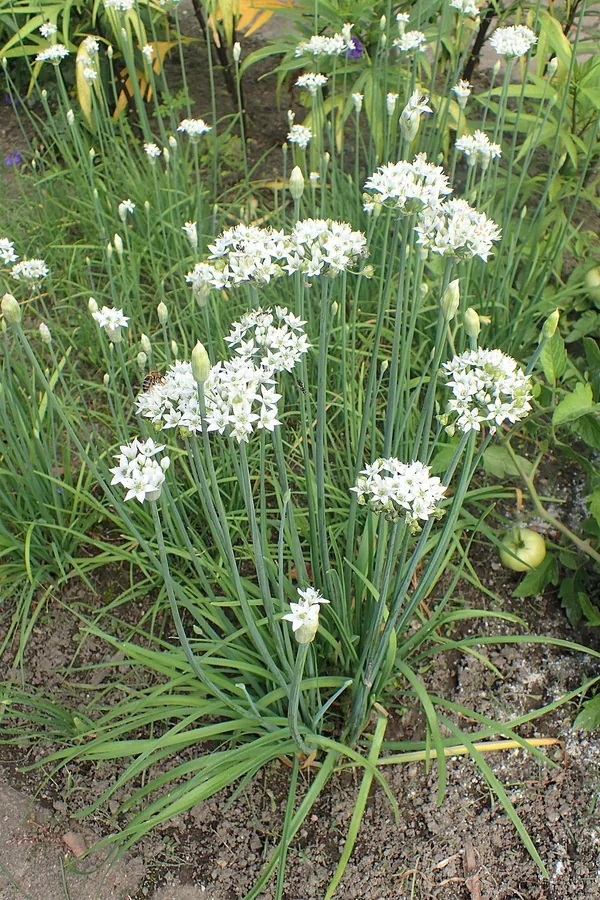
Garlic chives are a wonderfully forgiving clumping perennial in the onion family, grown for flat leaves that carry a soft garlic taste instead of the sharp onion bite of common chives. The plant comes from eastern Asia, where cooks have relied on it for centuries, and you may meet it as Chinese chives, Chinese leek, or nira. When late summer arrives it sends up white, star-shaped flowers that smell sweet and bring the pollinators around.
If you are just starting out, this is a lovely herb to build confidence with. It handles cold down to -22°F (-30°C), takes summer heat in stride, and asks very little once the clump has settled in. You cut the leaves as you need them, and the plant kindly grows more to take their place, so mistakes here are easy to recover from.
The single thing to keep an eye on is how keenly it wants to spread. Allowed to flower and set seed, garlic chives self-sow freely and can drift beyond the spot you chose for them. Snip the flower heads off before the seed ripens and the plant will happily stay put, right where you planted it.
Care
The short version: give them full sun and fertile, well-drained soil kept evenly moist for the most tender leaves, and you will do just fine. Shear the clump now and then for fresh regrowth, divide it every few years, and deadhead the flowers so it does not seed all over the garden.
Light
Garlic chives are happiest in full sun, which keeps the leaves stocky and packed with flavor. They will get along in partial shade as well, though the growth comes in thinner and a little softer there, so there is no harm in trying a part-shade spot.
Water
Aim to keep the soil evenly moist for the tenderest leaves, which usually means a drink every 5 to 10 days depending on your weather and soil. A settled clump can shrug off a short dry spell, so do not worry over the odd missed watering, but real drought will dull the flavor and toughen the leaves.
Soil
Plant them in fertile, well-drained loam with a good helping of organic matter mixed in. A pH somewhere between 6.0 and 7.0 suits them well, sitting comfortably near neutral.
Temperature
You would be hard pressed to find a hardier herb. Garlic chives come through winter cold as low as -22°F (-30°C) and hold up in heat to around 95°F (35°C), which is exactly why the clump keeps returning season after season.
Humidity
Everyday air is all they ask for, roughly 40% to 60%. There is no need to fuss over humidity outdoors, and honestly, good airflow does far more to keep rust away than any moisture reading.
Feeding
Feed them through spring and summer with a balanced or slightly nitrogen-rich fertilizer to encourage leafy growth. One seasonal feeding is usually all a clump needs when it is growing in decent ground, so keep it simple.
Pruning
Cut leaves to about 2 to 3 cm above the crown whenever you want a handful, and giving the whole clump a shear brings on fresh, tender new growth. Just remember to snip the spent flower heads off promptly, or the plant will happily seed itself across the bed.
Repotting
Garlic chives care less about repotting and more about dividing. Every 2 to 3 years, lift and split a crowded clump once the center gets congested, the leaves start to thin, and production begins to slow.
Size & spacing
Each clump stands 12 to 20 inches (30 to 50 cm) tall and spreads 8 to 12 inches (20 to 30 cm) across. Give them that much elbow room and the air will move freely, which makes it much harder for rust to settle in.
When to plant
There is plenty of room for a first try here, since garlic chives are relaxed about timing. Start seed indoors 6 to 8 weeks before your last frost, or sow it straight outside in spring, and move transplants out once hard frost has passed. You can cut leaves the whole season, and when white flowers arrive in late summer, snip them off before they seed.
Northern hemisphere
Southern hemisphere
Typical months for a temperate climate: start earlier in warm zones, later where spring frosts linger.
- Sow: 6-8 weeks before the last spring frost
- Plant: Spring, after danger of hard frost has passed
- Harvest: Snip leaves through the growing season; fragrant white star-shaped flowers appear in late summer (deadhead before seed set to prevent aggressive self-seeding)
Hardiness
USDA hardiness zones: 4–9
Temperature: down to -34°C
Troubleshooting
Most of the time garlic chives simply thrive, and the handful of troubles that do crop up are easy to read and easy to mend. Nearly all of them show on the leaves or in an aging clump. Find your symptom below and step in early, and you will keep the plant happy.
Silvery streaks and pale speckling on the leaves
Do not panic if the foliage turns speckled and twisted, because this is almost always onion thrips, small insects that scrape at the leaves and tend to arrive in hot, dry weather. A firm spray of water knocks them loose, and a follow-up with insecticidal soap settles the rest. Pinch off the worst-chewed leaves and the clump will recover nicely.
Fix:
- Spray foliage with a strong jet of water to dislodge thrips
- Apply insecticidal soap or horticultural oil to affected plants
- Remove heavily infested leaves
Rusty orange pustules dotting the leaves
Those little orange spots that rub off on your fingers are allium rust, a fungus that shows up when clumps grow crowded and the leaves stay damp for long stretches. It looks worse than it is, so take heart. Pull the marked leaves and get rid of them, open the clump up by thinning or dividing it, and try to keep water off the foliage from here on.
Fix:
- Remove and destroy infected leaves
- Improve air circulation by thinning and dividing clumps
- Avoid overhead watering
Grassy seedlings popping up all over the bed
Once the flower heads ripen, garlic chives scatter seed with real enthusiasm, and you will soon spot little grassy sprouts well past the parent clump. This is easy to stay on top of, so there is nothing to dread. Hoe or tug the young volunteers out while they are small, and cut the flowers before their seed has a chance to ripen and fall.
Fix:
- Pull or hoe unwanted seedlings while young
- Remove flower heads before seed matures and disperses
An old clump going bare and woody in the middle
If an older clump starts thinning and going bare in the middle, that is simply a sign it has grown crowded and the bulblets are competing for water and food. This is completely fixable and even good for the plant. Lift the whole clump in spring or early fall, gently split it, and replant the healthy outer pieces with a little breathing room between them.
Fix:
- Lift and divide the clump in spring or early fall
- Replant healthy divisions with adequate spacing
Toxicity
There are two sides to this plant, and it helps to hold both in mind. Garlic chives are a safe, delicious herb for people, yet as an Allium they are toxic to cats, dogs, horses, and other animals. The organosulfur compounds in every part damage red blood cells and can bring on hemolytic anemia, with cats the most sensitive of all. So enjoy them in the kitchen, and keep plants, trimmings, and cut leaves well out of reach of pets and livestock.
Toxic to
Cats · Dogs · Horses · Rabbits · Livestock · Birds
Safe for
People
Cats Severe
Please be extra careful with cats, since they are the most sensitive of any animal here and even a small taste can cause serious harm. You might first see vomiting, weakness, and pale gums, and then red or brown urine, quick breathing, and collapse as their red blood cells are destroyed.
Dogs Moderate
A dog who nibbles the leaves usually vomits and gets an upset stomach at first. The blood damage catches up over the following day or two, showing as tiredness, pale gums, and rust-tinged urine, so it is worth a call to the vet.
Horses Toxic
Horses react badly to alliums, and these same organosulfur compounds go after their red blood cells. If a horse keeps grazing on the plant, expect weakness, a dull coat, dark urine, and the pale gums that point to anemia.
Rabbits Toxic
Keep this one away from rabbits altogether. The thiosulfates that harm other animals damage a rabbit's blood cells in exactly the same way, so it should never go in the hutch as a green or a treat.
Livestock Toxic
Cattle, sheep, and goats can all be poisoned wherever alliums grow within reach. Grazing on it over time brings on anemia, weakness, a reluctance to move, and discolored urine, so fence it off from pasture.
Birds Toxic
Birds are at risk from allium poisoning as well, and their blood cells take the same oxidative hit. Even a modest amount can lead to weakness, labored breathing, and a poor appetite, so keep clippings well away from poultry and pet birds.
People Edible
Good news for the cook: garlic chives are a beloved kitchen herb that healthy people eat raw or cooked with no trouble at all. The flat leaves, the buds, and the flowers all find their way into stir-fries and dumplings.
Keep plants, trimmings, and harvested leaves out of reach of pets; do not feed any part to animals and dispose of clippings securely.
Helpline numbers

United States
ASPCA Animal Poison Control: (888) 426-4435 (fee applies)

United Kingdom
Animal PoisonLine: 01202 509000 (fee applies)

Australia
Animal Poisons Helpline: 1300 869 738
Varieties
Most garlic chives you will come across are the plain species, but a couple of selections are nice to know about if you grow them mainly to cook with.
'Geisha'
You will find this one grown for its broader, tender leaves and a fuller garlic flavor that earns it a spot in the kitchen.
Broad-leaf types (mauershan / da ye)
These give you wider, flatter leaves that cooks treasure in Asian dishes, and they shine in a stir-fry.
Companions
Garlic chives sit awkwardly next to legumes, since alliums tend to hold back their growth.
Keep apart
Beans: Alliums can inhibit the growth of beans
Peas: Alliums can inhibit the growth of peas
How to propagate
Making more garlic chives is genuinely easy, and there are two beginner-friendly paths to choose from. Division hands you a usable plant sooner, while seed is cheap and simple if you are content to wait a bit.
DivisionEasy
Spring or early fall · 4-6 weeks
Division is the friendliest way to get more plants, and spring or early fall is your window. Lift the clump, ease it apart into sections that each hold several bulblets, and settle them back in right away with room to grow. Give them about 4 to 6 weeks and the new divisions will be nicely established.
SeedEasy
Start indoors 6-8 weeks before last frost or sow outdoors in spring · 2-3 weeks to germinate; one to two seasons to a harvestable clump
Seed is just as simple, only slower, and it rewards a little patience. Start it indoors 6 to 8 weeks before the last frost, or sow it right into the spring garden, and watch for sprouts in 2 to 3 weeks. A full clump big enough to cut from takes one to two seasons, and since the plant self-sows freely, deadhead the flowers if you would rather keep it in one place.
Myths
Garlic chives are a mild culinary herb, so they must be safe for pets.
It is easy to assume something gentle on your plate is gentle for your animals, but that is not the case here. Being an Allium, garlic chives are toxic to cats and dogs, and even small or repeated nibbles harm red blood cells. The very herb that seasons your dinner can trigger hemolytic anemia in a pet.
Garlic chives and common chives are just two names for one plant.
They look enough alike to fool anyone, but they are two separate species. Garlic chives (Allium tuberosum) have flat, garlic-flavored leaves and white flowers, while common chives (Allium schoenoprasum) grow hollow, onion-flavored leaves topped with purple blooms.