Bulb · Amaryllidaceae
Giant Ornamental Onion
Allium giganteum
Tuck the bulbs in this fall and giant allium will thank you with purple globes drifting above the border come early summer.
Full sun
Every 7–10 days
USDA 4–8
3–6 ft · 0.9–1.8 m
Overview
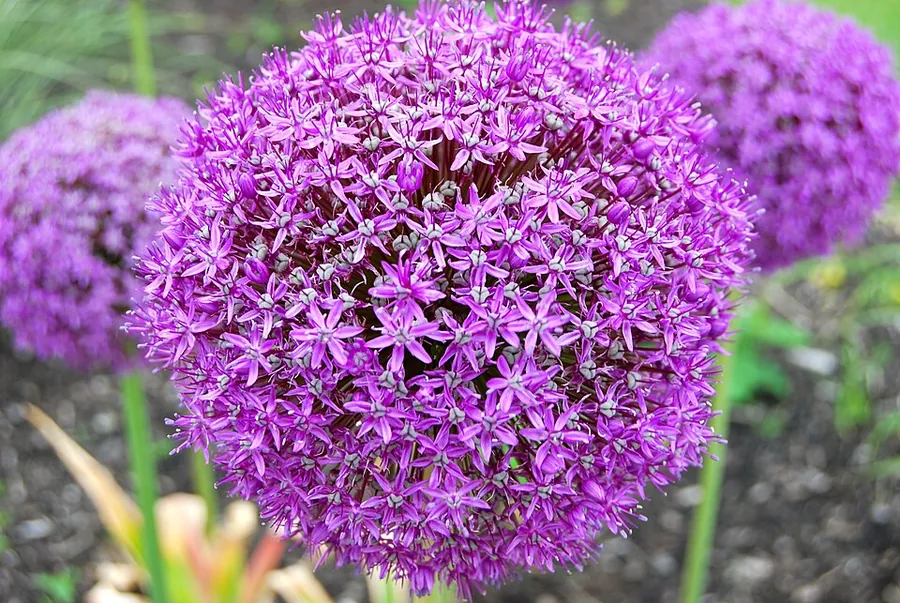
If you have never grown a bulb before, giant ornamental onion is a kind place to begin. The whole reason gardeners love it is those big, round purple flower heads that float up on bare stems in early summer, and you really cannot get them wrong. Yes, it sits in the same family as the onion and garlic you cook with, but here you are growing it purely for the gorgeous show rather than the kitchen, and the flowers can rise to head height above their neighbors.
This is a forgiving, hardy bulb that returns on its own every year, shrugging off winters as cold as -29°F (-34°C), so you have plenty of room for mistakes. Settle the dormant bulbs into the ground in fall, let them stretch up tall in late spring, and the globes keep their color for two to three weeks before the leaves quietly fade away. Once the flowers finish, the plant slips back and lets the rest of the bed shine, which means almost nothing is asked of you.
There is one thing to take seriously, and it is easy to handle. Every part of this plant is toxic to cats, dogs, horses, and livestock, in the same way a chewed onion would be, so plant it where grazing animals cannot reach it. Keep that in mind and you have a striking, low-fuss bulb that will reward an open, sunny bed for years.
Care
The short version: give it full sun and soil that drains freely, settle the bulbs deep in fall, keep things lightly moist while it grows, and pop in a stake for the tall stems if your spot gets breezy.
Light
Let your giant allium soak up full sun and it will reward you with the sturdiest, fullest flowers. A touch of afternoon shade is fine, but too much shade leaves the stems weak and leaning with fewer blooms, so brighter is kinder here.
Water
Keep the soil evenly moist while the plant is growing, then relax and let it coast through a dry summer once the leaves fade. Watering about every 7 to 10 days is plenty, and the one thing to avoid is leaving the bulbs sitting in waterlogged ground, which can rot them.
Soil
Almost any well-drained soil will make it happy, whether you garden in loam, sand, or even clay, as long as water can move through. It is relaxed about pH too, taking anything from 5.5 to 8.0, so most ordinary beds suit it just fine.
Temperature
You have a genuinely cold-hardy bulb here, comfortable through winters as low as -29°F (-34°C) and summer warmth up to 86°F (30°C). A proper cold winter is actually a gift, since the chill is what helps it set good flowers.
Humidity
There is no humidity number to chase, since regular outdoor air suits it well. What really helps is good drainage and airflow, because it is the damp, stagnant pockets that invite bulb rot, and those are easy to avoid.
Feeding
At planting time in fall, mix a balanced or low-nitrogen bulb fertilizer into the soil, then offer a second light feed in early spring. Go easy on nitrogen, which tends to push out floppy leaves while holding back the flowers you are after.
Pruning
Once the blooms are spent, snip off the flower scapes, but please leave the leaves alone to yellow and fade on their own, since they are quietly feeding next year's bulb. If your spot is open and breezy, a stake set early keeps the tall stems from toppling.
Repotting
When you start seeing fewer or smaller flowers, that is your cue to lift and divide the clumps every 3 to 4 years in fall. Crowded, congested bulbs are simply telling you they would love a little more room, so split them and replant.
Size & spacing
These plants stand a tall 3 to 6 feet (90 to 183 cm), so they feel at home toward the back of a bed where they can rise above everything. Give each bulb 9 to 12 inches apart and tuck it 5 to 8 inches deep so the clump has space to settle and fill in.
When to plant
Giant allium keeps a gentle fall-to-summer rhythm, and once you learn it the timing feels easy. Get the bulbs in the ground in autumn so the roots can settle before the freeze, let winter and spring do their quiet work, and you will be rewarded with flower globes opening in June and July for a couple of happy weeks.
Northern hemisphere
Southern hemisphere
Typical months for a temperate climate: start earlier in warm zones, later where spring frosts linger.
- Plant: Plant bulbs in fall about 5-8 inches deep and 9-12 inches apart
- Harvest: Late spring to early summer (June-July), blooms lasting 2-3 weeks
Hardiness
USDA hardiness zones: 4–8
Temperature: down to -34°C
Troubleshooting
Almost everything that troubles allium happens down at the bulb or on a windy afternoon, and the good news is each one is fixable. Soggy ground can rot the bulbs, little mites can pit them, and tall stems may bend if nothing holds them up. Find your symptom below and step in early, and you will keep the rest of the planting happy.
Soft, mushy bulbs and plants that keel over
When the soil stays wet and slow to drain, the bulbs can succumb to bulb rot, and in a really soggy corner a black rot fungus may move in too. If you lift one and it feels soft and smells off, do not panic. Gently pull and bin the rotted ones, ease off the watering, and replant the firm, healthy bulbs somewhere water actually drains away.
Fix:
- Remove and discard affected bulbs
- Improve soil drainage and reduce watering
- Replant healthy bulbs in well-drained amended soil
Twisted, stunted growth from pitted bulbs
Sometimes bulb mites tunnel into the scales and feed there, which leaves the fresh growth warped and the bulb scarred. Take a close look at any bulb you are unsure of for the tiny mites and their nibbled, pitted damage. Toss anything badly affected, plant only the firm clean bulbs, and move where you grow them next time.
Fix:
- Discard heavily infested bulbs
- Plant only firm, healthy, mite-free bulbs
- Practice crop rotation and good sanitation
Tall stems leaning or snapping in the wind
Those generous globes ride on long scapes, so a blustery day can bow or break them, usually right when the flowers are heaviest. The culprit is simply strong wind on stems with no support. Tuck the plant into a sheltered spot and slip a stake in before the blooms open, and they will hold up beautifully.
Fix:
- Stake tall stems for support
- Site plantings in locations sheltered from strong winds
Toxicity
It helps to think of the whole plant as something animals simply should not eat. Bulbs, leaves, and flowers all hold the organosulfur compounds that make onions and garlic risky for pets, and they can damage red blood cells and bring on hemolytic anemia. Cats feel it most, while dogs, horses, and grazing livestock are at real risk too, so choose a spot they cannot get to and you can relax.
Toxic to
Cats · Dogs · Horses · Rabbits · Livestock · Birds · People
Cats Severe
Of every animal, cats feel this the worst. Even a small taste can bring on vomiting and start breaking down their red blood cells, which you may notice as weakness, a racing heart, panting, and dark urine.
Dogs Severe
A dog that chews any piece of the plant can vomit and then turn weak and sluggish as its red blood cells break down. Keep an eye out for pale gums, fast breathing, and discolored urine, and head to the vet without delay.
Horses Severe
Horses take the same red blood cell damage if they graze the leaves or bulbs, which leaves them weak and dull. The anemia can creep up from repeated nibbling, so it does not take one big mouthful.
Rabbits Toxic
Those same onion-family compounds are toxic to rabbits, so keep the whole plant well clear of them. There simply is no safe amount to share.
Livestock Toxic
Cattle, sheep, and goats can develop hemolytic anemia from eating alliums, whether fresh in the pasture or dried into hay. Fence them away from your plantings and tidy up any trimmings they might reach.
Birds Toxic
Birds feel onion-family toxins too, so make sure chickens and pet birds never get near the bulbs, leaves, or flowers.
People Caution
This is an ornamental onion grown for flowers, not a kitchen crop, so it is not for eating. Handling it is perfectly fine, just wash your hands afterward and keep curious little ones away from the bulbs.
Keep all parts, including bulbs, foliage, and flowers, out of reach of pets and livestock. Store bulbs securely and clean up trimmings; wash hands after handling.
Helpline numbers

United States
ASPCA Animal Poison Control: (888) 426-4435 (fee applies)
Poison Control: (800) 222-1222



Canada
Poison Centres: 1-844-764-7669
Varieties
A handful of large-flowered alliums get sold under the giant-onion name, and a few close cousins fill in for it nicely. Here are the ones it pays to recognize.
Globemaster
This is the hybrid that puts on the biggest show, lifting dense violet globes of 8 to 10 inches on sturdy, dependable scapes.
Allium hollandicum (aflatunense)
A close ornamental onion with smaller rose-purple umbels, often offered as a budget-friendly stand-in for the true giant allium.
Allium cristophii (Star of Persia)
A shorter relative whose broad, open umbels unfurl into shimmering pink-violet stars.
Companions
Plant near
Roses: Tall allium scapes rise through and complement roses and other border plants while filling early-summer gaps.
Peonies: Allium bloom coincides with and extends color in the perennial border alongside peonies.
How to propagate
Making more giant allium is genuinely easy, whether you pick up fresh bulbs or divide the ones already in your garden. Most of the gentle work lands in fall.
Bulbs & cormsEasy
Fall · One growing season to bloom
The friendliest place to start is with dormant bulbs in fall. Tuck them 5 to 8 inches deep and 9 to 12 inches apart, and they will reward you with their first flowers the very next growing season.
Offsets & pupsEasy
Fall · 1-2 seasons
Settled bulbs grow little offset bulblets around their bases, a tidy free bonus. Lift them in fall, snap the offsets gently free, and replant to spread the planting wider, though they need a season or two to reach blooming size.
DivisionEasy
Fall · 1-2 seasons
Every few years, dig a crowded clump in fall and ease it apart to keep the bulbs healthy and vigorous. Each piece settles in over a season or two and comes back to flower on its own time, no fuss needed.
SeedModerate
Fall to spring · Several years
Alliums happily self-seed, and you can sow them any time from fall through spring if you fancy a go. It is the patient route, since seed-grown plants want several years to bulk up before they flower.
Myths
Ornamental flowering alliums are purely decorative and safe for pets, unlike the onions and garlic in the kitchen.
Here is the gentle truth: ornamental alliums share the very same genus as onion and garlic, so they carry the same toxic organosulfur compounds. Anything from the bulb to the flower can break down a pet's red blood cells. They are every bit as dangerous to cats, dogs, and horses as what sits in your spice rack, so treat them with the same care.