Bulb · Amaryllidaceae
Red Spider Lily
Lycoris radiata
Tuck the bulbs in with the neck above the soil, and come early fall the bare scapes rise into fiery red blooms.
Partial shade
Every 7–14 days
USDA 6–10
12–24 in · 30–61 cm
Overview
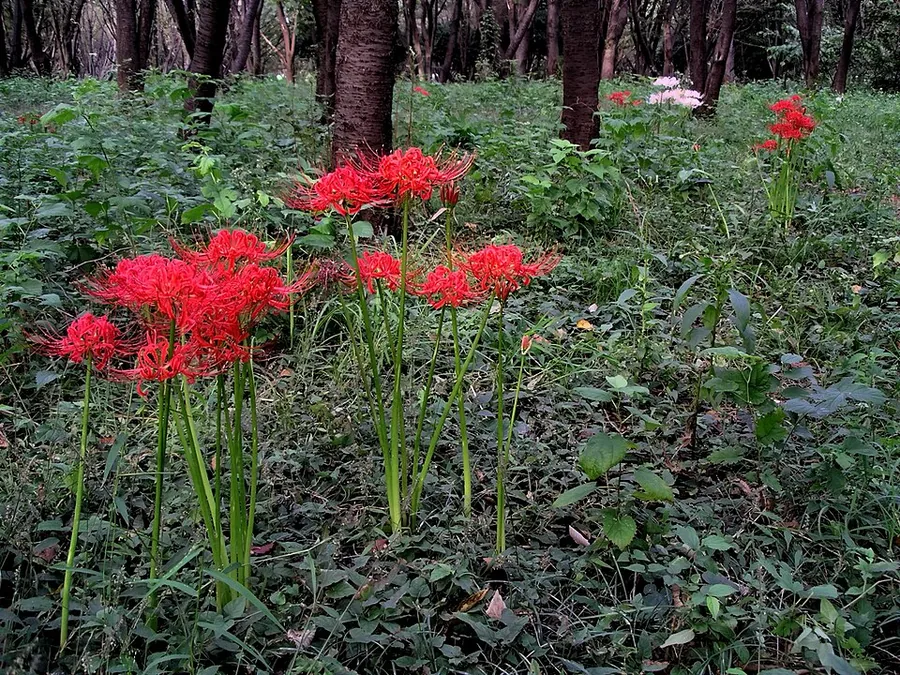
Even if this is your very first bulb, the red spider lily makes it easy to feel like a natural. It belongs to the amaryllis family and flowers in fall, sending up bare stems after the first cool rains that open into clusters of scarlet, spidery blooms. The leaves keep their own comings and goings through the year, so by flowering time the foliage has already slipped away and the blossoms look like they rise straight from bare earth.
Here is the gentle twist that surprises new growers, and it is nothing to worry about: this plant runs on a backwards calendar. Strappy green leaves show up in fall and stay through winter, then fade by late spring while the bulb takes a long summer rest. As late summer tips toward fall, the flower scapes break ground with not a single leaf in sight, which is just why it earns the fond nicknames naked lily and surprise lily.
Hardy roughly across zones 6 to 10, these bulbs settle in and naturalize, coming back a little fuller each year with almost no fuss from you. The one thing they truly care about is drainage, so give them well-drained ground and leave the neck of the bulb above the soil. Get that right and the rest is forgiving, and any small mistakes are easy to recover from.
Care
The short version: you have got this. Plant the bulbs in fall with the neck exposed in rich, well-drained soil, offer partial shade to full sun, water steadily through the leafy and blooming months, then let things go dry while the bulb sleeps away the summer.
Light
Partial shade keeps the red spider lily happiest, though it will gladly take full sun to partial sun too. Dappled light beneath tall trees is lovely for it, and if a healthy clump quietly stops blooming, deep shade is often the reason, so nudge it somewhere brighter.
Water
While the leaves and flowers are up and working, give medium moisture and water about every 7 to 14 days as the soil dries. Once summer dormancy sets in, ease right off and let the ground stay fairly dry, because soggy soil during that rest is what leads to rotted bulbs.
Soil
Aim for organically rich, well-drained loam or sand, and the bulb will feel right at home. It is relaxed about pH and takes anything from 6.0 to 8.0, but it truly will not forgive waterlogged ground, so mix in grit or compost if your soil runs heavy.
Temperature
This is a tough, forgiving bulb that handles a wide temperature swing, shrugging off winter lows near -9°F (-23°C) and summer heat up to about 86°F (30°C). That comfortably covers most temperate gardens in its zones, so once it is planted the weather rarely gives you anything to fret over.
Humidity
Good news here, since ordinary outdoor humidity is all it wants and there is no level for you to fuss over. Drainage matters far more than the air for this bulb, because its real worry is wet soil rather than dry or muggy weather.
Feeding
Offer a balanced bulb fertilizer in fall and again in spring, right while the foliage is busy storing up next year's flowers. A simple seasonal feed during that leafy stretch is truly all it asks of you.
Pruning
There is next to nothing to trim, which is a relief. Let the foliage die back naturally after the flowers fade so the bulb can refuel, then simply tidy away the spent flower scapes and any withered leaves once they are ready.
Repotting
Spider lilies love to be left in peace and bloom their best once they feel settled. Divide a clump only every 3 to 5 years, or a bit sooner if the bulbs grow crowded, the flowering trails off, or you spot bulbs heaving up out of the soil.
Size & spacing
12–24 in (30–61 cm) tall
When to plant
Do not let the upside-down schedule worry you, since it is easy once you know it. Plant in late summer to fall, let the leaves carry on through winter and slip away by spring, then look forward to the bare flower scapes rising to surprise you in late summer or early fall.
Northern hemisphere
Southern hemisphere
Typical months for a temperate climate: start earlier in warm zones, later where spring frosts linger.
- Plant: Plant bulbs in late summer to fall with the bulb neck exposed above soil level
- Harvest: Late summer to early fall (August to September)
Hardiness
USDA hardiness zones: 6–10
Temperature: down to -23°C
Troubleshooting
Take heart, because nearly every spider lily hiccup comes back to the bulb, either sitting too wet or planted at the wrong depth. Look over the signs below and you can usually put things right with a single dig. Match what you notice, act gently, and a struggling clump often bounces back.
Soft, mushy bulbs that just will not sprout
Do not panic, but this is bulb rot, and it usually begins with wet ground rather than any disease a spray could cure. When bulbs sit in soggy soil through the summer rest, they turn brown and foul from the inside out. Lift the clump, kindly toss anything soft, and replant only the firm, healthy bulbs in well-drained soil with the neck left above the surface.
Fix:
- Lift affected bulbs and discard any that are soft or rotted
- Replant healthy firm bulbs in well-drained soil with the neck exposed
- Withhold water during the summer dormant period
Hollowed, tunneled bulbs with feeble or missing growth
The likely visitor is the narcissus bulb fly, whose larvae burrow into a bulb and hollow out its center. Dig up a suspect one and you will often uncover a single plump grub in a soft, eaten-out core. Take heart and simply destroy any infested bulbs, replant only firm ones, and turn over the soil nearby to expose the pupae.
Fix:
- Lift and destroy infested bulbs
- Replant only firm, healthy bulbs
- Cultivate soil around plantings to expose pupae
Lots of healthy leaves but hardly any flowers
When the foliage looks great yet the blooms stay away, the bulbs are almost always tucked in too deep. These lilies want the top of the neck sitting at or above the soil line, never buried. Replant them shallow, gently thin any crowded clumps, and give a recently moved planting a season or two to settle before you expect a full show.
Fix:
- Replant bulbs with the top of the neck exposed above soil level
- Allow a few seasons for clumps to establish before expecting bloom
- Thin overcrowded clumps and site in full sun to partial shade
Toxicity
This is the one place to be firm rather than relaxed. Every part carries lycorine and related alkaloids, and the bulb is the most dangerous of all, so it is not safe for cats, dogs, horses, rabbits, livestock, birds, or people. Slip on gloves whenever you handle the bulbs, and keep them well out of reach of pets and children.
Toxic to
Cats · Dogs · Horses · Rabbits · Livestock · Birds · People
Cats Mild
A curious cat that nibbles any part will usually drool, vomit, and get a bout of diarrhea. The bulb is where the real danger lies, and a large dose can bring on tremors or even convulsions, so keep it well away.
Dogs Mild
After a dog chews the leaves, or worse digs up and gulps a bulb, look for drooling, vomiting, and loose stools. Because the bulb holds the most alkaloid, a big mouthful can set off tremors or seizures, so put bulbs out of reach.
Horses Toxic
The same lycorine in the leaves and bulbs hits a horse hard, bringing heavy drooling, colicky belly pain, and diarrhea. It is safest to keep grazing animals away from any planting.
Rabbits Toxic
These bulbs are no treat for a rabbit, and even a small nibble of leaf or bulb can leave it drooling, off its food, and dealing with an upset gut, so fence the plants safely out of reach.
Livestock Toxic
Cattle, goats, and sheep that graze the foliage or root up the bulbs can drool, scour, and turn weak from the alkaloids. Keep your stock off any ground where the bulbs are growing.
Birds Toxic
The alkaloids reach birds too, so an inquisitive parrot or backyard hen pecking at any part risks vomiting and gut distress. Keep birds away from the plant and its bulbs to be safe.
People Caution
No part of this plant belongs on a plate. Swallowing the leaves or, above all, the bulb brings nausea, vomiting, and diarrhea, so wash your hands well after handling and keep curious children at a safe distance.
Wear gloves when handling and dividing bulbs and wash hands afterward; keep bulbs out of reach of pets and children.
Helpline numbers

United States
ASPCA Animal Poison Control: (888) 426-4435 (fee applies)
Poison Control: (800) 222-1222



Canada
Poison Centres: 1-844-764-7669
Varieties
Most growers ever meet just one form of the red spider lily, and that is all you really need. Still, a second form exists, and it behaves quite differently once seed enters the picture.
Lycoris radiata var. radiata
This is the one you will almost always meet in gardens, a sterile triploid that seldom sets seed and instead spreads by happily multiplying its offset bulbs.
Lycoris radiata var. pumila
This smaller, fertile diploid does produce viable seed, which is exactly why breeders tend to favor it.
How to propagate
Making more spider lilies is genuinely simple, since the bulbs happily multiply on their own, and splitting a crowded clump hands you free plants. Seed is possible only on certain forms and asks for more patience than most gardeners can spare.
Offsets & pupsEasy
Early summer when foliage has died back and bulbs are dormant · One to a few growing seasons before reliable bloom
The kindest, easiest route is to let the bulbs multiply for you, since they naturalize on their own through offsets. In early summer, once the foliage has died back and the bulbs are resting, lift a clump, twist off the offset bulbs, and replant each with its neck exposed. Give them a season or a few to settle in and flower well, and they will.
DivisionEasy
Summer dormancy after foliage dies back · One to a few growing seasons
When a clump turns crowded, lift and split it during the summer dormancy after the leaves have withered, then replant the pieces straight away. Do not be discouraged if flowering takes a pause for a season or two while the fresh divisions find their footing again.
SeedDemanding
When ripe, on fertile diploid forms only · Several years to flowering
Seed rarely pays back the long wait, so save it for special cases. The common garden triploid is sterile and almost never makes viable seed, which means this path only works on the fertile diploid forms, and even then you are looking at several years of growing before that first flower.
Myths
The red spider lily is simply another name for the surprise lily.
They are actually two separate species, so it helps to know them apart. Lycoris radiata opens fiery red and copes with far less cold, while Lycoris squamigera blooms pink-lilac and takes much harsher winters, so it is only fair not to expect one to act like the other.
The plant must be safe since pets usually leave it alone.
That is good luck talking, not real safety. Every part holds toxic lycorine alkaloids, with the bulb the worst, and a cat or dog that does decide to taste it can end up drooling, vomiting, and dealing with diarrhea, so keeping it well out of reach is the kind thing to do.