Bulb · Amaryllidaceae
Crinum Lily
Crinum × powellii
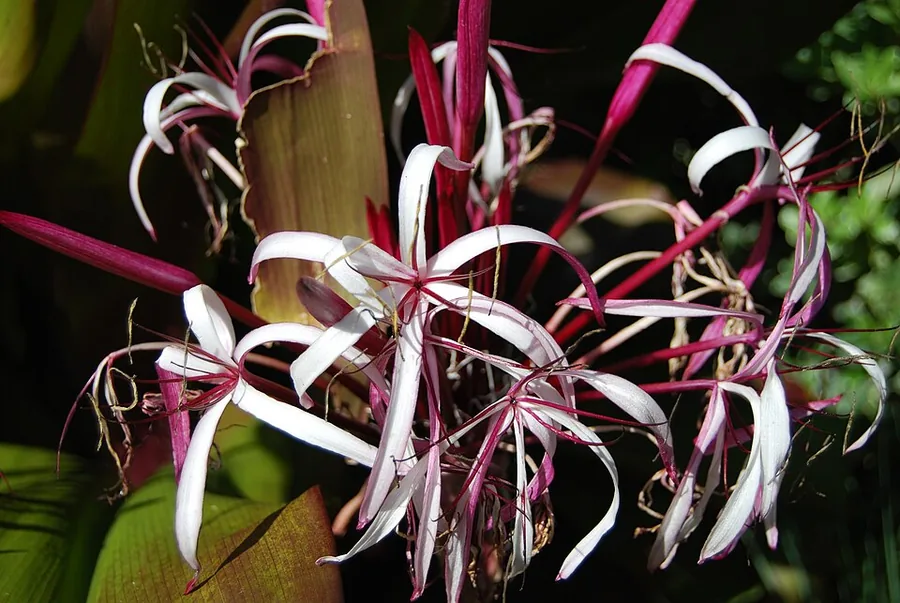
Tuck the bulb in once and step back, and the crinum lily keeps sending up fragrant pink trumpets every late summer for years.
Full sun
Every 7–14 days
USDA 6–11
2–5 ft · 0.6–1.5 m
Overview
If you have ever worried about killing a plant, the crinum lily is a gentle place to start. It is part of the Amaryllidaceae, and from one big bulb it sends up long strappy leaves before crowning the clump with umbels of sweetly scented, trumpet-shaped flowers from late summer into early autumn. Many old plantings keep going long after the gardener who set them has gone, which is how it picked up the kind nickname cemetery plant.
The lovely thing is how little it expects from you. Once it settles in, it takes heat, dry spells, and almost any soil in stride, happy in clay or sand as long as the water can drain away. It rides out a wide temperature range, roughly 25°F to 100°F (-4°C to 38°C), and returns faithfully each year as a hardy perennial in zones 6 through 11, so a slow start is nothing to fret over.
The only thing it dislikes is being fussed over, and that is good news for a nervous beginner. Crinum grows a large, long-lived bulb and would rather not be dug up, so planting it well and then leaving it be gives you the best flowers. A little patience is all it asks, and the rest takes care of itself.
Care
The short version: give it full sun to partial shade and rich, well-drained soil, keep it nicely moist while it blooms, go easy on water in winter, and then let the bulb rest undisturbed for years.
Light
Crinum gives you the most flowers in full sun, but it is forgiving and grows happily in partial sun or light shade too. More sun means more blooms, though a bit of afternoon shade is a welcome kindness where summers turn fierce.
Water
Try to keep the soil moist while the plant is in bud and bloom so the flowers do not dry out, then relax once it is established, because a settled clump shrugs off dry spells. In winter, water only a little, since a cold, soggy bulb is the one mistake that can lead to rot.
Soil
It is happiest in moist, rich, fertile loam, but do not worry if your ground is less than perfect, because crinum copes with clay, sand, or heavy soil as long as it drains. It accepts a wide pH range too, anywhere from 5.5 to 8.0.
Temperature
This is a remarkably hardy bulb that lives through a span from about 25°F to 100°F (-4°C to 38°C). That toughness is exactly why it can sit untouched in one spot for years across zones 6 through 11, so you can plant it and trust it.
Humidity
Ordinary outdoor air suits it just fine, so there is no humidity number to chase or worry about. Good airflow matters more than dampness in the air, since crowded, wet leaves are what invite the occasional fungal blotch.
Feeding
A balanced general-purpose fertilizer across the spring and summer growing season is truly all it asks. Feed it seasonally, then let the bulb take it from there.
Pruning
Trim off spent flower stalks and any tired or damaged leaves, but let the foliage die back on its own so the bulb can store up energy for next year. Staking the tall flower stalks keeps them upright when a strong wind blows through.
Repotting
Crinum resents disturbance and is happiest left in place for many years, so resist the urge to move it. Only step in when the clump is badly crowded and flowering has fallen off, or when bulbs begin pushing up out of the soil.
Size & spacing
A grown clump reaches 2 to 5 feet (60 to 150 cm) tall and spreads 2 to 4 feet (60 to 120 cm) across, so give it generous room from the start. Choose a spot where that size will not crowd its neighbors, since you will not want to lift it later.
When to plant
Crinum keeps a warm-season schedule, and the timing is forgiving. You can set the bulbs out any time from April through late October, let the clump fill in across spring and summer, and your reward arrives as flowers from late summer into early autumn.
Northern hemisphere
Southern hemisphere
Typical months for a temperate climate: start earlier in warm zones, later where spring frosts linger.
- Plant: April through late October
- Harvest: late summer to early autumn (August to September)
Hardiness
USDA hardiness zones: 6–11
Temperature: down to -23°C
Troubleshooting
Crinum is sturdy enough that serious trouble is uncommon, and almost everything that does turn up shows on the leaves or, at worst, the bulb. The good news is that most problems are easy to catch early and just as easy to recover from. Match what you are seeing below, then take the simple step that helps.
A soft, rotting bulb and a plant that leans over
Bulb and root rot creeps in when the soil stays waterlogged, most often over a wet winter or in ground that drains poorly. Once the base turns soft and smells off, that tissue cannot be saved, so lift the bulb, trim away or discard the rotted parts, and put the drainage right. Easing off the water through winter is the surest way to keep it from coming back, and most plants bounce back once the wet is fixed.
Fix:
- Improve drainage and stop overwatering
- Remove the bulb from soggy potting mix when planting potted specimens
- Discard severely rotted bulbs
Speckled, bronzed leaves with a fine webbing
Those mottled, bronze-tinted leaves and the fine webbing point to twospotted spider mites, which arrive when the weather is hot and dry and the plant is a little stressed. Do not worry, it is fixable: rinse the foliage with a strong jet of water to knock them loose, then follow with insecticidal soap or horticultural oil. Keeping the plant watered through dry spells is what stops mites from settling in the first place.
Fix:
- Rinse foliage with a strong spray of water to dislodge mites
- Treat with insecticidal soap or horticultural oil per label
- Improve airflow and avoid drought stress
Red blotches and streaks across the leaves
Those maroon spots and streaks are red blotch, a fungus that moves in when leaves stay wet and the air sits still. Snip off the worst-marked leaves and bin them, water down at the base instead of over the top, and open up a little breathing room around the clump. It looks worse than it is and rarely does real harm, though it will spread if left alone, so a quick tidy keeps it in check.
Fix:
- Remove and destroy badly affected leaves
- Avoid overhead watering and improve spacing for airflow
- Apply an appropriate fungicide if severe
Ragged, chewed leaves with bites taken out
A few different pests like to chew crinum leaves, mainly eastern lubber grasshoppers and caterpillars, with slugs and snails feeding after dark. Pick the bigger ones off by hand, which is easy enough, and set out bait where slugs are the trouble. Clearing away garden debris takes away the damp hiding places they shelter in, so the problem fades on its own.
Fix:
- Handpick grasshoppers, caterpillars, slugs, and snails
- Use slug or snail bait where appropriate
- Remove garden debris that shelters pests
Toxicity
Every part of the crinum lily is poisonous if eaten, and the bulb most of all, so it helps to know this going in. It holds lycorine and related alkaloids that cause drooling, vomiting, and an upset stomach, with tremors after a large amount. Keep the plant, and especially any bulbs you dig up, well away from pets, livestock, and children.
Toxic to
Cats · Dogs · Horses · Rabbits · Livestock · Birds · People
Cats Moderate
A cat that bites the leaves or chews a bulb usually drools, brings up its food, and gets loose stools, with belly pain alongside. The bulb holds the most lycorine, so a dug-up bulb is the part to watch most closely.
Dogs Moderate
Dogs are often the ones to dig up and gnaw a bulb, which sets off drooling, vomiting, and diarrhea. A big mouthful can lead to tremors, so keep planted bulbs out of their reach.
Horses Moderate
A horse grazing on crinum tends to go dull and off its feed, with drooling, loose manure, and stomach pain. A large dose can bring on trembling, so it is worth fencing the plants off.
Rabbits Toxic
The same alkaloids that sicken cats and dogs make crinum unsafe for rabbits, so expect drooling and gut upset. Never let one nibble the foliage or bulbs.
Livestock Toxic
Cattle, goats, and sheep can swallow enough lycorine from the leaves to drool, scour, and weaken. Fence the plants away from any grazing animals to keep them safe.
Birds Caution
It is safest to treat the bulb alkaloids as risky for birds, so keep poultry and pet birds from pecking the leaves or bulbs. Watch for drooping and gut upset if any gets eaten.
People Caution
No part of crinum is food, and swallowing any of it brings on nausea, drooling, and vomiting, with tremors after a large amount. The sap can irritate skin too, so wash up after handling cut stems or bulbs.
Plant sap may irritate skin; wash hands after handling bulbs or cut stems. Keep bulbs out of reach of pets and children.
Helpline numbers

United States
ASPCA Animal Poison Control: (888) 426-4435 (fee applies)
Poison Control: (800) 222-1222



Canada
Poison Centres: 1-844-764-7669
Varieties
Crinum spans a wide family, from swamp natives to old garden treasures, so do not feel you must learn them all. These are simply the ones you are most likely to meet by name.
Crinum × powellii
This hybrid lifts umbels of 8 to 10 fragrant, trumpet-shaped pink flowers on stalks reaching 3 to 5 feet, which open from late summer into early autumn.
Crinum americanum
The native Southern swamp lily is happy in wet soil and even standing water, offering white pink-blushed flowers with long purple stamens and a fondness for acidic ground.
Milk and Wine Lily
This old garden crinum gets its charming name from striped flowers marked in white and deep wine-red.
Ellen Bosanquet
A long-cherished cultivar grown for its deep rose-red flowers and lovely strong fragrance.
How to propagate
Crinum quietly makes more of itself through offset bulbs, and that is by far the kindest and easiest way to grow your stock, since it would rather not be disturbed and is slow from seed.
Offsets & pupsEasy
Spring through fall during active growth · 1 to 2 years to bloom
The gentlest route is to lift the offset bulblets the parent plant sends up during the spring-to-fall growing season, once their tops reach about 12 inches. Since crinum grows massive, long-lived bulbs and dislikes being disturbed, divide only when you truly need to, and give each new bulb a year or two to settle in before it blooms.
DivisionModerate
Spring through fall · 1 to 2 years to re-establish and bloom
To grow more from a big established clump, lift it during the growing season and ease it apart. Do not be discouraged if the divisions sulk for a season, since crinum resents root disturbance, and allow a year or two for them to re-establish and bloom before you see flowers again.
SeedDemanding
When fresh seed is available · More than 5 years to reach blooming stage
Raising crinum from fresh seed is a patient grower's project, with more than 5 years between sowing and the first flowers. Most gardeners happily skip it and start new plants from offset bulbs instead.
Myths
Crinum lilies cause fatal kidney failure in cats the way true lilies do.
Take heart, because crinum is not a true lily. It sits in the Amaryllidaceae, and its alkaloids upset the stomach rather than triggering the kidney failure that true lilies and daylilies cause in cats. The risk is real but it is a stomach upset, not the deadly kidney crisis of a Lilium.
Crinum bulbs need frequent digging, dividing, and repotting to bloom well.
Happily, the truth runs the other way. Crinum grows huge, long-lived bulbs and hates being disturbed, often flowering best when it is left in peace for years. Leave the clump alone and it thanks you with more flowers, not fewer, which makes it wonderfully low-effort.