Shrub · Adoxaceae
Elderberry
Sambucus canadensis
Offer it sun, steady moisture, and a partner cultivar close by, and elderberry rewards you with full, dark clusters of fruit.
Full sun
Every 3–7 days
USDA 3–9
5–12 ft · 1.5–3.7 m
Overview
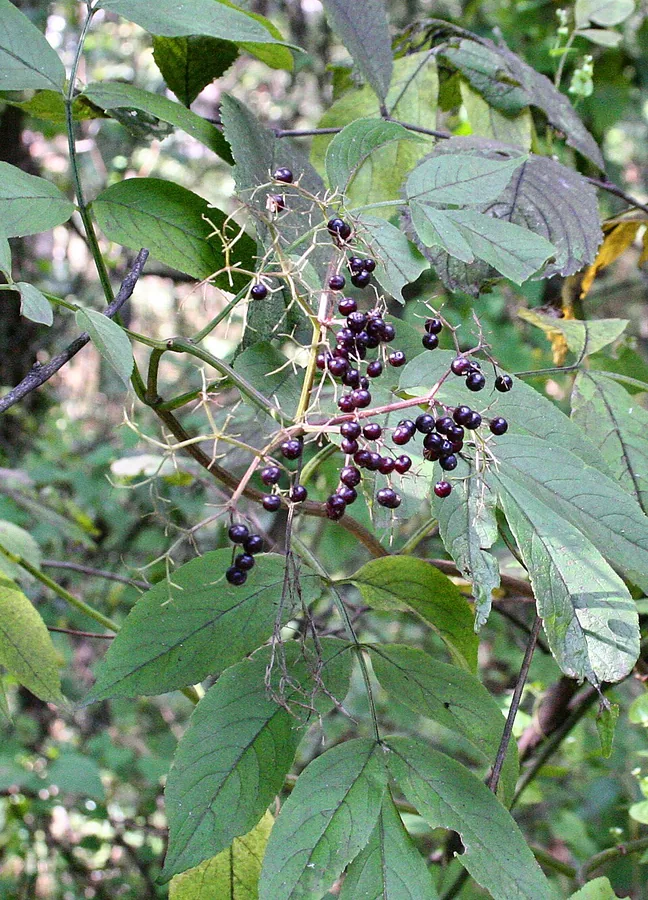
Elderberry is a quick-growing, good-natured shrub that gives back twice in a season, with wide creamy flower heads in June and dark berry clusters that ripen from August into September. It sits in the genus Sambucus and grows wild over much of North America, often turning up along damp ground and the edges of fields. Given its head it reaches 5 to 12 feet (1.5 to 3.7 m) and spreads out just as far into a many-stemmed thicket.
You will find this a sturdy and accommodating plant, comfortable in cold down to zones 3 through 9 and unbothered by poor soil, soggy ground, or a bit of shade. There is one firm rule to hold onto from the start: only the fully ripe berries, and only once cooked, are safe to eat. The leaves, stems, bark, roots, and any raw or unripe fruit hold cyanogenic compounds that will make people and animals unwell.
When the harvest is your aim, keep a second cultivar within reach, because a single plant by itself sets only a light crop. A pair of different cultivars that flower together will pollinate one another and weigh the canes down with fruit. Give it space, keep it watered, cut it back each winter, and an elderberry pays you back quickly, even if this is your very first try.
Care
The short version: full sun to part shade in rich, evenly moist soil, with a balanced spring feed, a hard dormant-season pruning each winter, and a second cultivar nearby for a full crop.
Light
Elderberry sets its best fruit in full sun, where the big flower heads and berry clusters can fill out properly. It will get by in partial sun and even partial shade, though as a gentle rule, the deeper the shade the lighter the crop you can look forward to.
Water
Aim to keep the soil evenly moist, since the shallow, fibrous roots dry out quickly and the plant notices most while it is flowering and fruiting. Water deeply through any dry stretch, roughly every 3 to 7 days as conditions ask, while taking care not to leave the ground sitting waterlogged.
Soil
Settle it into rich, moist, well-drained loam if you can, but rest easy, because elderberry is accommodating and takes to clay, sand, and ground that runs wet or dry. It is happy across a broad pH span of 5.5 to 7.5, so most ordinary garden soil will do nicely.
Temperature
This is a truly tough shrub, weathering winter cold down to -29°F (-34°C) and summer heat as high as 95°F (35°C). That sweep takes in most temperate gardens with nothing special asked of you.
Humidity
Ordinary humidity in the 40% to 70% range is all it asks, and outdoor air seldom comes up short. Still, crowded air does open the door to powdery mildew, so good airflow counts for more than the moisture around the leaves.
Feeding
A single feeding in early spring, just as growth stirs, is all it needs, using a balanced or nitrogen-rich blend such as 10-10-10 or composted manure. For a plant with this much drive, one seasonal meal is more than enough.
Pruning
Do your pruning in the dormant season, in late winter, and do not be timid about it. On an established plant, take the dead, weak, and 3-plus-year-old canes back to the base to encourage the strong 1 to 2 year wood, and some growers simply mow the whole thing to the ground every year. Tug out the root suckers while you are at it to stop the plant from roaming.
Repotting
Elderberry is happiest in open ground rather than a pot, so repotting hardly comes up. Should you keep one in a container for a while, shift it to fresh quarters before the roots circle, or it will stall and wilt not long after each drink.
Size & spacing
A grown plant reaches 5 to 12 feet (1.5 to 3.7 m) tall and opens out about as broadly, 6 to 12 feet (1.8 to 3.7 m). Leave each shrub room to breathe so air moves freely and mildew stays at bay.
When to plant
Elderberry keeps time with the seasons, and following its rhythm is easy. Plant dormant bare-root stock or cuttings in early spring once the hard frosts have let go, look for the creamy flower heads in June, and gather the dark, ripe berries from August into September.
Northern hemisphere
Southern hemisphere
Typical months for a temperate climate: start earlier in warm zones, later where spring frosts linger.
- Sow: Late winter, only after 60-90 days of cold-moist stratification; seed is slow and erratic, so cuttings are preferred
- Plant: Early spring after the last hard frost, using dormant bare-root plants or cuttings
- Harvest: Flowers in June; dark berry clusters ripen August to September
Hardiness
USDA hardiness zones: 3–9
Temperature: down to -40°C
Troubleshooting
Elderberry is a forgiving plant, and most of what comes its way is mild and easily mended. Powdery mildew and aphids tend to mar the look more than the health of the shrub, while cane dieback and visiting birds call for a faster hand. Find what matches your plant below and step in early, and you will keep small troubles small.
One lone cane fading while the rest stay green
If a single cane droops and gives up while the others look fine, the likely culprit is cane borers or fungal dieback settling into old or worn wood. The good news is that the cure is simple: slice the troubled cane off at the base and get rid of it. Keep up your yearly dormant pruning, clearing the canes that have passed 3 years, and this rarely comes back.
Fix:
- Cut out and destroy affected canes at the base
- Remove old (3-plus-year) and damaged canes during dormant pruning
A pale, dusty bloom spreading over the leaves
Take heart, this is just powdery mildew, a fungus that likes to settle where growth is packed tight and shaded and the air barely moves. Open the shrub up by thinning and pruning the canes, pick off the leaves that look worst, and only turn to a labeled fungicide or horticultural oil if it keeps creeping along. On a healthy plant it spoils the look and little else, so there is no need to worry.
Fix:
- Thin and prune canes to improve air flow
- Remove and dispose of badly affected leaves
- Apply a labeled fungicide or horticultural oil if severe
Tacky, twisting shoot tips dotted with tiny crawlers
Those little visitors are aphids, and they flock to the soft, fresh growth that a heavy nitrogen feed tends to bring on. A quick fix is at hand: knock them loose with a firm spray of water, and if a few cling on, follow up with insecticidal soap or horticultural oil. Lady beetles and lacewings will happily mop up the stragglers once you give them the chance.
Fix:
- Spray off with a strong jet of water
- Apply insecticidal soap or horticultural oil
- Encourage lady beetles and lacewings
Ripening clusters disappearing right at coloring time
Birds spot ripe elderberries long before you reach them and can clear a whole cluster in an afternoon, so do not feel discouraged if a few vanish. Lay netting over the shrub as soon as the fruit begins to darken, and gather each cyme the moment it is ready. Growing the cultivar Bob Gordon gives you a hand as well, since its clusters tip downward and hang where birds find them harder to reach.
Fix:
- Net plants as fruit begins to ripen
- Harvest whole cymes promptly when berries darken
- Grow cultivars with drooping clusters such as Bob Gordon
Toxicity
Here is the one place elderberry asks for real care. The leaves, stems, bark, roots, and any raw or unripe berries carry cyanogenic glycosides that free up cyanide and unsettle the stomach, and they are toxic to people and animals alike. Only fully ripe berries that have been cooked are safe to eat, so keep children, pets, and livestock clear of every green part of the plant.
Toxic to
Cats · Dogs · Horses · Rabbits · Livestock · Birds
Safe for
People
Cats Moderate
When a cat nibbles the leaves, stems, or raw berries, you will often see drooling first, then vomiting, with diarrhea and a dull, low mood close behind. The greater concern comes from a large bite of green plant, because the cyanide it sets free can leave a cat weak.
Dogs Moderate
Keep an eye out for vomiting, diarrhea, a lost appetite, and a dog turning sluggish after getting into the plant. Most of the time it is simply an upset belly, though a generous mouthful of raw berries or foliage can make the signs more pronounced.
Horses Toxic
For a horse, the leaves and woody parts pose real danger, and the cyanide released can surface as drooling, colicky discomfort, strained breathing, and an unsteady gait. The kindest step is to fence elder well clear of any pasture or paddock a horse can reach.
Rabbits Toxic
Never hand a rabbit the foliage, stems, or raw berries. Even a little of the green plant can set off gut stasis and a swift downturn, so it is safest to keep the whole shrub somewhere they simply cannot get to it.
Livestock Toxic
Cattle, goats, and sheep that nibble the leaves or unripe fruit can fall to cyanide poisoning, showing bloat, trembling, and in the worst moments a collapse. A common trap is wilted prunings tossed over a fence, where grazing stock reach them with ease.
Birds Caution
Wild birds tuck into the ripe berries with no harm at all and scatter the seed as they go, which is one reason the plant fruits so generously. The green parts and the raw, unripe fruit still carry cyanide, so none of it should ever reach a cage bird.
People Cooked ripe fruit safe
Once fully ripe berries are cooked, they make a safe and well-loved kitchen ingredient, and cooked or processed flowers are welcome too. Eaten raw, though, the berries along with any leaves, stems, bark, or roots bring on nausea, vomiting, and diarrhea, so always cook the fruit and toss the green parts.
Keep children and pets from chewing leaves, stems, bark, or unripe berries. Never eat raw berries or any green parts; always cook ripe berries and discard stems and leaves before eating.
Helpline numbers

United States
ASPCA Animal Poison Control: (888) 426-4435 (fee applies)
Poison Control: (800) 222-1222



Canada
Poison Centres: 1-844-764-7669
Varieties
Most home gardeners settle on a small group of dependable cultivars, and since the plant wants a pollination partner, they tend to go in two at a time. Here are the ones worth knowing by name.
Adams
An older, hard-working American selection prized for its big fruit clusters, and it is most often set beside York so each can pollinate the other.
York
Among the most generous of all for berry size, York also serves faithfully as the pollinizer that pairs with Adams.
Bob Gordon
A free-fruiting cultivar out of Missouri whose clusters tip over and hang down as they ripen, tucking a fair portion of the harvest away from the birds.
Sambucus nigra (European black elder)
Counted here as an alias, this European species reaches taller and more tree-like and is the parent behind many ornamental and medicinal forms.
Companions
Elderberry's most useful neighbor is another elderberry. A second cultivar that blooms at the same time is what turns a light crop into a heavy one.
Plant near
A second, different elderberry cultivar (for example Adams with York): Cross-pollination between two cultivars that bloom at the same time increases fruit set and yield.
How to propagate
Few shrubs are as welcoming to a beginner as elderberry, and three of the four ways to multiply it are about as close to foolproof as gardening gets. Most growers leave seed alone and simply take free copies of a plant they already love.
Stem cuttingsEasy
Hardwood cuttings in late winter while dormant; softwood cuttings in early summer · Roots in a few weeks; transplantable within one season
If you have never propagated anything before, start here, because cuttings are the gentlest way into a new elderberry. Snip pieces about as thick as a pencil with 2 or 3 nodes, keep them steadily moist, and roots appear within a few weeks. Anything you cut this year will be settled into its spot by the close of the same season.
DivisionEasy
Dormant season, late winter to early spring · Establishes within one growing season
Because the plant sends up rooted suckers all around the parent clump, dividing is as easy as lifting and splitting them while everything is dormant. Each section arrives with roots of its own and finds its feet across a single growing season, so you can hardly go wrong.
LayeringEasy
Spring to summer · Roots over one season before severing
The long, bendy canes make layering a relaxed and reliable choice. Hold a low cane against the soil from spring on through summer, let it have a full season to take root where it meets the ground, then free it as a brand new plant.
SeedDemanding
Sow after 60-90 days of cold-moist stratification · Slow and erratic; 1-2 or more years to a plantable shrub
Seed asks for the most patience of all the methods. Before it will sprout, the seed wants 60 to 90 days of cold, moist stratification, sprouting comes unevenly, and a plantable shrub is still 1 to 2 years or more away. Seedlings drift from the parent too, so if you want to hold on to a named cultivar, lean on cuttings instead.
Myths
Every part of an elderberry is deadly poison, so none of it can be eaten.
Cooked ripe berries and flowers have a long, well-loved place at the table and in the medicine cabinet, so do not let this one scare you off. Only the leaves, stems, bark, roots, and raw or unripe berries are toxic, and a simple cooking of the ripe fruit settles the matter.
Ripe elderberries are fine to eat straight off the bush.
Picked raw or before they ripen, the berries hold cyanogenic glycosides that can leave you queasy, vomiting, and dealing with diarrhea. They are safe only after cooking, and that is exactly why no one snacks on them by the fresh handful.
One elderberry bush is enough for a full crop.
On its own a single plant is only partly able to set its own fruit, so the harvest stays light. Plant two or more cultivars that bloom at the same time and you will watch both the fruit set and the yield rise in a hurry.