Shrub · Adoxaceae
Snowball Bush
Viburnum opulus
Give it full sun and a little room, and the snowball bush will thank you with white spring globes for years to come.
Full sun
Every 5–10 days
USDA 3–8
10–12 ft · 3–3.7 m
Overview
The snowball bush gets its cheerful name in mid spring, when the whole shrub fills with round white clusters that really do look like snowballs perched on the branches. It belongs to the viburnum family and grows as a deciduous shrub, prized for those sterile, fruitless blooms rather than any berries. Each flower opens a soft white and gently blushes pink as it ages, so nothing is wrong if the color shifts on you.
This is a generous, forgiving shrub, which makes it a lovely choice for anyone just starting out. It grows 10 to 12 feet (3 to 3.7 m) tall and spreads wider still, easing into a soft rounded mound that asks very little once its roots take hold. It handles bitter winter cold and a whole range of soils, so a few early mistakes rarely set it back.
The one thing that truly helps is giving it space and light. Tuck it into a cramped corner and you may see fewer flowers and a bit more mildew, but plant it in open, sunny ground and it rewards you with a full show every May while asking almost nothing in return. You really can grow this one, even on a first try.
Care
The short version: aim for full sun to light shade, soil that stays evenly moist but drains well, and plenty of open space. Prune right after the flowers fade, because next year's blooms are already forming on this year's old wood, and that timing keeps you from cutting them off by accident.
Light
Give the snowball bush full sun and you'll get the fullest, heaviest bloom, though it takes partial shade with good grace too. A shady spot just means fewer flowers and a little more risk of powdery mildew, so when you can, the open sunny corner is the kinder choice for the plant.
Water
While your shrub is still young, keep the soil evenly moist, watering it every 5 to 10 days and a touch more often through a dry stretch. Once it settles in, it grows far tougher and forgives a lot, so don't fret over the occasional missed watering. It simply prefers not to sit bone dry for long.
Soil
Good news: this shrub isn't picky about its ground and grows happily in clay, loam, or sand as long as water drains away. A well-drained loam is its happy place, and it accepts a wide pH range from 5.5 to 8.0, so most ordinary garden soil will suit it just as it is.
Temperature
This is a wonderfully cold-hardy shrub, shrugging off winter lows to -40°F (-40°C) and summer heat up to 100°F (38°C). That generous range covers most of the country, which is a big part of why it turns up in so many gardens and feels easy to grow almost anywhere.
Humidity
Outdoors the humidity is simply whatever the sky delivers, so there is no target number to chase and nothing to fuss over. What helps far more is steady air movement, since still, damp pockets are exactly where powdery mildew likes to settle in.
Feeding
One gentle feeding in early spring is all this shrub really wants. Reach for a balanced slow-release shrub fertilizer or a simple layer of compost, and go easy on nitrogen, which only pushes out soft growth that aphids find irresistible.
Pruning
Save your cuts for right after the flowers fade, since the blooms set on old wood and a late trim quietly removes next spring's display. Take out any dead, damaged, or crossing stems to keep that soft rounded shape, and then simply let the rest be.
Repotting
This shrub is truly happiest planted in the ground and rarely needs a pot at all. If you're minding a young one in a container for now, move it up before the roots begin to circle, but the real goal is to get it out into open soil where it can stretch and grow.
Size & spacing
Picture a large, generous shrub, 10 to 12 feet (3 to 3.7 m) tall and 12 to 15 feet (3.7 to 4.5 m) wide. Give it that whole footprint right at planting time so air moves freely through it, and you'll spare yourself the job of forever cutting it back.
When to plant
The snowball bush flowers in mid to late spring, around May, and that one gentle window really guides the rest of your year. Set it out in spring or fall while the soil is still easy to work, and save any pruning for just after the blooms fade so you never lose next season's flowers. Get the timing right and the plant does the rest.
Northern hemisphere
Southern hemisphere
Typical months for a temperate climate: start earlier in warm zones, later where spring frosts linger.
- Plant: Spring or fall while soil is workable
- Harvest: Mid to late spring (May); sterile snowball flower clusters, no fruit
Hardiness
USDA hardiness zones: 3–8
Temperature: down to -40°C
Troubleshooting
Happily, the snowball bush stays easy and mostly trouble-free, and the little that does come up tends to land on the fresh new leaves. Once you learn to read a curled tip or a spotted leaf, stepping in early feels simple. Find what matches below and act while it still makes a difference.
Spotted leaves, pale film, or fading stems
A handful of look-alike troubles can show up here, so take a calm, close look. Water-soaked angular spots suggest bacterial leaf spot, a pale film usually means powdery mildew hiding in a shady, still corner, and holes with sawdust-like frass at the base of a fading stem point to a borer. Snip out whatever's affected, open the plant up so air can move through, and water down at the base instead of over the leaves.
Fix:
- Prune out and dispose of affected stems
- Improve air circulation by thinning and proper spacing
- Avoid overhead watering to keep foliage dry
Twisted, puckered new leaves at the tips
Don't panic if the newest leaves at the branch tips turn twisted and cupped, because this is almost always the snowball aphid working the soft young growth. Flip a curled leaf over and you'll spot little bluish-gray insects with a dusting of white powder. The harm is mostly cosmetic, so a firm spray of water or a bit of patience while helpful bugs arrive usually sorts it out, and insecticidal soap has your back for a heavier run.
Fix:
- Knock aphids off with a strong stream of water
- Tolerate light infestations since natural predators often control them and damage is mostly cosmetic
- Treat heavy infestations with insecticidal soap, neem oil, or a labeled systemic such as imidacloprid
Toxicity
Here is the reassuring part for anyone with pets or little ones underfoot. The ASPCA lists viburnum as non-toxic to cats, dogs, and horses, and the sterile snowball form never sets fruit, so there is nothing tempting for a curious mouth to find. A stray nibble might bring a mild tummy upset, the way any plant can, but nothing here will poison them.
Safe for
People · Cats · Dogs · Horses · Rabbits · Livestock · Birds
Cats None
Cats are in good hands here. Because the ASPCA lists viburnum as non-toxic, a little taste-test does them no harm.
Dogs None
Dogs are fine near it too. A chewed leaf or two brings nothing worse than the mild stomach upset any greenery might, so there's no real cause for concern.
Horses None
Horses can browse close by with nothing to fear, since this shrub holds no toxins that would trouble them.
Rabbits Safe
Rabbits are welcome around the leaves and take no harm from them, even if the foliage isn't a favorite meal of theirs.
Livestock Safe
Cattle, goats, and sheep can nibble this shrub freely, as it poses no poisoning risk to grazing animals.
Birds Safe
Backyard birds are perfectly safe around it, and since the sterile snowball form sets no fruit, there isn't anything here for them to eat anyway.
People Safe
This is a kind plant to have around children. Nothing on it is poisonous, so a stray bite during play is no reason to worry.
No special handling precautions are required; sap may occasionally irritate sensitive skin as with any plant.
Varieties
A few different shrubs share the snowball name, and mixing them up is easy to do, so don't worry if you have. These are the ones you're most likely to come across, along with a simple way to tell them apart.
Viburnum opulus 'Roseum' (also sold as 'Sterile')
This is the classic European snowball you probably picture, carrying 3 to 4 inch round clusters of sterile white florets that blush pink as they age and never set fruit.
Viburnum macrocephalum (Chinese Snowball)
Often confused with the European snowball, this is a separate species that opens much larger blooms up to 8 inches across on semi-evergreen growth.
Viburnum plicatum (Japanese Snowball)
You can spot this one by its horizontally tiered branches and strongly pleated leaves, and it offers rounded sterile snowball clusters all its own.
How to propagate
Since the snowball bush sets no seed, you make more of it the way gardeners always have, by rooting a piece of the plant itself. It is more forgiving than it sounds.
Stem cuttingsModerate
Late spring to early summer · Several weeks to root, one or more seasons to establish
Take softwood cuttings in late spring or early summer, while the new wood still bends easily. They root over several weeks and then want a season or more to truly settle in, so a little patience pays off. Because the sterile 'Roseum' makes no seed, cuttings are the one way to copy it true.
LayeringEasy
Spring through summer · One growing season or more to root before severing
Layering is the gentlest, most forgiving route of all. Pin a low, flexible branch down against the soil anytime from spring through summer and let it root in place over a full growing season before you cut it free. It's a dependable way to multiply this fruitless cultivar, even for a beginner.
Myths
The snowball bush will seed itself everywhere and turn invasive like the wild European cranberrybush.
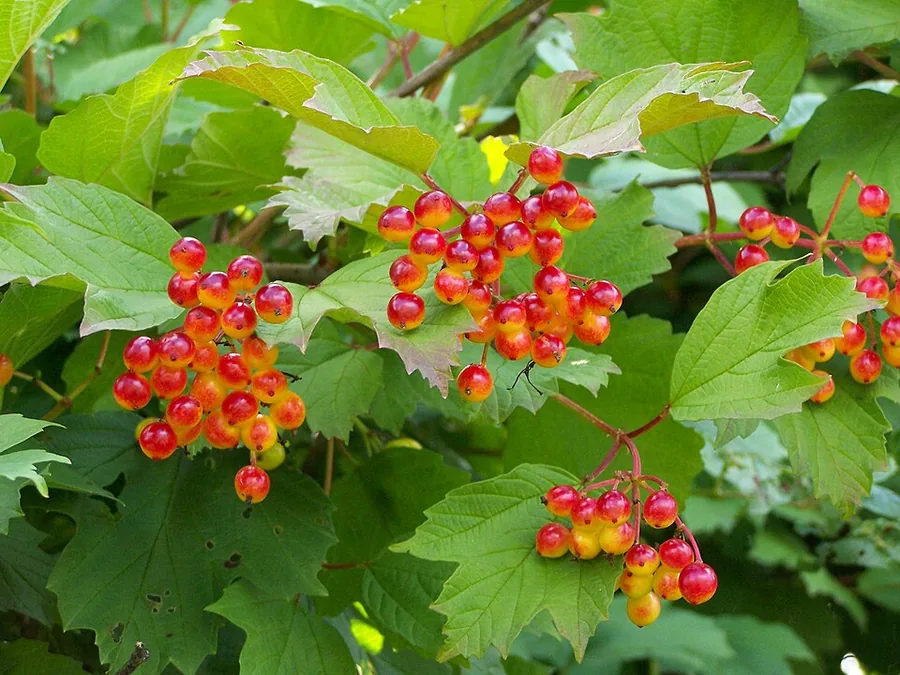
You can set that fear aside. The 'Roseum' cultivar carries completely sterile flowers and sets no fruit or viable seed, so it simply has no way to spread on its own. Only the fertile species, Viburnum opulus, has naturalized and become invasive in parts of the US and Canada.
The snowball bush is just another name for the fragrant Chinese snowball viburnum.
They only look like twins. The common European snowball is Viburnum opulus 'Roseum', while the Chinese snowball is Viburnum macrocephalum with its bigger blooms, and the Japanese snowball is Viburnum plicatum, so three different species share one nickname.