Ornamental · Aristolochiaceae
Wild Ginger
Asarum canadense
A gentle woodland groundcover that asks only for shade and steady moisture to settle in and thrive.
Full shade
Every 3–7 days
USDA 4–6
6–12 in · 15–30 cm
Overview
If you have a shady, damp corner where nothing seems happy, wild ginger may be the plant that finally settles in. It is a low, spreading native of eastern woodlands, loved for the soft carpet of hairy, heart-shaped leaves it lays across the forest floor. The name comes from the rhizome, which carries a faint ginger scent, though the plant sits in the birthwort family and has no kinship with the ginger in your kitchen. It keeps close to the ground and rarely climbs past 6 to 12 inches (15 to 30 cm), so there is nothing to stake or fuss over.
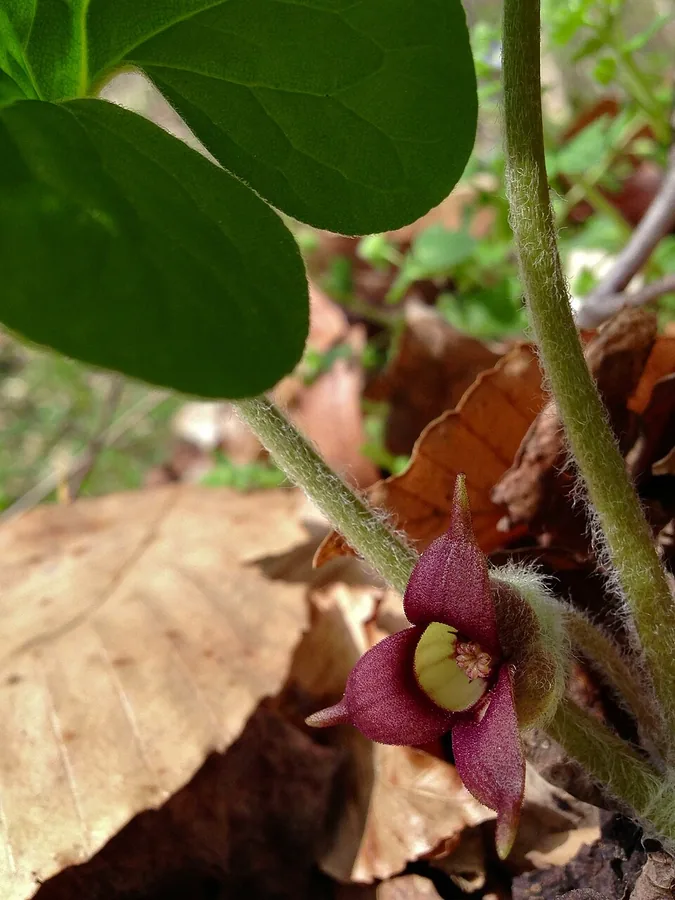
Come spring, you may need to kneel and part the leaves to find its quiet surprise, small brownish-purple, bell-shaped flowers resting right at soil level. After that the ants take over, carrying the seeds off to start fresh patches, so you can relax and let the plant do the spreading. Given decent ground and a little time, one modest planting knits itself into a wide, easy colony.
Think of it as a dependable shade groundcover rather than a flashy centerpiece and you will not be disappointed. Hand it the damp, rich, dappled spot where lawn and fussier flowers give up, and it fills in a little more each season. One caution stands apart from all the good news: despite the old habit of drying the root for flavoring, no part of wild ginger is safe to eat.
Care
The short version: give it full to part shade, rich humusy soil, and steady moisture all season, and you will find it very forgiving, since its only real dislike is drought.
Light
Wild ginger feels most at home in full to part shade, the soft, dappled light beneath a tree canopy. A touch of morning or partial sun is fine as long as the soil stays moist, but strong sun dries it out quickly and the leaves will show the strain, so lean toward shade when you can.
Water
Aim to keep the soil constantly moist, since this is the one thing wild ginger truly needs and drought is its weak point. Give it a drink through dry spells so the ground never bakes, roughly every 3 to 7 days depending on the heat and shade. Do not worry about the occasional soggy patch, as it takes those in stride.
Soil
Plant it in rich, humusy ground that holds moisture yet still drains, the loose, leaf-fed soil you would find on a woodland floor. It is not picky about acidity and settles in happily anywhere from a pH of 4.5 to 7.0, so most shaded beds will suit it.
Temperature
This is a tough, cold-hardy plant that shrugs off winters down to about -29°F (-34°C) and summers up to 84°F (29°C), so harsh seasons need not worry you. The deciduous leaves fade on their own in fall and return faithfully each spring.
Humidity
There is no humidity number to chase, since ordinary outdoor air suits it just fine. What truly matters is steady moisture at the roots and the cool, sheltered air of a shady bed, both of which are easy to provide.
Feeding
You can relax about feeding, because rich woodland soil already gives it most of what it needs. A simple spring top-dress of leaf mold or compost is plenty, feeding the ground slowly and echoing the leaf litter it grows among in the wild.
Pruning
Pruning barely enters the picture, which is a relief for a busy gardener. Pull away any tattered or damaged leaves whenever they catch your eye, and let the rest die back on its own through fall, since the foliage is deciduous.
Repotting
Since wild ginger grows in the ground as a groundcover and not in a pot, repotting is one chore you can forget. Every few years, if a colony crowds itself or starts to thin in the middle, you can gently lift and divide it and set the pieces back to grow.
Size & spacing
These are low, gentle plants that stay around 6 to 12 inches (15 to 30 cm) tall, with each one reaching 6 to 18 inches (15 to 45 cm) across. Space them with that spread in mind, and over time they will knit together into a soft, continuous mat without any coaxing.
When to plant
There is no rush and no delicate window to miss here. Set your divisions out in spring or fall while the soil stays cool and damp, count on it being hardy through zones 4 to 6, and look for the hidden flowers to open at ground level in early to mid spring.
Northern hemisphere
Southern hemisphere
Typical months for a temperate climate: start earlier in warm zones, later where spring frosts linger.
- Plant: Spring or fall
- Harvest: Brownish-purple bell-shaped flowers in early to mid spring (April-May), hidden at ground level beneath the foliage.
Hardiness
USDA hardiness zones: 4–6
Temperature: down to -34°C
Troubleshooting
Happily, wild ginger asks very little of you and rarely causes worry. Nearly everything that goes sideways comes down to slugs in the damp shade or soil that was allowed to dry out, and both are simple to spot and set right once you know what to look for.
The patch wilting, yellowing, and starting to fade
Because wild ginger has poor drought tolerance, dry soil is the very first thing to check. Plants droop and brown along the leaf edges when they run short of water, and you will notice the fading is always worst in the sunnier, drier corners of a bed. Water deeply to bring the moisture back, tuck leaf mold around them to hold it, and if the trouble keeps returning, move the planting to a shadier, damper home where it can settle for good.
Fix:
- Water deeply to restore even soil moisture
- Mulch with leaf mold or compost to retain moisture
- Relocate to a shadier, moister site if needed
Leaves turning up with ragged, chewed holes
Try not to take it personally, since this is simply the work of slugs and snails, which feed hardest in damp shade and right after rain. Look for their telltale slime trails and peek under the leaves after dark, where they like to hide. Pick them off by hand in the evening, clear away the leaf litter that shelters them, and if the nibbling gets ahead of you, scatter a little iron-phosphate bait to bring things back under control.
Fix:
- Hand-pick slugs and snails in the evening
- Remove leaf litter and debris that shelter them
- Use iron-phosphate slug bait if damage is heavy
An itch or rash after touching the foliage with bare hands
Some people find their skin reacts with contact dermatitis after brushing against the foliage, showing up as redness or itching where it touched. The comforting part is that it settles once the exposure stops. Wash the spot with soap and water to ease it, and reach for gloves before you handle or divide the plant next time.
Fix:
- Wash the affected skin with soap and water
- Wear gloves when handling or dividing the plant
Toxicity
Here is the one place to be firm, even in such an easygoing plant: keep every part of it off the menu. All of it holds aristolochic acid, a compound that harms the kidneys and is a known carcinogen, so the old habit of seasoning food with the root is simply not worth it. Keep it away from people, pets, and grazing animals alike, and slip on gloves before you handle the leaves, which can leave sensitive skin a little irritated.
Toxic to
Cats · Dogs · Horses · Rabbits · Livestock · Birds · People
Cats Caution
A curious cat that chews the leaves or roots may drool and get an upset stomach. The bigger concern is the aristolochic acid every part carries, which is hard on the kidneys, so it is kindest to keep inquisitive cats well away from it.
Dogs Caution
A dog that gnaws on it will usually end up with an irritated mouth and a queasy stomach. Since the plant holds aristolochic acid, a known kidney toxin, treat any real mouthful as a good reason to phone your vet.
Horses Caution
Horses have little cause to graze it in the shady spots where it grows, yet the aristolochic acid in its leaves and roots is genuinely hard on the kidneys. Keep it from turning up in their pasture or hay to be safe.
Rabbits Caution
This is simply not a green to hand a rabbit. The aristolochic acid running through every part is a kidney poison, so even a small nibble is best avoided altogether.
Livestock Caution
Cattle, goats, and sheep can take in the same kidney-damaging aristolochic acid if they browse it. Fence it off from grazing animals and keep it out of any cut forage, and everyone stays well.
Birds Caution
Poultry and other birds should not pick at the leaves or rhizomes, which hold the carcinogenic, kidney-toxic aristolochic acid. There is simply no safe part here for them to eat.
People Caution
For all the old habit of using it as a seasoning, no part of wild ginger is safe to eat. The aristolochic acid inside harms the kidneys and is a known human carcinogen, and handling the leaves can leave sensitive skin irritated too.
Wear gloves when handling, dividing, or pruning to avoid skin irritation, and keep the plant and its roots from being eaten by people or pets.
Helpline numbers

United States
ASPCA Animal Poison Control: (888) 426-4435 (fee applies)
Poison Control: (800) 222-1222



Canada
Poison Centres: 1-844-764-7669
Varieties
You can keep things simple here, since wild ginger is grown as the straight species. That leaves just one plant to get to know, which makes the choosing easy.
Asarum canadense (species)
This is the native deciduous species you will find offered, marked by hairy, heart-shaped leaves and a brownish-purple, three-lobed bell flower that hides right down at ground level.
Companions
Wild ginger pairs naturally with the other plants of the shaded woodland floor, the trilliums, violets, and ferns that want the same damp, rich, dappled ground.
Plant near
Trillium grandiflorum: Shares the same moist, shady woodland niche and naturalizes well alongside wild ginger as a groundcover.
Viola pubescens: A native woodland companion that thrives in the same part-to-full shade and rich soil conditions.
Ferns and woodland wildflowers: Combine well in shade and woodland gardens where wild ginger forms a low groundcover layer.
How to propagate
Making more wild ginger is genuinely satisfying and rarely goes wrong, in large part because a settled plant does most of the spreading for you through its creeping rhizomes.
DivisionEasy
Spring or fall · One to two growing seasons
Division is the kindest, most reliable way to make more wild ginger, and it is hard to get wrong. Lift a settled clump in spring or fall, then cut the rhizomes apart so each piece keeps a few growth buds. Set the divisions back and they will take hold and fill out over the next one to two growing seasons.
LayeringModerate
Growing season · One growing season once rooted
Here the plant quietly does most of the work for you. Its creeping rhizomes root as they wander across the ground through the growing season, weaving into wider colonies as they go. Once a stretch has taken root, usually within a single season, you can snip it free and lift it as a brand new plant.
SeedDemanding
Sow fresh seed in summer to fall · Several years to reach groundcover size
Seed is the slow, patient route and best saved for when you are in no hurry. Sow it fresh from summer into fall, since the seeds wear an oily elaiosome that ants gather and carry off in the wild. Expect several years to pass before a sown patch grows thick enough to read as a true groundcover.
Myths
Wild ginger makes a safe wild stand-in for kitchen ginger because its root smells and tastes the part.
As tempting as that sounds, Asarum canadense is no relative of true ginger and carries aristolochic acid, a documented kidney toxin and known carcinogen. People did once dry the root for seasoning, but that old custom does not make it safe today. No part of the plant should be eaten.