Ornamental · Melanthiaceae
Large-flowered Trillium
Trillium grandiflorum
Settle it into cool shade and leafy, rich soil, and this easygoing native will thank you with a bright bloom each spring.
Partial shade
Every 3–7 days
USDA 4–8
8–18 in · 20–46 cm
Overview
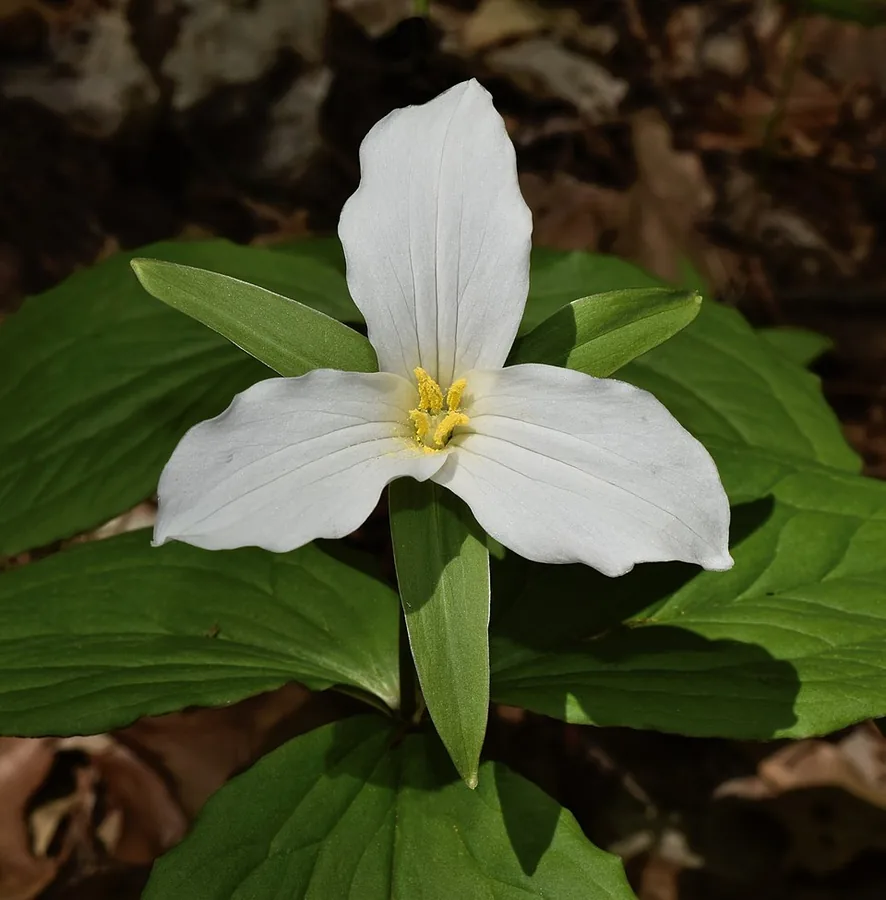
If a single graceful wildflower could welcome you to shade gardening, this would be the one. Large-flowered trillium lifts one clean white bloom above a whorl of three broad leaves, and it grows wild through the rich, shaded woodlands of eastern North America. As each flower ages it softens from white to a gentle pink, so no two weeks quite look the same.
Here is the reassuring part: this plant runs on its own gentle clock, so there is no rushing it and no way to fall behind. It grows from a rhizome and spreads at a slow, unhurried pace, and a single seed may need close to a decade to become a flowering plant. Given a calm, settled spot it will live for many years and knit itself into a lasting little colony.
Patience really is the whole secret here. Give it cool shade, damp ground, and soil rich with old leaves, and once it feels settled it will want little more than to be left in peace. The one rule worth holding onto is simple and kind: never lift a plant from the wild.
Care
The short version: tuck it into dappled or full shade, give it deep soil rich with humus and organic matter, keep it evenly damp right through spring, and then let the settled clump be.
Light
Think of the forest floor, and you will have this plant just right, because it loves partial to full shade. The broken light beneath deciduous trees suits it beautifully, since its flowers open before the branches leaf out, and it stays perfectly content in deeper shade once that leafy roof closes in.
Water
Aim to keep the soil evenly damp yet never soggy, and reach for the watering can during dry stretches while the plant is busy growing in spring. The leaves will fade away on their own by late summer, and once they do the resting rhizome asks for very little.
Soil
Give it deep, rich soil full of humus, generous with organic matter and quick to drain. Almost any reading from 5.0 to 7.0 on the pH scale will do, and that range covers the leafy, crumbly ground of most woodlands.
Temperature
You can relax about cold, since this tough native takes the whole sweep from -29°F to 84°F (-34°C to 29°C) in stride. It does count on a proper winter chill to wake up and flower, so it simply will not settle in hot, frost-free places.
Humidity
Good news: everyday outdoor air holds all the moisture it needs, so there is nothing to measure or fuss over. A cool, shaded, moist spot topped with leafy mulch will always serve it better than any gauge could.
Feeding
Most of the time the rich woodland soil does the feeding for you, which is one less thing to worry about. Come fall, spread a light blanket of leaf mulch or leaf mold, no more than 2 inches deep, to echo the forest floor and gently build up the earth over time.
Pruning
There is nothing to prune here, so you can put the shears away. Simply let the leaves fade on their own after the flowers finish, because they are quietly storing food in the rhizome for next spring, and snipping them off too soon only sets the plant back.
Repotting
Try to leave it be, since trillium is best moved as little as possible and truly dislikes being disturbed. Only lift a clump when crowding has cost it its strength or its flowers, and even then be ready to wait kindly while it finds its feet again.
Size & spacing
Once grown, each plant reaches 8 to 18 inches (20 to 46 cm) tall and fans out 9 to 12 inches (23 to 30 cm) wide. Leave a little breathing space around every one so it can build its slow clump in comfort.
When to plant
This one keeps to the rhythm of the forest, and following along is easy. Set the dormant rhizomes out in fall, then let yourself look forward to the flowers, which arrive sometime between April and June, just before the trees leaf out and shade the ground above them.
Northern hemisphere
Southern hemisphere
Typical months for a temperate climate: start earlier in warm zones, later where spring frosts linger.
- Plant: Plant dormant rhizomes in fall; sow fresh seed outdoors in fall
- Harvest: Blooms April to June
Hardiness
USDA hardiness zones: 4–8
Temperature: down to -34°C
Troubleshooting
Take heart, because a settled trillium rarely causes worry, and the few troubles it does meet almost always appear on the leaves where you can spot them. Look through the notes below, find what matches, and step in gently while a small problem is still easy to mend. The only serious stumble comes from moving the plant, so try to resist.
A plant that struggles or fades once it has been moved
Trillium really does not like its roots disturbed, so a bout of transplant shock tends to follow any digging or splitting. The kindest cure is simply to leave it where it is. If you truly must divide, hold off until the leaves have died down, then settle the rhizome straight back in at the same depth and keep it evenly damp while it recovers. Beginning with nursery-grown plants saves you both the worry and the risk of unsettling a wild clump that might never bounce back.
Fix:
- Leave established plants undisturbed where possible
- If dividing, do so after foliage dies back and replant rhizomes promptly at the same depth
- Keep newly set plants evenly moist while they re-establish
Torn, ragged holes across leaves and petals, with telltale slime trails
Do not take it personally, because this is simply slugs and snails at work, feeding in the dark of damp shade and leaving silvery trails as they go. Slip out with a flashlight at night or in the early morning to gather them up, clear away the fallen leaves and hiding boards, and go a little easier with the water. Should they keep returning, a scattering of iron-phosphate bait will help without much fuss.
Fix:
- Hand-pick slugs and snails in the evening
- Reduce excess moisture and remove debris that shelters them
- Apply iron-phosphate slug bait if pressure is heavy
Discolored spots, blotches, or powdery patches showing on the leaves
These little marks point to a fungal leaf spot, rust, or smut, the sort that settles in when leaves stay damp and the air hangs still around them. Gently pick off the spotted leaves and throw them out, open up the clump so air can move through, and pour your water down at the soil rather than over the top. A tidy sweep of old debris in fall stops the spores from lingering into next year.
Fix:
- Remove and destroy affected leaves
- Improve air circulation and avoid wetting foliage
- Clean up fallen plant debris at season end
Toxicity
There is no need to be alarmed here. Trillium counts as a mild worry, not a dangerous poison. Its berries and rhizome carry saponins that can leave a pet, a grazing animal, or a curious child with a queasy stomach if they are eaten, yet the plant is not a systemic toxin and it does not even appear on the ASPCA's list. Just keep the berries and the rhizome where pets and children cannot reach them, and please never dig this protected wildflower from the wild.
Toxic to
Cats · Dogs · Horses · Rabbits · Livestock · Birds · People
Cats Mild
If a cat should swallow a bit of the berry or rhizome, the saponins inside may unsettle its stomach and bring on some drooling or vomiting. Happily, most cats simply walk past the plant, and a tiny nibble seldom causes real harm.
Dogs Mild
Should a dog gnaw the fruit or dig down to the rhizome, it might drool, be sick, or have a loose stool for a while. The trouble stays mild and tends to pass on its own, though steering a keen digger away from the roots is a kind precaution.
Horses Mild
For a grazing horse, those same saponins turn the rhizome and berries into a gentle stomach irritant. Real trouble is unlikely though, because this plant keeps to shaded woodland and rarely turns up out in open pasture.
Rabbits Mild
A rabbit that eats much of the fruit or roots may end up with a queasy tummy from the saponins. The leaves are the gentler part of the plant, so it is wise to keep the berries and rhizome out of its reach.
Livestock Mild
Cattle, goats, or sheep that browse on the rhizome or fruit might have a mild bout of digestive upset from the saponins. There is little cause for alarm, since serious poisoning is not expected here.
Birds Caution
Wild birds are drawn to the ripe berries and kindly help spread the seed, yet the saponins still make that fruit a mild irritant. For a pet bird it is best treated with a little caution rather than offered as a safe treat.
People Caution
None of this plant is meant for the table, and its saponin-rich berries and rhizome can leave a person with an upset stomach if swallowed. Gently steer children away from tasting the fruit, and never gather it as something to eat.
Keep fruits and rhizomes away from pets and children. This is a slow-growing native protected or restricted in some areas; source only nursery-propagated plants rather than digging from the wild.
Helpline numbers

United States
ASPCA Animal Poison Control: (888) 426-4435 (fee applies)
Poison Control: (800) 222-1222



Canada
Poison Centres: 1-844-764-7669
Varieties
Most gardeners grow Trillium grandiflorum just as it appears in the woods, though a single charming color form does show up here and there.
f. roseum
This is a wild pink form that greets you with soft pink blooms in place of the familiar white.
How to propagate
If you would like more of it, you have two gentle options: split the rhizome or raise it from seed. Both reward a patient gardener, and neither one likes to be rushed.
DivisionModerate
After foliage dies back in late summer to fall · 1 to 2 years
Wait until the leaves have died down in late summer or fall and the plant has gone dormant, then carefully lift and divide the rhizomes. Tuck the pieces straight back into the ground and settle in for a wait, because trillium dislikes being disturbed and needs 1 to 2 years to find its stride again.
SeedDemanding
Sow fresh seed in fall outdoors · Several years to flowering
Raising trillium from seed is a lesson in patience, but it is a gentle one. Sow the fresh seed outdoors in fall and be ready for double dormancy, which means the seeds stir to life slowly over two or more years, and the young plant needs several more before it can flower. Each seed comes with a little fatty appendage that tempts ants, and they kindly carry it off and sow it for you.
Myths
Gathering a trillium from the woods or lifting one for the garden causes it no real harm.
Sadly, breaking off that flower carries away the plant's only leaves along with it, and without them the rhizome can slowly starve, leaving the plant weakened for years or lost altogether. On top of that it moves poorly and enjoys legal protection in many places. Always choose nursery-propagated plants instead of gathering them from the wild.