Vegetable · Amaranthaceae
Spinach
Spinacia oleracea
Keep it cool, watered, and picked young, and you will have tender spinach leaves in about six weeks.
Full sun
Every 2–4 days
32–77°F · 0–25°C
40–50 days
Overview
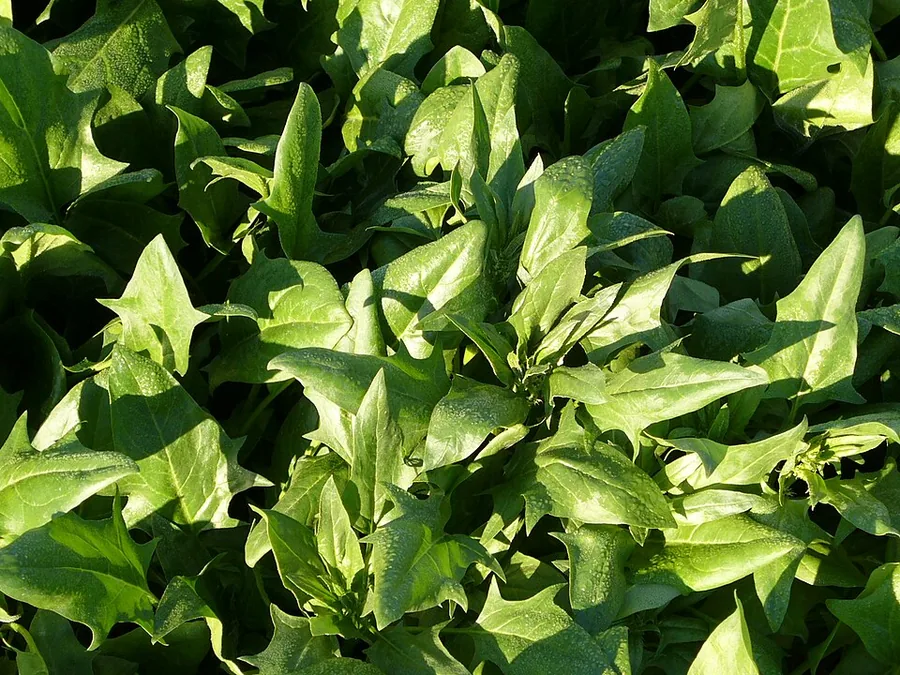
Spinach is a forgiving, fast-growing green that loves the cooler edges of the season, which makes it a kind place to begin. From the day you sow, tender leaves are ready to gather in about 40 to 50 days, so it is often the first reward of spring and a welcome last pick in fall. The one thing to keep in mind is that summer heat hurries it along, and it will bolt quickly if it goes in during the hottest weeks.
Better still, the plant stays small and tidy, spreading only 6 to 12 inches (15 to 30 cm) across, so it settles happily into a spare garden corner, a raised bed, or even a good-sized pot. You take the outer leaves and leave the heart of the plant to carry on, a gentle cut-and-come-again rhythm that keeps a single sowing giving for weeks. No special skill is needed, only a little patience.
There is one kind caution worth holding in mind. Spinach really is high in oxalates, and while that makes no difference to the healthy leaves you enjoy at the table, it does mean pets and livestock are best given only a little at a time.
Care
The short version: start your spinach in the mild weather of spring or fall, give it full sun or light shade with rich, moist soil, and keep gathering the outer leaves before summer heat coaxes it into bolting.
Light
Spinach is happy in full sun through the cool months and just as content with partial shade, so there is room to be relaxed about placement. Once the days heat up, a touch of afternoon shade actually does it a favor, easing off the bolting that warmth can trigger.
Water
Aim to keep the soil evenly moist, giving it a check every couple of days, because spinach roots run shallow and the tender leaves flag quickly when dry. That reliable dampness grows soft, generous foliage and gently pushes back the day the plant bolts as the weather warms.
Soil
Give spinach a rich, well-drained bed brimming with organic matter and it will thank you. It stays relaxed about pH, content anywhere from 6.0 to 7.5, and a helping of compost worked in ahead of time brings fuller leaves that come on faster.
Temperature
Cool conditions are everything for this crop. Spinach carries on happily from near freezing up to around 77°F (25°C), and it grows best toward the cooler end, which is exactly why spring and fall sowings do so much better than a summer one.
Humidity
Everyday outdoor air is all spinach asks for, so there is no humidity figure to fret about. What really matters is good airflow, since leaves left crowded and damp are just what downy mildew looks for.
Feeding
Think of spinach as a hungry feeder that leans on nitrogen to keep unrolling new leaves. Mix compost or a balanced, nitrogen-rich fertilizer into the ground before you sow, then give a gentle side-dressing later on if the leaves begin to look pale.
Pruning
Happily, there is no fussy pruning here. Simply pick the outer leaves as they fill out so the middle keeps making more, and tidy away any leaf that yellows or any stalk that starts to bolt.
Repotting
Because spinach lives as an annual and seldom lasts beyond one season, repotting is not part of the picture. When a patch is finished, pull it and sow a fresh round rather than trying to shift the plants.
Size & spacing
These are little plants, holding at 6 to 12 inches (15 to 30 cm) tall and roughly the same across. Thin the young seedlings to 3 to 6 inches apart, which gives each one gentle breathing room and space for its leaves to spread.
When to plant
Spinach truly loves cold and wilts in heat, so good timing does most of the work for you. Put the first sowing in as soon as spring soil loosens up, add another in late summer for a fall crop, and gather leaves through the cool stretch before the plants bolt.
Northern hemisphere
Southern hemisphere
Typical months for a temperate climate: start earlier in warm zones, later where spring frosts linger.
- Sow: Usually direct-sown; optionally start 4-6 weeks before the last spring frost if transplanting.
- Plant: Early spring as soon as soil is workable (about 4-6 weeks before last frost) once soil reaches 45°F, and again in late summer for a fall crop.
- Harvest: Harvest leaves roughly 40-50 days after sowing, before plants bolt; grown for foliage rather than bloom.
Hardiness
USDA hardiness zones: 2–11
Temperature: down to -46°C
Troubleshooting
Most spinach troubles turn up on the leaves or as a sudden dash to flower, and the good news is that spotting them early usually saves your harvest. Look over the signs below, find the match, and step in before the leaves go bitter or a disease has a chance to spread.
Yellow blotches above with soft mold below
This is downy mildew, a quick-spreading disease that thrives wherever plants sit cool, wet, and packed together. Look for a gray to violet fuzz beneath the leaves set against yellow patches up top. Clear away the affected leaves, thin the planting so air moves through, and water at soil level early in the day so the foliage dries quickly.
Fix:
- Remove and destroy infected leaves and plants
- Improve air circulation and avoid overhead watering
A tall stalk appears and the leaves start tasting bitter
What you are seeing is bolting, and it sets in as the days grow longer and the weather turns warm. The plant simply shifts its energy from leaves over to seed, and whatever foliage stays behind turns small and sharp on the tongue. There is an easy fix here: lift the whole plant as soon as that central stalk shows, then sow a fresh, cool batch to take its place.
Fix:
- Harvest the entire plant promptly once bolting begins
- Remove bolted plants and sow a fresh cool-season planting
Pale, winding trails threaded through the leaves
Those pale trails come from leafminer larvae tunneling between the top and bottom of each leaf, tucked away where no spray can follow. The gentlest response is to pick off any marked leaves and bin them the moment you notice. To head off the trouble, a floating row cover set over the bed early blocks the flies from laying their eggs in the first place.
Fix:
- Pick off and destroy mined leaves
- Remove badly infested plants
Toxicity
Take heart, spinach is a wholesome edible green and nothing about it is poisonous. The single thing to keep an eye on is its high oxalate content, a small dietary note for people who tend toward kidney stones and the reason to give cats, dogs, and horses only modest tastes instead of large helpings.
Toxic to
Cats · Dogs · Horses
Safe for
People · Rabbits · Livestock · Birds — the leaves
Cats Caution
One nibble of spinach will not hurt a cat, though the leaves carry a lot of soluble oxalates. Given steadily or in a big helping, they can put a strain on the kidneys and unsettle the stomach, so let it stay an occasional little treat.
Dogs Caution
For most dogs a little spinach is no trouble, but those oxalates do build up over time. Large or regular servings can irritate the belly and wear on the kidneys, which is worth extra care with a dog already prone to kidney problems.
Horses Caution
Spinach is not a poison for horses, yet its heavy oxalate load can get in the way of calcium and lean on the kidneys when a lot is fed. A small handful once in a while is the gentle limit to keep to.
Rabbits Safe
Rabbits are welcome to spinach as one part of a varied leafy diet. Since it brings oxalates along, simply rotate it with other greens instead of offering it day after day.
Livestock Safe
Cattle, goats, and sheep handle spinach and its trimmings just fine in reasonable amounts, and the leaves hold no toxin that would put a grazing animal in harm's way.
Birds Safe
Backyard hens and pet birds enjoy a peck of spinach. Serve it alongside a few other greens so the oxalates never become the main part of the diet.
People Edible
For people spinach is a nourishing leafy green, lovely raw or cooked. It naturally holds oxalates, which only concerns anyone prone to kidney stones, and a quick cooking lowers those levels nicely.
Spinach is high in oxalates, a human dietary consideration (relevant to kidney-stone-prone individuals); cooking reduces oxalate levels.
Helpline numbers

United States
ASPCA Animal Poison Control: (888) 426-4435 (fee applies)
Poison Control: (800) 222-1222



Canada
Poison Centres: 1-844-764-7669
Varieties
Spinach sorts itself into savoy, semi-savoy, and smooth-leaf kinds, and you really only need a handful of dependable names to fill a garden. Here are the friendly, well-proven ones to start with.
Bloomsdale Long Standing
A much-loved heirloom savoy whose thick, deeply crinkled dark-green leaves shrug off the cold with ease.
Tyee
A dependable semi-savoy hybrid that stands up to heat without bolting and is ready to gather in about 45 days.
Melody
A 1977 All-America Selections winner that pairs fine flavor with lightly crinkled leaves and a real reluctance to bolt.
Companions
Spinach grows best alongside other cool-season crops, especially legumes that share its early timing and feed nitrogen back into the bed.
Plant near
Peas: Shares cool-season preferences and the legume fixes nitrogen, making it an efficient early-spring interplant.
Bush beans: Listed on cool-season interplanting guides as a compatible companion that supplies nitrogen.
Brassicas: Cool-season brassicas pair well with spinach for interplanting in spring and fall beds.
How to propagate
Spinach is about as easy as growing gets, going straight into the soil from seed with no transplanting to worry over.
SeedEasy
Direct sow in early spring once soil reaches about 45°F and again in late summer for fall. · Germinates in about 7-14 days; harvestable in roughly 40-50 days.
Spinach is nearly always sown right where it will grow, straight into the soil. Tuck the seeds 1/4 to 1/2 inch deep once the ground reaches about 45°F (7°C), then thin the little seedlings to 3 to 6 inches apart. They come up in 7 to 14 days and hand you leaves to pick in roughly 40 to 50 days, so barely any patience is asked of you.
Myths
Spinach delivers a huge, easily absorbed dose of iron.
Spinach does contain iron, yet it is the non-heme form, and the plant's own oxalates tie up a good share of it as you digest. The old Popeye image oversells it as an iron source, so it is kinder to your expectations to prize spinach for its other nutrients.
Spinach must have full sun the whole day to do well.
It grows nicely in full sun but is perfectly relaxed about partial shade too. A bit of afternoon shade is a real help when it is hot, since it holds back the bolting that heat tends to bring on.