Ornamental · Amaranthaceae
Globe Amaranth
Gomphrena globosa
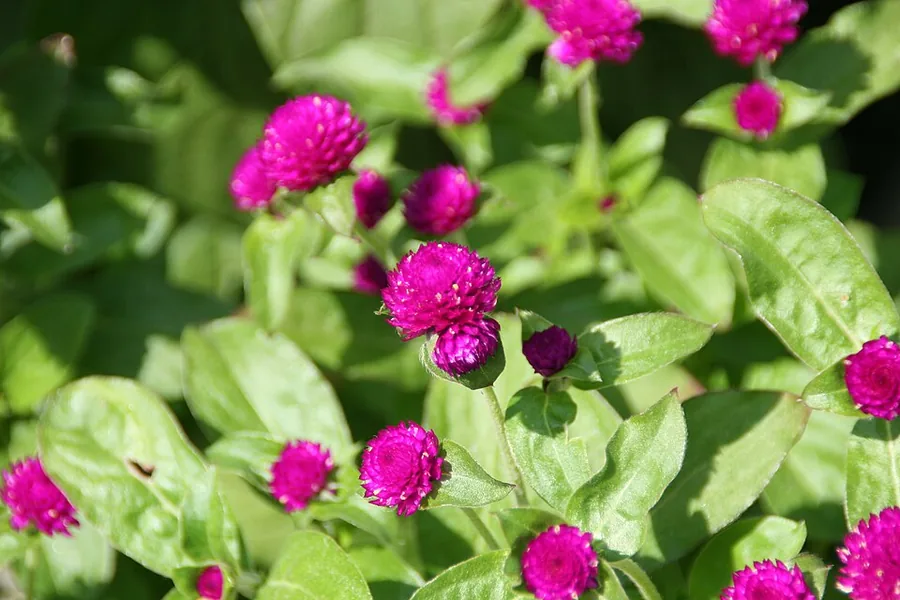
Give globe amaranth full sun and warm, well drained ground, and it will reward you with papery clover-like flowers from summer until frost.
Full sun
Every 5–10 days
70–75°F · 21–24°C
84–112 days
Overview
If you are new to growing, globe amaranth is a wonderful place to start. It carries round, papery flowerheads that resemble little clover blooms and hold their color for months on end. This tender annual grows happily across a wide range of climates, whether in a sunny bed or a simple pot, and it handles heat and dry spells far better than most summer flowers, so a missed watering is easy to forgive.
The blooms arrive in pink, purple, white, and red, perched on wiry stems above a neat mound of leaves. Cut them and let them dry, and they keep their shape and shade for a year or more, which is why they show up so often in everlasting bouquets. Out in the garden they welcome butterflies and are quietly passed over by deer.
Best of all, this is a forgiving plant that asks very little once it has settled in. It puts up with poor soil, keeps flowering as long as you keep picking off the spent heads, and rarely turns fussy. Give it sun and a little breathing room, and you will find the worst problems simply stay away.
Care
The short version: give it full sun and average, well drained soil, keep it steadily moist while it is young, then ease off since it takes heat and drought in stride once settled. Feed it every couple of weeks through the season and snip off the spent heads, and it keeps blooming happily.
Light
Globe amaranth loves full sun, ideally at least 6 hours of direct light each day. It can scrape by in part shade, but there the plants tend to stretch, flop, and flower far less. The more sun you can offer, the more blooms you will get to pick.
Water
Keep the soil evenly moist while the young plants are settling in and putting down roots. Once they are established, ease right off, because this plant handles heat and dry spells well and dislikes staying wet. Let the top half of the soil dry before you water again, since soggy ground is what invites disease.
Soil
Average, well drained soil is really all it needs. A pH between 6.0 and 7.0 suits it nicely, and it copes with poor ground better than most flowers. The one thing it will not forgive is heavy, waterlogged soil that never dries out.
Temperature
This is a heat lover that grows best around 70°F to 75°F (21°C to 24°C). It sails through hot summers with no trouble but cannot take a frost, so wait until the cold has fully passed before you plant it outdoors.
Humidity
Ordinary outdoor humidity suits it just fine, so there is no number to worry about. Air movement counts for far more, because still, damp air around crowded plants is what tends to bring on mildew and mold.
Feeding
Feed it at planting time with a water-soluble fertilizer, then keep it up every couple of weeks through the growing season. That gentle, regular feeding is what keeps the long run of flowers going strong.
Pruning
Deadhead or snip off the spent flowerheads to keep fresh blooms coming all season long. Pinching young plants back early helps too, nudging out more side branches for a fuller, bushier shape.
Size & spacing
Plants reach 12 to 24 inches (30 to 61 cm) tall with a spread of 6 to 12 inches (15 to 30 cm). Set them about 8 inches apart so air can slip between them and the leaves stay dry.
When to plant
Globe amaranth is a warm season annual that cannot cope with frost, so timing is your friend here. Start the seeds indoors in late winter, or sow them outside once the soil has warmed, and you can count on flowers from early summer right through until the first frost.
Northern hemisphere
Southern hemisphere
Typical months for a temperate climate: start earlier in warm zones, later where spring frosts linger.
- Sow: 6 to 8 weeks before last frost; soak seed overnight and keep at 70 to 75°F for germination in 2 to 3 weeks
- Plant: After all danger of frost has passed and soil has warmed, spaced about 8 inches apart
- Harvest: Blooms from early summer through fall until frost
Hardiness
USDA hardiness zones: 2–11
Temperature: down to -46°C
Troubleshooting
Most hiccups with globe amaranth trace back to damp, crowded conditions or too little sun, and none of them are hard to fix. Spot the early signs on the leaves and you can usually set things right with a bit more spacing and steadier watering. Match what you see below and act before it spreads, and your plants will bounce back.
Fuzzy gray patches or dark spots showing on the foliage
A stretch of cool, wet weather can invite gray mold (Botrytis) and a few fungal leaf spots, but these are easy enough to manage once you catch them. Pinch away the affected parts as soon as you notice them, and try to keep the leaves dry by watering at the base rather than over the top. Loosening the spacing so a little air can drift through will help the foliage dry out and keep this from coming back.
Fix:
- Remove affected plant parts
- Avoid overhead watering and wetting foliage
- Increase spacing and air movement
Only a few seedlings, or none, after sowing
This one is rarely your fault, since globe amaranth seed is slow to sprout and low-germinating by nature, and cold soil only makes it more stubborn. Give the seed an overnight soak before you sow, and hold the soil warm at 70°F to 75°F (21°C to 24°C) to coax it along. Sprinkle a few extra seeds to make up for the gaps, and hold off on direct sowing outside until the ground has truly warmed.
Fix:
- Soak seed in water overnight before planting
- Maintain 70 to 75°F soil for germination
- Sow extra seed to compensate for low germination
A dusty white bloom settling over leaves and stems
Don't panic if you see this, it is simply powdery mildew, a fungus that takes hold when a plant has gone too dry or sat through a run of cool, damp days. You can turn it around by giving the plants more elbow room, thinning any crowded growth, and watering on a steady rhythm so the leaves stay dry. Gently pick off the worst-coated leaves and throw them away, and the plant recovers.
Fix:
- Improve air circulation by spacing and thinning
- Water consistently to avoid drought stress
- Remove and discard severely affected foliage
Leggy, leaning stems with only a handful of blooms
When the plants grow thin and floppy with sparse flowers, the answer is almost always more sunshine. Move it, or replant it, somewhere it can soak up at least 6 hours of direct light each day, and it will firm up and bloom. Pinching young plants back early also helps a lot, since it nudges out more side branches and a much fuller crop of flowers.
Fix:
- Relocate or plant in full sun
- Pinch young plants to encourage branching
Toxicity
Here is some reassuring news for pet owners: globe amaranth is safe all around. The ASPCA lists it as non-toxic to cats, dogs, and horses, and it poses no real danger to other animals or to people either. The worst you might see is a brief stomach upset in a pet that has eaten a lot of any plant.
Safe for
People · Cats · Dogs · Horses · Rabbits · Livestock · Birds
Cats None
You can relax around a curious cat, because the ASPCA lists globe amaranth as non-toxic to cats. A nibble on the papery flowers will do no harm, though a really big mouthful of any plant may bring on a little drool or a brief tummy upset that passes on its own.
Dogs None
It is safe for dogs too, so a chewed stem or a nibbled flowerhead is nothing to worry over. The most a plant-loving dog might feel after really overdoing it is some mild, short-lived stomach upset.
Horses None
Horses are perfectly fine near it, as globe amaranth is non-toxic to horses and a mouthful while grazing carries no real risk.
Rabbits Safe
A rabbit that wanders into the bed and browses the leaves has nothing to fear here. There is no toxin in this plant, so it stays safe even for a determined nibbler.
Livestock Safe
Cattle, goats, and sheep can graze around it with no worry at all, since the plant holds nothing toxic to farm animals.
Birds Safe
Birds do just fine with it, and many happily pick at the dried seed heads. The plant is safe for backyard visitors and pet birds alike.
People Safe
Globe amaranth is safe for people, and in some places the dried flowers are even steeped into a gentle herbal tea. There is no reason to keep little hands away from it.
Varieties
Globe amaranth comes in tall cutting types as well as tidy little dwarfs for edging, so there is a size to suit any spot. These are the ones you are most likely to come across.
Strawberry Fields
A taller pick at 18 to 28 inches, it lifts bright red bracts dotted with tiny yellow true flowers well above the foliage.
Las Vegas series
Neat and compact at 16 to 20 inches, this group offers pink, purple, and white, making it a simple way to blend colors in a single bed.
Buddy series
At a tidy 6 to 8 inches, this little dwarf is a friendly choice for edging and snug corners where taller kinds would crowd in.
Fireworks
Its shimmering pink bracts finish in yellow tips, and it keeps flowering longer than most other globe amaranths.
How to propagate
Globe amaranth is grown from seed, and the only thing it asks of you is a little patience while the slow seed wakes up.
SeedEasy
Start indoors 6 to 8 weeks before last frost, or direct sow after frost and once soil is warm · Germinates in 2 to 3 weeks; blooms about 12 to 16 weeks after sowing
Growing globe amaranth from seed is well within reach for a first try. Start it indoors 6 to 8 weeks before your last frost, or sow it right into warm ground once the chill has gone for good. Give the seed an overnight soak and keep it cozy at 70°F to 75°F (21°C to 24°C), and it will sprout in 2 to 3 weeks. Let the seedlings harden off before they meet full sun, and you can look forward to the first flowers roughly 12 to 16 weeks after sowing.
Myths
Globe amaranth needs frequent watering to thrive.
Once this plant has found its feet, it takes heat and dry weather in stride, so there is no need to fuss over it. Watering it on a rigid, constant schedule actually works against you, because wet soil and damp leaves are just what mildew and rot are waiting for. Keep it well watered while it is young, then relax and let the top of the soil dry between drinks.
Globe amaranth is toxic to pets.
You can set this worry aside, because the ASPCA lists it as non-toxic to dogs, cats, and horses. A pet that gobbles a large helping might feel a mild, passing stomach upset, but there is no genuine poison here to fear.