Tree · Oleaceae
Olive
Olea europaea
Offer it full sun, lean soil, and a dry root run, and the olive will thrive for generations to come.
Full sun
Every 14–30 days
USDA 8–11
20–49 ft · 6–15 m
Overview
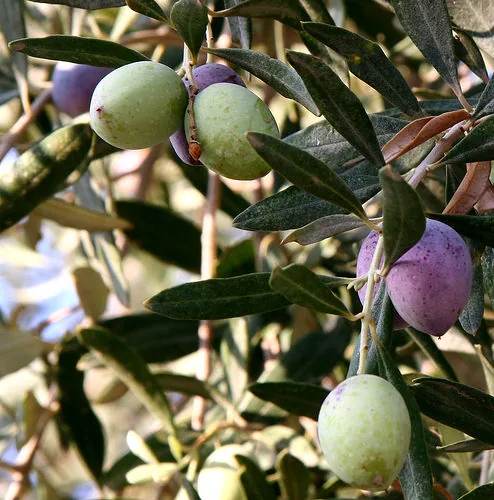
The olive is a patient, slow-growing evergreen from the Mediterranean, right at home in hot, dry country where few other trees fruit. People have grown it for its oil and fruit across thousands of years, and a single tree can live for centuries. When you plant one, you are planting for the long haul, so there is no rush and plenty of room for you to learn as it grows.
The lovely part is that an olive mostly asks you to leave things out. It wants full sun, sharp drainage, and lean soil, and it takes the poor, rocky, and chalky ground that would defeat a fussier tree in stride. Overwater it or set it in rich, soggy soil and it sulks, but ease back and it thanks you, so a gentle hand is exactly the right hand here.
One quirk is worth knowing from the start, and it catches many first-timers off guard. The fruit you pull from the branch is too bitter to eat raw and needs curing before it is any good. The tree also likes a touch of winter chill to flower well, which simply means it suits a warm-temperate garden rather than the tropics.
Care
The short version: give it full sun, sharp drainage, and lean soil, then water deeply but seldom once the tree has settled in. Skip the rich feeding and any standing water, and prune in late winter to keep the canopy open, and you will be just fine.
Light
Olives love the sun and want full sun all day to fruit their best. They will put up with a little partial sun, but a shaded tree grows lanky and sets a thin crop, so hand it the brightest spot you have and it will reward you.
Water
Once it has settled in, the olive is truly drought tolerant and would rather have a deep soak every 14 to 30 days than frequent little sips. Let the soil dry right out between waterings, and don't fret about underdoing it. Soggy, waterlogged roots are the quickest way to lose a tree that could otherwise live for centuries.
Soil
Drainage matters far more than richness here, which takes a lot of pressure off. Olives are happy in well-drained sandy loam and take poor, rocky, and chalky ground in stride across a wide pH of 6.0 to 8.5. The one thing they can't forgive is heavy soil that holds water around the roots.
Temperature
The olive handles real heat with ease, up to about 100°F (38°C), and shrugs off a dry Mediterranean summer. It is gentler natured about cold, taking only brief dips to around 19°F (-7°C) before the wood is harmed, so a warm-temperate garden is where it feels most at home.
Humidity
Dry air suits the olive just fine, and it is happiest in low humidity around 20% to 50%. Damp, still conditions are what invite the fungal leaf spots, so good airflow does more for your tree than any moisture in the air ever could.
Feeding
Olives are light feeders that grow lean by nature, so you truly cannot go wrong by keeping it simple. One balanced, nitrogen-rich feed in spring is all it needs for the whole season. Pour on more and you only push soft, leafy growth at the cost of fruit.
Pruning
Prune in late winter to early spring, opening the canopy into a loose vase shape so light and air reach the middle, and don't be shy about it. Take out the suckers, dead wood, and crossing branches. An open tree fruits better and stands up to the fungal spots that love dense, shaded growth.
Repotting
A container olive appreciates fresh quarters every 2 to 3 years to stay healthy. Keep a gentle watch for roots circling the pot or slipping out the drainage holes, water that runs straight through, and growth that stalls, all quiet signs it has outgrown its home.
Size & spacing
Left to its own devices, an olive reaches 20 to 50 feet (6 to 15 m) tall with a broad, spreading crown. Give it room to match, around 15 to 30 feet (4.5 to 9 m) of clearance, since this is a tree that settles in for the long term and rewards a little foresight.
When to plant
The olive keeps a slow Mediterranean rhythm, so there is no hurry. Set young trees out in spring once frost has passed and the soil has warmed, watch for bloom in late spring, and gather your fruit through fall, from September into November.
Northern hemisphere
Southern hemisphere
Typical months for a temperate climate: start earlier in warm zones, later where spring frosts linger.
- Plant: spring after the last frost once soil has warmed
- Harvest: blooms late spring; fruit harvested fall (September to November)
Hardiness
USDA hardiness zones: 8–11
Temperature: down to -12°C
Troubleshooting
Almost every olive worry traces back to wet weather and wounds, whether it shows up as a bacterial gall or a fungal leaf spot. The good news is that catching the early signs and pruning in a dry spell usually settles matters. Find what you see below, then act calmly before it spreads through the canopy.
One side of the tree wilting and dying back
When a limb or two suddenly droops while the rest looks fine, the cause is usually verticillium wilt, a fungus in the soil that clogs the tree's plumbing and starves whole branches. Slice into a wilting stem and you will find the wood stained inside. There is no cure to lean on here, so clear away the dead wood, ease off the watering, and please never replant olives on ground where this has appeared before.
Fix:
- Remove and destroy dead wood
- Avoid overwatering
- Do not replant olives where the disease is known
Warty woody lumps forming along the twigs and branches
Take heart, because those rough swellings have a clear name and a clear answer. They are olive knot, a bacterial trouble that sneaks in through pruning cuts, frost cracks, and leaf scars, and it runs worst after wet spells. Choose a dry day, trim the affected wood well below each gall, and wipe your tools between cuts so you don't carry it along. A copper spray after pruning or a frost closes the door gently behind you.
Fix:
- Prune out infected wood in dry weather well below the galls
- Disinfect tools between cuts
- Apply a copper bactericide after pruning or frost injury
Little puncture marks with grubs burrowing in the fruit
Those tiny stings and pale grubs inside the fruit point to the olive fruit fly, whose young feed within the ripening olives. Slice a suspect fruit open to be sure, and hang a few baited traps as harvest draws near. You can stay ahead of it by picking on time, sweeping up every dropped olive, and reaching for approved bait sprays or kaolin clay only if the flies get thick.
Fix:
- Harvest promptly
- Sanitize fallen fruit
- Use approved bait sprays or kaolin clay where infestation is heavy
Peacock-eye rings on leaves that yellow and fall
The sooty rings circled by a soft yellow halo are olive peacock spot, a fungus that settles low in the tree through cool, damp weather and nudges the leaves to drop. Don't worry, it responds well to a little care. Open the canopy with light pruning so air moves through, and gather up the fallen leaves where the spores wait out winter. A copper fungicide in fall, before the rains arrive, keeps it quiet.
Fix:
- Improve air circulation through pruning
- Apply a copper fungicide in fall before rains
- Rake and remove fallen infected leaves
Toxicity
Here is welcome news for homes with animals: the olive tree is non-toxic and safe to keep around pets, livestock, and people. The fruit is even edible once it has been cured. The only real hazard is the hard pit, which can choke a pet or block the gut if swallowed whole, so simply keep fallen fruit picked up and you are set.
Safe for
People · Cats · Dogs · Horses · Rabbits · Livestock · Birds
Cats None
You can relax with cats nearby, since the olive tree itself is safe and carries no toxicity. The one thing to mind is a swallowed pit, which can lodge in the gut, so a quick sweep of fallen fruit sets your mind at ease.
Dogs None
Dogs are in no danger of poisoning from an olive, so there is nothing to fear there. Just keep an eye on the firm pits, because a gulped stone can choke or block the gut, and leave the salty cured olives off the menu.
Horses Safe
Horses grazing near an olive have nothing to worry about, as the foliage holds no toxic threat. All it takes is keeping windfall fruit from gathering, since a swallowed pit could choke.
Rabbits Safe
Rabbits are perfectly fine around the olive, which is non-toxic to them. A whole pit is simply too big and hard for them to manage, so tidy dropped fruit away from the hutch and run and all is well.
Livestock Safe
Goats, sheep, and cattle can browse around olives without any poisoning risk at all. The one concern is the hard stones, since a swallowed pit can lodge or choke, so those are worth clearing.
Birds Safe
Birds have nothing toxic to fear from olives, and wild ones happily eat the fruit. The catch is the dense pit, which can choke a smaller bird trying to swallow it whole, so that is all to watch for.
People Safe
Cured olives are a safe and welcome part of the kitchen, though the raw fruit fresh off the tree is far too bitter to enjoy. Just don't bite the hard pit, and gently make sure small children don't swallow one.
The hard fruit pit is a choking and gastrointestinal obstruction hazard if swallowed, and cured table olives are very high in salt, so neither should be offered to pets.
Varieties
Olive cultivars fall mostly into those grown for oil and those grown for the table, with a few bred to drop little or no fruit at all. These are the friendly names you are most likely to meet along the way.
Arbequina
A compact, self-fertile Spanish cultivar that shrugs off cold better than most and settles happily into oil pressing or a container on the patio.
Mission
A hardy California cultivar that earns its place twice over, giving you good table olives and pressing oil alike.
Manzanillo
A rounded, widely grown table olive most treasured of all for canning at home.
Frantoio
The beloved Italian oil cultivar you can thank for so much rich, fruity olive oil.
Swan Hill
A nearly fruitless, low-pollen cultivar that is a kind choice wherever dropped fruit and allergens would otherwise be a bother.
Companions
How to propagate
Most olives are grown from cuttings or grafts so the young tree comes out matching its parent, since seedlings are slow and rarely true to type, and either method is well within your reach.
Stem cuttingsModerate
Late spring to summer · 2 to 3 months to root
Cuttings are the reassuring, reliable way to copy a named olive, because they grow up true to the parent. Take semi-hardwood cuttings from late spring through summer, root them under mist with a little bottom heat, and you can expect roots in about 2 to 3 months.
GraftingDemanding
Spring · One growing season
Grafting is a more advanced skill, the way growers set a prized cultivar onto a tough seedling or clonal rootstock. Worked in spring, a good graft joins and settles in over one growing season, so give yourself grace while you learn it.
SeedDemanding
Fall · Several years to fruiting
Seed is the slow and unpredictable path, and the seedlings will not match the parent cultivar, so it mostly raises rootstock. Sow in fall and be patient, since a seed-grown tree waits several years before it fruits at all.
Myths
Olives can be picked and eaten straight off the tree.
It is an easy thing to assume, but raw olives are fiercely bitter because of a compound called oleuropein. Before they turn into something you would want to eat, the fruit needs to be cured in brine, lye, or salt to coax that bitterness away.
Olive trees never need cold weather.
They are tender to frost, that much is true, yet they still need a spell of winter chill to bloom and set fruit dependably. A winter that stays too mild will leave you a healthy tree and only a handful of olives, which is nothing to fret over once you know why.