Herb · Lamiaceae
Lemon Balm
Melissa officinalis
Run your hand across it and the whole garden lifts: lemon balm pours out a bright, lemony scent while asking almost nothing of you.
Full sun
Every 5–7 days
50–86°F · 10–30°C
70–90 days
Overview
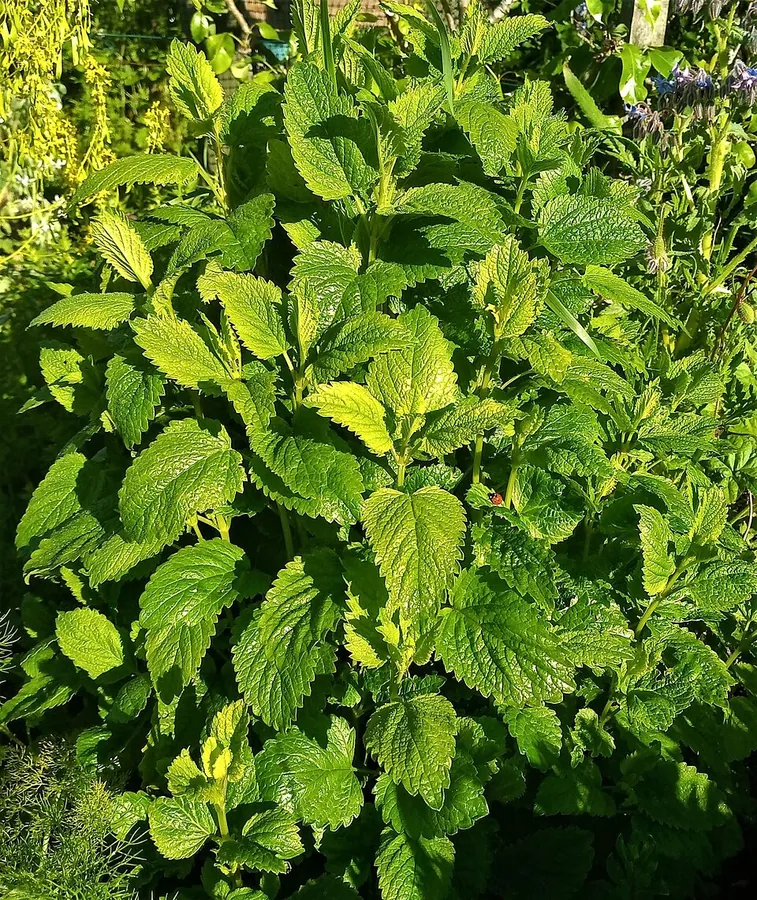
Take heart if you're just starting out, because lemon balm is one of the kindest herbs you can grow. This hardy perennial belongs to the mint family, and it's loved for soft, crinkled leaves that give up a fresh lemon scent the moment you crush them. It first came from the eastern Mediterranean and western Asia and has stayed a cottage garden favorite for hundreds of years, treasured by bees and cooks alike. Its little summer flowers slip by almost unnoticed, and that's fine, because the leaves are the real reward.
You'd be hard pressed to find a more forgiving plant, and mistakes here are easy to undo. It settles happily into poor, sandy, or rocky ground, welcomes full sun or a bit of shade, and springs right back after a firm cut. The single thing to keep an eye on is its eagerness to spread, both by seed and by creeping roots, which is exactly why so many gardeners hand it a pot or a bed of its own.
Pick the leaves before the plant blooms and you'll be rewarded with the cleanest, sweetest lemon flavor for tea, salads, and cooking. If it does slip into flower, the foliage turns a touch coarser, so a hard shearing after bloom coaxes out tender new growth and leaves the clump looking tidy again. You've got this.
Care
The short version: give it full sun to part shade in average, well-drained soil, keep it steadily watered while young and much less once it's settled. Feed it sparingly, harvest before it blooms, and cut it back hard after flowering so it stays lush and stays put.
Light
Lemon balm is happiest in full sun, which keeps the leaves thick and their scent at its strongest. It's forgiving of partial shade too, a real help where summers run hot, though skimp on light and it grows thin and floppy.
Water
While your young plants settle in, keep them evenly moist, then relax, because established lemon balm handles drought well and needs a drink only about every 5 to 7 days when things turn dry. The one misstep it won't shrug off is soggy ground, most of all over winter, so let the soil drain freely and you'll both be fine.
Soil
This herb makes do with almost any ground, from poor sand to clay to shallow rocky soil, so long as the water drains away. It's happiest in average, well-drained loam at a pH of 6.0 to 7.5. Oddly enough, overly rich soil works against you, growing plenty of leaf but a fainter lemon scent.
Temperature
Lemon balm is content anywhere between 50°F and 86°F (10°C to 30°C) through the growing season. As a perennial hardy to USDA zone 3, its roots take a hard winter in stride and send up fresh growth every spring, so cold need not worry you.
Humidity
Everyday outdoor humidity in the 40% to 60% range suits it just fine. What matters far more than moisture is airflow, since crowded, stagnant air is what tempts powdery mildew onto the leaves.
Feeding
This is a herb that wants little to no feeding, which makes life easy. A light balanced feed in spring is truly all it asks, and piling on fertilizer only grows soft, leafy plants with a weaker lemon scent.
Pruning
After it flowers, shear the plant back and clear the spent stalks to draw out fresh, fragrant growth while gently curbing its self-seeding. Harvesting the leaves often, before bloom, quietly does the pruning for you and hands you the best flavor.
Repotting
In a pot, repot or divide every 1 to 2 years, ideally come spring. Keep an eye out for roots circling the pot or slipping through the drainage holes, along with slowing growth and quick drying, all friendly hints that the plant is ready for more room.
Size & spacing
A grown plant reaches 18 to 35 inches (45 to 90 cm) tall and spreads roughly as wide. Leave each one about 18 to 35 inches (45 to 90 cm) of elbow room so air can move freely and mildew stays away.
When to plant
Timing lemon balm is refreshingly simple, so there's no need to fret over the calendar. Start seeds indoors in late winter, move the plants outside in spring once frost has passed, and gather leaves right through summer, aiming to finish the biggest harvest before the plant flowers around June to August.
Northern hemisphere
Southern hemisphere
Typical months for a temperate climate: start earlier in warm zones, later where spring frosts linger.
- Sow: 6-8 weeks before the last spring frost
- Plant: Spring, after the last frost
- Harvest: Small white to pale-yellow flowers in summer (about June-August); harvest leaves before flowering for best flavor
Hardiness
USDA hardiness zones: 3–9
Temperature: down to -40°C
Troubleshooting
Lemon balm asks very little and rarely runs into anything alarming. Most of its hiccups come down to crowding, still air, or its own keenness to spread, all of which are gentle to fix. Find what you're seeing below and a small tweak will usually put it right.
New seedlings turning up all around the parent plant
This one is easy to get ahead of. When the flowers are left alone they drop seed everywhere, and the plant also travels on rhizomes, so one gentle clump can widen into a patch over a season or two. Snip it back before those flowers set seed, and tug out the little strays while they're still small and come away with a light pull. Popping it in a pot keeps everything neatly in one place.
Fix:
- Deadhead and cut back before seed set
- Pull volunteer seedlings
- Grow in a container to contain spread
A soft white dust settling over the leaves
Don't worry when you spot this, it's only powdery mildew, a fungus that shows up when plants sit close together in still, stuffy air. Pinch off the worst leaves, open up the clump so a breeze can pass through, and try to water at the roots rather than the tops. Move it into full sun and the plant will usually shake this off by itself.
Fix:
- Remove and discard affected leaves
- Improve air circulation by thinning and spacing plants
- Avoid overhead watering
Stems splaying open and going bare down low after the flowers fade
This is a normal part of the plant's rhythm, so there's nothing to fear here. After flowering the stems tend to sprawl open and harden at the base, leaving the leaves thin up top. Cut the whole thing back hard and it will reward you with tender, bushy new growth in just a few weeks. Give it that firm trim once a year after bloom and the clump stays full and leafy for you.
Fix:
- Cut plants back hard after flowering to force fresh compact growth
Toxicity
Here's the reassuring part: lemon balm is safe all around. The ASPCA lists it as non-toxic to cats, dogs, and horses, and as a kitchen herb it lands on our own plates and in our teacups every day. The only patience it tests is that of the gardener keeping its spread in check.
Safe for
People · Cats · Dogs · Horses · Rabbits · Livestock · Birds
Cats None
You can relax with a cat in the house. Should one nibble a leaf, the strong oils might leave it with a passing tummy grumble, and that really is the worst of it.
Dogs None
There's nothing to fear for a dog here. A chew on the lemony leaves will do no harm at all.
Horses None
Horses are perfectly fine around it, and a bit of grazing leaves them none the worse.
Rabbits None
Rabbits munch the leaves happily with no trouble, and plenty of them treat the fragrant foliage as a welcome little snack.
Livestock None
Cattle, goats, and sheep can browse it as they please and stay just fine.
Birds None
Backyard birds and poultry are safe around the leaves, so there's no need to keep them apart.
People None
This is a friendly kitchen herb, steeped into tea and stirred into food. Both grown-ups and little ones can eat the leaves without worry.
Non-toxic culinary herb; leaves are edible and commonly consumed.
Varieties
Most gardens keep the plain green species, and that's a lovely place to start, but a handful of selections stand out for their leaf color or their scent. These are the ones worth tracking down by name.
Aurea
You'll love its leaves marbled in gold and green, and that variegation glows brightest when the weather stays cool and the spot sits in partial shade.
All Gold
The whole plant shines a warm golden yellow, and a little shade keeps that color safe from scorching so it looks its best.
Lime
This one was chosen for a brighter, lime-like scent that stands in for the familiar lemon fragrance.
How to propagate
Few herbs are as easy to multiply as this one, so feel free to be generous with new plants. You can split a clump, root a cutting, or sow seed, and it will happily sow itself around the garden whether or not you meant it to.
DivisionEasy
Spring or early fall · 4-6 weeks
If you want a named cultivar to come out just like its parent, dividing is your safest bet and it's very forgiving. Ease a mature plant up in spring or early fall, gently pull the crown into a few pieces, and tuck each one back into the ground. Every piece takes hold and grows new roots in about 4 to 6 weeks.
Stem cuttingsEasy
Late spring to summer · 3-4 weeks
Soft stem cuttings are wonderfully easy and hard to get wrong. Snip a few from late spring into summer, sit them in a damp mix or a glass of water, and you'll see roots appear in roughly 3 to 4 weeks.
SeedModerate
Spring; surface-sow as seed needs light · 2-3 weeks to germinate, several weeks more to establish
Seed takes a little more patience and won't keep a cultivar true, since the plant is such a keen self-seeder already. Rest the seed right on top of the soil in spring instead of covering it, because it leans on light and warmth to wake up. Give it 2 to 3 weeks to sprout, with several weeks more before the seedlings feel settled.
Myths
Lemon balm is just another type of true mint.
It's an easy mix-up to make. The plant does share the mint family, Lamiaceae, with the true mints, but it sits in its own genus, Melissa, and is no Mentha at all. Once you catch the lemon scent and feel those softer leaves, you'll tell them apart with ease.
Lemon balm behaves itself and won't run the way mint does.
It travels just as widely, only along a different path. Leave it to flower and it self-seeds heavily while creeping on rhizomes, so it will wander out of the bed unless you deadhead it or settle it into a pot. Knowing that up front makes it simple to keep in hand.