Herb · Lamiaceae
Catnip
Nepeta cataria
Hand it full sun and lean, dry soil, and catnip rewards a light touch while your cat handles the celebrating.
Full sun
Every 7–14 days
59–86°F · 15–30°C
USDA 3–9
Overview
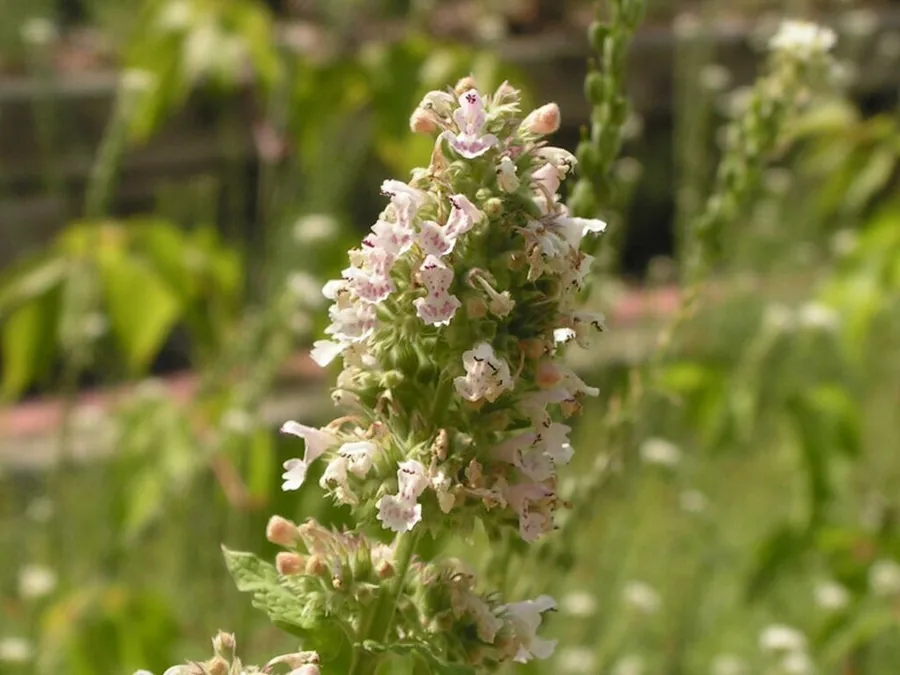
Catnip is a sturdy, quick-growing perennial from the mint family, and it is a kind plant to learn on. Its leaves are soft and gray-green, and small white flowers carry little purple spots. It came from Eurasia long ago and now feels at home across much of the temperate world, settling just as happily into a garden bed as a pot. Hardy from zones 3 to 9, it takes cold winters and dry summers in its stride.
Its name comes from nepetalactone, the fragrant oil tucked in the leaves that tips many cats into a brief, joyful tumble of rolling and rubbing. People have leaned on it for ages as well, gathering the leaves for a soft herbal tea. Along the way it welcomes bees and other pollinators and quietly keeps a few garden pests at bay.
If you are new to growing, catnip is a forgiving friend. It wants sun, sharp drainage, and little more, and it would rather be left alone than fussed over, since rich soil and heavy feeding only make it flop. The single real catch is how freely it spreads, so most of your gentle effort just goes to keeping it where you want it.
Care
The short version: full sun, lean and well-drained soil, and a deep drink only once the top half has dried out. Shear it after bloom, feed it little, and pen it in if you would rather it not self-seed everywhere, and you will do just fine.
Light
Catnip leans toward full sun for the sturdiest plants and the richest scent, so give it the brightest spot you have. It will get by in part shade, though too little light leaves it leggy and floppy with a fainter aroma. Don't worry if your spot isn't perfect, since it forgives a lot.
Water
Once it has settled in, catnip is drought-tolerant and much happier on the dry side than the wet. Water it deeply but only every 7 to 14 days, letting the top half of the soil dry first. Soggy ground will rot it, and wet soil through winter can take it for good, so when in doubt, wait.
Soil
Set it into average, well-drained loamy or sandy soil and please don't fret over fertility, since it shrugs off poor and dry ground. A pH anywhere from 6.0 to 7.5 suits it just fine. The one thing it truly counts on is sharp drainage.
Temperature
Catnip is comfortable across a wide stretch, roughly 59°F to 86°F (15°C to 30°C), so most gardens already suit it. It is cold-hardy through winter in zones 3 to 9 and takes summer heat without a fuss.
Humidity
Plain household or garden air is all it asks, somewhere around 30% to 60%, so there is nothing here to manage. What helps far more is good airflow, since still, crowded conditions invite powdery mildew onto the leaves.
Feeding
Go easy at the table, since catnip only wants a light helping of balanced fertilizer or compost in spring, if anything at all. Push more on it and you swap its scent and tidy shape for soft, floppy growth, so a light hand truly is kindness.
Pruning
After the first flush of bloom, shear the plant back by one-third to one-half to coax a rebloom, hold its shape, and slow the self-seeding. Then in late fall or early spring, cut the spent stems right down to the ground, and you cannot really hurt it by doing so.
Repotting
Lift and divide clumps every 2 to 3 years to keep them lively, and repot any container plants in spring. Roots circling the pot, smaller leaves, water rushing straight through, and a woody, crowded center are all friendly hints that it is time.
Size & spacing
Catnip rounds out into a clump about 24 to 35 inches (60 to 90 cm) tall and nearly as wide, so picture that when you place it. Give each plant that breathing room and air will move freely, which keeps mildew away and your worries with it.
When to plant
Catnip keeps time with the spring frost, the same as most garden herbs, so you don't have to guess. Start seed indoors in late winter, set plants out once the cold has truly passed in mid to late spring, and watch the flowers open from late spring through summer. For the strongest scent, gather the leaves just as the buds appear.
Northern hemisphere
Southern hemisphere
Typical months for a temperate climate: start earlier in warm zones, later where spring frosts linger.
- Sow: 6-8 weeks before the last spring frost
- Plant: After the last spring frost, in mid to late spring
- Harvest: White-to-pale-lavender, purple-spotted flowers from late spring through summer; harvest leaves just before or at flowering for peak aroma
Hardiness
USDA hardiness zones: 3–9
Temperature: down to -40°C
Troubleshooting
Catnip seldom causes real grief, and nearly everything that goes sideways is only cosmetic, so you can breathe easy. The usual three are cats roughing up the stems, a flop after flowering, and seedlings popping up where you never planted them. Find what matches below and the remedy is usually quick and simple.
Volunteer seedlings turning up across the bed
No need to fret, this just means catnip is a happy self-seeder that also wanders outward on short rhizomes into little colonies. Snip or shear it before the seeds ripen, and lift the young volunteers while they pull free with ease. A container is a kind, simple way to keep it exactly where you want it.
Fix:
- Deadhead or shear before seed set
- Pull or hoe volunteer seedlings while young
- Grow in a container to contain spread
Stems pressed flat and the clump matted down
Take heart, because this is almost always just cat damage and nothing wrong with your growing. The nepetalactone pulls cats in to roll, rub, and chew, and a hard rain or gust can press the soft stems down too. A young or treasured plant does fine under a little cage until it grows large and woody, and a few spare clumps left out for the cats keeps everyone happy.
Fix:
- Protect young or prized plants with a wire cloche or low cage
- Plant extra clumps so cats can use some freely
- Stake or surround floppy stems for support
Leaves yellowing, stippled, or dusted with white
Several look-alikes can land here, so don't worry if it takes a moment to tell them apart. Aphids curl the tender new growth, spider mites speckle the leaves through hot dry weather, and powdery mildew settles a white film on plants packed too close. A firm spray of water knocks pests loose, insecticidal soap handles the stubborn ones, and a little more breathing room clears the mildew.
Fix:
- Hose off pests with a strong jet of water
- Apply insecticidal soap or horticultural oil for aphids and mites
- Improve spacing and airflow and remove affected foliage for mildew
Plant turned leggy and flopping open after bloom
Rest easy, since this is just the natural slowdown after flowering, nudged along by too much shade or soil so rich it pushes weak, soft stems. Once the first flush of flowers fades, shear the plant back by a third to a half and it firms right back up, often with a fresh round of bloom. Full sun, lean soil, and a gentle hand with feeding keep it sturdy.
Fix:
- Shear the plant back by one-third to one-half after the first bloom
- Move container plants into full sun
- Reduce fertilizer
Toxicity
Catnip is safe all around, which makes it an easy choice for a worried household. It holds no real toxin, so cats, dogs, horses, rabbits, livestock, birds, and people can all share space with it in comfort. Cats just meet the nepetalactone with a harmless few minutes of bliss, and for you the leaves brew into a gentle, friendly tea.
Safe for
People · Cats · Dogs · Horses · Rabbits · Livestock · Birds
Cats None
This is the joy of the plant, and you can relax, because it is gentle and safe. The nepetalactone gives a short, harmless lift, so your cat may roll, rub, lick, and shake its head for about 10 minutes and then drift away. If one tucks into a big pile of leaves, a touch of passing vomiting or loose stool is the worst of it.
Dogs None
Dogs simply take catnip in stride. Most never give it a glance, and a curious nibble does no harm at all.
Horses None
Your horse is welcome to graze catnip with nothing to fear. It belongs to the mint family and holds no toxin.
Rabbits None
Rabbits are fine with catnip in the small amounts they would nibble. As with any fresh green, just ease them in rather than offering a sudden big helping.
Livestock None
Cattle, goats, and sheep can browse catnip with no worry. Nothing in it will poison them.
Birds None
Pet and backyard birds are perfectly safe around catnip, and plenty pay it no mind. The leaves carry nothing that could harm them.
People None
For people, catnip is a comforting old kitchen and tea herb, steeped into a soft, pleasant cup. The leaves are safe to handle and to sip, and the scent simply doesn't move us the way it moves a cat.
Smelling or eating catnip causes a temporary euphoric response in many cats (rolling, rubbing, head-shaking, drooling, vocalizing) lasting roughly 10 minutes, after which the cat loses interest; this behavioral effect is harmless, while eating very large amounts may cause mild, transient vomiting or diarrhea. The aroma is harmless to people.
Helpline numbers

United States
ASPCA Animal Poison Control: (888) 426-4435 (fee applies)

United Kingdom
Animal PoisonLine: 01202 509000 (fee applies)

Australia
Animal Poisons Helpline: 1300 869 738
Varieties
Most gardens grow plain catnip, and that is a fine place to begin, but one named form is lovely to know.
Nepeta cataria 'Citriodora'
Lemon catnip greets you with a bright lemon scent sitting over the familiar minty catnip aroma.
How to propagate
Catnip multiplies with very little fuss, which is reassuring when you are starting out. You can raise it from seed, split an old clump, or root a cutting, and it often does the work for you by seeding itself.
SeedEasy
Sow indoors 6-8 weeks before the last frost, or direct sow in spring · 10-20 days to germinate; harvestable within the first season
Seed is the easy, forgiving way in. Start it indoors 6 to 8 weeks before your last frost, or simply scatter it outside in spring, and it comes up in 10 to 20 days with leaves ready to pick that very first season. After it settles, catnip kindly sows itself, usually more than you expected.
DivisionEasy
Spring or early fall · 2-4 weeks to re-establish
Lifting and splitting a settled clump in spring or early fall freshens a tired plant and gives you new ones at no cost. Each division roots back in within 2 to 4 weeks. A quick split every few years keeps the middle from going woody and bare, and it is hard to get wrong.
Stem cuttingsModerate
Late spring to summer, from non-flowering shoots · 2-3 weeks to root
Snip softwood cuttings from shoots that aren't flowering, in late spring or summer. Settle them in a moist, well-drained mix with plenty of humidity and they root in 2 to 3 weeks. It asks a bit more attention than seed or division, so save it for when you feel ready.
Myths
Catnip is a dangerous, addictive drug that gets cats high.
You can set that worry down, because the nepetalactone only triggers a short behavioral response, not a true high, and it forms no addiction. The effect fades in about 10 minutes, and your cat then goes quiet to it for a while before it can take hold again.
Every cat goes wild for catnip.
Don't take it to heart if yours stays calm, since the reaction is inherited and only about half to two-thirds of cats respond at all. Kittens under roughly 3 months and a good number of grown cats feel nothing from it, and that is perfectly normal.