Herb · Lamiaceae
Holy Basil
Ocimum tenuiflorum
Give it full sun and warm soil, keep pinching the tips, and tulsi rewards you with fragrant leaves all summer long.
Full sun
Every 2–4 days
50–95°F · 10–35°C
60–90 days
Overview
Holy basil, loved across India as tulsi, is a fragrant member of the mint family, and its clove-like, peppery scent greets you the instant you brush a leaf. People have grown it for centuries as both a kitchen herb and a sacred plant, and it goes by the botanical name Ocimum tenuiflorum. In warm climates it settles in for years, while in cooler places most gardeners simply enjoy it as a single-season annual, which works out just fine.
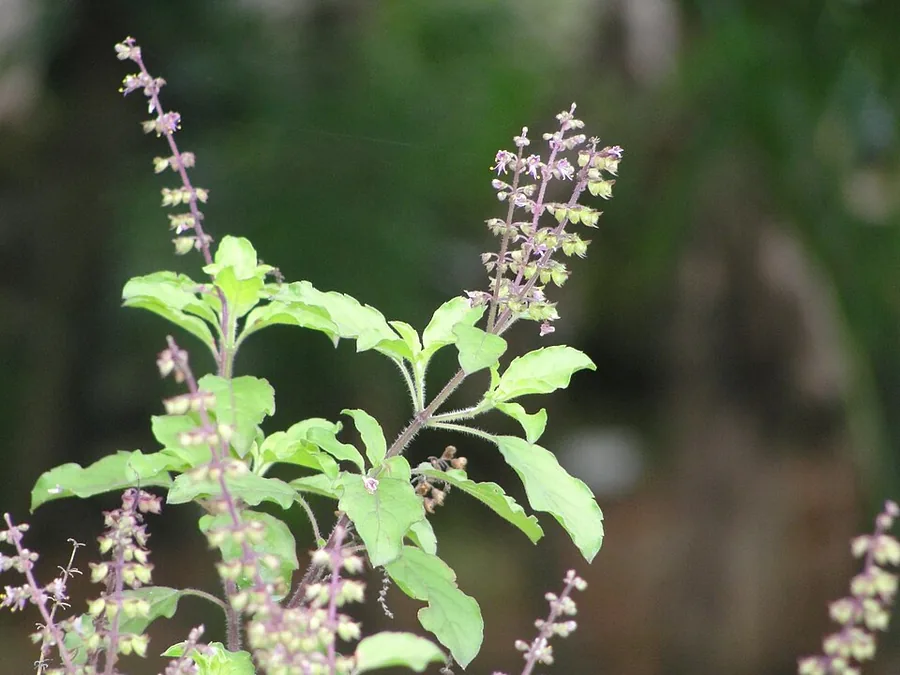
You'll find this a wonderfully easy plant to please. Give it sun, warmth, and steady moisture and it grows fast once the weather turns, reaching 12 to 24 inches (30 to 60 cm) tall in a single season. Depending on the type you choose the leaves come in green or purple-tinged, and the small white-to-lavender flowers smell every bit as lovely as the foliage.
The one thing worth staying ahead of is flowering, and it's an easy habit to manage. As soon as a tulsi plant starts sending up flower spikes, the leaves turn small and lose their strength. Keep pinching the tips and the spikes and you simply swap a brief flush of bloom for months of tender, flavorful leaves.
Care
The short version: full sun and warm, well-drained soil kept evenly moist but never soggy is all it asks. Feed it monthly through the growing season, pinch the tips and flower spikes often, and you'll keep the plant bushy and full of leaf.
Light
Holy basil loves full sun, ideally 6 or more hours of it a day. A little partial sun won't stop it, but in a bright, open spot the leaves come in fuller and far more fragrant.
Water
Aim to keep the soil evenly moist but well drained, letting the surface dry a touch between waterings. It struggles in waterlogged ground, so good drainage counts as much as regular watering. Through the heat of summer you'll likely reach for the watering can every 2 to 4 days.
Soil
Settle it into fertile, well-drained soil that's rich in organic matter, be that a loam or a sandier blend. A pH anywhere from 6.0 to 7.5 suits it, so most garden beds and bagged potting mixes will make it happy without any fuss.
Temperature
This is a warmth lover, at its best between 50°F and 95°F (10°C to 35°C). Frost is the one thing it truly can't handle, so wait for settled warm weather before it heads outdoors.
Humidity
Average humidity of 40% to 60% keeps it content, which happens to describe most homes and gardens. There's no need to mist it or fuss over the air, so you can let that worry go.
Feeding
Feed it monthly through the spring and summer growing season with a balanced all-purpose fertilizer or a diluted liquid feed. That light, steady meal keeps fresh leaves arriving without pushing the soft, pest-prone growth you'd rather avoid.
Pruning
Pinch the growing tips often to keep the plant bushy rather than leggy, and snap off flower spikes the moment they appear. Staying on top of those spikes holds back bolting and keeps tender leaves coming for far longer than you might expect.
Repotting
Grown as an annual, holy basil hardly ever needs repotting within a season, though a lively plant may appreciate a roomier pot once a year. Roots slipping through the drainage holes, growth that slows, or soil that dries out fast are your gentle cues that it's ready to move up.
Size & spacing
Each plant reaches about 12 to 24 inches (30 to 60 cm) tall with a spread of 12 to 18 inches (30 to 45 cm). Give it that much elbow room so air moves freely and the foliage stays dry and healthy.
When to plant
Holy basil simply can't take the cold, so plan around warmth. Sow the seeds indoors in early spring, move the plants outside only once frost has passed and the soil feels warm, and then gather leaves from early summer right through to the end of the season.
Northern hemisphere
Southern hemisphere
Typical months for a temperate climate: start earlier in warm zones, later where spring frosts linger.
- Sow: 6-8 weeks before the last expected frost
- Plant: After all danger of frost has passed and soil is warm (above ~15°C/60°F)
- Harvest: Harvest leaves from early summer onward; pinch flower spikes as they appear to prolong leaf harvest
Hardiness
USDA hardiness zones: 10–11
Temperature: down to -1°C
Troubleshooting
Almost all holy basil trouble shows up first on the leaves, whether from a pest, a bit too much water, or the plant hurrying to flower. The good news is that catching these early makes them easy to set right. Find what matches below, then act while a small step still does the job.
Drooping and collapse with soft, darkened roots
Soggy soil has led to root rot, and a plant that has slumped this far seldom bounces back. If you lift one out, you'll find the roots brown and mushy where they should be firm and white. The kind fix going forward is better drainage, letting the surface dry between waterings, and making sure the roots never sit in standing water.
Fix:
- Improve drainage and allow soil to dry between waterings
- Remove badly affected plants and avoid replanting in soggy soil
Curling, sticky leaves hiding little bugs beneath
Take heart, this is a common one: aphids or whiteflies have gathered on the soft new growth and are sipping the sap. A firm blast of water knocks most of them loose, and a follow-up of insecticidal soap or neem oil on the leaf undersides handles the rest. Easing back on nitrogen helps too, since it stops the plant from pushing the tender growth they crave.
Fix:
- Spray foliage with a strong jet of water to dislodge insects
- Apply insecticidal soap or neem oil to affected foliage
- Encourage natural predators such as ladybugs and lacewings
Leaves nibbled down to a lacy pattern
The shiny green offender is the Japanese beetle, and it eats the soft tissue between the veins until only a lace-like frame remains. Don't worry, you can stay ahead of it: pick the beetles off by hand in the cool of the morning and drop them into soapy water before more arrive. A floating row cover keeps them away completely once their numbers rise in summer.
Fix:
- Handpick beetles and drop them into soapy water
- Cover plants with floating row cover during peak beetle activity
Flower spikes rising while leaves shrink and fade in flavor
There's nothing wrong here, this is just bolting, the plant's natural turn toward flowering as it matures or feels summer heat. Once it blooms, its energy flows into seed and the leaves grow small and mild. Pinch those spikes away as soon as you spot them, keep tipping the shoots, and you can hold it in fresh leaf for a good while yet.
Fix:
- Pinch off flower spikes as they form to redirect energy into leaf production
Toxicity
Here's the reassuring part: holy basil is safe for everyone in the home. The ASPCA lists basil as non-toxic to cats and dogs, and people the world over eat it and brew it as tea. A pet that grazes a big mouthful might get a brief, mild stomach upset, but nothing here can do any real harm.
Safe for
People · Cats · Dogs · Horses · Rabbits · Livestock · Birds
Cats None
You can relax about the cat, since the ASPCA lists basil as non-toxic to cats and a nibble does no harm. If one really overdoes it on a whole plant, a brief, mild tummy upset is the very worst that follows.
Dogs None
Your dog is perfectly fine around holy basil, so there's no cause for concern. A big greedy mouthful might bring a little passing stomach upset, and even that settles on its own.
Horses Safe
Horses are welcome to it, as holy basil is safe for them to graze. The plant holds no toxin that could trouble a horse.
Rabbits Safe
Rabbits can enjoy the leaves as part of a mixed diet with no danger from the plant itself. Just offer any new green a little at a time so their tummy has a chance to settle into it.
Livestock Safe
Cattle, goats, and sheep can browse holy basil and come to no harm at all. None of the compounds that make certain garden plants risky for grazers are present here.
Birds Safe
Birds are quite safe with this one. Backyard hens and pet birds can peck happily at the leaves without any worry.
People Safe
For people, holy basil is a beloved kitchen and tea herb enjoyed all over the world. Use the leaves fresh, dried, or steeped, and rest easy handling the whole plant safely.
Generally safe around pets; concentrated basil essential oils and large quantities of foliage may cause mild, transient stomach upset if ingested.
Varieties
A few types of tulsi show up in gardens and seed catalogs, each with its own flavor and coloring. These are the ones it helps to know by name as you choose.
Rama Tulsi (Sri Tulsi)
With its green leaves, gentle clove flavor, and faintly purple-tinged flowers, this is the kindest of the three to start cooking with.
Krishna Tulsi
You'll know this one by its purple-tinged leaves and stems, and it brings a bolder, more peppery clove kick than the green kinds.
Kapoor Tulsi
If your summers run short and cool, this quick, heavy-seeding type is a reassuring choice because it matures fast enough to reward you anyway.
How to propagate
Holy basil is a joy to multiply, whether you're opening a fresh seed packet or taking a quick copy of a plant you already love.
SeedEasy
Start indoors 6-8 weeks before last frost, or direct sow after frost when soil is warm · 2-3 weeks to germinate; about 6-8 weeks to transplant size
Seed is the way most growers begin, and it's a forgiving start: sow indoors 6 to 8 weeks before the last frost or drop the seeds straight outside once the soil has warmed. Rest the tiny seeds on the surface or barely cover them, because they need both warmth, around 70°F to 84°F (21°C to 29°C), and light to wake up. Give them 2 to 3 weeks to sprout and about 6 to 8 weeks to reach transplant size, and once settled, the plant will happily scatter its own seed.
Stem cuttingsEasy
During active growth in spring and summer · 2-4 weeks to root
Cuttings are the quick, dependable route to more plants through the spring and summer growing season. Take a non-flowering shoot about 4 to 6 inches (10 to 15 cm) long, pull off the lower leaves, and stand it in water or moist potting mix. In 2 to 4 weeks roots appear, and you're left with a ready clone of the parent to pot on.
Myths
Holy basil and sweet basil are the same plant.
They're actually two separate species that happen to share a name. Holy basil, Ocimum tenuiflorum, carries a clove-like, peppery taste and usually goes into cooked dishes or a warm cup of tea. Sweet basil is the softer sort you'd scatter fresh over a salad or a pizza.
Holy basil is toxic to cats and dogs.
Happily, it isn't. The ASPCA lists basil as non-toxic to both cats and dogs, so a curious pet comes to no harm from a few leaves. The only thing to expect from a large mouthful is a touch of mild, short-lived stomach upset.