Herb · Lamiaceae
Catmint
Nepeta × faassenii
Offer it full sun and lean, dry soil, and catmint will hum with bees and lavender-blue bloom right through summer.
Full sun
Every 7–14 days
USDA 3–8
12–24 in · 30–60 cm
Overview
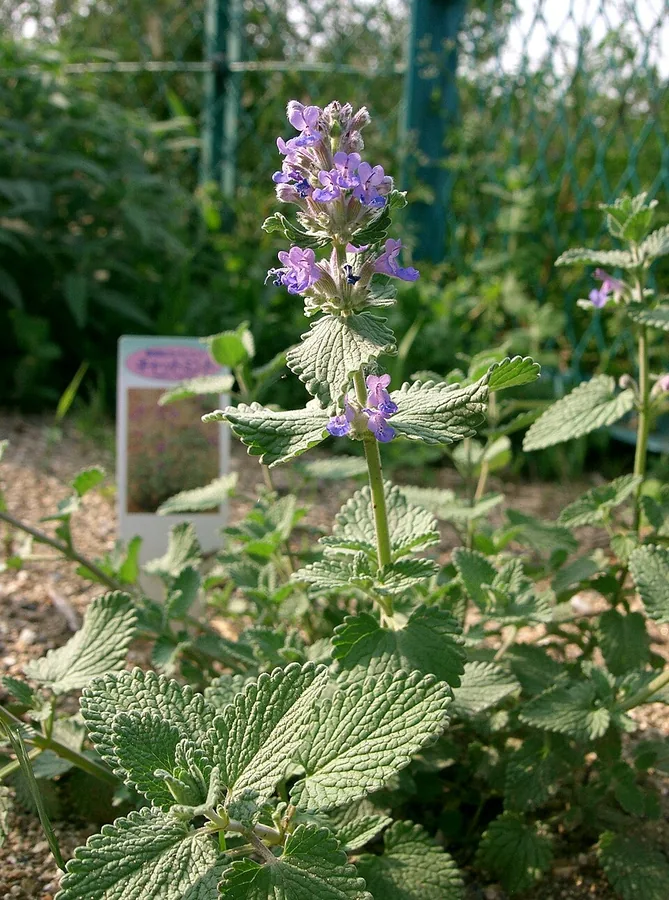
Catmint is a forgiving, good-natured perennial from the mint family, loved for the soft cloud of lavender-blue flowers it lifts above its gray-green leaves. It sits in the genus Nepeta alongside true catnip, and most of what you find in gardens is the hybrid Nepeta x faassenii. Once its roots are settled, it really does ask for next to nothing from you.
It grows into a low, spreading mound that bees and other pollinators visit happily all day. Heat, drought, and thin soil barely faze it, and deer and rabbits usually leave it be. Cats, on the other hand, can't resist it, since the nepetalactone in the leaves invites them over to roll and lounge, though the pull is softer than true catnip.
More than anything, this plant wants sun and soil that drains freely. Set it in lean ground, ease off the watering once it has established, and give it a shear after the first bloom, and it will flower from late spring well into summer. Spoil it with rich soil and heavy feeding, though, and you will end up with floppy, open growth that splits down the center, which is easy to avoid once you know.
Care
The short version: give it full sun and lean, well-drained soil, water deeply but only every so often once it has settled in, hold back on the feeding, and shear it after the first flush of bloom to keep it neat and flowering. None of it is fussy.
Light
Catmint blooms its heart out in full sun, where the growth stays full and stands tall. A little light shade is fine, but skimp on the sun and you will see weak, floppy stems and far fewer flowers.
Water
Water deeply yet sparingly, somewhere around every 7 to 14 days, and let the top half of the soil dry before you reach for the can again. Once it is established this plant truly shrugs off drought, and soggy ground is the quickest way to rot its roots, so leaning dry is the safe side to err on.
Soil
Give it lean, well-drained soil rather than anything rich. It copes with dry to medium moisture and all sorts of textures, and a pH from 6.0 to 7.5 keeps it happy. Sharp drainage matters far more here than fertility.
Temperature
This is a wonderfully tough plant, handling everything from -40°F to 95°F (-40°C to 35°C). It carries through hard winters and brushes off summer heat without missing a beat.
Humidity
Catmint prefers things on the dry side, around 30% to 50% humidity, and dislikes muggy, still air. A little airflow goes a long way toward keeping powdery mildew off the leaves.
Feeding
Keep it light. One spring feeding with a balanced fertilizer or a scoop of compost covers it for the whole year. Rich soil or extra feeding only grows soft, floppy stems, so less really is more.
Pruning
A good shear is the secret to a tidy plant, and it is hard to overdo. Cut it back by a third to a half after the first flush of bloom to keep it compact and bring on a second round of flowers, then take the whole thing down to the ground in late winter.
Repotting
Catmint belongs in the ground, not a pot. Every 3 to 4 years, lift and divide the clump to freshen it up, especially once the middle thins out or the flowering starts to ease off.
Size & spacing
Plants reach 12 to 24 inches (30 to 60 cm) tall and spread 18 to 35 inches (45 to 90 cm) across. Leave each one space to fill in so air can move through freely and mildew stays away.
When to plant
Catmint follows an easy seasonal beat you can lean on. Plant it out in spring once frost has passed, enjoy the lavender-blue spikes from late spring through summer, and shear after the first flush to invite a second round of bloom.
Northern hemisphere
Southern hemisphere
Typical months for a temperate climate: start earlier in warm zones, later where spring frosts linger.
- Plant: Spring, after danger of frost has passed
- Harvest: Lavender-blue flower spikes from late spring through summer (roughly May to September); shear after the first flush to encourage a second bloom
Hardiness
USDA hardiness zones: 3–8
Temperature: down to -40°C
Troubleshooting
Catmint asks very little and rarely causes you grief, and when something does slip, it almost always comes down to too much water or a site that is too rich. Keep a gentle eye on the stems and leaves, and most problems clear up with a firm shearing or better drainage. Find what matches below, and step in early.
Drooping and a sudden collapse in waterlogged ground
This one is root rot from Pythium or Phytophthora, and it creeps in when soil stays wet for too long. By the time the plant wilts, the roots have usually gone black and soft, and a plant this far gone cannot be brought back. Don't be too hard on yourself: lift it out, sort out the drainage, and start fresh in a drier spot with a much lighter hand on the watering.
Fix:
- Improve drainage and remove affected plants
- Replant in well-drained soil and reduce watering
Your plant opens up and falls apart down the middle once the flowers fade
What you are seeing is flopping, and it tends to arrive after the first round of bloom finishes and the stems grow top-heavy. Soil that is too rich or a spot with too little light makes the stems soft, which only adds to the slump. The good news is the fix is simple: give it a shear back by a third to a half, keep it in full sun, and grow it in lean ground, and the mound will firm right back up.
Fix:
- Shear the plant back by one-third to one-half after first flowering
- Grow in full sun and lean soil to keep growth compact
A dusty white film settling over the leaves
Try not to worry: this is powdery mildew, a fungus that shows up when the air turns humid and the plant has too little room to breathe. You can turn this around by giving the clumps more space or dividing them, trimming away the worst of the dusted leaves, and watering at the base instead of from above so the foliage stays dry.
Fix:
- Improve air circulation by spacing or dividing plants
- Shear affected growth and avoid overhead watering
Flowering tapers off or pauses after that first burst
When the old flower spikes are left in place, the plant spends its energy setting seed rather than making new buds. The remedy is easy and forgiving: shear those tired spikes away after the first flush and keep the plant in full sun, and a fresh wave of bloom will usually follow.
Fix:
- Shear flower spikes after initial flowering to promote continued bloom
Leaves squashed and tangled where a cat has been rolling
The nepetalactone tucked inside the leaves is irresistible to cats, and a happy cat will roll right on top and press the stems flat. Take heart: the plant usually springs back on its own, though a young one can be flattened before it has a chance to settle. Pop a small cage over new plantings until they take hold, or tuck them where cats wander less.
Fix:
- Protect young plants with a low cage or grow where cats have less access
Toxicity
Here is the part pet owners will love: catmint is safe right across the board. The ASPCA lists Nepeta as non-toxic to cats and dogs, and there is no danger to horses, rabbits, livestock, birds, or people either. Cats simply find the nepetalactone in the leaves irresistible, which sets them happily rolling and rubbing with nothing to worry about.
Safe for
People · Cats · Dogs · Horses · Rabbits · Livestock · Birds
Cats Safe
You can relax here: catmint is perfectly safe, and most cats make a beeline for it. The nepetalactone in the leaves leaves them rolling, rubbing, and thoroughly content, a gentle buzz that fades on its own. If a cat overindulges it might feel briefly queasy, but that settles quickly.
Dogs Safe
Dogs are in safe hands, and they tend to walk right past it since the scent does nothing for them. Should a curious pup take a nibble of the leaves, no harm will come of it.
Horses Safe
Horses have nothing to fear from it. They can graze beside a patch with no worry at all.
Rabbits Safe
Rabbits can nibble the leaves without any trouble, although that bold minty scent usually keeps them at a polite distance to begin with.
Livestock Safe
Cattle, goats, and sheep are all safe around it, and the aromatic leaves rarely catch their interest in the first place.
Birds Safe
Birds are quite safe. The plant does its part instead by drawing in the bees and other pollinators that come to its flowers.
People Safe
People are safe too. The leaves have long been brewed into herbal teas, and brushing past or handling the plant carries no risk at all.
Non-toxic. Contains nepetalactone and may mildly attract and excite cats (a harmless behavioral effect, generally weaker than true catnip, Nepeta cataria). Large ingestion may occasionally cause mild, self-limiting vomiting or diarrhea, but it is not a poison.
Varieties
Most of the catmint you will meet in gardens comes from a handful of named hybrids, each with its own size and shape. These are the few well worth knowing.
'Walker's Low'
Crowned Perennial Plant of the Year in 2007, this one grows into a generous mound in spite of its name and stands among the best-loved long-blooming catmints you can plant.
'Six Hills Giant'
A strong, taller grower climbing to roughly 3 feet, sending up sheets of lavender-blue spikes.
'Purrsian Blue'
A neat, compact mound carrying rich periwinkle-blue flowers that pop against their reddish calyxes.
How to propagate
Catmint is a joy to multiply, and since the usual garden hybrid is sterile, you do it by splitting clumps or taking cuttings rather than saving seed.
DivisionEasy
Spring or early fall · About one growing season
For these sterile named hybrids, dividing is the friendliest path and hard to get wrong. Dig up a settled clump in spring or early fall, gently pull it into pieces, and tuck them back in, and the new divisions will find their feet over roughly one growing season.
Stem cuttingsModerate
Late spring to summer, from non-flowering shoots · A few weeks to root
Cuttings make a dependable backup for sterile hybrids and are well worth a try. Snip soft growth from shoots that are not in flower during late spring or summer, and they will put down roots within a few weeks.
SeedModerate
Late winter to spring · Several weeks to germinate
Seed is only an option for true species or seed-grown kinds, which this is not. Nepeta x faassenii is a sterile cross of N. racemosa and N. nepetella, so it seldom forms viable seed and is best multiplied by division or cuttings instead. For the seed-grown types where it does apply, sow from late winter into spring and look for sprouts over several weeks.
Myths
Catmint and catnip are one and the same, and both knock cats flat.
Think of catmint as the ornamental relative of true catnip, the garden plant Nepeta cataria. It holds the very same nepetalactone, so cats still take notice, yet the reaction tends to be gentler.
Catmint will poison your pets.
The ASPCA records Nepeta as non-toxic to both cats and dogs. It poses no poisoning risk, and a cat that rolls in it or chews a leaf is perfectly fine.