Herb · Apiaceae
Cilantro
Coriandrum sativum
Offer it cool weather and steady moisture, and cilantro will reward you with fresh leaves in only a few weeks.
Full sun
Every 2–4 days
50–75°F · 10–24°C
45–70 days
Overview
If you are just starting out, cilantro is a kind plant to learn on. It is the quick, cool-weather herb behind so many salsas, curries, and noodle bowls, and it belongs to the carrot family. Wonderfully, you get two harvests from the one plant: the fresh leaves are sold as cilantro, while the dried seeds become the spice coriander. Going from seed to your first pick takes only 4 to 6 weeks, so it ranks among the speediest herbs you can raise.
The one thing to keep in mind is that it has a short fuse, and that is nothing to fear once you know it. Cilantro is a cool-season annual, so when summer heat and lengthening days arrive, it bolts: a flower stalk goes up and the leaves turn thin and sharp. The fix is wonderfully easy and comes down to timing. Plant it in the cool of spring and again in fall, and keep a fresh patch on the way with a new sowing every few weeks.
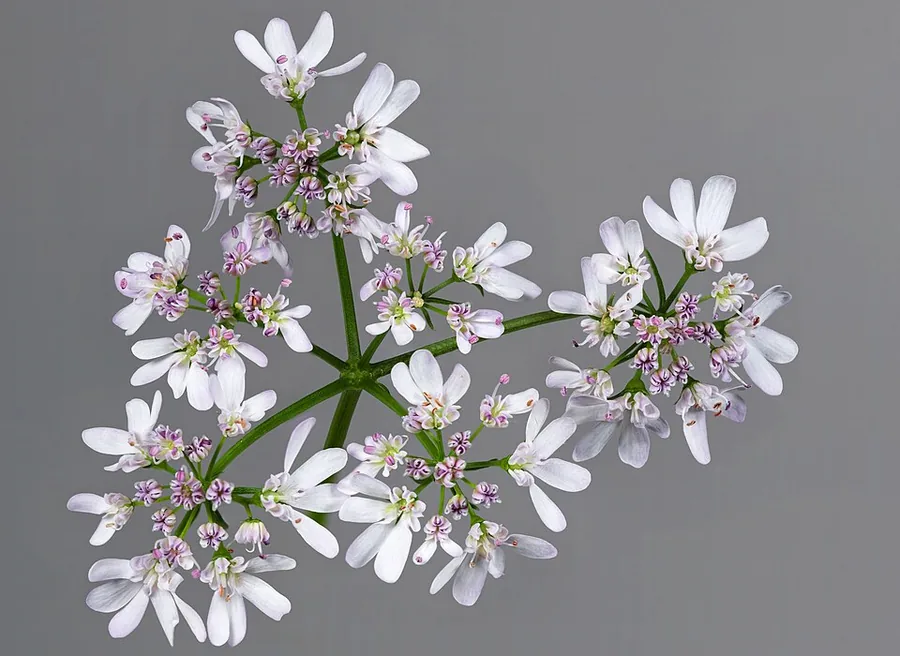
It is happy either in a garden bed or in a pot on a sunny windowsill, growing 8 to 35 inches (20 to 90 cm) tall by flowering time. Give it cool soil, steady water, and a touch of afternoon shade when it is hot, and a plant that wants to bolt will instead keep handing you leaves for a good long while.
Care
The short version: full sun with a little afternoon shade when it is hot, soil kept evenly moist and on the cool side, and a fresh sowing every few weeks so there is always a new plant coming along to replace one that bolts.
Light
Cilantro is happiest in full sun, though where summers run hot a stretch of afternoon shade does it a real favor, keeping the plant cooler and easing it away from a quick bolt. Indoors, simply set it at the brightest window you have.
Water
While the plant is settling in and growing leaves, keep the soil evenly moist, watering every 2 to 4 days as the surface dries. That steady moisture, paired with cool soil, is what holds bolting at bay. Just take care not to leave it sitting soggy, since cilantro is not fond of waterlogged, humid ground.
Soil
Set it into rich, well-drained loam with a pH somewhere between 6.0 and 7.0. Drainage is the part to get right, because the taproot will rot if the soil stays cold and wet.
Temperature
Being a cool-season herb, it does its best between 50°F and 75°F (10°C to 24°C). Once warmth pushes past the upper end of that range, the plant takes it as a cue to flower and the leaf harvest begins to taper off.
Humidity
Ordinary humidity around 40% to 60% suits it just fine. What you want to steer clear of is damp, still air, since crowded and muggy conditions are what tend to bring on leaf spot.
Feeding
There is little fussing to do here. A light hand with nitrogen through the growing season is all it asks, and going overboard actually weakens the flavor of the leaves.
Pruning
Begin picking the outer leaves once the plants stand 4 to 6 inches (10 to 15 cm) tall, which keeps them full and producing. Pinch away any flower stalks as soon as they show to draw out the leaf harvest, or leave them be if you would like the plant to make coriander seed.
Repotting
not_typically_repotted
Size & spacing
Expect them to reach 8 to 35 inches (20 to 90 cm) tall, low and leafy at the start and taller once the flower stalk climbs. Give each plant breathing room and good airflow, allowing 12 to 24 inches (30 to 60 cm) of space, so the leaves dry off fast and leaf spot stays away.
When to plant
Cilantro loves cool weather and only has a short stretch before heat pushes it into flower, so timing is your friend here. Sow in early spring once frost has passed, sow again in early fall, and rather than leaning on a single planting, simply start a fresh patch every few weeks to keep the leaves coming.
Northern hemisphere
Southern hemisphere
Typical months for a temperate climate: start earlier in warm zones, later where spring frosts linger.
- Sow: Late winter to early spring, 4-6 weeks before last frost (transplants carefully due to taproot)
- Plant: Early spring after danger of frost and again in early fall; it is a cool-season crop that bolts in summer heat
- Harvest: Cut leaves young and often for cilantro; for coriander seed, allow plants to flower and set seed, harvesting when seed heads turn brown
Hardiness
USDA hardiness zones: 3–11
Temperature: down to -40°C
Troubleshooting
Nearly every cilantro hiccup comes down to one of two things: heat that brings on bolting, or wet conditions that open the door to rot and leaf spot. The reassuring part is that spotting trouble early usually lets you keep your harvest going. Find what matches your plant below, then take action while it can still make a difference.
Tiny seedlings tip over at the base or never break ground
This one is damping-off, a fungal rot that settles into cold, waterlogged ground, and it is more about conditions than anything you did wrong. The baby stems go water-soaked and pinch right at the base, so the seedlings flop, sometimes before they even reach daylight. Gently remove the ones that have gone, lighten up on watering, and start again in soil that drains freely once it has warmed and dried out.
Fix:
- Remove affected seedlings
- Improve drainage and reduce watering frequency
- Re-sow in well-drained soil once conditions allow
A flower stalk rises fast and the leaves quit coming
What you are seeing is bolting, and please don't take it as a failure: it happens to nearly every cilantro grower, so you are in good company. As warmth sets in and the days stretch long, the plant simply decides to flower instead of leaf, the foliage thins out and goes feathery, and the taste softens. You can still save the day. Pick whatever leaves remain, or let it bloom and carry on to coriander seed, then tuck a new round of seed into cooler weather or a shadier corner.
Fix:
- Harvest remaining leaves promptly before flavor declines
- Allow plant to flower and set seed for coriander harvest
- Sow a fresh succession of seed in a cooler period or shaded spot
Dark, sharp-edged spots show up on the leaves you wanted to pick
These marks point to bacterial leaf spot, which moves quickly when leaves stay wet and plants sit close together. You will notice small dark lesions that blur into one another during muggy stretches. It is very manageable: pinch away the spotted leaves, switch to watering down at the soil line instead of over the top, and thin things out so a breeze can pass through.
Fix:
- Remove and discard affected foliage
- Avoid overhead watering and wetting leaves
- Improve spacing and air movement
Speckled, yellowing leaves with little bugs on the fresh growth
The usual visitors here are leafhoppers and aphids, gathering on the soft new shoots and leaving the leaves yellowed or curled. Leafhoppers can sometimes carry aster yellows, so it is worth pulling any plant that looks stunted and oddly colored just to be safe. For the rest, a firm jet of water knocks them off nicely, and letting your cilantro bloom invites in the helpful insects that feed on these pests for you.
Fix:
- Dislodge pests with a strong spray of water
- Remove heavily infested foliage
- Encourage beneficial insects, which cilantro flowers attract
Toxicity
Cilantro is about as gentle and safe as plants come, so you can grow it with a calm mind. The ASPCA lists it as non-toxic to cats, dogs, and horses, and people eat it by the handful in the kitchen. A pet that nibbles a leaf has nothing to worry about, though a very large mouthful of any greenery might upset a stomach for a day.
Safe for
People · Cats · Dogs · Horses · Rabbits · Livestock · Birds
Cats None
You can relax around cats. Because the ASPCA marks cilantro as non-toxic, a curious taste will not hurt them.
Dogs None
Dogs are in the clear too. A few chewed leaves are perfectly fine, though a big mouthful of any greens might loosen the stomach for a day.
Horses Safe
Horses can browse it freely. Nothing in the plant troubles them.
Rabbits Safe
Rabbits enjoy the fresh leaves, and a small handful alongside their hay makes a lovely treat.
Livestock Safe
Goats, sheep, and cattle can graze the foliage safely, with nothing to worry about.
Birds Safe
Pet birds and backyard hens are welcome to the leaves and the seeds, all of it harmless.
People Safe
This is a kitchen herb at heart. Both the leaves and the seeds are good eating, whether raw or cooked.
Generally regarded as safe; as with any plant, ingesting large amounts of foliage may cause mild, transient gastrointestinal upset in pets.
Varieties
Most named cilantro varieties are chosen for one quality above the rest: holding back the bolt that brings the leaf harvest to a close. Here are a few that are good to know by name.
Santo
A popular slow-bolting kind that keeps the leaves coming a bit longer before it turns to flower.
Caribe
Said to hold off on bolting a touch better than ordinary types when the weather warms up.
Leisure
A slow-to-bolt pick valued for keeping the leaf harvest going longer.
Delfino
A fern-leaf form with delicate, lacy foliage that looks quite unlike the usual flat leaves.
How to propagate
There is really just one way to grow cilantro, straight from seed, and it would rather you not move it. Happily, seed is inexpensive and fast, so keeping yourself in fresh leaves mostly comes down to sowing little and often.
SeedEasy
Early spring and early fall; succession-sow every few weeks because it bolts quickly · Germinates in about 7-21 days; leaves ready to harvest in roughly 4-6 weeks
You will plant cilantro from seed dropped directly where it is meant to grow, because its long taproot would rather not be disturbed. Sprouts appear in 7 to 21 days, and the first leaves are ready to snip within 4 to 6 weeks. Since it heads to flower in a hurry, popping in a small new sowing every few weeks keeps a steady supply on hand. Thin the young plants out for plenty of leaves, or leave them more room if you are letting them mature into coriander seed.
Myths
Cilantro and coriander are harvested from two separate plants.
Rest assured, you are dealing with a single plant, Coriandrum sativum. People call the fresh leaves cilantro, or coriander leaf, while the dried seeds get sold as coriander. One herb, two parts, two familiar names.