Herb · Apiaceae
Dill
Anethum graveolens
Pop the seed right in the soil, keep it cool and evenly watered, and dill will reward you with leaves all season.
Full sun
Every 3–7 days
50–77°F · 10–25°C
40–90 days
Overview
Dill is a quick, feathery annual in the carrot family, and you grow it for two lovely things at once: its soft blue-green leaves and its flat heads of fragrant seed. Its story begins around the Mediterranean and western Asia, and it has found a warm welcome in kitchens and gardens everywhere for pickles, fish, and bright fresh salads. Sow it just once and it will often come back on its own, scattering seed that greets you again next spring.
Cool weather is what dill loves most, and that one preference shapes the whole way you tend it. Spring and early fall suit it beautifully, while summer heat tends to coax it into flower, a turn gardeners call bolting. The happy secret is simply to keep new young plants on the way by sowing a fresh pinch every couple of weeks, so you always have tender leaves ahead.
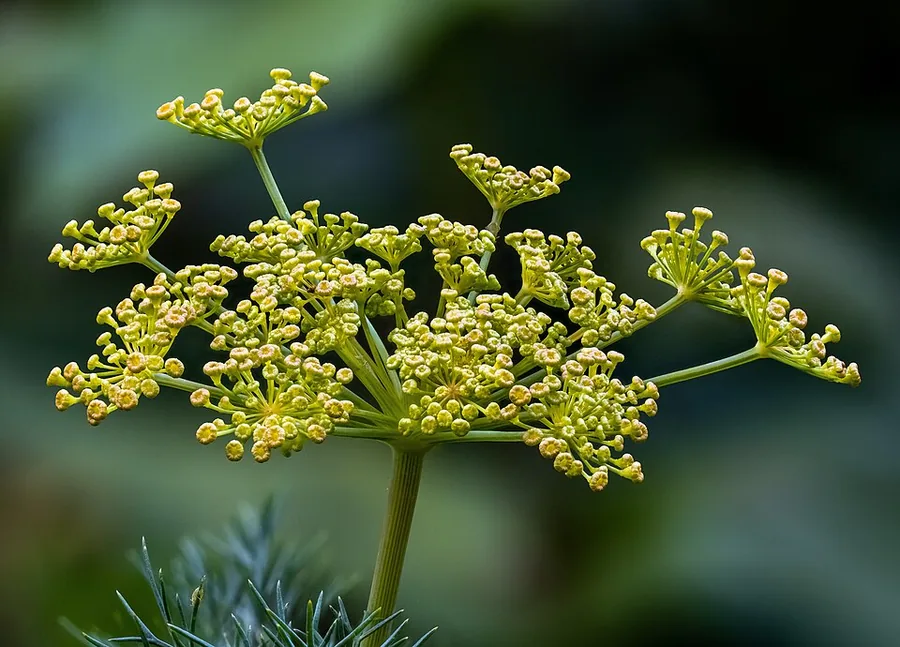
Dill grows a deep taproot and would rather not be moved, so it is happiest sown right where it will live. Give it full sun and steady moisture and it shoots up fast, and once those cheerful yellow umbels open they bring in pollinators and butterflies to share your garden.
Care
The short version: give dill full sun, cool weather, and evenly moist, well-drained soil, and you are most of the way there. Sow it straight into the ground, pick the leaves often so it holds off flowering, and start a fresh row every few weeks for a steady, generous supply.
Light
Dill is happiest in full sun, around six or more hours a day, though it will gladly take a little afternoon shade where summers turn fierce. Give it too much shade and you get thin, floppy plants that bolt early and hand you far less leaf, so a bright spot really pays off.
Water
Keep things at a gentle, even moisture, roughly an inch of water a week, and pay it the most attention while the seeds are sprouting and the seedlings are still finding their feet. Try not to let it dry right out, because a dry spell is one of the surest ways to coax dill into flowering too soon.
Soil
Settle dill into well-drained, fertile loam with a good helping of organic matter mixed through. A slightly acidic pH of 5.5 to 6.5 suits it best, and loose, friable ground lets that deep taproot reach straight down with ease.
Temperature
Dill does its best growing in cool comfort, somewhere around 50°F to 77°F (10°C to 25°C). Once the heat pushes past that, the plant simply turns its energy from making leaves toward making flowers, and bolting follows.
Humidity
Ordinary outdoor humidity, somewhere near 40% to 70%, is plenty for dill, so there is no figure to fuss over. Good airflow does more for it than damp air ever could, since crowded plants stay wet and that invites a little bother.
Feeding
Dill is a light feeder that gets along on a single balanced feed or a handful of compost worked in at planting. In reasonably fertile soil it asks for little else, and heaping on nitrogen only coaxes soft, leggy stems that flop over.
Pruning
Pinch or snip the foliage often to keep the plant full and bushy and to hold off bolting. Take away any forming flower heads if leaves are what you are after, or leave the umbels to ripen when you are hoping to gather seed.
Repotting
Dill isn't really one for repotting. It is a direct-sown annual with a taproot that hates being disturbed, so sow it where it will grow rather than potting it on, and if you do try a container, keep an eye out for stunting or quick bolting.
Size & spacing
Plants stretch up to 2 to 4 feet (60 to 120 cm) tall on a slender 12 to 18 inches (30 to 45 cm) spread. Tuck them close enough to lean on one another, which gives those tall hollow stems a helping hand to stay upright when the wind blows.
When to plant
Dill is happiest on the cool side of the year and rushes to flower once summer heats up, so timing is your friend. Sow it straight outdoors in early spring once the hard frosts have passed, gather leaves through the cooler months, and let the summer umbels ripen into seed you can tuck away.
Northern hemisphere
Southern hemisphere
Typical months for a temperate climate: start earlier in warm zones, later where spring frosts linger.
- Plant: Direct-sow in early spring after danger of hard frost; cool-season crop that bolts quickly in summer heat. Succession-sow every 2-3 weeks for continuous leaf harvest.
- Harvest: Cut leaves anytime once plants are established; yellow flower umbels form in summer, followed by seeds harvested as they ripen and turn brown.
Hardiness
USDA hardiness zones: 2–11
Temperature: down to -46°C
Troubleshooting
Almost everything that troubles dill traces back to heat or a few familiar garden visitors, and none of it is hard to handle. Spot the early signs and you can keep the leaves coming and the plants standing tall. Find what matches below, then step in while a small fix still does the most good.
Your dill rushes to flower before it gives you many leaves
Take heart, this is just bolting, the plant's natural answer to summer warmth and the long days of midsummer. A spell of dryness or a jostled root only nudges it along, so the main stalk reaches skyward and sets flower heads while the leaves slow down. You can stay ahead of it easily: pick young leaves early, keep the soil pleasantly moist, and tuck in a fresh pinch of seed every couple of weeks so there is always a tender plant waiting for you.
Fix:
- Harvest leaves promptly before flowering
- Succession-sow new plantings
- Provide consistent moisture and light afternoon shade in heat
Striped caterpillars nibbling at the soft, lacy leaves
Those plump green caterpillars wearing black bands and little yellow spots are black swallowtail larvae, and dill happens to be a meal they love. It can look alarming, yet a healthy plant shrugs the damage off and bounces back. If you would rather keep every leaf, gently move them to a spare clump, or simply sow a bit extra and let them eat their fill, because they grow up into lovely butterflies.
Fix:
- Hand-pick and relocate caterpillars if foliage loss is a concern
- Plant extra dill to share with larvae as a pollinator host
Little soft insects gathering on the fresh new growth
Don't worry, the small green or gray specks crowding your tender shoots are just aphids, and the sticky film they leave behind washes away. A firm spray of water dislodges most of them, and a gentle insecticidal soap is there as backup only if a crowd really takes hold. Going easy on the nitrogen and making ladybugs welcome will keep the next batch from ever getting comfortable.
Fix:
- Spray with a strong jet of water
- Apply insecticidal soap if severe
Tall stems leaning or toppling after a windy, wet day
Dill carries its height on hollow stems, so a tall plant standing alone in a breezy spot can bow or break near the base when the weather turns rough. Very rich soil makes it more likely by encouraging soft, leggy growth. A simple stake for the tallest ones, a sheltered corner out of the wind, and a little crowding so neighbors lean together will keep them standing proud.
Fix:
- Stake taller plants
- Plant in a sheltered location
Toxicity
Here is the reassuring part: dill is a kitchen herb that is safe for people and pets alike. The leaves and seeds are everyday cooking staples, and the ASPCA does not count the plant among pet toxins. The one small footnote is that very heavy grazing of the foliage can bring on mild photosensitivity in some livestock.
Safe for
People · Cats · Dogs · Horses · Rabbits · Livestock · Birds
Cats None
Rest easy if your cat sneaks a bite, because a nibble of dill does no harm. The ASPCA leaves it off its list of pet toxins, so a curious taste means nothing to clean up.
Dogs None
Your dog is welcome to munch the soft leaves with no cause for concern, and plenty of folks even tuck a little into homemade treats.
Horses Safe
Dill foliage sits perfectly well with horses and now and then shows up in herbal feed mixes, so there is nothing to fret over.
Rabbits Safe
Rabbits delight in a little fresh dill, and the feathery sprigs make a lovely treat to offer once in a while.
Livestock Mild
Grazing animals can browse dill without trouble. The one small thing to keep in mind is that piling into the furanocoumarin-bearing foliage in large amounts may bring on a touch of photosensitivity in a few animals.
Birds Safe
Pet birds and backyard hens are free to peck the leaves and ripe seeds, and they will come to no harm doing so.
People Safe
Dill is a friendly kitchen herb, leaves and seeds alike, and wholly safe to enjoy. Give it a rinse before you cook, just as you would any fresh green.
Edible herb safe to handle and consume; wash before use. Sap and furanocoumarins can rarely cause mild skin photosensitivity in sensitive individuals.
Varieties
Most seed packets come back to just a few well-loved dills, told apart mainly by their height and how soon they bolt. These are the friendly names worth knowing as you begin.
Bouquet
A much-loved compact dill that rewards you with a generous flush of seed heads and a warm, classic flavor.
Fernleaf
A friendly dwarf that settles happily into a pot and keeps the leaves coming long after other types have given up.
Mammoth (Long Island Mammoth)
A tall heirloom that hands you the most leaf and the most seed, a real gift for a beginner who wants plenty.
Dukat
A gentle, slow-to-bolt variety whose sweet, fragrant leaves win gardeners over for fresh use in the kitchen.
Companions
Dill earns its keep near other crops by drawing in pollinators and the predatory insects that hunt garden pests.
How to propagate
Dill grows from seed alone, and it could hardly be gentler on a beginner, since the plant so often sows the next generation for you.
SeedEasy
Direct-sow in early spring and succession-sow through the cool season · 7 to 21 days to germinate; harvestable leaves in about 40 to 60 days
Tuck the seed straight into the garden bed where you want it to stay, pressing it in just shallowly, since that taproot would rather not be moved. Little sprouts push up in 7 to 21 days, and you can begin snipping leaves in around 40 to 60 days. Sow a fresh short row every couple of weeks while the weather stays cool, and let a few plants flower so they happily seed themselves for next spring.
Myths
Dill transplants easily like any other seedling.
Dill puts down a deep taproot that takes the move hard, and the disturbance can shock it straight into early flowering. The kindest thing you can do is sow it right where it will grow, instead of raising it in cells to shift later.
Dill is toxic to cats and dogs.
Dill is a kitchen herb that is counted as safe, and the ASPCA does not place it among the plants that harm cats or dogs. So if a pet sneaks a taste, there is truly nothing to worry about.