Herb · Apiaceae
Lovage
Levisticum officinale
Give it rich, moist soil and full sun, and one forgiving lovage plant will hand your kitchen celery flavor for years to come.
Full sun
Every 3–7 days
90–120 days
USDA 3–9
Overview
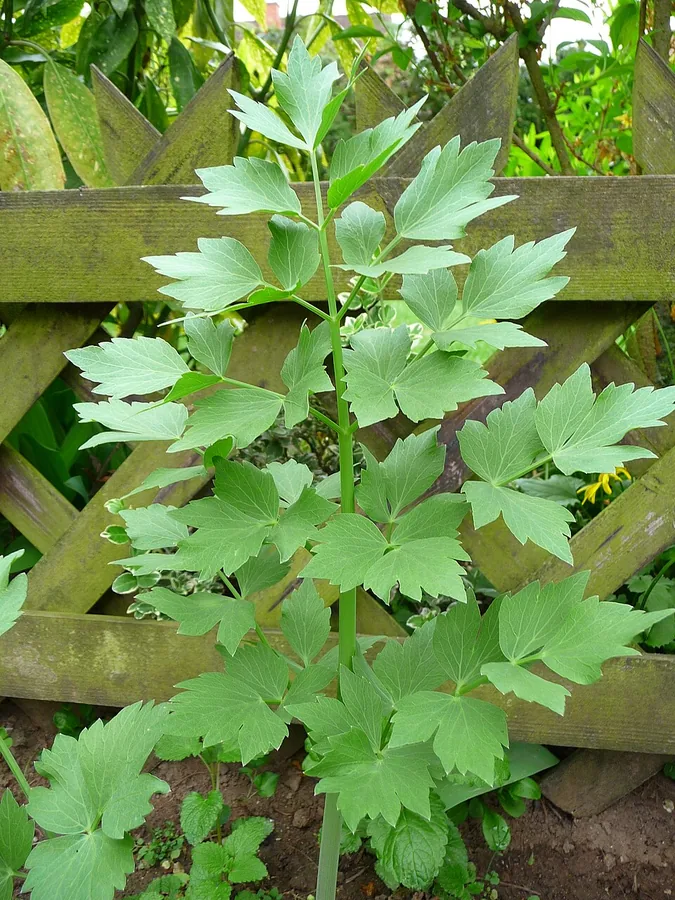
Lovage is a tall, easygoing perennial herb with a flavor much like celery, only bolder, and it is a lovely first herb to try. It sits in the same family as carrots and parsley, growing from a deep crown that returns each year with hollow stems and glossy, divided leaves. One healthy plant is usually plenty for a whole kitchen.
Do give it space, because this herb grows big and proud. By midsummer it can reach 4 to 6.5 feet (120 to 200 cm) and spread a couple of feet wide, then lift airy yellow-green flower heads high above everything else in the bed. Tuck it at the back of a border or in a roomy corner, and its size will never crowd your smaller plants.
Best of all, lovage asks very little once it takes hold, so mistakes are easy to recover from. It laughs off hard winters, returns stronger each spring, and is truly forgiving of a beginner's slips. Keep the soil rich and the roots evenly moist, and you will find the leaves, stems, and seeds all earning their keep in the pot.
Care
The short version: give lovage full sun or a touch of shade, deep fertile soil kept evenly moist, and room to reach shoulder height, and it will reward even a nervous grower. A single spring feeding and dividing the crown every few years keeps it strong and full.
Light
Lovage is happiest in full sun yet takes partial shade in good humor, which is a real help where summers turn hot. A little afternoon shade shields the tall leaves from scorching, though you will see the most generous growth in an open, sunny spot.
Water
Keep the soil evenly moist, since this big herb drinks deeply and wilts quickly the moment it dries out. Water well during dry spells, roughly every 3 to 7 days depending on the heat, but let the ground breathe between soakings so the crown never sits wet and starts to rot.
Soil
Set it into deep, fertile, moisture-holding loam with plenty of organic matter mixed through. Lovage is relaxed about pH and grows contentedly anywhere from 6.0 to 7.5, as long as the soil stays rich and the roots stay damp without standing in water.
Temperature
This is a wonderfully tough, cold-hardy herb that shrugs off winters down to -29°F (-34°C) and summers up to 86°F (30°C). It quietly dies back to the crown in the cold and pushes up fresh new growth again each spring, so a rough winter is nothing to fear.
Humidity
Ordinary outdoor humidity suits it just fine, somewhere around 40% to 70%, and there is no figure to fuss over. What truly counts is steady moisture at the roots and a little breathing room around the leaves.
Feeding
Feed it just once in spring with a balanced fertilizer or a top-dressing of compost or aged manure. That single seasonal helping is enough to carry this hungry herb right through the year and fuel its broad leaves and tall stems.
Pruning
Trim back the flowering stalks to keep tender new leaves coming, and clip off the flower umbels before they set seed if you would rather it not spread. Pick the outer leaves as you need them, and cut the whole plant back after it blooms to bring on a soft flush of fresh foliage.
Repotting
Lovage grows too large to be happy in a pot for long, so it does best planted in the ground. Freshen it instead by dividing the crown every 3 to 4 years, a simple job that keeps the leaves full-sized and the stems thick.
Size & spacing
Expect a good-sized plant, 4 to 6.5 feet (120 to 200 cm) tall and 2 to 3.3 feet (60 to 100 cm) across. Give it a clear spot near the back of the bed so it will not cast shade over your smaller herbs.
When to plant
Lovage keeps time with the seasons and takes cold in stride, staying hardy from zone 3 to zone 9. Start it indoors in late winter or sow it fresh in autumn, move young plants outside in spring once frost has passed, and gather leaves and stems all through the growing season while the tall flower heads rise in early summer.
Northern hemisphere
Southern hemisphere
Typical months for a temperate climate: start earlier in warm zones, later where spring frosts linger.
- Sow: Late winter to early spring, 6-8 weeks before last frost (fresh seed germinates best)
- Plant: Spring, after the last frost when soil has warmed
- Harvest: Harvest leaves and stems through the growing season; tall yellow-green flower umbels appear early to mid summer, followed by seed
Hardiness
USDA hardiness zones: 3–9
Temperature: down to -40°C
Troubleshooting
Lovage rarely causes any real headaches, and the little that does turn up tends to sit on the leaves or the tall stems. Spot it early and a small, calm fix usually sorts it out. Find what matches below, then step in before it has a chance to spread.
A wilting plant with a soft, browning crown at soil level
When the base goes soft, brown, and mushy, you are looking at crown and root rot, which creeps in once the soil stays soaked and water lingers around the base. The crown softens and smells sour while the roots darken underneath. Tissue this far gone can't be nursed back, so open up the drainage, cut out or replace the ailing plant, and go gentler with the watering next time, and you will get a healthy start again.
Fix:
- Improve drainage
- Remove affected tissue or replace plant
- Avoid overwatering
Tall stems leaning or breaking once a storm rolls through
This one is not your fault, it is simply how the plant is built. Lovage sends up hollow stems that turn top-heavy as the flower heads fill out, so a gust or a heavy rain can tip or crack them. Slip a stake or a cage in early, before the stems reach their full height, and trim a few of the flowering shoots to lighten the load, and a sheltered corner away from the wind makes it all much simpler.
Fix:
- Stake or cage tall stems
- Cut back flowering stalks to reduce height and weight
Pale squiggly lines or nibbled holes showing up on the leaves
Don't worry, these marks are easy to read once you know them. The pale, winding tunnels are the work of leaf miner grubs feeding safely inside the leaf, the ragged holes usually mean celery worms, the plump green caterpillars that grow into swallowtail butterflies, and any sticky clusters on the fresh tips are aphids. Simply pick off and bin the marked leaves, lift the caterpillars away by hand, and rinse the aphids off with a firm jet of water or a dab of insecticidal soap, and the plant bounces right back.
Fix:
- Remove and destroy mined or infested leaves
- Handpick caterpillars
- Spray aphids off with water or use insecticidal soap
Toxicity
Lovage is a kitchen herb that is safe for people and pets alike, carrying no toxin in its leaves, stems, or seeds. The one small thing to keep in mind is the sap, which holds furanocoumarins that can leave sensitive skin sun-sensitive after you handle a large batch, so pull on gloves and rinse off when you are working in bright sun.
Safe for
People · Cats · Dogs · Horses · Rabbits · Livestock · Birds
Cats Safe
You can relax with a curious cat nearby, as this herb is a gentle one to keep. Should a cat chew through a big pile of the strong, aromatic leaves, the most you might see is a passing tummy upset, and nothing worse.
Dogs Safe
A dog is welcome to sniff and taste this plant without any worry on your part. The most a large mouthful tends to bring on is a little gas or a soft stool, and that clears up all by itself.
Horses Safe
Feel free to let a horse graze near lovage, since the leaves hold no toxin at all. One that overdoes the pungent foliage may just decide it tastes too strong and move along.
Rabbits Safe
Rabbits can nibble the leaves in comfort. Just offer a little at a time to begin with, the same kind way you would with any new green, so their gut can ease into it.
Livestock Safe
Goats, sheep, and cattle are all free to browse lovage with nothing to fear. It carries no compound that would poison a grazing animal.
Birds Safe
Backyard hens and pet birds are in no danger from this plant. A peck at the leaves or a taste of the seed does them no harm at all.
People Safe
The leaves, stems, and seeds are a trusted kitchen ingredient and perfectly safe to eat. The only gentle caution is the furanocoumarins in the sap, which can make sensitive skin react to sunshine after handling, so slip on gloves and rinse off when the day is bright.
The foliage and sap contain furanocoumarins; skin contact with the sap followed by sun exposure can cause mild phytophotodermatitis (photosensitivity) in sensitive handlers. Wear gloves and wash hands after handling large quantities, especially in bright sun.
Helpline numbers

United States
ASPCA Animal Poison Control: (888) 426-4435 (fee applies)

United Kingdom
Animal PoisonLine: 01202 509000 (fee applies)

Australia
Animal Poisons Helpline: 1300 869 738
Varieties
Lovage really comes down to a single species rather than a long roster of named kinds, so there is comfortingly just one plant to get to know.
Levisticum officinale (species)
You really only need to know one plant here, the standard culinary species, with its hollow stems that carry a deep celery flavor and its glossy, deeply cut leaves.
How to propagate
Lovage is a friendly plant to multiply, whether you start it from fresh seed or gently split an old clump into new plants.
SeedEasy
Late summer/early autumn when seed is fresh, or late winter to early spring indoors · 2-3 weeks to germinate; one full season to establish
Because lovage seed loses its spark quickly, you will get the best results sowing it fresh in late summer or early autumn, or starting it indoors in late winter to early spring. Just settle each seed onto the surface instead of burying it, since a touch of light helps it wake up, and you can look forward to little seedlings in 2 to 3 weeks and a settled plant after one full season.
DivisionEasy
Early spring or autumn · One growing season
An older clump comes apart with ease in early spring or autumn, so don't be nervous about it. Lift the whole crown and slice it into pieces, keeping roots and growth buds on each one, and the new divisions will happily settle in across a single growing season.
Myths
Lovage is simply celery under a different name.
It is easy to mix them up because both taste strongly of celery, but they are truly separate plants. Lovage is a tall perennial herb called Levisticum officinale, while celery is the yearly Apium graveolens, a different genus and species that only shares the Apiaceae family. In how they look and grow, the two have almost nothing in common.