Vegetable · Asteraceae
Endive
Cichorium endivia
Keep it cool, steady, and given room, and endive rewards you with crisp salad leaves through spring and fall.
Full sun
Every 3–5 days
39–75°F · 4–24°C
85–100 days
Overview
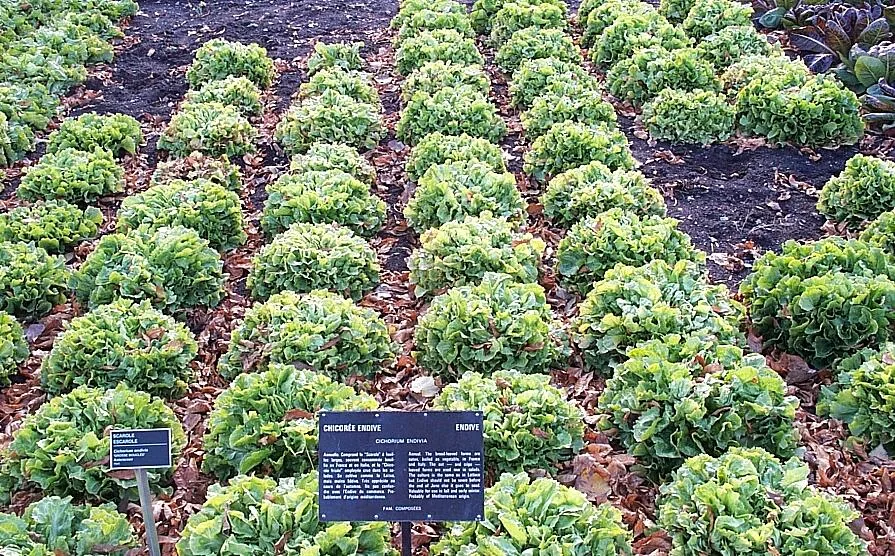
Endive is a leafy salad green in the daisy family and a close relative of chicory, grown for its frilly or broad leaves rather than for any bloom. You will meet it in two friendly forms: the curly, finely cut frisee and the wide, flat escarole. Each brings a pleasant bitter note that softens the moment it reaches your plate, so do not let that edge put you off.
At its core this is a cool-season crop, and that makes it easier than you might fear. It grows happiest in spring and fall, when the days stay mild and the soil holds its damp, and it only sulks or bolts once summer heat rolls in. Aim for the cooler stretches of the year and you will find it among the most forgiving greens to raise.
The second half of the craft is blanching, and it is a simple, recoverable step. Tie the outer leaves up over the heart or cover the plant for a couple of weeks, and shutting out the light gently turns the bitterness sweeter and paler. Leave that step out and you still come away with a perfectly good, if sharper, salad green.
Care
The short version: give endive full sun or a touch of shade, keep the soil steadily moist so the leaves never go thirsty, plant it in rich ground during cool weather, feed it gently, and leave room between plants to keep bolting and tipburn away.
Light
Endive is happiest in full sun, yet it takes partial shade in good stride, and a little afternoon shade is genuinely welcome when the weather warms. Give it too little light and the leaves come in thin and loose, so a bright spot pays off.
Water
Try to keep the soil evenly moist through and through, watering every 3 to 5 days and a bit more often in dry heat. Letting it run dry is what turns the leaves bitter and brings on tipburn and early bolting, so gentle consistency really is the heart of it.
Soil
Set it in fertile, moisture-holding loam that still drains freely, with a good helping of organic matter mixed in. A pH of 5.5 to 7.0 suits it nicely, and ground that holds onto water keeps the leaves crisp and sweet.
Temperature
This cool-season green is content between 39°F and 75°F (4°C to 24°C) and does not mind a light frost in the least. Once the heat climbs above that range, though, it bolts and the leaves turn sharp, so watch the warmer days.
Humidity
Average humidity of 50% to 70% suits endive just fine, and grown outdoors it is rarely something you need to fuss over. Steady soil moisture means far more to the plant than the air around it ever will.
Feeding
Mix a balanced N-P-K into the bed at planting time, then side-dress with a little nitrogen while the leaves fill out. Go easy here, since too much nitrogen invites tipburn and the soft, aphid-tempting growth you would rather avoid.
Pruning
There is hardly any pruning to do beyond pulling off damaged outer leaves. The one job worth your time is blanching: tie the outer leaves up over the heart or cover the plant for 2 to 3 weeks before harvest to gentle the bitterness.
Size & spacing
Plants grow 10 to 24 inches (25 to 61 cm) tall and reach 10 to 18 inches (25 to 46 cm) wide. Give each one that whole spread of room, because crowding only feeds bolting, rot, and stale air around the leaves.
When to plant
Endive lives by cool weather and bolts when it turns hot, so getting the timing right is the kindest thing you can do for it. Sow in early spring once hard frost has passed, or again in midsummer for a fall crop, and plan to harvest while the days stay cool. The fall planting often comes out sweetest of all, kissed gentle by that first light chill.
Northern hemisphere
Southern hemisphere
Typical months for a temperate climate: start earlier in warm zones, later where spring frosts linger.
- Sow: 4-6 weeks before the last spring frost, or in midsummer for a fall crop
- Plant: Early spring after hard-frost danger passes, or late summer for fall harvest
- Harvest: Harvest leaves/heads in cool weather before heat triggers bolting
Hardiness
USDA hardiness zones: 4–9
Temperature: down to -34°C
Troubleshooting
Most endive worries turn up right on the leaves, whether it is a pest having a chew or the weather nudging the plant toward bolting. Spot the signs early and you can almost always rescue the crop, so there is no need to panic. Find what matches below, then step in before it spreads.
A tall flower stalk appears and the leaves go sharply bitter
Your plant is bolting, hurrying toward flowering because of heat, longer days, or too little elbow room, and once that switch flips the leaves quit filling and turn harsh. There is no gentle way to say it, this part cannot be undone, so harvest whatever is still good before it passes. For next time, grow endive in the kinder weather of spring or fall, give each plant space, and keep it clear of high summer heat.
Fix:
- Harvest promptly once bolting begins
- Plant cool-season-timed successions instead
Burnt-looking brown edges on the young inner leaves
What you are seeing is tipburn, and it is simply a calcium shortage in the fast-growing center, made worse by heat and a heavy hand with nitrogen. The good news is the roots and outer leaves carry on just fine while only the tender new edges scorch. Keep the soil evenly damp, ease back on the feeding, and pick your crop while the days are still cool, and the heart fills in cleanly.
Fix:
- Maintain even soil moisture
- Avoid over-fertilizing with nitrogen
- Harvest during cooler conditions
Tiny insects gathering on curled, tacky leaves
Those little soft-bodied dots are aphids, and that sticky film they leave is just honeydew, so try not to worry. A firm spray of water knocks most of them loose, and pinching away the worst leaves clears the rest. Should a few stragglers return, insecticidal soap settles things, and going a little lighter on the nitrogen keeps the soft new growth they crave from coming back.
Fix:
- Hose aphids off with a strong water spray
- Pinch out and discard heavily infested foliage
- Use insecticidal soap if populations persist
Torn holes and shiny slime trails across the foliage
Take heart, this is the work of slugs and snails, which feed once the sun goes down and leave that giveaway shine behind, most often when the weather turns cool and damp. A shallow dish of stale beer set level with the soil draws them in, and a quick after-dark walk lets you gather any that remain. Tidying away mulch and old debris takes away the cool, dim shelter they look for.
Fix:
- Trap with a shallow saucer of stale beer set flush to the soil
- Hand-pick at night
- Remove mulch and debris that shelter slugs
Toxicity
Here is some lovely news for a home with pets or children: endive is completely safe. It is a salad green bred for eating, and nothing in the plant can harm a person or an animal. Grow it freely wherever curious paws and little hands might wander.
Safe for
People · Cats · Dogs · Horses · Rabbits · Livestock · Birds
Cats None
You can relax about the cat. The worst a leaf-nibbler might face is a brief, mild tummy upset, no different from tasting any new green.
Dogs None
Dogs are perfectly fine with endive, and a leaf or two makes an easy treat. A big helping of any vegetable can soften the stool, but the plant holds nothing harmful.
Horses Safe
Horses can browse the leaves with nothing to fear. The plant carries no compounds that would bother them.
Rabbits Safe
Rabbits thrive on endive alongside other leafy greens. Bring it in slowly, the way you would any new forage, and it settles with them comfortably.
Livestock Safe
Cattle, goats, and sheep can graze the foliage safely, since not one part of the plant holds a toxin.
Birds Safe
Backyard chickens and pet birds love to peck at the leaves, and you can let them freely. It is a healthy green for them.
People Safe
Endive is grown for the table, eaten raw in salads or gently cooked, and it is safe for everyone in the family, little ones included.
No special handling precautions; leaves are eaten raw or cooked by people.
Varieties
Endive comes in a handful of well-loved types, and the one you choose quietly shapes how sharp or mild your salad turns out. These are the names worth getting to know first.
Curly endive (frisee, var. crispum)
With its slim, finely cut, curly dark-green outer leaves, this is the most boldly bitter of the group.
Escarole (Batavian, var. latifolium)
Its wide, flat, smoother leaves give it a gentler, much milder flavor than curly endive.
'Clodia'
A tidy, self-blanching escarole that grows its own tender, pale, mild hearts with no help from you.
How to propagate
Endive starts from seed and seed alone, but it sprouts quickly and grows in a hurry, so a fresh sowing is always close to the table when you want one.
SeedEasy
Sow in early spring or late summer for fall harvest, in cool soil · 7-14 days to germinate, with transplants set out 4-6 weeks after sowing
Seed is the only way endive starts, and happily it is a forgiving one. Tuck seeds straight into cool soil in early spring or late summer, or begin them indoors and move the young plants out 4 to 6 weeks on. Germination comes in 7 to 14 days, and thinning to comfortable spacing early keeps crowding, bolting, and rot from troubling you later.
Myths
Belgian endive and curly endive or escarole are the same plant.
They are not even cousins of the same species, so the mix-up is easy to forgive. Belgian endive, sometimes called witloof, is forced chicory, Cichorium intybus, while curly endive and escarole are Cichorium endivia. It is the shared name that trips most people up at the market.
Blanching turns endive into a different, sweeter variety.
Blanching does not change the variety at all, so there is nothing tricky to learn here. Covering the heart simply blocks the light and slows the chlorophyll the plant makes, and that is what softens the bitterness. Grow the very same plant in full light and it just comes out sharper.