Shrub · Theaceae
Tea Plant
Camellia sinensis
Offer it acidic soil, part shade, and steady moisture, and Camellia sinensis happily grows the leaves behind every cup of tea.
Partial shade
Every 3–7 days
USDA 6–9
6–15 ft · 1.8–4.6 m
Overview
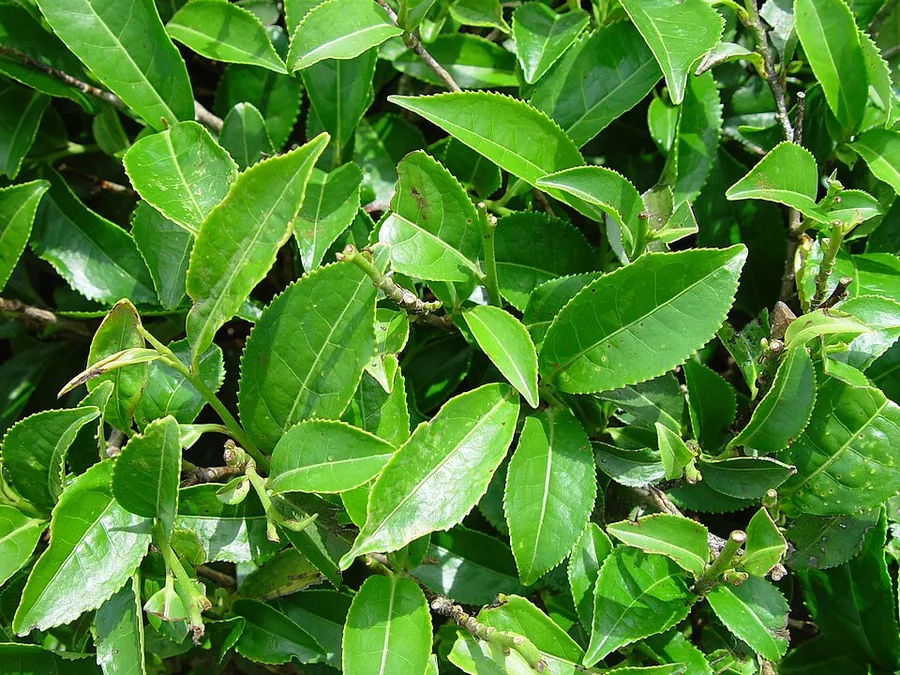
If you have ever wanted to grow your own tea, Camellia sinensis is a wonderful place to begin, and it asks less of you than you might fear. This member of the camellia family fills in slowly as a dense evergreen, carrying glossy leaves and small fragrant white flowers that open in fall and linger toward early winter. It can stretch into a small tree if you let it, but you are free to keep it low and bushy, whichever suits you.
What it loves is simple to give: acidic, organically rich soil and a place with part shade, and it gladly takes a little more sun wherever the ground stays moist. Depending on the type you choose, it is hardy from zone 6 to zone 9, so even a real winter need not worry you. This is a slow and gentle grower, and a few patient years are repaid many times over.
The lovely part is the harvest you get to make. Gather the young leaves and buds in spring and process them at home, and one shrub can become green, white, oolong, or black tea depending on how you handle the leaf. Keep the soil acidic and evenly moist, and a single plant can keep you in tea for decades to come.
Care
The short version: part shade, acidic and organically rich soil kept evenly moist, a gentle spring feed with an acid-forming fertilizer, and a yearly trim to keep fresh leaves coming. Mistakes here are forgiving, so relax and enjoy it.
Light
Your tea plant will be happiest in part shade, the kind of soft, broken light it knew in its forest home. It accepts part to full sun wherever the soil stays dependably moist, though hot, dry sun can tire the leaves and buds, so lean toward the gentler spot if you are unsure.
Water
Aim to keep the soil evenly moist but never waterlogged, since roots sitting in water are what invite rot. A 2 to 3 inch layer of mulch holds moisture nicely between waterings, and a dry summer stretch is what makes flower buds fall, so do give it a drink in the heat and it will thank you.
Soil
This is a true acid lover, content in organically rich, well-drained loam at a pH of 5.0 to 6.0. Mix in plenty of organic matter, and if you ever notice the leaves yellowing, take it kindly as a hint that the ground has crept too alkaline.
Temperature
You will find this plant tougher than it looks, comfortable anywhere from 0°F to 100°F (-18°C to 38°C) once it has settled in. The hardier Chinese type weathers the cold end more easily than the tender Assam type, so match the type to your winters.
Humidity
Everyday outdoor humidity is plenty, so there is no number you need to chase. What helps more is good airflow, because still, damp air pressed around crowded leaves is what lets scale and flower blight get a foothold.
Feeding
A light spring feed with an acid-forming azalea or camellia fertilizer is all this slow grower asks. One seasonal helping does the job, and a simple soil test will reassure you whether the plant wants any more.
Pruning
Trim after flowering to shape the shrub, and for a steady leaf harvest cut it back to 4 to 5 feet just before spring growth to coax out fresh shoots. Even hard cutbacks are safe from late winter into early May, so do not be nervous about it.
Repotting
A potted plant likes a move up roughly every 3 years. Repot when you see roots circling or peeking from the drainage holes, growth slowing, or the plant plainly outgrowing its pot, and it will reward the fresh room.
Size & spacing
Given its head, the shrub climbs to 6 to 15 feet (1.8 to 4.5 m) tall and spreads 4 to 8 feet (122 to 244 cm) wide, though most growers keep it far smaller for easy picking. Leave it room to match the size you plan to keep, and you will save yourself fuss later.
When to plant
This plant keeps an unhurried calendar, and that gives you room to breathe. Settle young plants into the ground in spring or fall where winters are mild, watch the white flowers open from fall into early winter, and begin gathering the fresh young leaves and buds in early spring once new growth appears.
Northern hemisphere
Southern hemisphere
Typical months for a temperate climate: start earlier in warm zones, later where spring frosts linger.
- Plant: spring or fall in mild climates
- Harvest: fragrant white flowers fall to early winter; young leaves and buds harvested for tea beginning in early spring
Hardiness
USDA hardiness zones: 6–9
Temperature: down to -23°C
Troubleshooting
Most worries with a tea plant turn up on the leaves, the flowers, or the roots, and the cool, damp conditions camellias enjoy can also invite a few pests and fungi. Take heart, because nearly all of it is recoverable when you spot the early signs below and match them before trouble travels through the shrub.
The whole shrub yellows and quietly fades
If a plant yellows all over and slips into decline after a wet spell, the likely cause is Phytophthora root rot. Dig down a little and check the roots, which turn red-brown to dark brown rather than staying white. There is no cure once it takes hold, so remove the badly affected plants, mend the drainage with raised beds, and shield the rest with a mefenoxam drench.
Fix:
- Improve drainage and avoid waterlogged sites; use raised beds
- Remove severely affected plants since fungicides will not cure established infection
- Apply mefenoxam preventatively to protect remaining healthy plants
Yellow flecks on top, a soft white crust below
If the upper leaves freckle yellow, gently flip one over and you may find tea scale, an armored sap-sucker that hides on the underside. The dark females and smaller white males gather into a cottony mat down there. Take heart, because you can scrape or prune off the light patches, then treat with horticultural oil in late winter and insecticidal soap once the crawlers begin to move.
Fix:
- Hand-scrape or prune out lightly infested leaves
- Apply 2% horticultural oil in late winter to early spring
- Use insecticidal soap during crawler activity
- Apply systemic dinotefuran or contact acephate/bifenthrin for heavy infestations
A flower that browns away within a day
When a few small spots brown a whole bloom in 24 to 48 hours, the cause is camellia petal blight, a fungus rather than a chill. The dark veins running through the spoiled petals are how you tell it apart from cold damage. Pick off and destroy every infected flower, rake up the fallen ones, and freshen the mulch so the fungus has nowhere to wait out the winter.
Fix:
- Promptly remove and destroy all infected flowers
- Rake up fallen blooms and debris and replace surface mulch
- Apply mancozeb sprays or soil drenches in late December through January where blight is established
Yellow leaves while the veins stay green
A leaf that yellows but keeps green veins is showing chlorosis, almost always because the soil has drifted too alkaline for this acid lover to take up iron. A shortage of magnesium can look the same. Test the soil, ease the pH back down, and add iron chelate, keeping Epsom salt for a magnesium gap you have actually confirmed.
Fix:
- Lower soil pH toward acidic range for this acid-loving plant
- Apply iron chelate to correct iron-related chlorosis
- Apply Epsom salt solution (1 tablespoon per gallon) if magnesium deficiency is confirmed by soil test
Toxicity
This is the very plant your tea comes from, and the picked leaves are safe and welcome for people. The one thing to watch is the caffeine. A fair nibble of the fresh leaves can mildly upset cats, dogs, and horses, and brewed tea, tea bags, and dried leaves are far more of a concern for pets than the living shrub. Simply tuck all of those out of an animal's reach and you can relax.
Toxic to
Cats · Dogs · Horses · Rabbits · Livestock · Birds
Safe for
People
Cats Mild
The fresh leaves hold caffeine, so a cat that nibbles a good amount may grow restless, drool, or get an upset tummy. Brewed tea and tea bags are the real worry, so keep those well out of reach and you can rest easy.
Dogs Mild
A dog that chews more than a leaf or two might turn jittery, pant, and bring its food back up from the caffeine. The dried leaves and a forgotten mug of tea carry the most, so tidy them away.
Horses Mild
Grazing on a quantity of leaves can leave a horse wound up and off its feed because of the caffeine. Most horses simply ignore the bitter shrub, but it is worth fencing off from a bored one to be safe.
Rabbits Caution
There is no clear safety record for rabbits eating tea leaves, and the caffeine gives no reason to chance it. Keep the plant and any dried leaves away from them and you have nothing to fret about.
Livestock Caution
Cattle, goats, and sheep usually walk past the bitter foliage, though a hungry animal eating a lot could feel the caffeine. Fence it off where stock graze close and all is well.
Birds Caution
Birds are small and react sharply to caffeine, so keep them clear of the leaves and never near brewed tea. It is kindest to treat the shrub as off limits for pet birds.
People Safe
This is the plant behind every cup of tea you have enjoyed. The young leaves and buds are picked, dried, and brewed for people with no trouble at all.
The plant itself is non-toxic, but the harvested, dried/processed tea leaves and brewed tea contain caffeine and theobromine (methylxanthines) which are toxic to pets in quantity; do not let pets consume brewed tea, tea bags, or large amounts of dried leaves.
Helpline numbers

United States
ASPCA Animal Poison Control: (888) 426-4435 (fee applies)

United Kingdom
Animal PoisonLine: 01202 509000 (fee applies)

Australia
Animal Poisons Helpline: 1300 869 738
Varieties
Tea comes in two main kinds of plant, and the one you pick gently decides both how much cold your shrub can shrug off and what sort of tea its leaves make best.
Camellia sinensis var. sinensis
The small-leaved Chinese type is the cold-hardy friend here, holding on into USDA zone 6, and its tender young leaves and buds become green and white tea.
Camellia sinensis var. assamica
The large-leaved Assam type from northern India is the more tender of the two, happiest in zone 7 and south, and its older leaves go into oolong and black tea.
How to propagate
Making more tea plants is well within your reach, whether from cuttings or from seed, and the two routes simply trade speed for certainty in opposite ways.
Stem cuttingsModerate
Summer, using semi-hardwood new growth · Several weeks to months to root
Cuttings hand you an exact copy of a plant you already love, which is reassuring. Take semi-hardwood pieces of the current season's growth in summer and root them under humid cover, where they settle in over several weeks to a few months.
SeedModerate
Sow fresh ripe seed in fall · Slow; seedlings take about 4 years to begin flowering
Seed is the slower and less predictable path, since seedlings will vary from the parent. Sow fresh ripe seed in fall and give it your patience, because a young plant takes about 4 years to offer its first flowers.
Myths
The tea plant is just the same as the showy garden camellias.
They share a genus, but they are different species. Camellia sinensis is grown for the leaves you brew and carries smaller fall flowers, while C. japonica and C. sasanqua are planted for their large ornamental blooms. Your garden camellias are not where tea comes from, so you will want this particular species for a cup.